Volume 14, Issue 10 - Wednesday, March 9, 2022 |
|
By Mary Scott Nabers, CEO of Strategic Partnerships, Inc. |
|
Citizens and taxpayers may be surprised to learn that massive amounts of funding are now available for upgrading parks, planting trees, creating additional bike trails, and developing all types of areas for cultural events and community gatherings. Land values will be enhanced, jobs will be created, tourism will flourish, and there will be an abundance of environmental enrichment as well.
These projects are worthy of note because contracting and collaborative opportunities will be plentiful. The funding will begin flowing soon, so officials in many cities, counties and states are diligently working to finalize plans. Now is the time to get involved if participation is of interest.
In Washington state, city officials in Mercer Island are directing unprecedented levels of funding toward park improvement plans. In March, the city approved a budget of $41.7 million for its Parks Capital Improvement Program. This is the largest amount ever allocated for parks. As the councilmembers approved the funding, they sent a strong signal to citizens that parks, community gathering places, entertainment venues, and environmental upgrades are a focus for the region. The slate of park-oriented capital improvements will include many projects and stretch over several years, but preliminary work on high priority projects will begin in 2022. Mercer Island will design an athletic field with construction slated for 2023, make improvements to both the Clarke Beach and Groveland Beach parks, and construct numerous community gathering venues.
|
|
FTA makes $1.47B available for low-emission bus, facility upgrades |
|
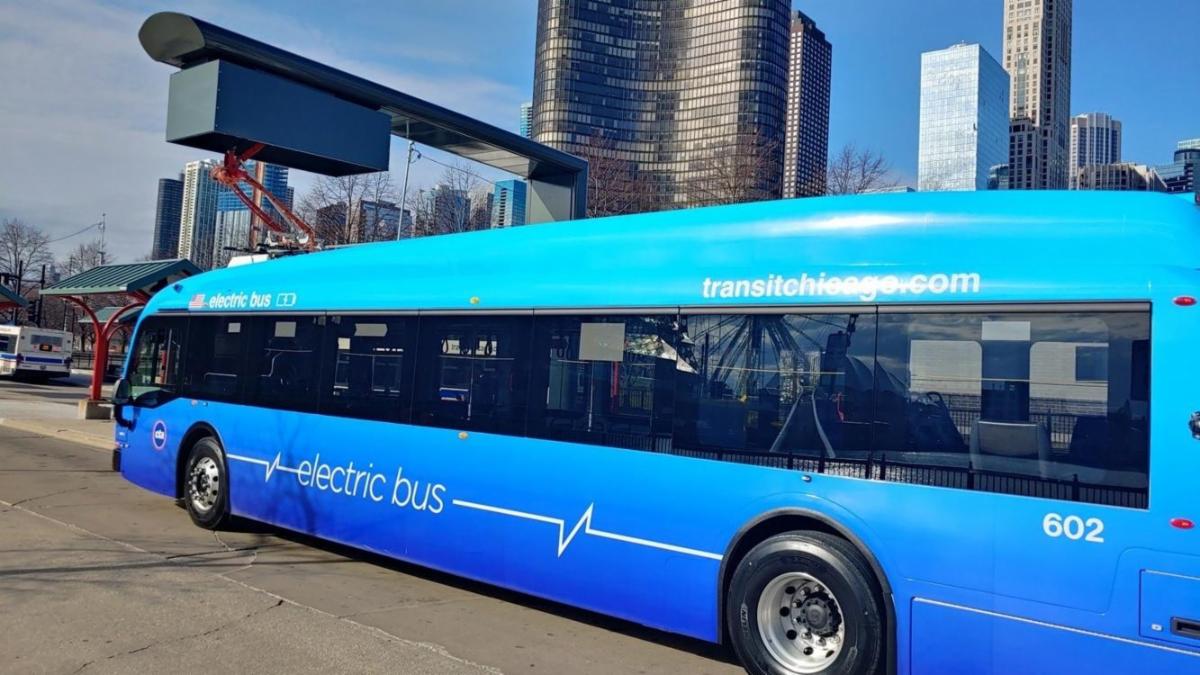
Washington, D.C. – The Federal Transit Administration (FTA) will make $1.47 billion in competitive grants available to help modernize bus fleets and facilities.
FTA’s Low or No Emission (Low-No) Grant Program makes funding available to help transit agencies purchase or lease U.S.-built low or no emission vehicles that use advanced technologies, including related equipment or facilities, for transit revenue operations.
The Bipartisan Infrastructure Law (BIL) will provide $5.5 billion over five years for the Low-No Program — more than 10 times greater than the previous five years of funding. For Fiscal Year 2022, approximately $1.1 billion will be available for grants under this program.
FTA’s Grants for Buses and Bus Facilities Program makes funding available to help transit agencies purchase and rehabilitate buses, vans, and related equipment, and build bus facilities. The BIL will provide nearly $2 billion over five years for this program. For FY 2022, approximately $372 million for grants will be available under this program.
|
|
Federal ruling clears way for Anchorage port modernization |
|
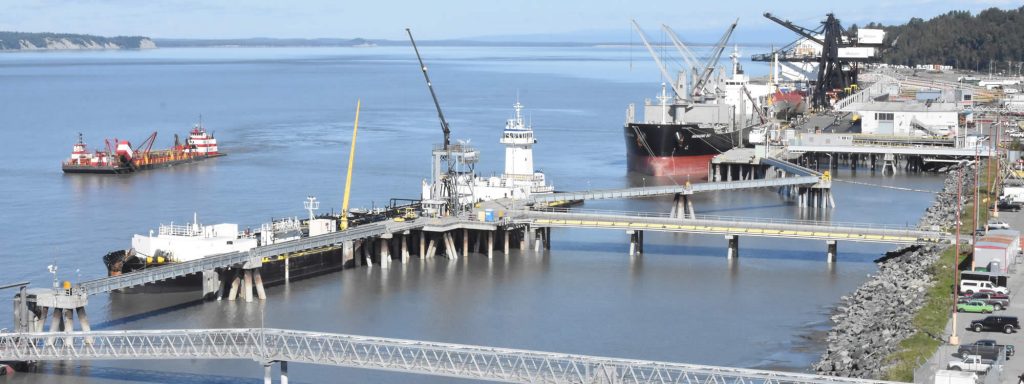
Alaska – A federal judge recently awarded Anchorage more than $367.4 million in damages due to design, construction, and management failures at the Port of Alaska Intermodal Expansion Project. This judgement is subject to appeal.
The port’s Modernization Program is an estimated $1.6 billion to $1.8 billion project. Anchorage still needs $600 million from the state of Alaska to design and construct one seismically resilient cargo dock at the port.
Engineers estimate that Port of Alaska’s aging docks will start closing due to corrosion and loss of load-bearing capacity in as few as eight years if they are not replaced, possibly sooner if there is another big earthquake.
The port aims to replace Anchorage’s aging docks and related infrastructure by:
- Improving operational safety and efficiency.
- Accommodating modern shipping operations.
- Improving resiliency to survive extreme seismic events and sustain ongoing cargo operations.
Officials plan to maintain normal cargo operations throughout the program. Final scope, designs, and schedule are still being determined based upon user needs and available funding.
|
|
Report: Solar, wind powering 13% of U.S. energy |
|
Washington, D.C. – Renewable energy’s contribution to the U.S. power grid rose by 4.1 percent from 2020 to 2021 to account for more than one-fifth of the country’s power generation, according to a new report by the Business Council for Sustainable Energy (BCSE).
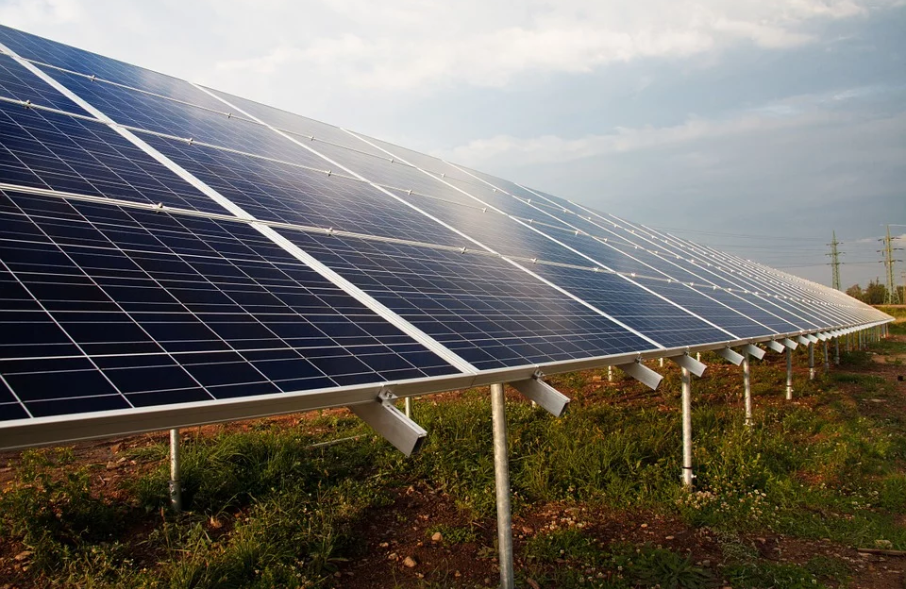
The 2022 Sustainable Energy in America Factbook reported wind, hydropower, and solar were the largest contributors. Wind and solar each made record contributions to power generated and consumed in 2021 with the two technologies generating a record 13 percent of total U.S. power last year.
A record-breaking $105 billion in new capital went into new U.S. clean energy assets, an 11 percent year-on-year jump. New investment has grown 70 percent in the last five years.
Developers built a record 37 gigawatts (GW) of wind and solar power-generating capacity. Solar enjoyed its best year ever with 24.2GW added while wind had its third-best year at 13GW. For a third straight year, solar accounted for the largest share of new capacity added to the U.S. grid.
Total U.S. offshore wind capacity stands at 42 megawatts, but there is now a pipeline of 17.6GW of projects in very active development. Most are set to be commissioned post-2025.
BCSE is a coalition of companies and trade associations from the energy efficiency, natural gas, and renewable energy sectors, including public power providers.
|
|
Army Corps, Massachusetts working on bridge replacements |
|
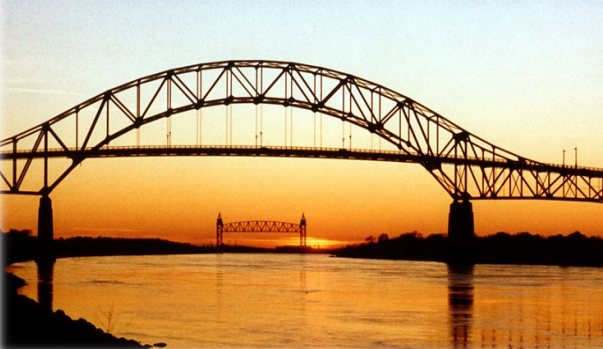
Massachusetts – Working with the U.S. Army Corps of Engineers (USACE), the Massachusetts Department of Transportation (MassDOT) is preparing an application for federal funding to support the replacement of the Bourne and Sagamore Highway Bridges.
Based on a 2020 study, USACE engineers decided to replace the 87-year-old bridges that span the Cape Cod Canal in Bourne with two new bridges. In 2020, the total project costs for the Bourne Bridge and Sagamore Bridge were estimated at $730 million and $502 million, respectively.
Construction would erect two new highway bridges each located parallel to and immediately inshore of the existing Bourne and Sagamore bridges.
The new highway bridges would be designed to include access for both pedestrians and other non-vehicular traffic such as bicycles. To improve traffic safety and through traffic reliability, each bridge would include one acceleration/deceleration lane and two through traffic lanes in each direction, for a total of six vehicular lanes on each bridge.
Both existing bridges would remain in service until the new bridges are opened to traffic. Then, the existing bridges would be demolished.
|
|
University of South Florida narrows sites for proposed stadium |
|
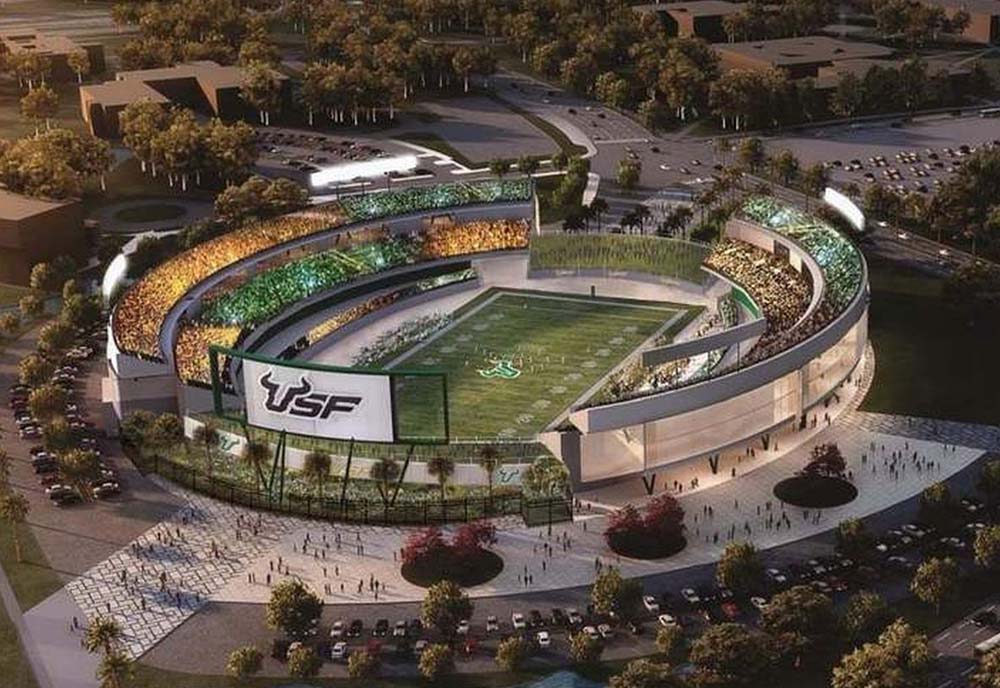
Florida – The committee charged with selecting a site for the first on-campus stadium at the University of South Florida (USF) is recommending a location at Sycamore Fields on the east side of the Tampa campus.
During an update to the board of trustees, the co-chairs of the committee walked through the merits of the location, which is currently used for intramural sports. It is within the USF Athletics district and sits near its operations facility and new Indoor Performance Facility. The site is positioned close to student housing and parking, with multiple options for tailgating space.
The committee will return to the board for approval of the site after additional analysis, such as further assessment of the land, review of the campus master plan, and more study of traffic flow.
Trustees also received a project schedule, which includes options for completion in 2026 or 2027. Cost estimates range from $250 million to $400 million.
|
|
Virginia county seeking input on continuity software solutions |
|
Virginia – The Fairfax County Department of Emergency Management and Security issued a request for information (RFI) for a continuity of operations software solution in a web-based, hosted, or Commercial Off-the-Shelf system.
Staff desire software that has planning automation capabilities to eliminate redundant input of information.
The software also must be capable of:
- Business impact analyses.
- Program risk assessments.
- Plan development and updates.
- Program assessment reporting.
- Supply chain management.
- Comprehensive testing, training, and exercising program.
In addition, it must provide reports and dashboards to increase engagement and availability of critical information for decision-makers.
RFI submissions are due by 2 p.m. EST March 15.
|
|
Higher education leaders empower SPI Consulting Team |
|
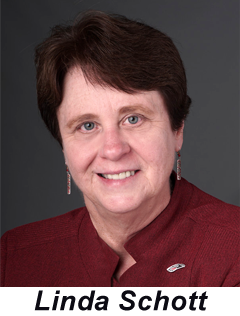
Strategic Partnerships Inc. (SPI) Consultant Dr. Linda Schott grew up on a cattle ranch in the Texas Hill Country. She attended Baylor University, graduating with a Bachelor of Arts degree. She then attended Stanford University, earning a Master of Arts degree in 1982 and a Ph.D. in History and Humanities.
Linda moved back to Texas and began a career in higher education. She served on the faculty at Texas State University, Texas Lutheran University, and the University of Texas at San Antonio.
In 2003, she moved to Eastern Michigan University. There she served as director of the Women’s and Gender Studies Program, and later the chair of the Department of History and Philosophy and associate dean of the College of Arts and Sciences.
In 2008, Linda became the dean of the School of Arts, Humanities, and Social Sciences at Fort Lewis College in Durango, Colorado. In 2012, she became the president of the University of Maine at Presque Isle and later was named president of Southern Oregon University. Linda retired on December 31, 2021, and recently joined the SPI Team.
Linda has expertise in strategic thinking and institutional planning. She is a member of the International Women’s Forum, was inducted into the San Antonio Women’s Hall of Fame, and was a part of Leadership Texas.
Strategic Partnerships Inc. will be a stronger unit with the expertise of Dr. Schott.
|
|
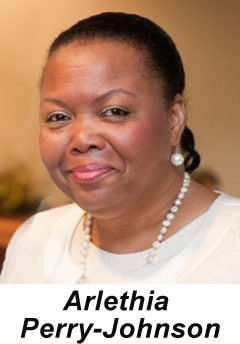
Arlethia Perry-Johnson has more than 35 years of experience in higher education, federal and state government, and the non-profit sector. As a strategic advisor to executives, she developed vast expertise in communications, marketing, external affairs, government relations, strategic planning, international engagement, program management, fundraising, and governance.
During her decade-long tenure at Georgia’s Kennesaw State University, Arlethia moved from Special Assistant to the President, to Vice President of External Affairs. Then, she was asked to assume the title of Vice President of Strategic Communications and Marketing. In those three roles, she spent nine years working with legislators at Georgia’s State Capitol.
As the Chief Communications Officer for the Board of Regents of the University System of Georgia (USG), Arlethia served four chancellors over 11 years. She also became the founding director of USG's African American Male Initiative which she led for 15 years.
Her career also includes managerial roles at large public research universities in Pennsylvania, New Jersey, and Virginia. And, as manager of national and investor media relations for the Tennessee Valley Authority, Arlethia worked directly with that federal agency’s chairman and chief financial officer on national and global media strategy.
Arlethia is a board member of Communities in Schools of Georgia and the Georgia Council on Economic Education. She is a graduate of the Executive Leadership Academy at the University of California, Berkeley, and a past Fellow of the Associate’s Program of the National Center for Public Policy in Higher Education. She also previously served as vice-chair and chair of the American Association of State Colleges and Universities’ Advisory Council for Communications and Public Affairs.
Arlethia has received education awards from the International Colloquium on Black Males in Education, CASE, the NAACP, and Georgia Tech, among others. She was recognized by Diverse: Issues in Higher Education as one of “25 Women Leaders Who Are Making a Difference.”
Arlethia holds a B.A. in journalism and communications from Point Park University. Strategic Partnerships is lucky to add Arlethia to our team of consultants.
|
|
New York City marine terminal to boost offshore wind development |
|
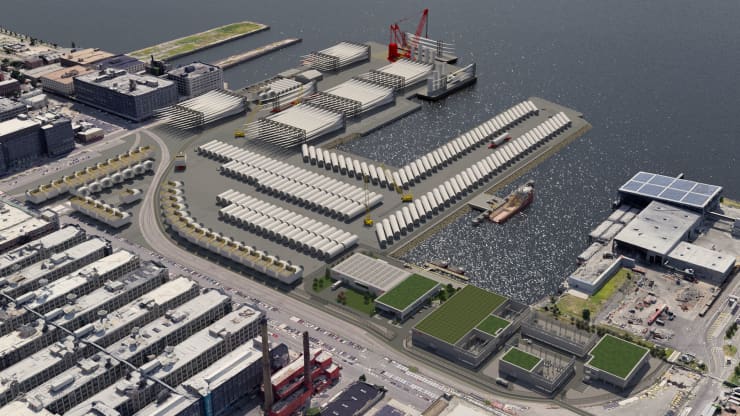
New York – An agreement with the New York City Economic Development Corporation and a private partner will transform the city’s South Brooklyn Marine Terminal into one of the largest offshore wind port facilities in the U.S.
The deal will help establish New York as a leader in offshore wind and help New York City meet its climate goal of 100 percent clean electricity by 2040.
Per the deal, the partners will build out the terminal as an operations and maintenance base.
The terminal will become a power interconnection site for the Empire Wind 1 project, and heavy lift platforms will be built on the 39th Street Pier for wind turbine staging and installation for developers. The port will serve as a hub to support the Empire Wind and Beacon Wind offshore wind farms.
In September 2021, the city committed $191 million to offshore wind projects — including $57 million in support of the South Brooklyn Marine Terminal and $134 million in new investments.
Five offshore wind projects are in active development, which will power more than 2.4 million New York homes and bring a combined economic impact of $12.1 billion to the state.
|
|
North Carolina approves $164M in financial aid for water projects |
|
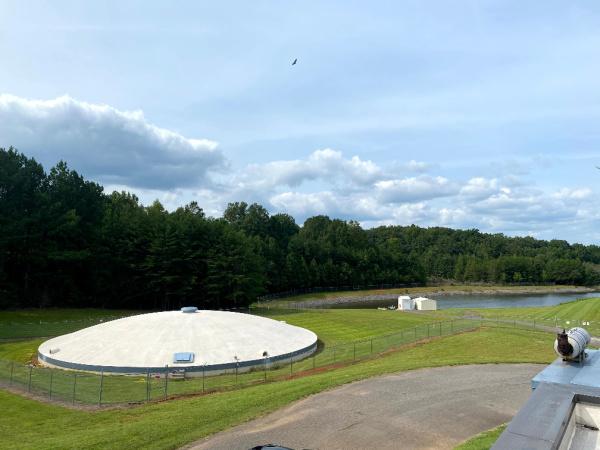
North Carolina – The State Water Infrastructure Authority of North Carolina authorized $164 million in financial assistance to help fund 76 water and wastewater projects throughout the state.
These projects are funded through the Clean Water State Revolving Fund, Drinking Water State Revolving Fund, Drinking Water and Wastewater State Reserves, and the Viable Utility Reserve.
Some of the projects approved in the latest funding round include:
- The city of Sanford and the town of Fuquay-Varina will receive a combined $35 million for expansion of the Sanford Water Treatment Plant.
- Durham County secured almost $19.3 million for its Chin Page Road pump station project.
- The city of Belmont will get more than $15 million for improvements to a pump station and force main.
- Davie County will collect more than $9.12 million for a water supply improvement project through the Drinking Water State Revolving Fund. This project creates a stronger regional water system by expanding Davie County’s Cooleemee Water Treatment Plant and adding an interconnection to the city of Mocksville, allowing Mocksville to decommission its Lagle Water Treatment Plant.
- The town of Wilkesboro secured $3 million in Wastewater Reserve grants and an additional $30 million in a combination of State Revolving Fund loan and principal forgiveness, to expand its wastewater treatment facility.
- The town of Pilot Mountain was awarded $2.84 million in Wastewater Reserve to replace its aged wastewater collection system infrastructure.
- Projects in 19 counties will receive funding to conduct asset inventories and assessments of drinking water and wastewater systems to plan for long-term rehabilitation and replacement of aging and critical infrastructure.
Studies show that North Carolina needs from $17 billion to $26 billion in upgrades to its water and sewer infrastructure statewide over a 20-year period, according to the governor’s office.
|
|
USDOT awards $100M to improve Alabama infrastructure |
|
Alabama – The U.S. Department of Transportation (USDOT) on March 2 awarded $100 million to two Alabama transportation authorities to construct multi-modal transportation assets.
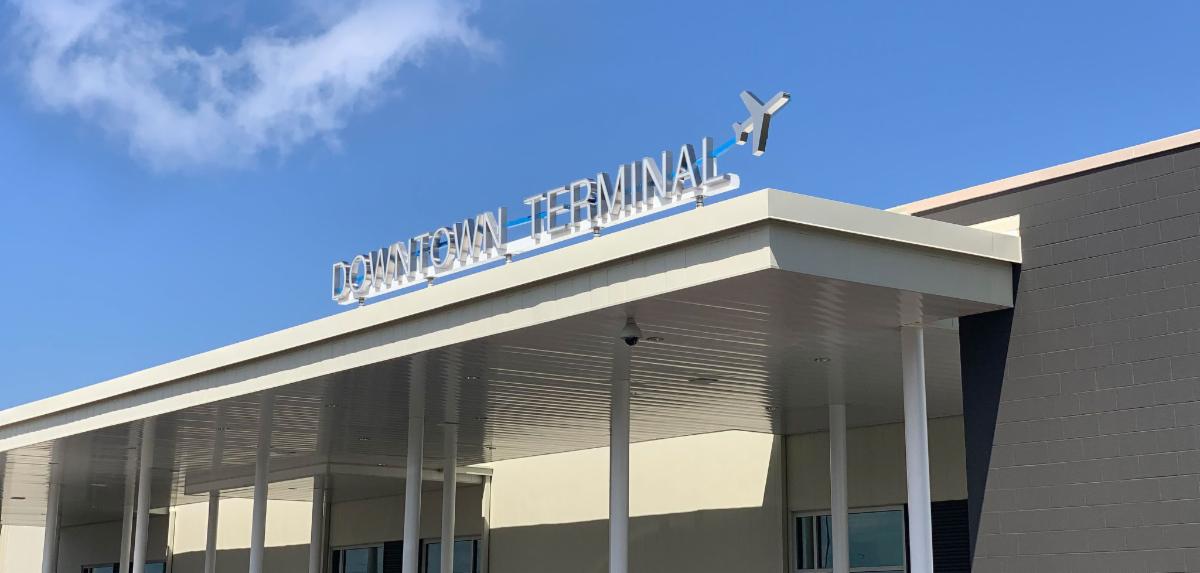
The Mobile Airport Authority (MAA) and the Alabama State Port Authority (ASPA) jointly competed for the opportunity to use the U.S. Department of Transportation (USDOT) Demonstration Program Grant to facilitate capital infrastructure improvements at the Port of Mobile and at the Mobile Downtown Airport (BFM).
Authorized under the Consolidated Appropriations Act, the competitive grant is intended to increase the efficiency of freight movements by air, rail, highway, and water.
The MAA will use its $62 million portion of the grant and other funds to construct a new international airport terminal at the BFM to add commercial aircraft belly capacity for cargo and more efficient cargo processing with Federal Inspection Services. MAA expects to open the new terminal in 2024.
Under the grant, the Alabama State Port Authority will receive $38 million to leverage freight movement efficiencies by water, rail, air, and highway.
The port will invest in an interterminal connector bridge at the container intermodal complex to connect the marine terminal with the intermodal container transfer facility (ICTF) terminals and adjacent logistics park. The connector facilitates direct, low emission transfer of a container from an ocean vessel to rail via the ICTF or to warehouse distribution centers located within the logistics park. The port also is developing the site and civil infrastructure in preparation of the construction of distribution centers.
These assets are in the Mobile Harbor where a $367 million channel deepening and widening program is underway to provide ocean carriers a 50-foot deep draft channel by late 2024 or early 2025.
|
|
Indiana city explores P3 for sports complex operations |
|
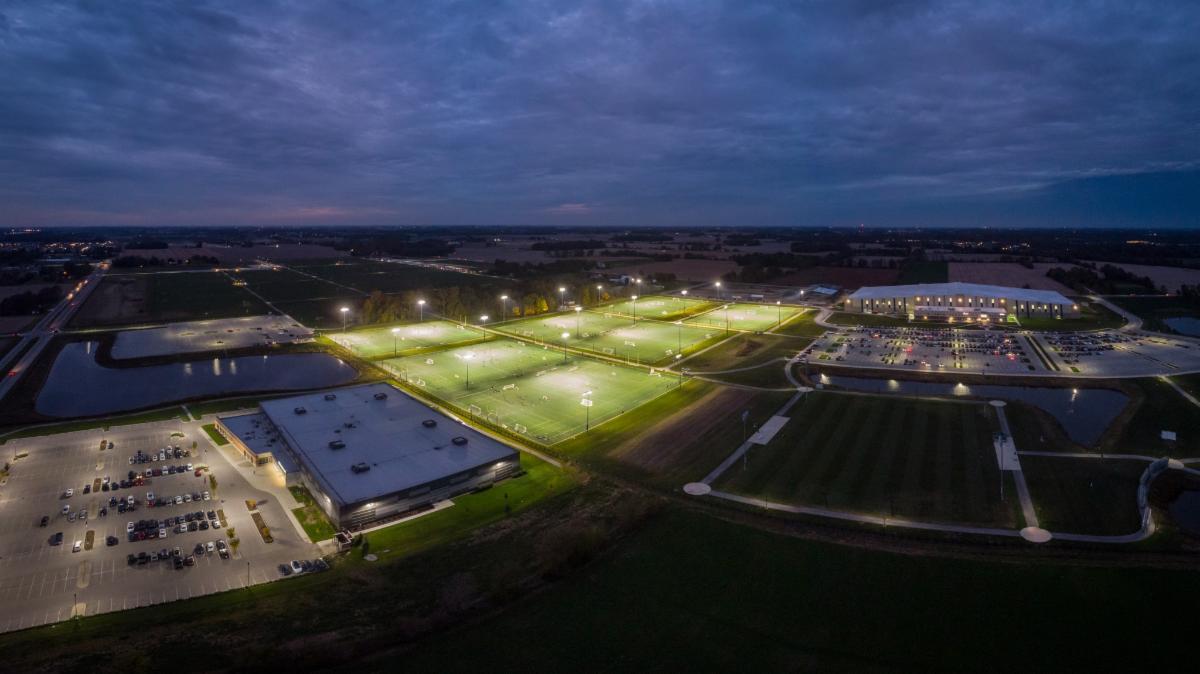
Indiana – The city of Westfield Redevelopment Commission will host an online bidders conference on March 18 as it considers entering a public-private partnership (P3) for a new owner or operator of Grand Park Sports Complex.
Grand Park, which opened in 2014, is an approximately 400-acre sports campus which includes 31 soccer fields, 26 baseball diamonds, two administration buildings, seven concession stands, and a 378,000-square-foot multi-use event center.
The campus hosts more than 2.5 million visits a year and has spurred more than $1.3 billion of economic development in Westfield. It has events booked through 2024.
City officials said additional investments from the private sector are needed to improve the facility and adequately compensate staff.
|
|
California county issues RFI for recreation management system |
|
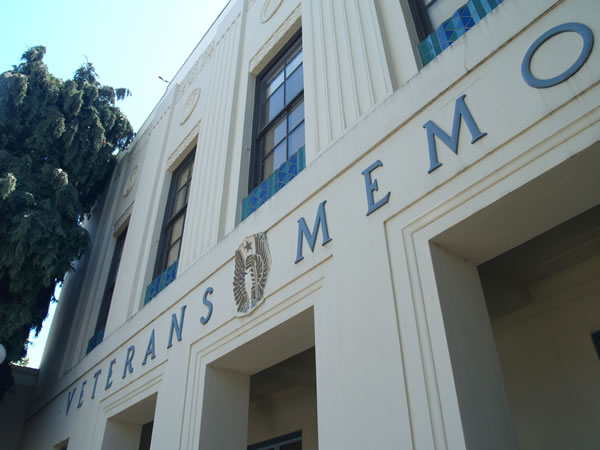
California – Alameda County released a request for information (RFI) for a recreation management system to aid in the use of the county-operated Veterans’ Memorial Buildings.
These buildings are primarily reserved and held for use of the veterans’ groups. To offset maintenance and operations costs, these spaces are made available for rental by members of the public.
The county seeks a web-based system to manage reservations for four separate facilities. Staff intend to release a future solicitation for a vendor that also will provide both pre-defined and ad-hoc reporting, technical support, training, and implementation.
Requirements of the system include an ability to check facility availability, submit reservation requests online, and book multiple rooms within the facility.
The RFI will remain open until the county issues a request for proposals or qualifications, which is scheduled for April 1.
|
|
USDA service commits $166M to dam, flood prevention projects |
|
Washington, D.C. – The U.S. Department of Agriculture (USDA) will invest more than $166.5 million in 108 infrastructure projects with funding from the Bipartisan Infrastructure Law (BIL).
USDA’s Natural Resources Conservation Service (NRCS) is working with local communities in 23 states to assist with new dam and flood prevention projects and repairs to existing watershed infrastructure.
NRCS prioritized projects in communities heavily impacted by drought and other natural disasters as well as historically underserved and limited resource communities.
The BIL provided $918 million for NRCS watershed programs, which includes the Watershed and Flood Prevention Operations (WFPO) Program, Watershed Rehabilitation Program (REHAB), and Emergency Watershed Protection (EWP) Program.
REHAB focuses on repairing existing infrastructure, including two rehabilitation projects for two dams on Margaret Creek near Athens, Ohio. Funds will enable the Margaret Creek Conservation District to raise the embankment of the Meeks Lake Dam, armor its spillway, and extend its lifespan by at least another 50 years. Meanwhile, for the second project, the Margaret Creek Conservation District will bring the Fox Lake Dam into compliance with Ohio’s safety regulations and restore the original flood protection benefits of the structure to last another 50 years or more.
WFPO projects focus on new infrastructure, including:
- Alakanuk, Alaska: Funds will support planning, design, construction, and the removal of damaged property from the floodplain. This work will assist the Alakanuk community with flood damage reduction and mitigation measures.
- Duchesne County, Utah: Funds will support projects that address water use, improve agricultural operations, and reduce flood damage throughout the watershed. Specifically, the project will address drought concerns by improving irrigation canals that serve approximately 38,000 acres of cropland and increased flood protection in four communities within the watershed.
- Glacier County, Montana: Funds will be used to help implement a new ag-water management strategy for the St. Mary Canal and address areas of deterioration that need to be repaired. Modernization will help the surrounding agricultural community build toward climate resiliency.
Since their enactment in 1948, NRCS’ watershed programs have designed and built 11,000 dams, constructed water storage structures, flood management systems, bank stabilization, moved towns, redirected stream flows, re-established wildlife habitat, and more to save lives and protect watersheds.
|
|
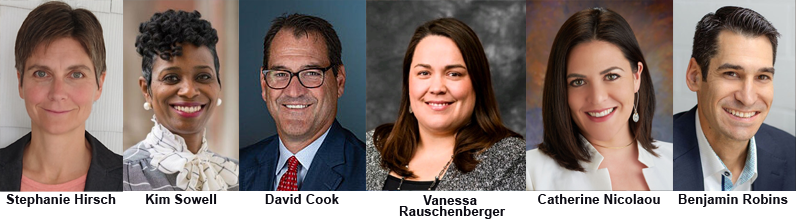
Wisconsin – The Eau Claire City Council appointed Stephanie Hirsch as its new city manager, effective April 4. Hirsch most recently served as operations administrator for Eau Claire County. Before that, she was an at-large city councilor for the city of Somerville, Massachusetts and worked on special projects for the mayor.
North Carolina – The Durham County board of commissioners named Kim Sowell as county manager, effective March 14. Sowell currently serves as assistant city manager with the city of Greensboro. Before that, she worked in the city’s human and water resources departments and as a vice chancellor for business and finance at North Carolina Agricultural and Technical State University.
North Dakota – The State Board of Higher Education selected Dr. David Cook as the new president of the North Dakota State University (NDSU). It is anticipated that the new NDSU president will assume office in July. Cook serves as the vice chancellor for the Office of Public Affairs & Economic Development at the University of Kansas (KU). Prior to that, he was vice chancellor of the KU Edwards Campus in Overland Park.
California – Gold Coast Transit District (GCTD) appointed Vanessa Rauschenberger as its next general manager. Rauschenberger has more than 18 years of experience in the transportation industry, including over 11 years at GCTD in various roles such as director of planning and marketing. Before that, she worked for the New York City Department of Transportation as an associate planner/project manager.
New Mexico – The city of Albuquerque named Catherine Nicolaou as its first broadband program manager. Prior to her role at the city, Nicolaou was the external affairs and marketing manager for a New Mexico-based communications company and a member of the city’s Information Services Committee.
Florida – The Hillsborough County Aviation Authority has named Benjamin Robins as vice president of maintenance. Robins’ lengthy service in the U.S. Air Force culminated with his role as the vice commander of MacDill Air Force Base.
|
|
|
|
Connect with SPI
Check out our social media links!
|
|
About Government Contracting Pipeline |
|
Strategic Partnerships, Inc.
Ph: 512-531-3900
|
|
Government Contracting Pipeline, a publication of Strategic Partnerships, Inc., is a free, weekly newsletter detailing important happenings nationwide and the premier source for federal, state, and local government news and contracting opportunities.
|
|
Help us share this message.
To ensure delivery and proper formatting of the newsletter, be sure to add editor@spartnerships.com to your safe senders list.
Otherwise, the newsletter may be flagged as spam and automatically routed to your junk e-mail folder.
|
|
© 2022 Strategic Partnerships, Inc. All rights reserved.
|
|
|
|
|
|
|
|