Volume 14, Issue 13 - Wednesday, March 30, 2022 |
|
By Mary Scott Nabers, CEO of Strategic Partnerships, Inc. |
|
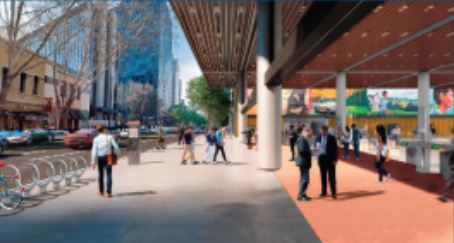
Public officials and economic development organizations throughout the country are now eligible to receive large amounts of federal funding which have been allocated for projects related to tourism, recreation, and revenue-generating venues. The new funding available amounts to approximately $750 million.
Because the pandemic significantly damaged operations related to public assets that attracted tourism, served as cultural centers, and/or provided entertainment, the federal government is attempting to revitalize the operations, recover jobs that were lost, and provide revenue-generating opportunities for local governments. This will catalyze the launch of hundreds of new projects in the near future.
The U.S. Economic Development Administration is prepared to dole out funding through grant applications for states and communities that have losses in the travel, tourism, or outdoor recreation sectors. Every region in the country is eligible to qualify for funding from this finite but attractive program.
Many public entities have already announced plans. The Seneca Park Zoo project in Monroe County, New York, is ready for launch. Officials will overhaul the county’s second-largest tourist attraction at a cost of at least $60 million. That price-tag includes construction of a multi-level tropical complex with indoor and outdoor habitats.
|
|
USDOT recommending $4.5B in rail, bus projects for FY23 budget |
|
Washington, D.C. – The U.S. Department of Transportation (USDOT) is recommending $4.5 billion to advance seven new rail and bus rapid transit (BRT) projects and continue funding for eight projects through grant programs aligned with President Biden’s proposed fiscal year 2023 budget released on March 28.
These projects, which require a local match, competed for funding through the Federal Transit Administration’s Capital Investment Grants (CIG) Program and Expedited Project Delivery (EPD) Pilot Program.
In New York, the Second Avenue Subway Phase 2 heavy rail project is recommended for $400 million in CIG funding to extend heavy rail subway service 1.5 miles along the East Side of Manhattan. The project includes three new stations and signal and communications systems.
In California, the East San Fernando Valley Corridor Phase 1 light rail project is recommended for $250 million in EPD Pilot Program funding to construct a 6.7-mile light rail project with 11 stations, nine traction power substations, an overhead contact system, new vehicles, and a maintenance and storage facility.
The Bay Area Rapid Transit District (BART) Silicon Valley Phase II heavy rail project is recommended for $200 million in EPD Pilot Program funding to extend BART service six miles from the Berryessa Station through downtown San Jose to Santa Clara.
In New York/New Jersey, the Hudson Tunnels commuter rail project is recommended for $100 million in CIG funding to construct a new two-track heavy rail tunnel along the Northeast Corridor between New Jersey and Manhattan's Penn Station.
In Washington, the Seattle RapidRide J Line Bus Rapid Transit project is recommended for $60.1 million in CIG funding to build a 5.2-mile BRT line connecting the University District neighborhood to downtown Seattle.
The President’s FY 2023 budget also includes proposed funding for eight projects with existing construction grant agreements, including: $813 million for the existing Los Angeles Westside Subway Sections 1-3 rail projects; $241 million for the existing San Diego Mid-Coast Light Rail transit project; $250 million for the Minneapolis Southwest Light Rail Transit project8B; $339.5 million for the Secaucus Portal North Bridge rail project in New Jersey; $318 million for the Seattle Federal Way Link Light Rail extension project; and $250 million for the Seattle Lynwood Link Light Rail extension project.
|
|
Infrastructure investments top pending $4.8B Michigan budget |
|
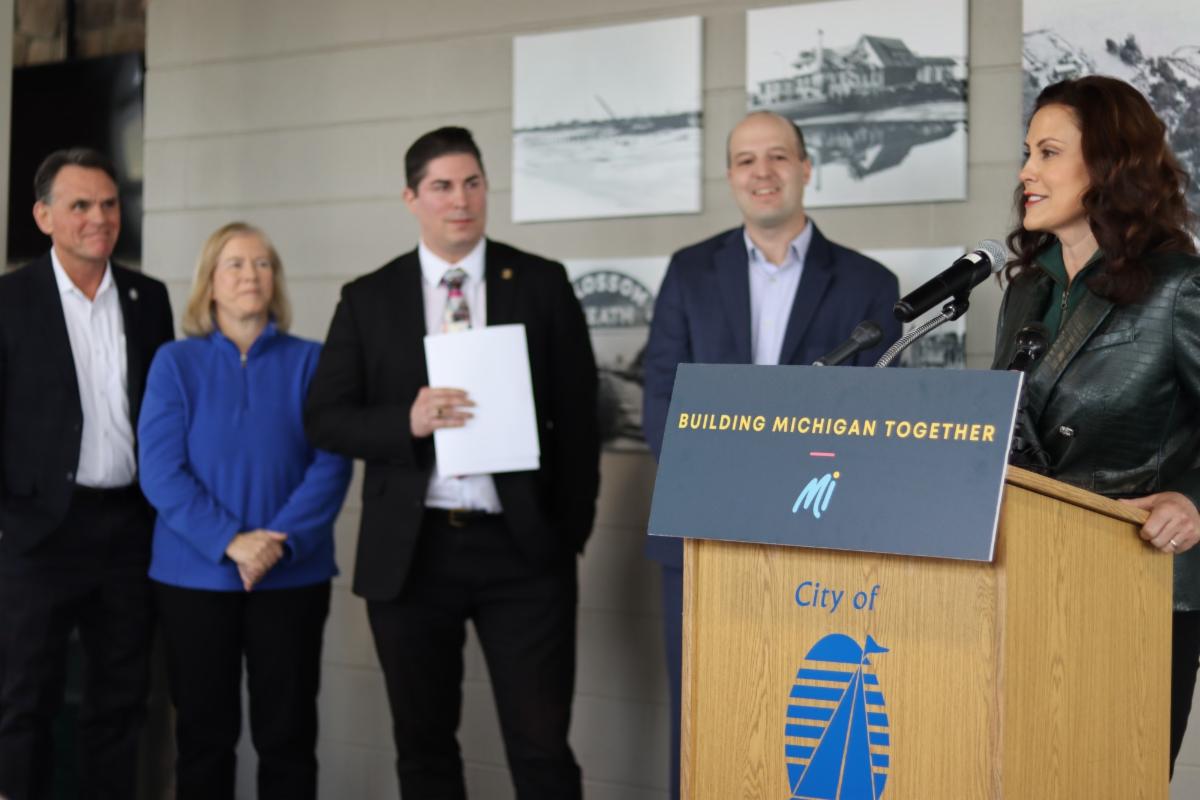
Michigan – State lawmakers passed a $4.8 billion budget highlighted by the Building Michigan Together Plan committed to protecting water, fixing roads, improving parks, and building affordable housing.
Critical investments of $645 million in Michigan’s infrastructure include $317 million for road and bridge programs and $66 million to make state transportation infrastructure more resilient to future flooding events. Another $98 million will go toward airport infrastructure improvement grants, and $66 million will support public transportation improvements.
The plan includes nearly $2 billion to address critical water infrastructure needs and more than $1 billion for drinking water improvements, including:
- $669 million for clean water infrastructure.
- $210 million to repair dams in Midland and Gladwin counties and another $40 million to address the repair, renovation, or elimination of dams statewide.
- At least $325 million to replace lead service lines, including 100 percent of lead service lines in Benton Harbor.
- $55 million to help communities tackle toxic contaminants.
- $43 million in assistance for small and disadvantaged communities.
Michigan would invest $250 million for state parks, including the creation of a new state park in the city of Flint and $200 million for local park systems, including transformative greenway projects in Detroit and Grand Rapids.
The Building Michigan Together Plan will connect more households and small businesses to fast, reliable high-speed internet through $250 million in funding to improve access and adoption of broadband.
Housing and home improvement programs would receive $150 million, including a $50 million investment in the Housing and Community Development Fund to meet the housing needs of low-income households, $50 million to create a missing middle housing gap fund, and $50 million for residential home improvements including grants to incentivize energy efficiency and provide energy assistance.
The bill is pending the approval of Gov. Gretchen Whitmer, who has indicated she will sign it.
|
|
New York enters P3 for $1.4B football stadium in Buffalo |
|
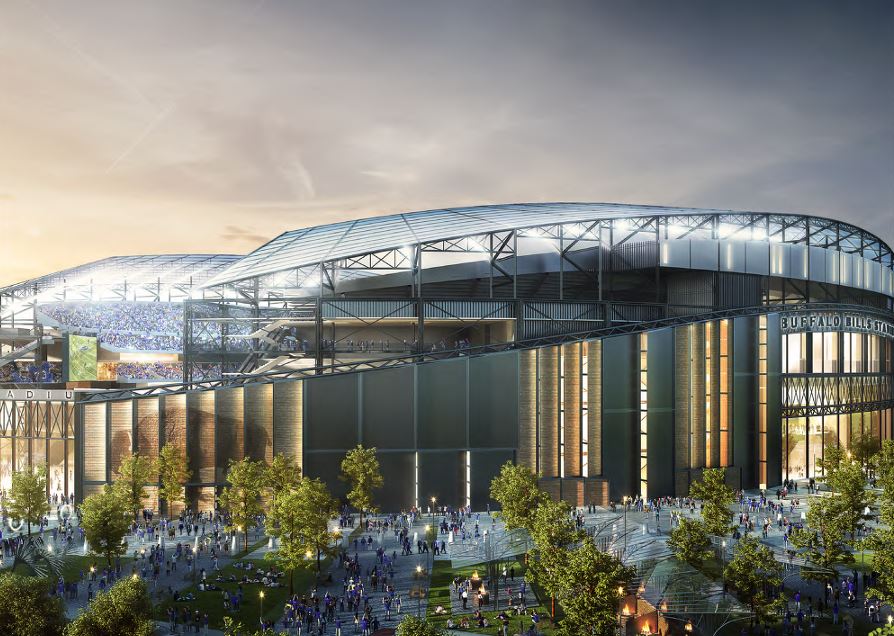
New York – Gov. Kathy Hochul announced a joint public-private partnership (P3) between New York State, Erie County, and the NFL’s Buffalo Bills for a $1.4 billion new stadium in Orchard Park.
Hochul’s negotiations secured a 30-year commitment for the Bills to remain in the Buffalo suburb, and a combined $550 million from the NFL and Bills approved by the NFL owners.
She will advance a $600 million proposal in the state budget, and Erie County will contribute $250 million. The economic and tax impacts generated from the team will support more than 100 percent of the public share of the new stadium cost.
The 30-year agreement details the construction of a new stadium with a minimum of 60,000 seats in Orchard Park. The Bills will negotiate a project labor agreement with the Building and Construction Trades Council of Buffalo, New York and Vicinity, AFL-CIO, on behalf of its affiliated local unions. The deal requires the Bills to agree to a Community Benefits Agreement, which is to be negotiated.
Erie County will transfer ownership of the current stadium and adjoining complex, which includes practice facilities and office space, to the state. The state will own the new stadium and adjoining complex, which will be leased to the Bills.
The new stadium is expected to be ready for the Bills home opener in 2026.
|
|
North Carolina planning to procure electronic health record system |
|
North Carolina – The state of North Carolina’s Department of Public Safety released a request for information (RFI) as it develops plans to procure a new Electronic Health Record (EHR).
This RFI is intended to collect information from vendors who provide EHR software to be used in the state’s correctional facilities’ medical units for offenders. This will include the installation, training, technical support, application hosting, and software maintenance for all facilities.
The proposed EHR system must be integrated with the NC Offender Population Unified System and meet North Carolina State IT security and architecture requirements, including NC Health Information Exchange requirements/policies.
Currently, the department has several legacy electronic medical record systems which it plans to replace with a single comprehensive, integrated EHR that encompasses primary, specialty, and clinic scheduling capabilities.
The deadline for RFI responses is 2 p.m. EDT April 22.
|
|
Colorado airport draft master plan targets terminal upgrades |
|
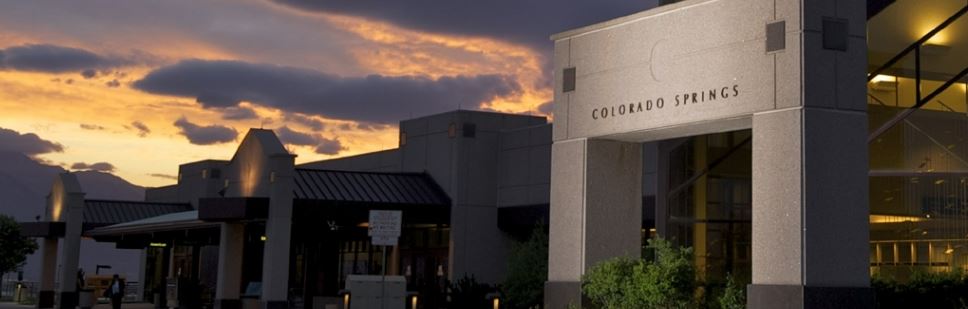
Colorado – Last updated in 2013, a new Colorado Springs Airport master plan is being drafted with a recommended option calling for increasing the number of terminal gates from 12 to 24 gates and adding space for ticketing and baggage claim. Cost estimates for the addition range from $75 million to $125 million.
A more extensive terminal expansion, new control tower, runway and taxiway reconfigurations, and parking garage for rental cars are among the proposed improvements included in the draft master plan designed to guide the airport for the next 20 years.
Plans for $20 million in renovations to the airport’s passenger terminal are underway, adding to the list of projects planned by the airport to accommodate an accelerating number of passengers. Last year, the airport recorded its highest number of passengers in 13 years.
A series of public meetings are part of the process that includes Federal Aviation Administration review of aviation demand forecasts, the creation and evaluation of alternative strategies, and the finalization of the Airport Layout Plan are major milestones during this project. Formal adoption of the layout plan is anticipated in winter 2022.
|
|
ARTBA road project analysis ranks Midwest states as most active |
|
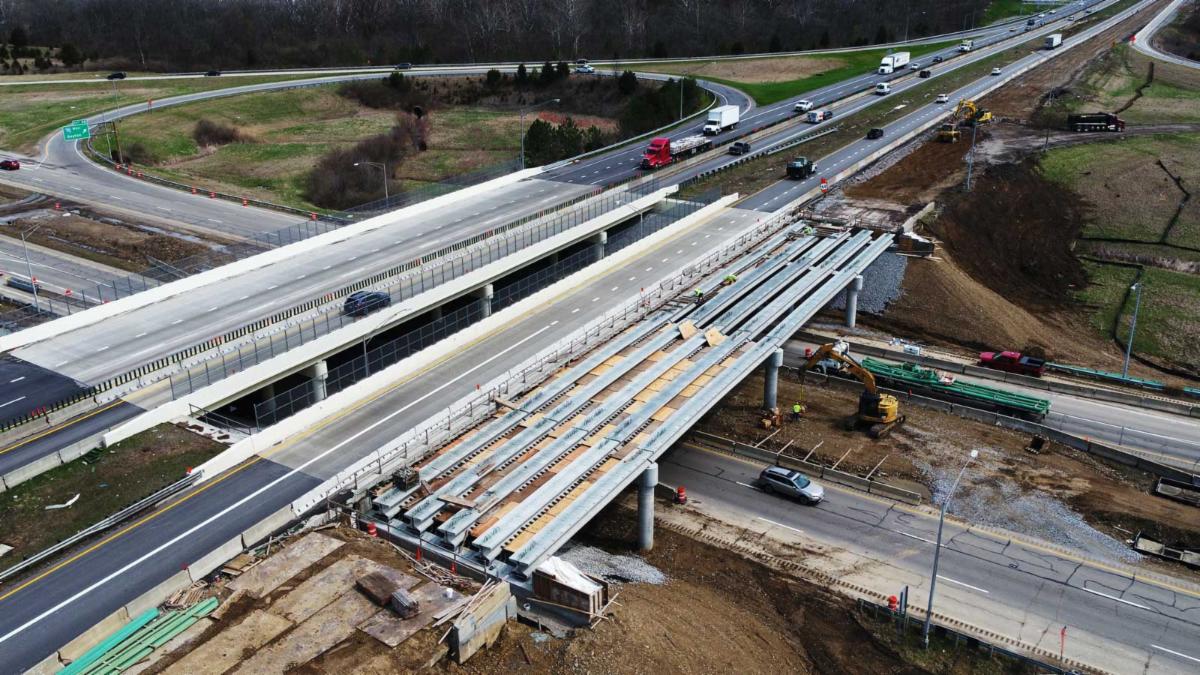
Washington, D.C. – Midwest states topped the list for most highway and bridge improvement projects in 2021, according to American Road & Transportation Builders Association (ARTBA) analysis of federal highway data.
The association’s “Federal Highway Investment Benefits by State” dashboard shows that states matched $31.4 billion in federal funds with their own financing to advance nearly $57 billion in projects.
The five states with the most projects are:
- Missouri – 1,040 projects.
- Michigan – 903 projects.
- Ohio – 796 projects.
- Indiana – 731 projects.
- Tennessee – 663 projects.
Nearly half of the projects – 43 percent – were for repair or reconstruction work. An additional 20 percent was used for adding capacity, such as a new lane or major widening, to an existing roadway. Six percent of funds were invested in new roads or bridges.
The five largest projects nationally that include a mix of federal, state, local, and private funds, are:
- Georgia – SR 400 North Springs Marta Station to McFarland Road Express Lane ($3.8 billion).
- Arizona – I-17 Split ($899 million).
- Texas – Interstate 35E, new roadway lanes/reconstruct existing roadway ($715 million).
- Nebraska – 20th Street, Missouri River, Omaha ($607 million).
- Louisiana – LA 1: Leeville to Golden Meadow, Phase 2 ($524 million).
The data that states submit to the Federal Highway Administration’s Fiscal Management Information System (FMIS) populates the ARTBA dashboard.
|
|
Public sector veteran bolsters SPI Consulting Team |
|
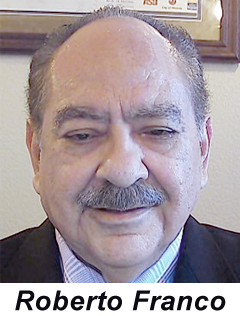
Roberto E. Franco brings over 30 years of public sector experience to the Strategic Partnerships Inc. (SPI) Consulting Team.
Roberto served as the Community and Economic Development Department assistant director for the city of Phoenix from 2002 to 2017. He also founded the Phoenix Community Development and Investment Corporation (PCDIC), where he served as president, vice-chairman, and voting board member.
The U.S. Department of Treasury’s Community Development Financial Institution awarded the PCDIC millions in New Market Tax Credits allocations, and Roberto provided oversight to the benefit of the regions.
Before joining the city of Phoenix, Roberto served as the director of Economic Development for El Paso, Texas, for more than 10 years. He also worked at Brown & Root Services Corp. at Ft. Bliss U.S. Army post. He served as business manager and was responsible for managing and negotiating all financial operations of the $40 million job order contract with the U.S. Department of Defense.
Roberto earned a Master of Business Administration and Bachelor of Business Administration from The University of Texas at El Paso. The SPI Team is delighted to have his expertise.
|
|
New Hampshire city issues RFI for sports complex partnership |
|
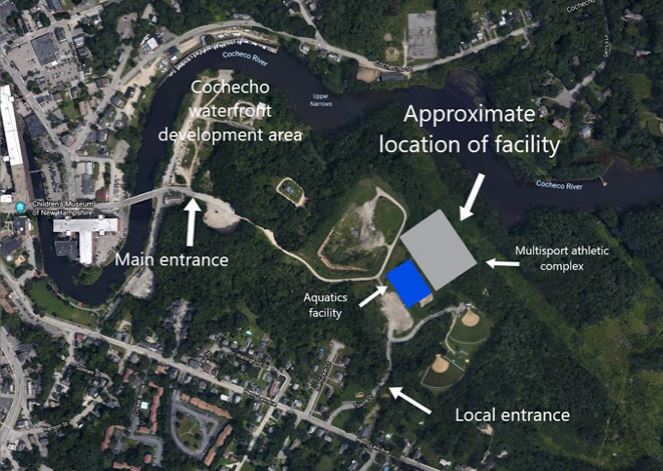
New Hampshire – The city of Dover is teaming with the private Dover Sports Complex Committee to solicit feedback on a proposed multisport athletic complex and aquatics facility with onsite parking.
As part of a request for information (RFI), Dover is seeking descriptions of how a private or nonprofit entity would develop and operate the sports complex in partnership with the city to provide multiple recreational facilities.
The sports complex concept will likely contain:
- Multi-generational use pool(s) with handicap access and spectator seating.
- Multi-use gymnasium which can transform into a synthetic turf multi-use field with spectator seating.
- General use studios (suitable for yoga or martial arts classes with the potential to lease space).
- Strength and conditioning fitness room with weights and cardio equipment (potential to lease space to local or national program).
- Walking paths (optional based on-site location).
Other desired features include a general entrance lobby, concession area, meeting/party room, on-site daily use parking, and a tie-in to off-site event parking (optional).
Both the committee and city are focused on placing the complex at Maglaras Park adjacent to downtown Dover and abutting a significant mixed-use waterfront development project along the banks of the Cocheco River.
In addition to the Dover area, the partners envision the new complex serving the surrounding Seacoast regions inclusive of New Hampshire, Maine, and Massachusetts.
The closest multi-sport athletic complex is 25 miles south near the Massachusetts border, in Hampton. This facility does not have the components that the Dover sports complex is envisioned to have. There are no comparable indoor aquatic facilities in New England that are not affiliated with a college or university.
RFI responses are due by 2 p.m. EST April 28.
|
|
Miami-Dade County releases draft RFP for detainee kiosks |
|
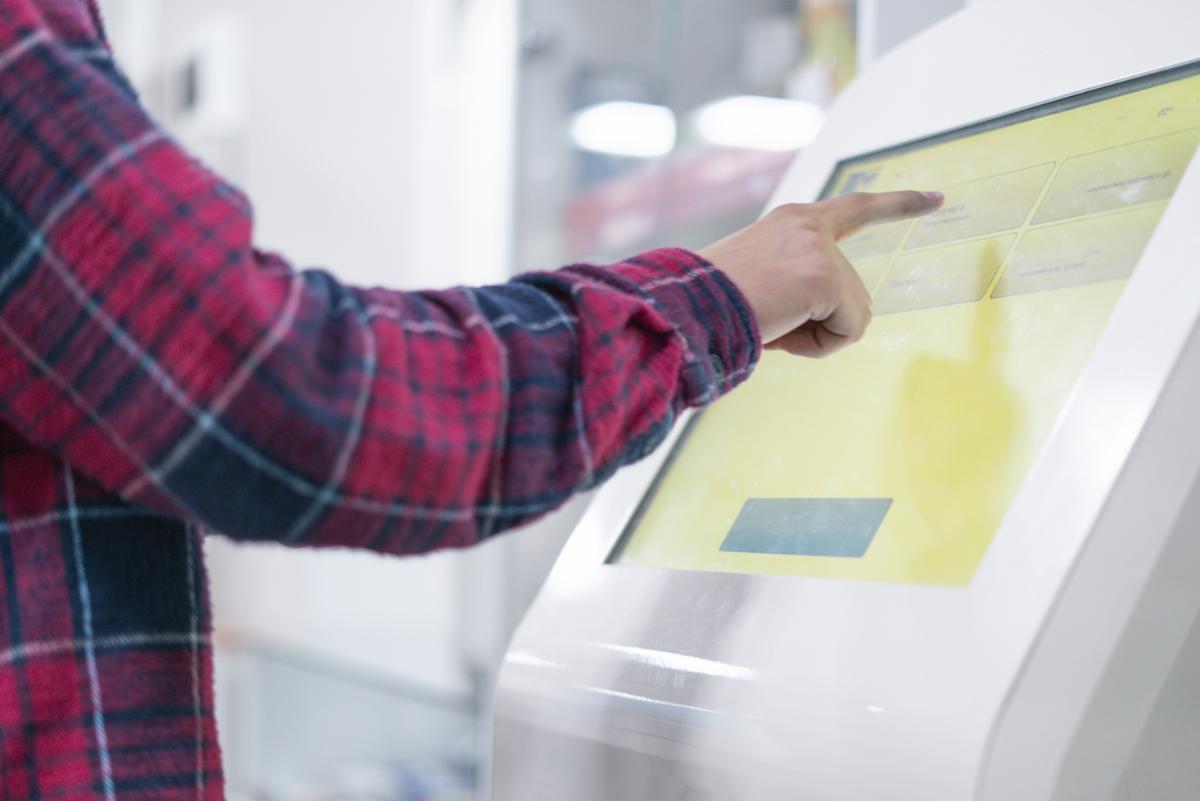
Florida – Miami-Dade County has signaled its intent to solicit bids for a detainee electronic communications and media solution by releasing a draft request for proposals (RFP).
In its draft, the county’s Corrections and Rehabilitations Department expresses a desire for a vendor that can provide not only hardware such as tablets, mobile kiosks, and stationary kiosks that utilize touchscreen as the primary input device, but also software, configuration, training, hosting, and support services.
The solution must be Criminal Justice Information System (CJIS) compliant and remain compliant with future releases of the FBI’s CJIS policy. The solution must be on a physically separate network, which does not interfere with current department systems, to include network, Wi-Fi, and radio frequencies.
Miami-Dade County desires the solution to be fully implemented no later than 90 days after contract execution and anticipates awarding a contract for an initial five-year period, with an option to renew once for five years, at the county’s discretion.
The draft includes plans for a pre-proposal conference and site visits to four of the county’s detainee facilities.
|
|
Oklahoma school district approaching $81M bond election |
|
Oklahoma – Voters in the Pryor Public Schools district will determine the fate of proposed facilities and renovations in an $81 million bond election on April 5.
The district is seeking voter approval for $24.7 million in athletic improvements including a new football field and stadium, field house with soccer and football locker rooms, a hospitality room, and offices.
If approved, bond sales would fund a $16.2 million addition to Pryor High School featuring a practice gym, cheerleading and pom squad room, and locker rooms.
Capital projects that would receive funding are:
- $4.7 million in renovations for Jefferson and Lincoln elementaries.
- $5.8 million for a middle school classroom addition and renovation of a maintenance building to allow for Science, Technology, Engineering, and Math (STEM) and IT instruction.
- $6.6 million to build a new maintenance facility that includes shop areas, offices, locker rooms, and storage for sites.
Another $2.1 million would fund the purchase of district technology.
|
|
Tennessee seeks online training system for first responders |
|
Tennessee – Through a request for information (RFI), the Tennessee Emergency Management Agency (TEMA) is gathering input on a solution that will enable the management and delivery of training for first responders and emergency management personnel statewide.
TEMA requires the ability to manage their progress and records with the goal of having a more practiced public safety and emergency management response to and recovery from emergencies and disasters.
Solicitation documents indicate a desire for such features as online enrollment and test taking, course calendars, individual learning plans, and creation of student identification.
RFI submissions are due by 2 p.m. CDT May 2.
|
|
South Dakota county calls bond election for law enforcement center |
|
South Dakota – Clay County commissioners called a $39.1 million bond election for June 7 to fund the construction of a 44-bed jail and law enforcement center.
After voters rejected a bond last year to fund a new county government facility, commissioners removed court space from the proposed project on West Cherry in Vermillion.
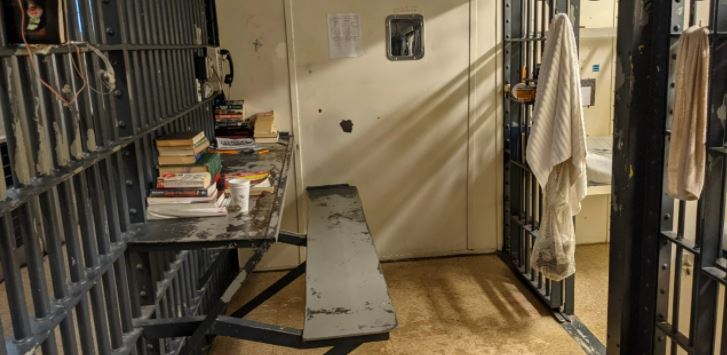
Clay County operates out of a 20-bed jail where some areas have been in use since 1912. Despite a renovation in 1989 to add a day room, new booking area, and a cell block, the jail is not capable of holding detainees longer than 72 hours. It must hold long-term inmates in other counties.
The county Sheriff’s Office, Vermillion Police Department, and Clay Area Emergency Communications Center would be housed in the new law enforcement center, which would replace the existing Vermillion/Clay County Public Safety Center built in 1989.
|
|
Minnesota airport secures funding for cargo hangar project |
|
Minnesota – Thief River Falls Regional Airport is planning solicitations for April to build a new $12.5 million cargo hangar.
The facility will have a capacity of two planes and will allow for indoor maintenance and cargo operations sheltered from the elements. The airport’s commercial partner will use the hangar.
Combined with a $5.5 million state bond from 2020, the remainder of the project budget will be funded by $7.5 million from the federal omnibus spending bill.
Construction is scheduled to begin this summer and conclude by 2023.
|
|
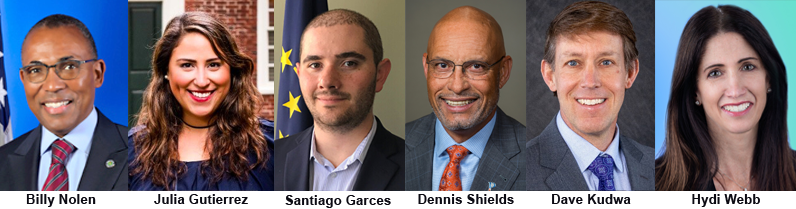
Washington, D.C. – The Federal Aviation Administration (FAA) named Billy Nolen to serve as acting FAA Administrator. He will take over from Steve Dickson who is departing at the end of March. Nolen is an experienced aviation safety professional and former airline captain. He has been the FAA’s associate administrator for aviation safety since January.
Massachusetts – Mayor Michelle Wu appointed Julia Gutierrez as chief digital officer and Santiago Garces as chief information officer (CIO), effective April and May respectively. Garces is currently the executive director of the Department of Community Investment in South Bend, Indiana, and formerly served as the CIO of Pittsburgh, Pennsylvania, and of South Bend. Gutierrez was previously at Massachusetts Digital Service, part of the state’s Executive Office of Technology Services and Security. Prior to her time at Mass Digital, Gutierrez worked at a Mexican public policy think tank.
Louisiana – The Southern University System board of supervisors selected Dennis Shields as the next president of the system and chancellor of Southern University and A&M College. He will succeed President-Chancellor Ray L. Belton, who announced his retirement in 2021. Shields is the current chancellor of the University of Wisconsin Platteville. Prior to his current position, he held administrative positions in law schools at the universities of Iowa, Michigan, and Duke.
Michigan – The St. Johns City Commission named Dave Kudwa as its next city manager. He succeeded former City Manager Jon Stoppels who retired in November 2021. Kudwa has served in various roles with the city, including as deputy city manager and community development director, since he joined St. Johns in 2012.
Florida – Miami-Dade Mayor Daniella Levine Cava tapped Hydi Webb as the next director of PortMiami. Webb served in various positions at the port, including deputy port director and assistant director of business development and marketing, before being tapped as interim port director.
|
|
|
|
Connect with SPI
Check out our social media links!
|
|
About Government Contracting Pipeline |
|
Strategic Partnerships, Inc.
Ph: 512-531-3900
|
|
Government Contracting Pipeline, a publication of Strategic Partnerships, Inc., is a free, weekly newsletter detailing important happenings nationwide and the premier source for federal, state, and local government news and contracting opportunities.
|
|
Help us share this message.
To ensure delivery and proper formatting of the newsletter, be sure to add editor@spartnerships.com to your safe senders list.
Otherwise, the newsletter may be flagged as spam and automatically routed to your junk e-mail folder.
|
|
© 2022 Strategic Partnerships, Inc. All rights reserved.
|
|
|
|
|
|
|
|