Volume 14, Issue 12 - Wednesday, March 23, 2022 |
|
By Mary Scott Nabers, CEO of Strategic Partnerships, Inc. |
|
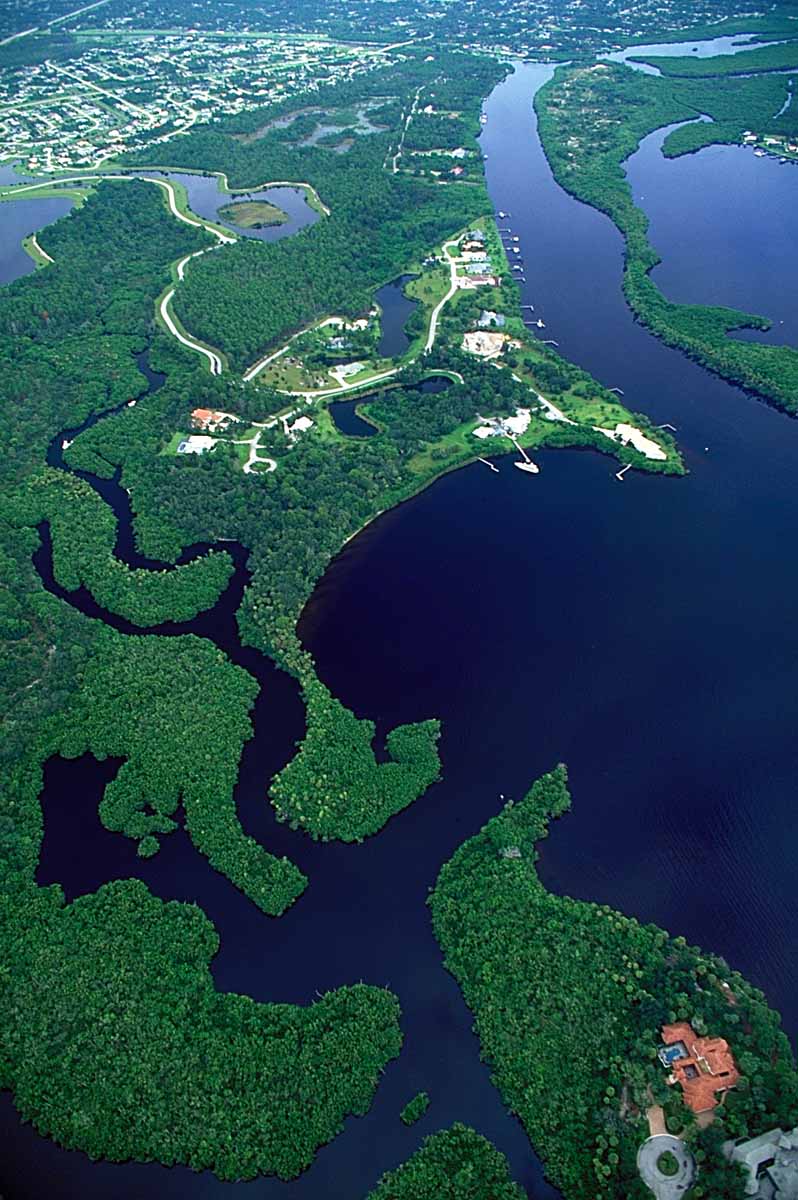
Port operations throughout the world were damaged when the pandemic occurred. The effects of COVID were significant and the problems have lingered. Supply chain disruptions, port congestion, cruise ship restrictions, budgets stretched to the limit, and limited resources – these are but a few disruptions that still plague port officials.
Now, however, there is an abundance of activity at American ports. Funding has been made available and positive changes are occurring rapidly. Collaboration between public and private-sector partners will soon be at an all-time high.
It is important to take note of what is happening at ports in America because the modernization that is needed to compete globally will require various types of expertise. Leading-edge technology, specialized engineering, construction, planning, design, lighting, power modernization, and project management – it will all be required. The goal is to launch a successful, efficient coordinated effort between public officials and private-sector contractors for the good of the country.
The Port of Seattle has $20 million to invest in port-related innovations. Immediate plans call for conversion of an historic ship supply building into a Maritime Innovation Center. Scheduled for completion in 2024, the facility will support the port’s goals to modernize port-related practices, seek new inventions, and solidify Washington’s leadership in the maritime industry.
|
|
Earmarks pour forth from $1.2 trillion omnibus spending bill |
|
Washington, D.C. – Legislators across the country secured millions of dollars from the $1.2 trillion omnibus spending bill in earmarks for projects in their states and districts.
The basic bill provides federal agencies with $730 billion in nondefense funding, a $46 billion increase over fiscal 2021.
U.S. Army Corps of Engineers leadership secured $350 million for the Comprehensive Everglades Restoration Plan. The Corps also will receive $45.1 million for construction projects on the Upper Mississippi River, $38.37 million for Columbia River fish mitigation projects in Washington, Oregon, and Idaho, and another $18.39 million for remediation work at Indiana Harbor in Chicago.
Higher education institutions will benefit from earmarks secured by their respective legislators, such as $39.7 million from the Agricultural Research Service of the U.S. Department of Agriculture for a plant germplasm research facility at the University of Wisconsin-Madison.
The U.S. Department of Commerce will contribute $60 million for renovation and expansion of the University of South Alabama College of Medicine, $20 million for the Ozarks Health and Life Science Center at Missouri State University, and $17 million for the renovation of Forsyth Library at Fort Hays State University in Kansas. Missouri State University will receive another $30 million from the U.S. Department of Health and Human Services (HHS) for the life science center.
Water infrastructure and flood mitigation projects will receive a bevy of federal funds to improve public health and safety.
More than $67.34 million will go to the Bureau of Reclamation to help fund the Navajo-Gallup Water Supply Project to convey water from the San Juan River to the eastern section of the Navajo Nation, southwestern portion of the Jicarilla Apache Nation, and the city of Gallup, New Mexico.
Harris County Flood Control District in Texas will receive a combined $38.1 million from the Federal Emergency Management Agency for pre-disaster mitigation projects including construction of stormwater detention basins and culvert improvements.
The city of Weirton, West Virginia, will get $22.47 million from the Environmental Protection Agency (EPA) for a water treatment capacity project. The EPA also will provide $8 million to the city of Rock Hill, South Carolina, for a water treatment plant alum sludge dewatering facility.
In Alaska, HHS will distribute $27.67 million to the Alaska Native Tribal Health Consortium for facilities and equipment. The agency also will provide $18 million to Beaufort Memorial Hospital in South Carolina to expand its emergency department.
One of the organizations that will receive funding via the U.S. Department of Transportation (USDOT) is the Mobile Downtown Airport in Alabama which will get a $100 million grant for planning and design to build a new terminal and implement airfield improvements, among other projects.
Arkansas will get a $59 million boost from USDOT for its plans to build a future Interstate 49 highway and construct an Interstate 57 corridor as well as improve Interstate 69 and Highway 67 corridors.
USDOT will direct $23 million to the county of Maui, Hawaii, for its estimated $90 million project to realign the Honoapiilani Highway. Should the project be fully funded, construction is anticipated to begin in late 2024.
The U.S. Department of Housing and Urban Development (HUD) will contribute $23 million to Mat-Su Youth Housing to build the Carson Cottle Center for job training of homeless youth in Wasilla, Alaska, $12 million for the Nevada Cares Campus, and $9 million for the Vermont Center for Emerging Technologies.
|
|
Massachusetts administration files $9.7 billion transportation bill |
|
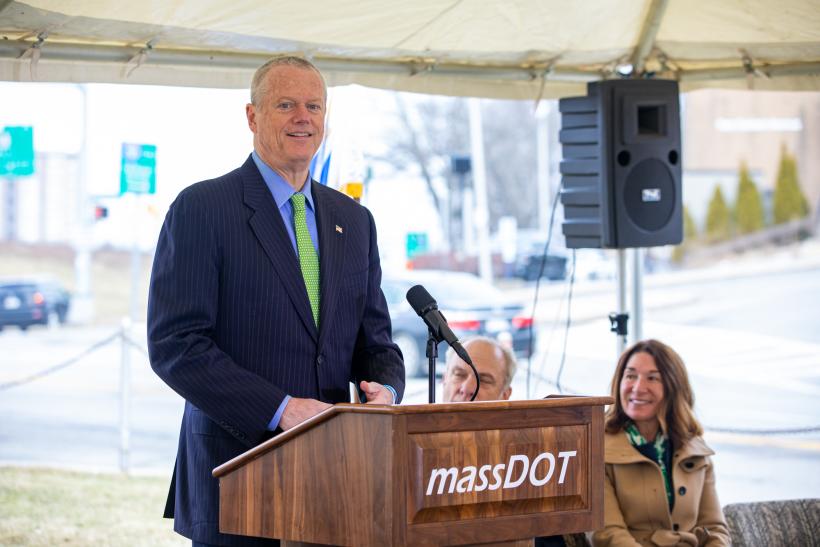
Massachusetts – Gov. Charlie Baker and Lt. Gov. Karyn Polito filed a $9.7 billion Massachusetts Transportation Resources and Climate (MassTRAC) bill on March 17 designed to provide state matching funds for the state to compete for federal funds from the Bipartisan Infrastructure Law (BIL).
The legislation includes $6.2 billion to support core federal formula programs for highway, transit, and environmental projects. The funding authorized under BIL provides the state with an opportunity to increase investments in roads, bridges, and other transportation infrastructure, with a focus on climate change mitigation, resiliency, equity, and safety for all users, particularly cyclists and pedestrians.
It includes $3.5 billion in potential state matching resources to support the aggressive pursuit of new and existing federal discretionary and competitive grant programs available under the BIL.
Highlights of the $9.7 billion MassTRAC bill:
- $6.2 billion to support core programs for Highway, Transit, and Energy and Environmental Affairs (EEA).
- $2.8 billion in authorization related to the increased federal formula funding in BIL.
- $2.5 billion for highway federal aid and non-federal aid BIL support.
- $145 million for state match funds required for the increased federal funding for the Massachusetts Bay Transportation Authority (MBTA).
- $200 million to support EEA’s Clean Transportation program.
In addition, the bill would fund:
- $3.3 billion to support Massachusetts Department of Transportation (MassDOT) and MBTA capital programs through 2026.
- $1.79 billion (federal aid and non-federal aid) for MassDOT Aeronautics, Highway, Rail & Transit, and Office of Transportation Planning to support capital program through 2026.
- $150.8 million in new federal aid authorization for MassDOT Highway to utilize the funding provided under the Coronavirus Response and Relief Supplemental Appropriations Act (CRRSAA).
- $85 million authorization to improve the condition of non-interstate pavement on the National Highway System.
- $55 million in additional authorization to support investments in cities and towns to promote bicycle and pedestrian safety, improve municipal transportation asset conditions, and invigorate downtown community public spaces through several grant programs.
- $400 million for the MBTA to continue to invest in the modernization of its infrastructure and vehicles.
- $830 million to support the purchase of a new fleet of MBTA Green Line cars that are more energy efficient.
- $3.55 billion to support pursuit of federal discretionary and competitive grant program funding.
Provisions of this bill would enable the (MassDOT) and the Massachusetts Bay Transportation Authority (MBTA) to use certain project procurement and delivery tools that could speed the implementation of BIL funded projects, as well as regular project delivery.
|
|
HUD allocates nearly $3B for disaster recovery, resilience efforts |
|
Washington, D.C. – The U.S. Department of Housing and Urban Development (HUD) awarded more than $2.93 billion in disaster recovery grants on March 22 to help communities restore their infrastructure after disasters and build resilience to climate change.
HUD is allocating $2.21 billion in Community Development Block Grant-Disaster Recovery (CDBG-DR) funds to 10 local governments and 13 state governments for 16 major disasters in 2021. HUD also is allocating $722.7 million to five of the previously announced 2020 disaster recovery grants to reflect the higher level of need than previously calculated for disasters in those states.
|
|
Allocations will go to recovery efforts in the states of:
- California - $14.76 million for fire disaster.
- Colorado - $7.41 million for fire disaster.
- Kentucky - $74.95 million for floods and tornadoes.
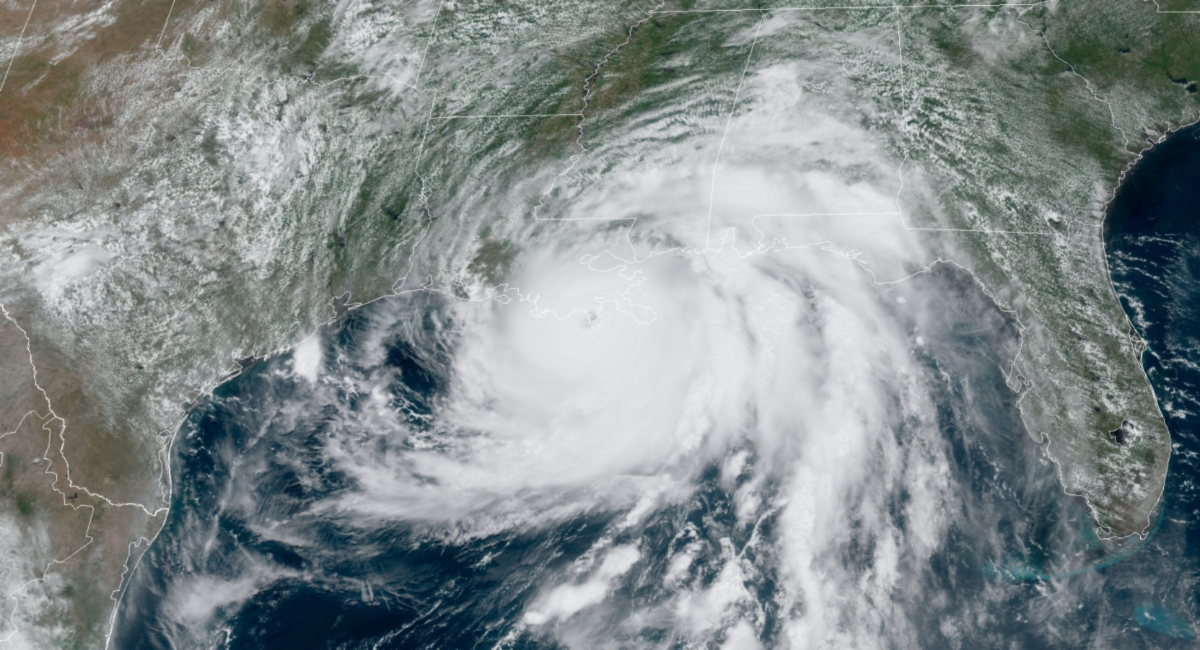
- Louisiana - $1.27 billion for floods and Hurricane Ida.
- Michigan - $12.03 million for severe storms.
- Mississippi - $8.4 million for Hurricane Ida.
- North Carolina - $7.97 million for Tropical Storm Fred.
- New Jersey - $228.34 million for Hurricane Ida.
- New York - $41.26 million for Hurricane Ida.
- Pennsylvania - $23.15 million for Hurricane Ida.
- Tennessee - $25.4 million for flooding.
- Texas - $26.39 million for severe ice storm.
- Washington - $18.64 million for flooding.
|
|
Cities receiving CDBG-DR funds include:
- Detroit - $57.59 million for severe storms.
- Dearborn, Michigan - $16.33 million.
- New York City - $187.97 million for Hurricane Ida.
- Philadelphia - $98.7 million for Hurricane Ida.
- Houston - $30.29 million for severe ice storm.
- Dallas - $24.43 million for severe ice storm.
- Fort Worth - $16.61 million for severe ice storm.
|
|
These funds will go to recover from and build resilience to natural disasters, including climate disasters, with a specific focus on low- and moderate-income populations. The funds are specified to be used for disaster relief, long-term recovery, restoration of infrastructure and housing, economic revitalization, and mitigation, in the most impacted and distressed areas.
With the March 22 allocations, HUD has now dispersed the remaining funds of the $5 billion appropriated in the Extending Government Funding and Delivering Emergency Assistance Act for CDBG-DR funds. In November 2021, HUD allocated more than $2 billion in CDBG-DR for 2020 disasters. In January 2022, HUD opened access to more than $2 billion.
|
|
Louisiana issues RFI for claim, financial management solution |
|
Louisiana – The Bureau of Health Services Financing in Louisiana is gathering input on modules for claim and encounter processing and financial management (CEP-FM) as it begins to transform the design of its current Medicaid Enterprise System from a single-vendor platform to a coordinated set of solutions.
Through a request for information (RFI), the bureau seeks public feedback on the development of a module that will result in increased interoperability and data exchange, real-time claim processing, monitoring, reporting, and financial management throughout Louisiana.
The CEP-FM module will be a claims processing solution that will adjudicate and determine reimbursement amounts for Medicaid Fee-for-Service health-care claims.
During adjudication, the solution will process service authorizations, third party liability, and calculate beneficiary liabilities including cost share. In addition, it will process and store encounter records and process capitation payments for the managed care entities.
The solution will be highly automated, configurable, modular, and process claims in real-time. It must include a member and provider call center, federal reporting, and financial reporting. The desired solution will be federally compliant and address all state specific needs, laws, and policies.
RFI responses are due by 3 p.m. local time April 11.
|
|
Iowa commits $100M to airport infrastructure fund |
|
Iowa – A $100 million investment by the state of Iowa will help launch the Iowa Commercial Aviation Infrastructure Fund that will support modernization and expansion projects at eight commercial airports in the state.
Eligible projects under this program include terminal construction and renovations, parking structure construction, and hangar construction.
The Iowa Commercial Aviation Infrastructure Fund will be administered by the Iowa Department of Transportation utilizing one-time federal funds from the American Rescue Plan Act (ARPA).
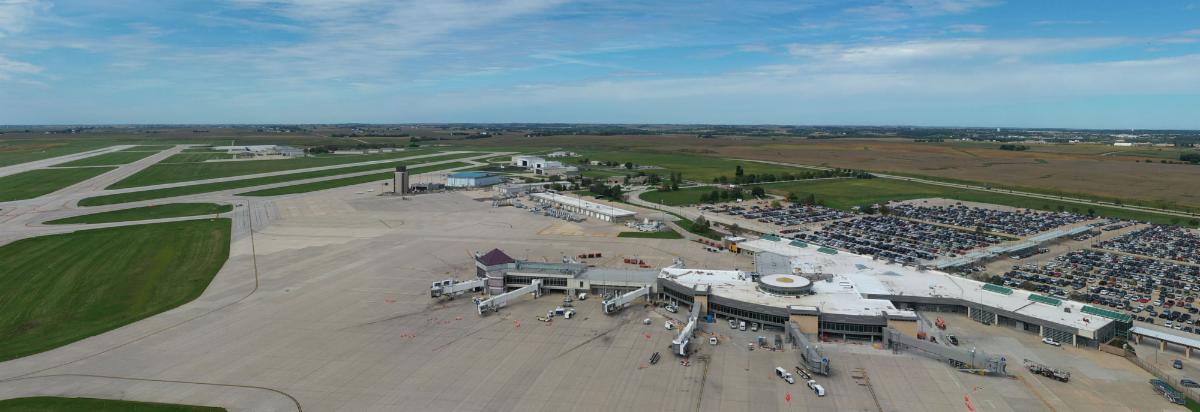
Des Moines International Airport stands to receive $58.78 million in ARPA grants that will contribute to its terminal construction project, and Eastern Iowa Airport in Cedar Rapids will get $28 million to put toward its terminal modernization project.
Eastern Iowa Airport has invested nearly $55 million through the first three phases of its Terminal Modernization Project. It has identified more than $50 million in additional improvements to match continued growth at the airport. Grants from the new fund will enable the completion of the fourth and final phase of improvements. Improvements are scheduled to begin in spring 2023.
The remaining commercial airports to receive funding are:
- Sioux City - $3.15 million.
- Dubuque - $2.78 million.
- Waterloo - $2.19 million.
- Fort Dodge - $1.58 million.
- Mason City - $1.57 million.
- Southeastern Iowa - $1.57 million.
Ninety percent of the funds will be granted based upon passenger numbers from 2019, and the other 10 percent will be split equally among the eight commercial airports.
|
|
Wyoming developing zero emission vehicle strategy |
|
Wyoming – In preparation to execute National Electric Vehicle Infrastructure (NEVI) formula funds and other program incentives, the state of Wyoming is developing a zero emission vehicle strategy.
State officials intend to use the funds to facilitate electric vehicle (EV) infrastructure development, especially charging stations, around the state.
The funding is part of the Bipartisan Infrastructure Law. The Wyoming Department of Transportation (WYDOT) is allocated $3.9 million in 2021 and expects $5 million each year for the next four years for a total of $23.96 million for EV infrastructure over five years.
Wyoming’s interstates have been designated as “Alternative Fuel Corridors,” and under the NEVI program must have infrastructure installed first. Corridor infrastructure must adhere to guidelines set by the NEVI Program Joint Office for charger efficiency, location, and accessibility. Once the interstate corridors are complete, remaining funding may be spent along other key routes to popular destinations such as Yellowstone National Park and Devil’s Tower National Monument.
WYDOT and other state officials have scheduled public meetings around the state in early April to gather public input as well as feedback from potential bidders and other interested parties.
|
|
Public safety, education leaders join SPI Consulting Team |
|
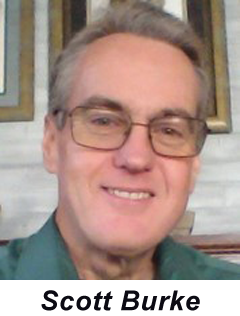
Strategic Partnerships Inc. (SPI) welcomes Scott Burke and his 25 plus years of public safety operations and administration to the team.
Scott served for 15 years as an EMS provider (EMT and Paramedic) and he overlapped approximately half that time as a police officer and law enforcement executive. He began his public service as a paramedic and worked with both the Portsmouth fire department and police department as they deployed “tactical” medics.
He then transferred to the City of Portsmouth Police Department as a full-time assignment and moved to his final position as Interim Chief of Police. During his law enforcement tenure, Scott served as a patrol officer, patrol sergeant, training director and criminal investigations commander. He had oversight for a $32 million budget and was responsible for hiring, onboarding, training new officers, and providing in-service continuing education.
Scott helped his department adopt new technology including cameras, digital photography, and more. As the in-house subject matter expert for technology, he led efforts to partner the department with the Naval Criminal Investigative Service’s LInX project.
His education background includes a bachelor’s degree from Virginia Tech and a graduate certificate from the University of Virginia for studies at the FBI National Academy. He continues to be an active member of the International Association of Chiefs of Police (IACP), recently concluding a 10-year appointment to the IACP’s Communication and Technology Committee. Scott is active in the Virginia Association of Chiefs of Police organization and works with the group’s legislative review committee. He maintains his involvement with the FBI National Academy Associates and the FBI’s regional InfraGard team. His law enforcement background will be of high value to the SPI Team.
|
|
David Westenhover joins the Strategic Partnerships Inc. (SPI) team after retiring from a successful career in K-12 education.
David most recently served as Superintendent of the high school of Alpena School District in Arkansas. Prior to holding that position, David served as K-12 Principal in the Jasper School District. Under his leadership, schools in the Jasper School District received seven academic awards from the Office for Educational Policy.
Overall, he served the students of Arkansas for 25 years. For 18 of those years, he held positions as a district or school administrator. His areas of responsibility included leadership and involvement in multiple areas of operations. He was responsible for financial and academic goals, student growth management, teacher development, community interactions, and coordination with boards to meet various other goals.
David received a Bachelor of Science in education from Arkansas Tech University. He earned a Master of Science and an Education Specialist degree in Educational Leadership from the University of Central Arkansas. The SPI Team welcomes his experience and expertise.
|
|
Virginia releases RFI for multi-cloud management services |
|
Virginia – The Virginia IT Agency (VITA) recently issued a request for information (RFI) on managed public cloud services in a multi-cloud environment.
VITA would like to better understand the current multi-platform managed cloud service offerings that are available in the market as well as the suppliers that provide these services.
In addition, the agency would like to understand how managed public cloud services are structured in the marketplace, including architecture/infrastructure, support, associated standards, and cost models.
Through the RFI, the agency would like to explore the various pricing models, architecture, management, automation, and self-service options. Staff are particularly interested in scalable models that may be leveraged for variable usage and volumes. They also are open to innovative recommendations from the supplier community.
The state’s current multi-cloud environment utilizes multiple cloud providers managed by a single provider. The current environment consists of over 300 servers across all providers. The expectation is that this usage will continue to grow, and the number of providers may increase.
With increased complexity and utilization, VITA would like to identify a provider with demonstrated experience and management capabilities that optimizes utilization leveraging the elastic and scalable solutions offered by the cloud platforms with enhanced management capabilities to include delegated self-service functions.
The deadline for RFI responses is 4 p.m. EST March 31.
|
|
Michigan moving I-375 Modernization Project to design phase |
|
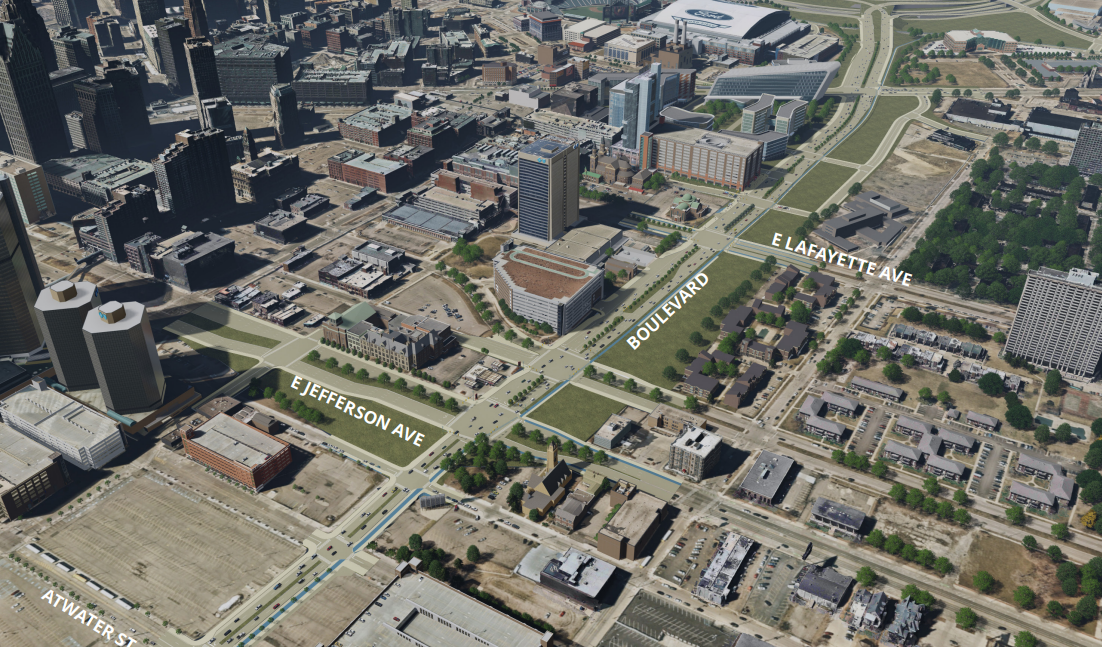
Michigan – The state of Michigan is advancing the Interstate 375 Modernization Project to replace the outdated freeway with an urban boulevard in Detroit.
After Michigan Department of Transportation (MDOT) concluded its environmental review process and found no significant impact, the estimated $270 million project will progress to the design phase this spring.
The selected alternative is a street-level boulevard that will begin south of the Interstate 75 interchange and continue to the Detroit River (Atwater Street), effectively using the city grid to disperse and collect traffic. It will open additional connections to the riverfront, Eastern Market, and Brush Park, and create a new local connector street from Eastern Market to Gratiot Avenue.
Improved nonmotorized facilities include a two-way cycle track on the east side of the boulevard connecting the riverfront to the Montcalm Street extension. The cycle track will extend west to Brush Street and east to Gratiot Avenue, where it will connect with the Dequindre Cut bicycle path.
More than 50 years ago, construction of I-375 demolished prominent black neighborhoods to make way for the freeway. Built through a thriving Hasting Street, the new I-375 opened in 1964 and created a barrier between the central business district in Detroit and the neighborhoods to the east, resulting in decades of underinvestment and a lack of opportunity for the predominantly black communities on the other side of the freeway.
Several blocks of commercial and residential buildings were also levelled to make way for the freeway and urban renewal. Although I-375 has a number of cross-bridges, many properties declined due to reduced connectivity and especially because the community's economic and residential base was substantially dislocated.
Today, almost three generations later, Michigan has an opportunity to eliminate this obstacle and provide easier access to better jobs, services, and quality of life to the residents of adjacent areas of persistent poverty. After nearly 60 years of use, I-375, the I-75/I-375 Interchange, and associated bridges are nearing the end of their useful service life and require modernization.
|
|
Leading Idaho transportation package devotes $200M to bridges |
|
Idaho – Gov. Brad Little signed part of his “Leading Idaho” transportation funding bill into law that will provide hundreds of millions of dollars in new transportation funding to clear out one-third of Idaho’s bridge maintenance backlog.
SB 1359 includes $210 million to help clear one-third of the backlog of the state’s deficient bridges, $6.4 million for air, $8 million for rail, $18.48 million to pay off debt for Grant Anticipation Revenue Vehicle (GARVEE) bond projects, $10 million for safe pedestrian crossings, and $10 million to build out a road at the Port of Lewiston.
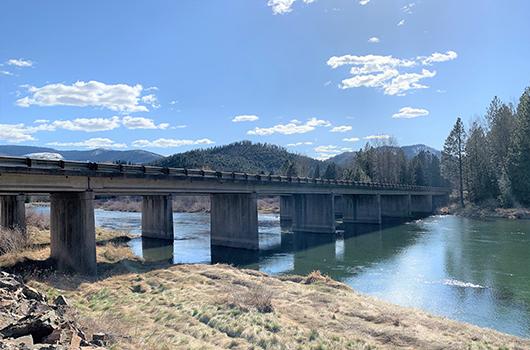
Replacement of bridges on Interstate 90 and Canyon Road near Cataldo are among the projects underway to address the state’s bridge maintenance backlog.
Idaho Transportation Department (ITD) plans to replace the structures on I-90 over the Coeur d’Alene River near milepost 40 in 2024. The bridges were built in 1964 and have reached the end of their design life. Final design on the I-90 bridges will begin in mid-2022, and construction bidding is scheduled for mid-2023.
East Side Highway District is exploring alternatives for the future of the Canyon Road Bridge located 400 feet upstream, which was built in 1936.
Little is expected to sign another transportation funding bill in the coming days that will include $200 million for road maintenance.
|
|
Washington child support division seeks input on data capture |
|
Washington – The state’s Division of Child Support (DCS) released a request for information (RFI) for solutions in the marketplace for image capture, intelligent data capture, remittance processing, and document management.
DCS is interested in a modern solution that will improve the efficiency of image processing and data capture from images and documents.
It is hoped that a new solution will not only receive images and documents from a variety of sources, but also further automate or assist in the process of identifying types of documents and in capturing data from them. Additional capabilities to use workflows and automate processes are desired.
Additionally, DCS has not implemented a document management system and is interested in software or services to act as the central point for document storage, retrieval, process workflows, and management for documents that are captured in these processes as well as outgoing documents created in form generation software.
DCS scans over 1 million items per year, and the processing of these items is considered mission critical.
The deadline for RFI responses is April 8.
|
|
North Carolina establishes Joint Cybersecurity Task Force |
|
North Carolina – Gov. Roy Cooper signed an executive order establishing the North Carolina Joint Cybersecurity Task Force to provide incident coordination, resource support, and technical assistance to state and local government agencies and educational entities.
The N.C. Department of Information Technology, N.C. Emergency Management, N.C. National Guard, and N.C. Local Government Information Systems Association Cybersecurity Strike Team form the task force.
In the order, North Carolina public and private sector Critical Infrastructure and Key Resources (CIKR) entities are strongly encouraged to work with the task force to help identify any vulnerabilities and to report significant cybersecurity incidents to the task force to limit the impacts from an incident and to coordinate an effective response.
Other state agencies, federal agencies, and additional stakeholders may partner with the task force as needed.
The order comes as cybersecurity threats are increasing in volume and sophistication, requiring a need to understand the threat landscape to prevent attacks and to protect the state’s information technology networks and critical infrastructure. to provide incident coordination, resource support, and technical assistance to state and local government agencies and educational entities.
The N.C. Department of Information Technology, N.C. Emergency Management, the N.C. National Guard, and the N.C. Local Government Information Systems Association Cybersecurity Strike Team make up the task force.
In the order, North Carolina public and private sector Critical Infrastructure and Key Resources (CIKR) entities are strongly encouraged to work with the task force to help identify any vulnerabilities and to report significant cybersecurity incidents to the task force to limit the impacts from an incident and to coordinate an effective response.
Other state agencies, federal agencies, and additional stakeholders may partner with the task force as needed.
The order comes as cybersecurity threats are increasing in volume and sophistication, requiring a need to understand the threat landscape to prevent attacks and to protect the state’s information technology networks and critical infrastructure.
|
|
DOE to assist underserved communities with energy storage |
|
Washington, D.C. – The Department of Energy (DOE) Office of Electricity Energy Storage Program has selected 14 communities to receive technical assistance from Pacific Northwest National Laboratory as part of the Energy Storage for Social Equity (ES4SE) Initiative.
Launched in September 2021 and funded by the Energy Storage Program, ES4SE supports underserved communities as they leverage energy storage as a means of increasing resilience and long-term affordability.
Selected as part of the first phase, these communities will receive technical support to better assess their energy challenges, evaluate solutions, and find partners to support the community in meeting its energy goals. Identified urban, rural, and tribal communities will receive technical assistance, equity assessments, and workforce analysis. Technical assistance may include energy, economic, and spatial analysis.
The selected participants are:
- Native Renewable, Flagstaff, Arizona.
- Cher-Ae Heights Indian Community and Western Energy Development, Trinidad, California.
- Ayika Solutions Incorporated, Atlanta, Georgia.
- Hoʻāhu Energy Cooperative Molokai, Kaunakakai, Hawaii.
- Together New Orleans, New Orleans, Louisiana.
- Honor the Earth, Callaway, Minnesota.
- Coast Electric Power Association, Kiln, Mississippi.
- Joule Community Power and Open Door Mission, Rochester, New York.
- Warm Springs Community Action Team, Warm Springs, Oregon.
- Rogue Climate, Coos Bay, Oregon.
- Coyote Steals Fire Energy Group, Pendleton, Oregon.
- Makah Tribe, Neah Bay, Washington.
- Klickitat Valley Health, Goldendale, Washington.
- Oneida Nation, Oneida, Wisconsin.
The second phase will focus on energy storage project development and deployment, where up to five communities within this group will be selected to begin installing and commissioning their projects.
Engineering support may include equipment sizing, identifying utility connections, identifying safety concerns, installation support, measurement, and validation to ensure project performance meets the original goals.
Nationally, more than 65 percent of low-income households face a high energy burden and more than 30 percent of all households have experienced some form of energy insecurity.
ES4SE was created to provide a solution to unreliable and expensive energy, contribute to an equitable clean energy transition, and bring economic prosperity to underserved communities.
|
|
New York – The Metropolitan Transportation Authority appointed Richard Davey as the next president of New York City Transit. Davey served in several high-ranking transit leadership posts in Massachusetts including secretary and CEO of the Massachusetts Department of Transportation and general manager for the Massachusetts Bay Transportation Authority.
California – The Long Beach Board of Harbor Commissioners appointed Tasha Higgins as director of program management at the Port of Long Beach. Higgins started at the port as assistant director of program management. Prior to that, she worked on various transportation improvement programs for agencies including Long Beach Transit, Los Angeles World Airports, the Los Angeles County Metropolitan Transportation Authority, and Caltrans.
Florida – The University of South Florida (USF) board of trustees unanimously voted for Rhea Law as the university’s president-elect on March 22, pending confirmation by the Florida Board of Governors next week. Law had been serving as USF’s interim president since August 2021. Previously, she was president, CEO, and chair of a Florida law firm.
New Mexico – The city of Albuquerque named Richard McCurley as director of aviation, overseeing Albuquerque International Sunport and the city’s general aviation airport, Double Eagle II. McCurley joined Sunport as deputy director in 2020 and had been serving as interim director since November 2021. Before that, he was chief of staff and interim senior vice president for the Rhode Island Airport Corporation. He also worked for the Houston Airport System for 29 years.
Illinois – The city of Chicago selected Sandra Blakemore as acting commissioner of the Chicago Department of Assets, Information, and Services. Blakemore previously served as Chicago’s managing deputy commissioner over finance, procurement, energy, and human resources. Before that, she was the city’s deputy commissioner of finance and administration as well as its vehicle fleet and facilities.
Minnesota – The city of Winona selected Chad Ubl as its new city manager on March 21. He had been serving as interim city manager since former City Manager Steve Sarvi vacated the position in October 2021. Ubl most recently served as assistant city manager for Winona. Before that, he was the city’s community services director.
|
|
|
|
Connect with SPI
Check out our social media links!
|
|
About Government Contracting Pipeline |
|
Strategic Partnerships, Inc.
Ph: 512-531-3900
|
|
Government Contracting Pipeline, a publication of Strategic Partnerships, Inc., is a free, weekly newsletter detailing important happenings nationwide and the premier source for federal, state, and local government news and contracting opportunities.
|
|
Help us share this message.
To ensure delivery and proper formatting of the newsletter, be sure to add editor@spartnerships.com to your safe senders list.
Otherwise, the newsletter may be flagged as spam and automatically routed to your junk e-mail folder.
|
|
© 2022 Strategic Partnerships, Inc. All rights reserved.
|
|
|
|
|
|
|
|