Volume 14, Issue 1 - Wednesday, January 5, 2022 |
|
By Mary Scott Nabers, CEO of Strategic Partnerships, Inc. |
|
What a year we just left behind! After living through 2020, we all hoped that 2021 was the year to bring normalcy back to our lives. It did not happen, so here we are again, entering a new year and hoping that 2022 will be the year we return to some degree of orderliness. We know it will happen … we are just not sure when.
Despite the virus and all its complications, the government marketplace continues to thrive more than could ever have been expected. Public officials throughout the country are launching new projects, upgrading technology, purchasing equipment, and investing in planning and design services. Upcoming opportunities for private-sector contractors are abundant.
Many jurisdictions have not yet spent all their Coronavirus Aid, Relief, and Economic Security (CARES) funding or the American Rescue Plan Act (ARPA) funding from the federal government. And, those same jurisdictions now are receiving Bipartisan Infrastructure Bill funding. The potential for even more state and local government funding looms large as legislators discuss the Build Back Better Act in Washington.
To say the government marketplace is ‘hot’ is a huge understatement. However, competition in the multimillion-dollar marketplace is keener than ever.
|
|
L.A. Metro to write legislature for $16.5B in transportation funding |
|
California – The Los Angeles County Metropolitan Transportation Authority (Metro) board of directors is seeking $16.5 billion in state transportation funding to achieve what the authority is calling a “Golden Opportunity Package” to improve mobility and quality of life.
Metro staff anticipate the county’s infrastructure will need to accommodate tens of thousands of visitors from around the world in the coming years.
Los Angeles will host major events including Super Bowl LVI on February 13, the Major League Baseball All-Star Game on July 19, and the 2028 Summer Olympic and Paralympic Games.
In order to serve the expected increase in system users, Metro is requesting $10 billion for public transit capital projects. Funding could be matched with local resources, as well as resources from the Infrastructure Investment and Jobs Act.
Projects that could be funded from this allocation include such priorities as:
- Bus Rapid Transit/Bus-Only Lanes Countywide Expansion.
- East San Fernando Valley Transit Corridor.
- Eastside Transit Corridor Phase 2.
- Foothill Extension of the Metro Gold Line.
- Green Line Extension to Torrance.
- Inglewood Transit Connector Project.
- Sepulveda Transit Corridor.
- Metro Green Line Rehabilitation.
- West Santa Ana Branch Transit Corridor to Downtown Los Angeles.
Metro is seeking an additional $2.5 billion for projects that support the 2028 Summer Olympic and Paralympic Games such as adding capacity at transit stations and transit system bottlenecks, expanding bus-only lanes on major arterial streets countywide, and investing in zero emissions charging infrastructure.
The authority also is advocating for $1 billion to go toward a new California Next Generation High Speed Rail Program. This funding would support Metrolink’s SCORE program – helping to achieve the California State Rail Plan, Antelope Valley Rail Line improvements, and high-speed rail projects in Los Angeles County.
This category could fund projects such as capacity and safety enhancements on Metrolink’s entire system, double tracking on corridors such as the Antelope Valley Line, and construction of a Palmdale to Burbank Tunnel.
Metro’s board of directors was set to act on these funding requests and more at its January 5 meeting.
|
|
Rail initiative to connect Port of Mobile to Birmingham |
|
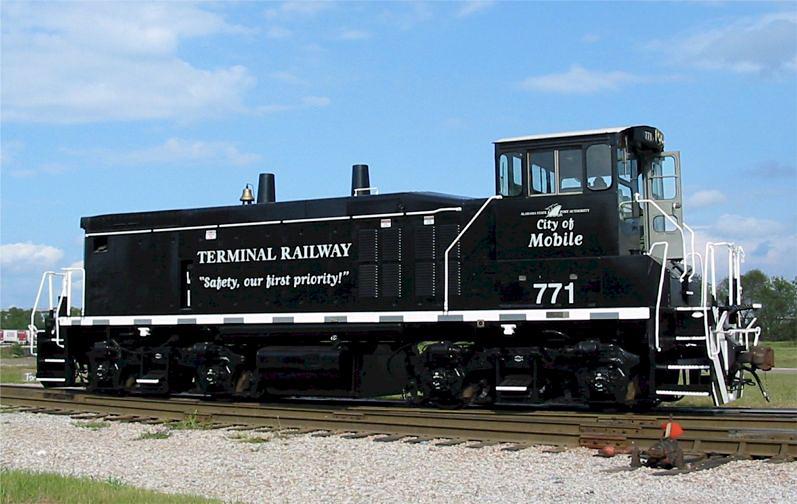
Alabama – Gov. Kay Ivey on January 4 announced the creation of the A-USA Corridor, a proposed $231.6 million program of rail projects supported by a public-private partnership (P3).
The first phase of the corridor initiative involves a $71.6 million project to link the Port of Mobile with the McCalla Intermodal Facility near Birmingham by making 12 specific track, signal and yard improvements on rail lines between Mobile, Selma, and Birmingham.
This 280-mile rail corridor also will link mega economic development sites in Etowah (Little Canoe Creek), Shelby (Calera), and Washington/Mobile (Calvert) counties, each totaling more than 1,000 acres. A fourth site in Jefferson County (McCalla) will see the development of a 104-acre site with up to a million square feet of warehousing under roof.
More than half of the project will be funded by a private railroad company. Alabama is investing $5 million into the project, with the remainder coming from present and future federal Consolidated Rail Infrastructure and Safety Improvements Program (CRISI) grants through the Alabama Department of Transportation.
|
|
Washington seeks input on capitol incident management solution |
|
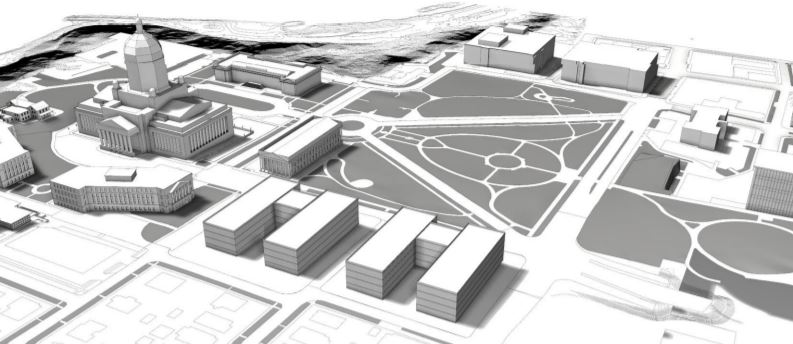
Washington – The state’s Department of Enterprise Services issued a request for information (RFI) for vendor input on available incident management and reporting solutions to support operational security and emergency management, as well as risk mitigation for the Washington State Capitol Campus.
The 468-acre Capitol Campus is a destination location that serves more than 7,500 state employees, 49 Senators, 98 state House members, nine Supreme Court justices, the governor, lieutenant governor, and several state cabinet offices.
It includes 30 buildings with more than 3 million square feet, five parking garages with more than 1.6 million square feet, and six public parks.
The desired solution is for a Criminal Justice Information Services-compliant emergency, operational, campus, and physical security system. The department is not seeking information technology security.
Among the proposed system requirements of the proposed system is working easily in a modern computing environment using current technologies including mobile devices. The system must be highly available and reliable. Over the life of the system, the department’s computing environment must remain secure, meaning it will rapidly update its user workstations with software vendor patches.
RFI submissions are due by 5 p.m. PST January 31.
|
|
MARTA submits $300M bus rapid transit project for federal grant |
|
Georgia – A Bus Rapid Transit (BRT) project at the Metropolitan Atlanta Rapid Transit Authority (MARTA) has entered a federal funding program.
MARTA has requested that the Federal Transit Administration (FTA) grant entry of its estimated $300 million Clayton Southlake BRT into the project development phase of the Capital Investment Grant (CIG) program.
The BRT project will provide high-capacity transit service connecting the College Park MARTA Station to several destinations in Clayton County including Airport Gateway, Shops of Riverdale, Southern Regional Medical Center campus, Mount Zion commercial corridor, and Southlake Mall.
Features of the BRT system will be similar to those found in rail investments including dedicated transit lanes, more frequent service, BRT-focused stations, and transit-oriented development opportunities.
The project also will include 13 new BRT stations with offboard fare collection, the purchase of 10 BRT electric buses and associated electric vehicle charging infrastructure, and the installation of transit signal priority equipment at key intersections.
MARTA received support from the Clayton County Board of Commissioners in November 2021 to advance the project, and because the CIG program is competitive and timely entry into the pipeline is critical to success, the MARTA board of directors voted to move on the project in December 2021.
If entry into project development is granted, next steps include CIG budget request to Congress in August, completion of the National Environmental Policy Act (NEPA) in December 2023, and construction underway in summer 2024 with an operational date in 2026.
|
|
Utah Inland Port Authority planning $112M transloading facility |
|
Utah – The Utah Inland Port Authority (UIPA) secured $150 million in bond funding, which gives the authority approximately $112 million in revenue to kick off proposed projects including a transloading/cross-dock facility.
Adjacent to a railyard, the new facility will offer international and domestic cargo stakeholders a cost-effective and efficient inland alternative option by leveraging existing infrastructure and intermodal rail hub which is near the rail ramp in Salt Lake City.
Through an investment-grade business case analysis, UIPA has identified at minimum the three California port gateways of Los Angeles, Long Beach, and Oakland for the transloading facility to compete for international cargo volumes. Additional lanes have been identified as cargo begins to move inland.
As UIPA builds the transloading facility, it will focus on sustainability and smart logistics actions that include sustainable construction technology, increased water and energy efficiency, reduced waste and emissions, using eco-friendly building materials, and improving indoor environmental quality. The equipment used inside the building will be automated, and equipment outside the building, under UIPA control, will be zero or near zero emission.
The transloading facility will shift cargo containers from truck to rail, taking three trucks off the road between California and Salt Lake City by consolidating the contents of three ocean containers into two domestic containers.
An associated truck parking facility that was funded as part of the 2022 budget will also provide auxiliary power for truck drivers, reducing idling trucks overnight on Salt Lake City side streets.
The transloading facility is one of six new projects approved by UIPA’s board of directors in October 2021 to reduce current air emissions and improve rail access for Utah businesses. The infrastructure projects are focused in UIPA’s current jurisdictional area in the northwest of the Salt Lake Valley.
Other projects being planned include construction of a renewable energy refueling station, acquisition of a rail spur and test track, and development of an employee dining and day care with an industrial kitchen.
The authority also plans to expand the 7200 West roadway from State Road 201 to 700 North and purchase an easement for development of the North Temple Rail Line to open rail access north of Interstate 80.
|
|
States recognized for data, evidence achievements |
|
Washington, D.C. – During a virtual event co-hosted by the National Governors Association, eight states were honored for using evidence and data to protect the health and safety of their residents, to accelerate their economic recovery, and to advance equity.
The 2021 Invest in What Works State Standard of Excellence recognized Colorado, Minnesota, North Carolina, Ohio, Oregon, Tennessee, Utah, and Washington – and four honor roll states of Massachusetts, New Jersey, Pennsylvania, and Rhode Island – for using evidence and data to deliver better results for residents.
Results for America’s analysis found innovative examples of how states are using evidence and data to deliver better results. Here are a few initiatives that garnered recognition:
Colorado’s governor and state legislature are using a five-step evidence continuum to evaluate budget requests, and one-third of all budget requests during the evaluation period were assessed based on evidence.
Washington’s Department of Children, Youth, and Families is shifting its entire client services portfolio – $500 million annually – to performance-based contracts, a key equity priority for the department.
Minnesota is spending 1 percent of the budget of its opioid epidemic response grant program funds to evaluate sound investments.
New Mexico launched a first-of-its-kind LegisStat initiative – led by a joint state House-Senate Committee – to address the root causes of performance challenges.
Utah, North Carolina, and Minnesota used disaggregated data and evidence-informed strategies to improve equity in vaccine distribution. Utah increased the vaccination rate among its Hispanic population by 463 percent.
Tennessee’s evidence requirements — which were included in cost-increase and reduction requests — helped the state make informed choices about how to balance its budget.
Rhode Island’s budget requests at the Office of Management and Budget must include the evidence base for any new and expanded programs in FY21.
North Carolina and Colorado are providing grants to state agencies to conduct research and evaluations that will help guide policy and program decisions.
This year’s State Standard of Excellence showcases 202 examples of data-driven and evidence-based practices, policies, programs, and systems in 36 states across the country – a 20 percent increase from 2020.
|
|
New Hampshire exploring enterprise licensing, permitting solutions |
|
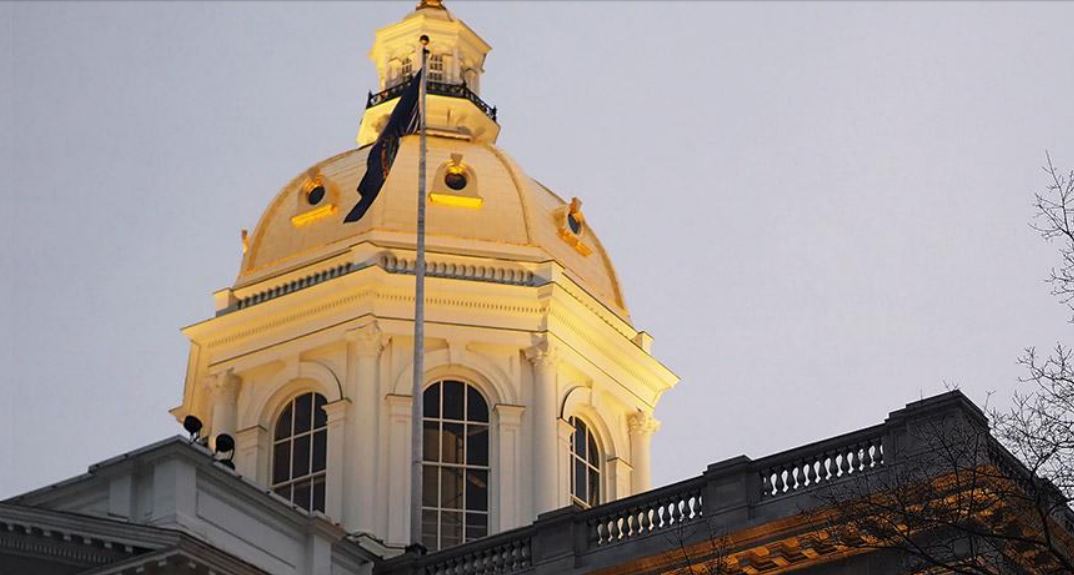
New Hampshire – The Department of Information Technology in New Hampshire is seeking information from companies that offer an enterprise licensing and permitting system.
Desired features include occupational licensing, facility licensing, inspections, permitting, file attachments, enforcement, and electronic and printed communication with licensees.
Using information collected from the request for information (RFI), the state plans to create a request for proposals for an enterprise license and permit management system.
Currently, the state is licensing 61 professions in one enterprise system. Types of licenses regulated are both personal and business. The current database is SQL Server. Now, permitting is not part of the current system.
The current system holds licensing data and related inspection and enforcement data. It allows documents indexed to the different types of records such as license, person, enforcement, and inspections.
The deadline for RFI submissions is January 28.
|
|
Dayton airport launches $40M in concourse improvements |
|
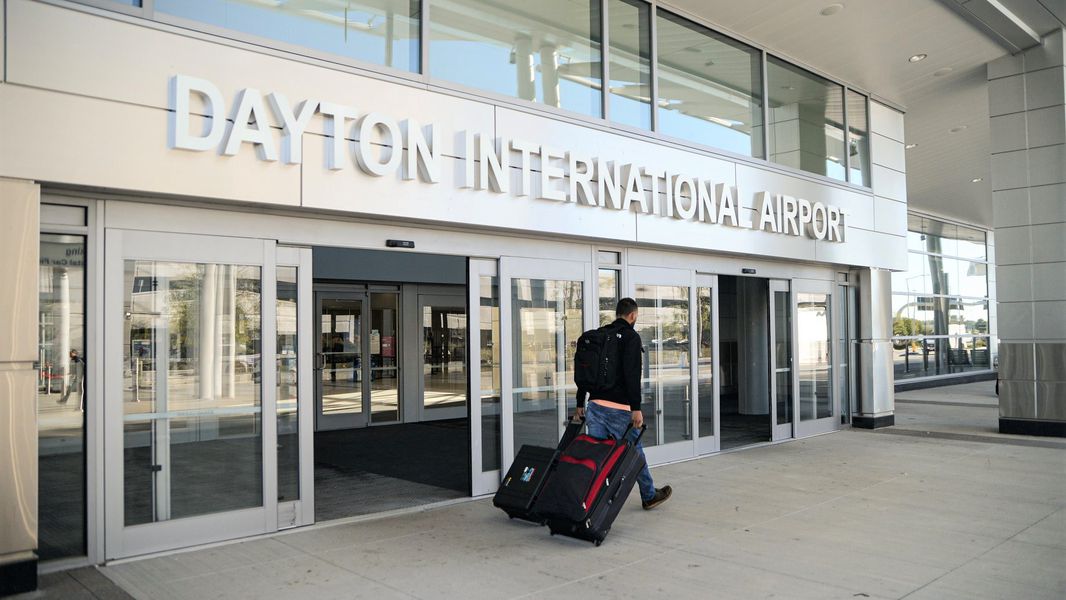
Ohio – Dayton International Airport is planning $40 million in concourse connector improvements to shorten walking distances for passengers to reach gates.
The project is one of several initiatives, including work on concessions areas, that comprise the second phase of the airport’s Terminal Modernization Project.
This phase of the master plan will begin to change the way passengers make their way to the concourses. After leaving security, travelers will take new escalators or stairs to the second floor, putting them on the same level as the concourses.
Remodeling and additions will provide new spaces for restaurants, stores, and other airport amenities while providing 300-foot connections to Concourses A and B, shortened from the current 550-foot-long connectors.
The environment is envisioned to be spacious with a large expanse of glass that provides a view of the aircraft as they are docked and the airfield beyond. The elevated configuration also allows baggage handling vehicles to pass underneath, for more direct access to the baggage handling area.
|
|
Nashville lines up Next Great Neighborhood with boulevard project |
|
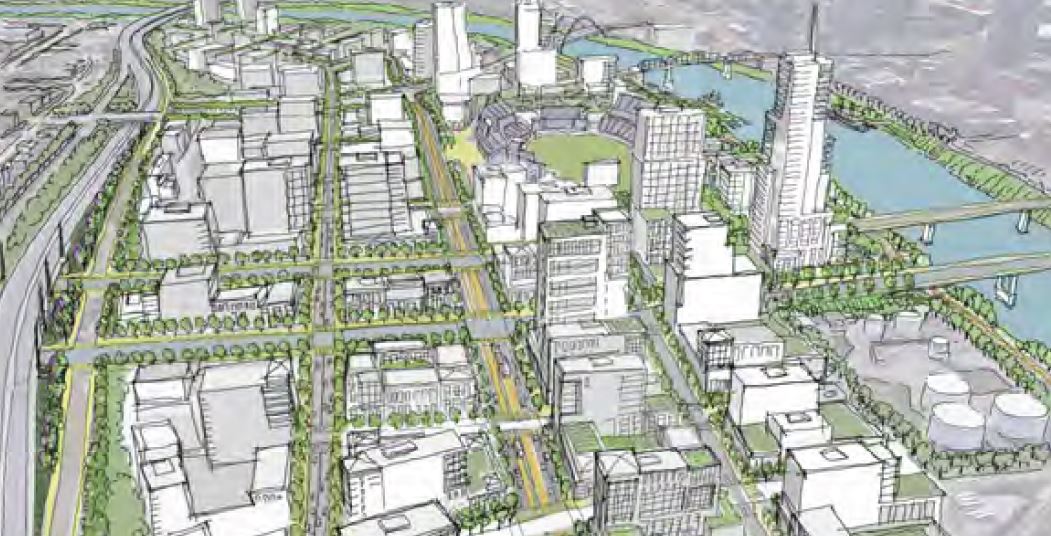
Tennessee – The city of Nashville has taken action to create its “Next Great Neighborhood” on the East Bank of the Cumberland River by approving a $564 million capital spending plan including the construction of a key boulevard.
The Greater Nashville Regional Council (GNRC) in late December 2021 approved a partnership between the departments of transportation for both Nashville (NDOT) and the state for needed right of way acquisition to construct a central, north-south boulevard in the area.
Serving as a backbone for additional connector streets, the boulevard will include all modes of transportation – with an emphasis on pedestrians, cyclists, and public transit options – while focusing on improving safety and navigation and connecting to the larger Middle Tennessee region.
The Nashville mayor’s vision for roughly 338 acres – bounded by Interstate 24 to the east and south, the Cumberland River to the west, and Jefferson Street to the north – is a neighborhood that will serve all residents, with a city greenspace along the riverfront for pedestrians and bicyclists, a boulevard that provides multimodal access, and places for residents to live and work.
Now the focus of a city study, the area is currently characterized by industrial development, sports facilities, asphalt parking areas, and other large-scale infrastructure that primarily serves vehicle traffic.
Metro Planning, NDOT and the Metro Development and Housing Agency are in the first phase of the East Bank study, which is one of the largest and most complex undertaken by Metro government.
Metro Planning is now incorporating public feedback into a vision framework document to present to the Metro Planning Commission in coming months.
|
|
Kentucky seeks juvenile case management system information |
|
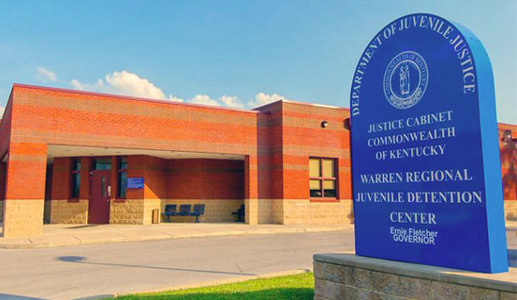
Kentucky – The Department of Juvenile Justice (DJJ) in Kentucky released a request for information (RFI) to obtain information and suggestions regarding the acquisition of a fully integrated juvenile case management system.
Department officials hope to gather information about potential software or cloud service product solutions. Said solution is to enable the DJJ to manage all aspects of day-to-day care and management of youth in a variety of residential and nonresidential settings.
DJJ currently relies heavily upon two major legacy applications and 20-plus adjunct applications to help manage the day-to-day processes of managing the youth in its care. These legacy applications have been built in house and modified over the years to keep up with the changing needs of the agency.
At this time, DJJ is looking to simplify its case management and daily operations solutions into a more cohesive single source tool to increase efficiencies, reduce duplicate data entry, and deploy technology on a more modern flexible base.
RFI responses are due by 3:30 p.m. EST on March 1.
|
|
NCDOT to host DBE outreach events for business opportunities |
|
North Carolina – In partnership with the Office of Civil Rights, the North Carolina Department of Transportation (NCDOT) will host a second round of outreach events in all 14 highway divisions to promote business opportunities for Disadvantaged Business Enterprises (DBEs).
Odd-numbered divisions will host their outreach events on January 22; even-number divisions will hold their events on January 29. All events will be from 10 a.m.-noon.
Hundreds of small, woman-owned, or minority-owned business firms representing all types of industries participated in the first several outreach events held on Saturdays since June 2021.
NCDOT’s Division of Highways advertises and awards numerous contracts each year for all sorts of transportation work. Each project is an opportunity for NCDOT to encourage DBE participation and provide equitable and balanced access for these businesses to compete on contracts.
The department has multiple contract opportunities statewide, including construction, maintenance, emergency work, and traffic control.
Highway division staff will be on hand during these events to help the owners of small, minority, or woman-owned firms learn about how they can do business with NCDOT.
|
|
Virginia county eyes P3s for cellular coverage expansion |
|
Virginia – Grayson County is exploring public-private partnership (P3) options for the purpose of developing infrastructure solutions to expand cellular coverage.
The county is interested in building infrastructure that could be used as backhaul or middle-mile connectivity points to enable local broadband providers’ last-mile distribution connectivity to their subscribers in a technology neutral way.
These solutions also may include last-mile network facilities that directly pass unserved and underserved homes, businesses, and community institutions.
To that effect, the county released a request for information (RFI) for exploring strategies for expanding cellular coverage, and/or private-sector co-investment strategies.
These opportunities can involve collaboration to deploy cellular infrastructure, including planning, investment, build-out, network operations and maintenance, marketing, and other advanced services.
The county is seeking creative solutions for the purposes of construction, operations, and maintenance of a more reliable cellular infrastructure. This includes expansion of cellular connectivity in areas of Grayson County for businesses and residents.
In 2018 Grayson County contracted an assessment of broadband access throughout the county and that produced recommendations for how to improve broadband services. The assessment was based on broadband as defined as 25Mbps/3 and considered all fixed access below that speed as “unserved.”
Based on the 25Mbps/3 definition and additional data, 57 percent of the county was unserved, more than 50 percent of the county’s public safety facilities were unserved, and when compared Grayson’s neighbors, the county had the least connectivity in the region.
RFI responses are due 5 p.m. EST January 17.
|
|
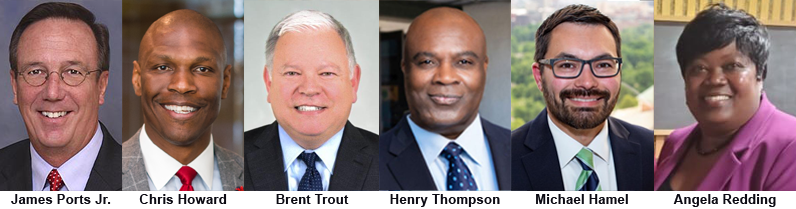
Maryland – Gov. Larry Hogan appointed James Ports Jr. as secretary of the Maryland Department of Transportation (MDOT). He will succeed Secretary Greg Slater who accepted a position with another state. Ports currently serves as executive director of the Maryland Transportation Authority. Before that, he was MDOT’s deputy secretary and deputy administrator for the National Highway Traffic Safety Administration.
Arizona – Robert Morris University President Chris Howard will join Arizona State University (ASU) as executive vice president and chief operating officer of the ASU Enterprise, effective in February. Prior to his appointment at Robert Morris University, Howard was the president of Hampden-Sydney College and vice president for leadership and strategic initiatives at the University of Oklahoma.
North Carolina – Harnett County commissioners appointed Brent Trout as the new county manager, effective January 13. He will take over from Interim County Manager George Wood. Trout most recently served as city manager for Topeka, Kansas. Before that, he was city administrator/clerk for the Iowa cities of Bancroft, Eagle Grove, Boone, and Mason City.
California – The city of Fresno selected Henry Thompson as its new director of aviation. Thompson has more than 35 years of aviation experience. He rose through the ranks at San Francisco International Airport and Mineta-San Jose International Airport. Most recently, he served as director of Santa Barbara Airport.
Massachusetts – The city of Worcester named Michael Hamel as its new chief information officer, effective January 10. He will succeed Eileen Cazaropoul who retired in May 2021. Hamel most recently served as chief of enterprise applications for the city of Boston. Before that, he was chief engagement officer for the state of Massachusetts.
Georgia – The Cordele City Commission appointed Angela Henderson Redding as the new city manager. She will succeed City Manager Roland McCarthy. Redding is currently the city manager of Monticello and has 20 years of experience as a management analyst.
|
|
|
|
Connect with SPI
Check out our social media links!
|
|
About Government Contracting Pipeline |
|
Strategic Partnerships, Inc.
Ph: 512-531-3900
|
|
Government Contracting Pipeline, a publication of Strategic Partnerships, Inc., is a free, weekly newsletter detailing important happenings nationwide and the premier source for federal, state, and local government news and contracting opportunities.
|
|
Help us share this message.
To ensure delivery and proper formatting of the newsletter, be sure to add editor@spartnerships.com to your safe senders list.
Otherwise, the newsletter may be flagged as spam and automatically routed to your junk e-mail folder.
|
|
© 2022 Strategic Partnerships, Inc. All rights reserved.
|
|
|
|
|
|
|
|