Volume 13, Issue 44 - Wednesday, November 3, 2021 |
|
By Mary Scott Nabers, CEO of Strategic Partnerships, Inc. |
|
For hundreds of years, the U.S. Army Corps of Engineers (USACE) has overseen some of the country’s most monumental civil works – projects that improved waterway passages, conserved the environment, mitigated flooding, and, ultimately, made the nation more livable. The sprawling scope of USACE projects has almost always depended on assistance from private sector contractors. And as USACE continues to carry out its mission of civil safety, it will just as surely continue needing private sector expertise. Newly announced opportunities to contract with USACE clearly affirm this.
Along the midwestern stretch of the Mississippi River in Missouri several new USACE opportunities are emerging. In early 2022, the Kansas City District of USACE will oversee a solicitation for a $10 million project that will require a construction partner to deliver a Remote Inspection Facility for the National Geospatial-Intelligence Agency (NGA) in St. Louis. Work is slated to begin in 2022 and, once completed, the facility will be the home of all vehicle and cargo inspections.
Other modernization projects related to the NGA are planned. One effort will include construction of an Access Control Point facility and the cost projection exceeds $10 million. The work will extend over two years, beginning with an anticipated start date in 2022.
In October, USACE announced plans to contract work for a Coastal Storm Risk Management initiative, which includes projects at two sites in North Carolina to stabilize the state’s shorefront. The projects are designed to distribute over 1.6 million cubic yards of sand between the ocean shore of Kure Beach and the beachfront along Carolina Beach. Each project has been assigned a prospective budget between $8 million and $10 million. The work will begin in the designated ‘environmental window’ for sand-dredging which falls between November 2021 and April 2022.
|
|
USDOT, California address supply chain woes with $5B investment |
|
California – In response to supply chain disruptions, the state of California and the U.S. Department of Transportation (USDOT) entered a strategic partnership to finance $5 billion in infrastructure improvements and facilitate innovative projects at seaports and other ports of entry.
The agreement allows California to expedite work on a network of related projects – rather than using a piecemeal approach – that collectively will help grow the economy, protect the environment, facilitate the movement of imports and exports, and modernize supply chain processes to create resilience throughout the trade corridors of California and the U.S., including around San Pedro Bay and the Inland Empire.
Under the Emerging Projects Agreement, the Build America Bureau at USDOT will support the California State Transportation Agency (CalSTA) in developing California infrastructure projects designed to improve the capacity and resiliency of the goods movement chain and will assist project sponsors in exploring innovative financing opportunities for billions in infrastructure investment, in part through the USDOT credit assistance programs Transportation Infrastructure Finance and Innovation Act (TIFIA) and Railroad Rehabilitation and Improvement Financing (RRIF).
Projects that could receive support through this agreement include:
- Port-specific upgrades.
- Expanding capacity for freight rail.
- Developing inland port facilities for increased warehouse storage.
- Railyard and truck electrification.
- Highway upgrades to improve truck travel times.
- Grade-separated crossings to reduce the number of rail-street intersections and improve safety and efficiency.
- Land ports of entry to expand trade capacity and cross-border commerce.
- Other eligible projects of critical importance identified by CalSTA.
Prior to announcing the partnership, California Gov. Gavin Newsom issued an executive order that directs state agencies to identify additional ways to alleviate congestion at California ports.
California’s recently enacted budget includes $250 million for ports, $280 million for infrastructure projects at and around the Port of Oakland, and $1.3 billion over three years for zero-emission trucks, transit buses and school buses, including the deployment of more than 1,000 zero-emission port drayage trucks.
|
|
Survey: Local governments to use ARPA funds for infrastructure |
|
Washington, D.C. – The International City/County Management Association (ICMA) surveyed local government chief administrative officers this fall about their priorities for utilizing the American Rescue Plan Act (ARPA)’s Local Fiscal Recovery Funds (FRF).
Nearly 600 town, city, and county managers responded. Responses include local governments with populations ranging from less than 2,500 to over one million; two-thirds came from communities of 25,000 or fewer residents, which fall under the U.S. Department of Treasury definition of Nonentitlement Units (NEUs) designating local governments typically serving a population of under 50,000. Counties and metropolitan cities constitute the majority of Direct FRF recipients.
Key findings include:
- Infrastructure was the top investment priority for communities of all sizes, prioritized by 84 percent of respondents. Within this category, most anticipated projects and priorities concern water and sewer infrastructure.
- Approximately half of all respondents anticipate replacing lost public sector revenue.
- Local governments planning public health expenditures are overwhelmingly counties.
- Broadband infrastructure is being considered by 45 percent of direct recipients and 25 percent of smaller communities/NEUs. Broadband interest is especially high among responding counties.
- Nearly half of overall respondents anticipate hiring or designating coordinators for overall planning and management of these funds.
Overall, one-third of respondents are considering regional collaboration on a project or investment. Regional collaboration is expected most frequently in ICMA’s Mountain Plains region and by counties nationwide.
|
|
New Jersey seeks input on accounting system modernization |
|
New Jersey – The Office of Information Technology for the state of New Jersey is gathering input through a request for information (RFI) for solutions that could support the modernization of the statewide government accounting system.
About 1,500 users statewide conduct approximately 6,000 daily transactions on a system that is operating on a legacy mainframe with many outdated or external applications.
The office is interested in a modern low-code or no-code statewide government account system that can interface with numerous entities and systems such as financial institutions and other computer applications. Information would be useful regarding commercial off the shelf (COTS) solutions that could potentially meet this need.
RFI submissions are due by 3 p.m. EST November 12.
|
|
Redmond planning to replace facility with $45M wetland complex |
|
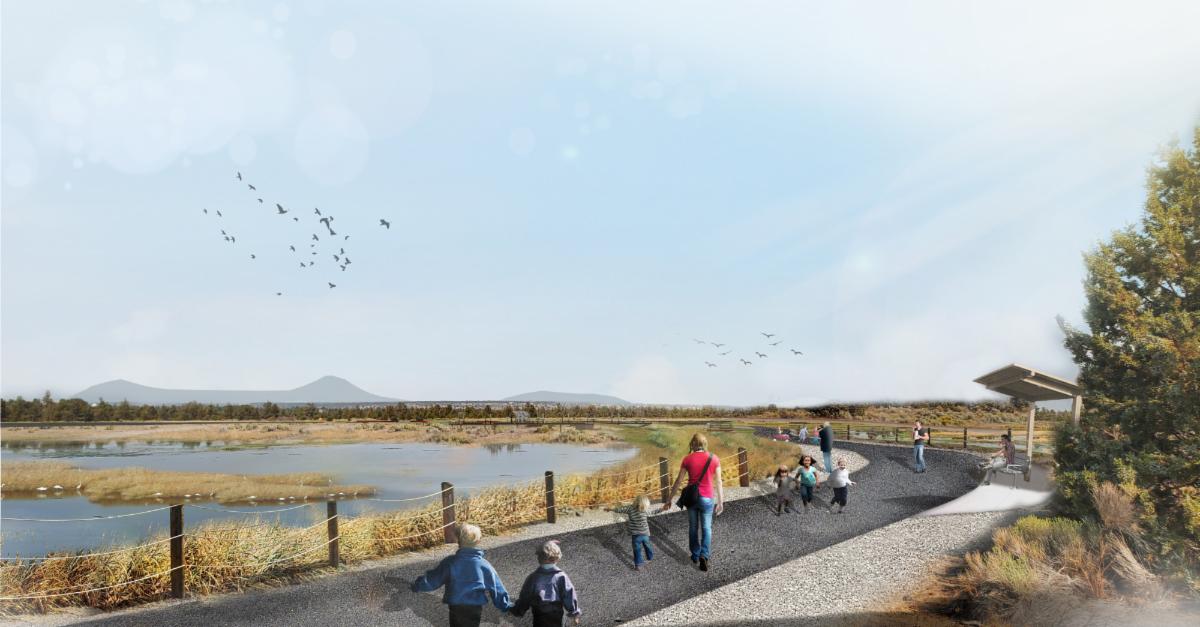
Oregon – City of Redmond officials are in the first phase of preliminary design for an estimated $45 million wetland complex to meet the growing population’s needs.
The expansion will relocate the city’s main Water Pollution and Control Facility to a 30-acre site outside city limits where Redmond currently repurposes and discharges all of its treated wastewater effluent and biosolids.
Proposed improvements will include:
- New operations facilities.
- Primary treatment provided with headworks screening.
- Aerated lagoon system for secondary treatment.
- Lined treatment wetlands for effluent polishing.
- Unlined wetlands for effluent disposal.
The complex will comprise pretreatment screening at the headworks, a series of lagoons, and sodium hypochlorite disinfection with options for disposing treated water by employing irrigation or sending it to treatment wetlands and then disposal wetlands.
Wildlife habitats, walking trails, and picnic areas are among the features planned for the complex.
The first phase of design is expected to be completed in February 2022 followed by a nine-month final design process. Redmond officials anticipate beginning construction in February 2023 and completing the project by 2025.
|
|
New county library-museum to anchor downtown Wilmington |
|
North Carolina – Designs are underway for New Hanover County’s plans to build a county building for a new public library next to the Cape Fear Museum as part of the “Project Grace” redevelopment project.
The county is redeveloping a 3-acre county-owned block in downtown Wilmington that will transform the county’s downtown Public Library, a parking deck, and several underutilized surface parking lots into a purpose-built library adjacent to the museum.
The new facility will anchor cultural resources in downtown Wilmington, meet the specific and unique needs of both the library and museum, create new synergy in services, and enhance the visitor’s experience.
New library space will house adult services, children services, and local history services and allow for additional space for enhanced teen and tween services. Additionally, it will feature two outdoor reading terraces and incorporate natural light throughout to ensure it is a welcoming and open space.
The museum experience will be enhanced with a planetarium/immersive theater, gallery for Cape Fear Stories, health and nutrition gallery, Science Matters gallery, outdoor exhibit space, and changing gallery to accommodate a wider range of traveling exhibits.
The building will also have shared multi-purpose space that the library and museum can both use for additional programming opportunities. Outdoor space will be devoted for the museum and for community celebrations and meetings.
Once the new library and museum are constructed, private development will be added to the south side of the block to complement the new library and museum.
With schematic design complete, the development team will begin working closely with a landscape architect, an exhibit designer for the museum exhibits, a structural engineer for the building, and other disciplines to ensure the original vision is achieved. This process will likely take through January 2022.
|
|
Higher education veterans join SPI Consulting Team |
|
Strategic Partnerships Inc. (SPI) Consultant Jim Murdock is an experienced higher education administrator with substantial financial acumen gained over 45 years of diversified management positions in central administration and academic units.
Jim began his professional higher education career at the regional campus of the University of Michigan-Flint (U-M). He subsequently served the university as chief financial officer (CFO) and assistant dean for finance and planning for the Ross School of Business for 23 years. In that role, he participated in the planning and construction of several academic and auxiliary enterprise facilities.
After retiring from U-M, Jim served in several interim vice president for finance and controller positions for the Registry of College Presidents of Peabody, Massachusetts and the Association for Governing Boards (AGB) in Washington, D.C. He recently completed a six-month assignment with the Florida Institute of Technology as its interim controller and interim assistant to the CFO.
Jim also held the position of interim vice president for finance and administration of Marygrove College in Detroit, Michigan. In that role, he was the chief financial and administrative officer for the campus, supervising the units of finance, business operations, budget, human resources, facilities management, public safety, and information technology.
His other interim assignments included positions as the vice chancellor for fiscal affairs at the University of Indiana-South Bend and at Antioch College as interim CFO-controller. In 2020, he served three months for AGB as the interim CFO for Southwestern College in Winfield, Kansas.
Throughout his career, Jim was a member of the Society for College and University Planning where he served multiple terms as a board member and treasurer. He was the 2004 recipient of SCUP’s Distinguished Service Award.
Jim holds a bachelor’s degree in economics from Muskingum University and his Master of Business Administration from the Wharton Graduate School of the University of Pennsylvania. He completed all doctoral coursework at the Center for the Study of Higher and Postsecondary Education at U-M.
|
|
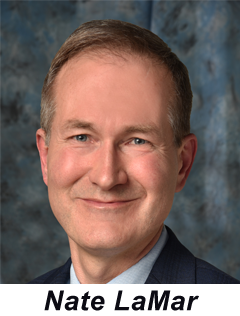
Strategic Partnerships Inc. (SPI) Consultant Nate LaMar is a multilingual international business development executive and government relations consultant. He has spent 24 years in international management capacities and has provided government relations services. He currently serves as a director of the Henry County Rural Electric Membership Cooperative. He also is an occasional university guest lecturer.
A former elected official, Nate served as president of Henry County Council in Indiana and on Indiana’s State Workforce Innovation Council. Before that, he was board president of the Eastern Indiana Development District and was elected as one of two board members representing the Great Lakes states on the National Association of District Export Councils (NADEC), a public-private partnership of the U.S. Department of Commerce. He now serves NADEC as an Advisory Board member.
Nate’s areas of expertise include K-12 education, higher education, rural issues, economic development, and working with Regional Planning Organizations.
While on U.S. Army active duty, he served in Germany, Jordan, the Pentagon, and had other assignments. He now serves as a West Point recruiter for East, Central, and Southeastern Indiana.
Nate earned a bachelor’s in Middle Eastern studies and general engineering from the U.S. Military Academy at West Point, a Master of Business Administration in international management from the Thunderbird School of Global Management, and a German Linguist Certificate from the Defense Language Institute.
|
|
FAA to seek innovative design for sustainable airport control towers |
|
Washington, D.C. – In an effort to encourage sustainable designs for airport control towers, the Federal Aviation Administration (FAA) is launching a nationwide solicitation.
More than 100 aging FAA control towers at regional and municipal airports across the U.S. will eventually need to be replaced. The goal of the solicitation is to develop a standardized design for towers that will:
- Meet operational and cost requirements.
- Maximize energy efficiency.
- Be easy to modify according to height needs.
- Be rapidly constructed.
On November 9, the FAA will host a webinar to answer questions from interested businesses before the official solicitation starts. Between now and then, the FAA will raise awareness of the opportunity to minority-owned and disadvantaged businesses. The registration opening for U.S.-based architectural and engineering design firms is scheduled for November 16.
A three-phase selection process will be used starting with a request for information (RFI) followed by a request for qualifications (RFQ) and request for offers (RFO). In the RFO, the FAA will evaluate the design package and cost estimate from each of six firms invited to submit offers. From those six submissions, the FAA plans to award a contract to an applicant to fully design the new air traffic control tower concept.
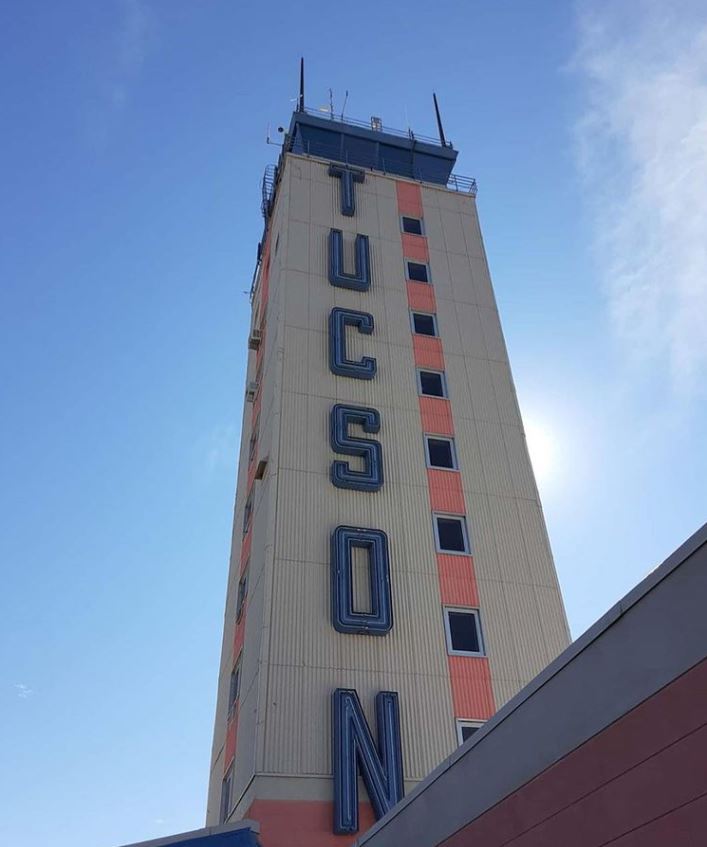
The tower at Tucson International Airport provides an example of a sustainable building already in operation. The tower is the first air traffic facility with net-zero energy consumption. It uses a 1,600-panel solar farm to generate power for all its electrical needs and supplies unused power back to the grid.
|
|
Pennsylvania transit authority focusing on community development |
|
Pennsylvania – The Southeastern Pennsylvania Transportation Authority (SEPTA) launched the Transit Supportive Community Development (TSCD) program to support healthy, sustainable, and vibrant communities by shaping development near SEPTA services.
Increased ridership, improved social equity through mixed-use and mixed-income projects, stabilization of SEPTA’s financial base, and reduced reliance on cars are all program objectives.
Unlike traditional transit-oriented development programs, SEPTA’s TSCD program will guide and support development along corridors with frequent transit service — not just near SEPTA stations.
Starting this year, SEPTA will develop TSCD guidelines with the support of an external steering committee. This document will provide clear guidance to developers on construction on or near SEPTA’s property, encourage equitable transit-oriented development with the authority’s partners, and detail the process.
This program launches amid a series of major efforts underway by SEPTA, including a comprehensive redesign of the bus network, new wayfinding tools, trolley modernization, and King of Prussia Rail. Together, these projects work toward achieving the goals in SEPTA Forward.
|
|
Washington utility district issues RFI for packet transport network |
|
Washington – Public Utility District No. 1 of Snohomish County released a request for information (RFI) for vendor feedback on a next generation packet transport network.
The district uses an existing SONET network for critical utility application transport of circuits between utility locations at 100-plus sites and headend locations.
It is seeking responses from vendors for packet-based solutions to replace the existing network equipment to allow reliability commensurate with electric system critical infrastructure that also allows additional capacity and flexibility for future packet applications beyond what SONET or other circuit-based platforms can provide.
The new network should utilize the existing fiber optic and microwave infrastructure between electric substations and the control center locations. This proposed system will serve as the platform for the district wide area network (WAN) transport for all time-division multiplexed (TDM) and Ethernet applications going forward. A new 10 Gbps backbone will serve critical electric utility applications and require highly reliable hardware and software.
The district intends to proceed with a solicitation based on the RFI responses. It may be issued as either a formal request for proposals (RFP) or invitation for bid (IFB). RFI submissions are due by 2:30 p.m. PST November 30.
|
|
Voters approve funding for $57M middle school transformation |
|
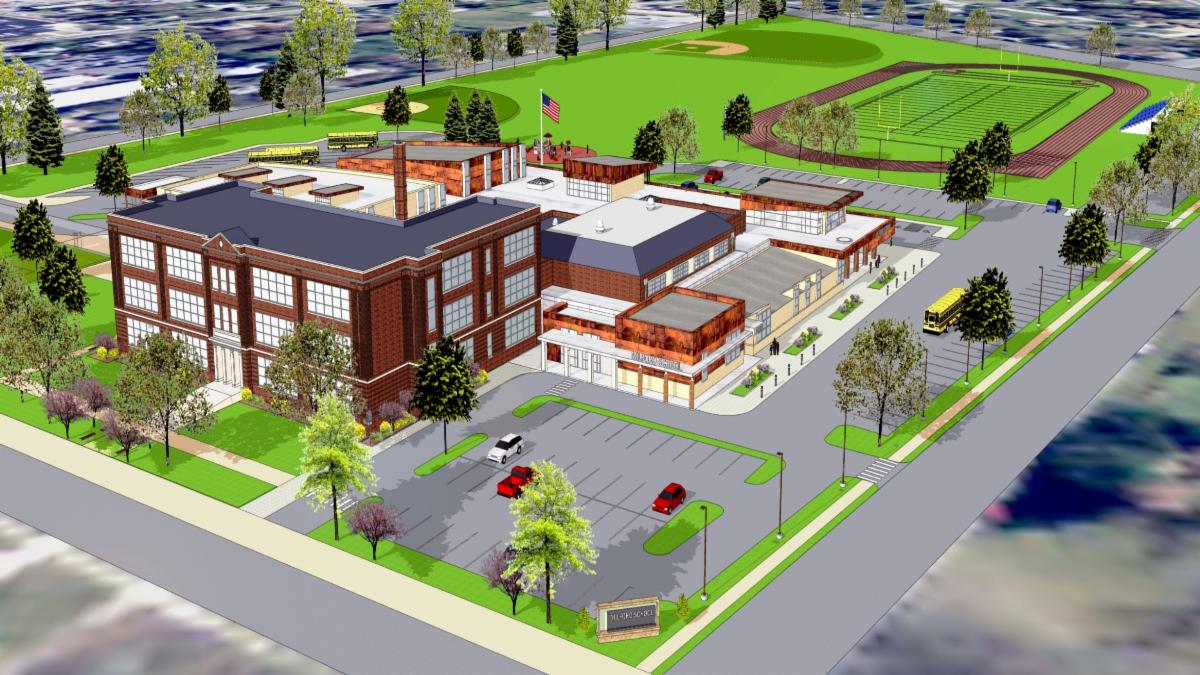
Delaware – Sixty-seven percent of voters approved a referendum by Milford School District on October 27 for $14.89 million to restore and revitalize a middle school built in 1929.
The renovation project costs are estimated at $57.27 million to add space for 1,000 fifth- and sixth-grade students at Milford Middle School by demolishing exterior wings and reconfiguring the school with new structures for a modern student learning environment.
Vacant since 2012 and the former Milford High School, the new 132,910-square-foot building will maintain a gymnasium, auditorium, and outside grounds with athletic fields for community use.
Renovations will create an environment suited for fifth- through eighth-graders and allow the district to merge all elementary feeder schools at one campus.
|
|
Kansas City targets 2022 for 300MW solar farm at airport |
|
Missouri – As it aims to land World Cup 2026 matches and be carbon free by 2040, Kansas City is exploring the possibility of building a 2,000-acre solar farm to complement the new $1.5 billion terminal under construction at Kansas City International Airport.
City officials said they hope to issue a request for proposals (RFP) in 2022 with the help of the U.S. National Renewable Energy Laboratory for a solar farm that would be capable of producing 300 megawatts (MW) of power.
Kansas City is familiar with installing solar power on city-owned sites, having placed solar panels on various administrative facilities including public safety buildings, water infrastructure, and highways.
|
|
Pennsylvania solicits input on continuing education application |
|
Pennsylvania – The Department of State for Pennsylvania released a request for information (RFI) to assist with the development of a solicitation for a continuing education management application.
The solution would allow for audit and compliance management of continuing education for boards where it is statutorily required.
State officials desire the ability to formulate specifications and requirements, realistic timeframes, and cost structures for the procurement and projects.
Pennsylvania seeks to replace the current information technology systems used in the Bureau of Professional and Occupational Affairs with a commercial off-the-shelf (COTS) solution that allows for creation, upload, verification, and document management.
In addition, the application would need to handle both confidential and public, personally identifiable information, transcripts, professional experience, and criminal history data.
The deadline for RFI responses is noon EST November 8.
|
|
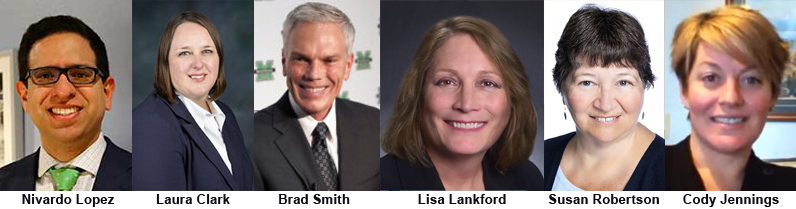
New York – The state of New York selected Nivardo Lopez as deputy secretary for transportation. Lopez most recently served as Bronx Borough Commissioner for the New York City Department of Transportation where he began as director of legislative affairs.
Michigan – Gov. Gretchen Whitmer appointed Laura Clark as the state’s chief information officer. Clark currently serves as Michigan’s chief security officer and will retain those duties. Before that, she was deputy chief security officer and interim senior management executive of infrastructure and operations.
West Virginia – The Marshall University board of governors named Brad Smith as the university’s new president, effective January 1, 2022. He will succeed Jerome Gilbert who will not seek an extension of his contract. Smith most recently co-founded the Wing 2 Wing Foundation. Before that, he was chief executive officer of an American financial software company.
Tennessee – The Metropolitan Nashville Airport Authority promoted Lisa Lankford to vice president and strategic adviser to the president. Before that, Lankford was assistant vice president, special assistant to the president, and a project manager with the authority.
Maine – The city of Augusta appointed Susan Robertson as its new city manager. Robertson had been serving as acting city manager since the retirement of former City Manager Bill Bridgeo in September. Robertson most recently served as Augusta’s assistant city manager and human resources director. Prior to coming to Augusta, she was the city administrator in Sun Valley, Idaho, and the village manager in Fox Point, Wisconsin.
Alaska – The municipality of Skagway assembly named Cody Jennings as the first director of the Port of Skagway. Jennings most recently served as tourism director for the borough. Before that, she was director of retail operations for a railroad company.
|
|
|
|
Connect with SPI
Check out our social media links!
|
|
About Government Contracting Pipeline |
|
Strategic Partnerships, Inc.
Ph: 512-531-3900
|
|
Government Contracting Pipeline, a publication of Strategic Partnerships, Inc., is a free, weekly newsletter detailing important happenings nationwide and the premier source for federal, state, and local government news and contracting opportunities.
|
|
Help us share this message.
To ensure delivery and proper formatting of the newsletter, be sure to add editor@spartnerships.com to your safe senders list. Otherwise, the newsletter may be flagged as spam and automatically routed to your junk e-mail folder.
|
|
For news or calendar items: editor@spartnerships.com
For information about SPI's products and services: sales@spartnerships.com
© 2021 Strategic Partnerships, Inc. All rights reserved.
|
|
|
|
|
|
|
|