Volume 22, Issue 5 - February 2, 2024 | |
|
There is no argument - everyone agrees technology is changing our world! Technological evolution and innovation trends are rampant. Changes are happening so fast that it’s simply not possible to keep up with everything. However, because taxpayer dollars fund much of what is happening in the government marketplace, the innovation is interesting to note.
The Technology Modernization Fund (TMF) has invested $800 million in technology initiatives to upgrade and modernize high-priority systems such as cybersecurity, public-facing digital services and cross-government collaborations. The funding was allocated to agencies at the federal level of government, but most of the innovation will impact citizens and other public entities.
Cities throughout America are also launching large initiatives to install new and innovative technology that will modernize old systems, increase efficiency, improve citizen services and reduce costs. Some of the federal technology-modernization funding flows to state agencies. Still, many government officials at local levels are supplying their own funding for new technology innovations because of the cost reductions and a need to meet citizen needs more efficiently.
Last month, state officials in Pennsylvania purchased 50 enterprise ChatGPT licenses for the state’s Office of Administration employees as part of a pilot program that breaks new ground in government as artificial intelligence is incorporated into operations. ChatGPT is an artificial intelligence (AI) chatbot that can be taught to handle many administrative tasks. In addition to the 50 licenses purchased for the pilot program, the state plans to eventually make another 100 licenses available to other agency employees.
Officials stressed that the AI bot would not be public-facing and only accomplish internal administrative tasks such as processing text, updating employee policy language and drafting job descriptions. The overall goal of the initiative is efficiency.
This initiative resulted from an executive order by the governor, and state agencies were encouraged to find ways to make use of the new technology. An AI governing board has been named to recommend and approve ChatGPT initiatives.
In Texas, the Department of Transportation received a $1 million grant from the Federal Highway Administration to study and implement newly developed sensors that monitor concrete conditions. The sensors are designed to collect data about the structural conditions of concrete without the need to stop traffic or collect pavement samples for testing.
The technology is attached to rebar or other formwork and then concrete is poured on top. Once the sensors begin transmitting data on pavement conditions, the information is also logged in real-time for future reference. Sensor alerts are sent to engineers via smartphone apps when maintenance is needed.
Click here for more
|  | |
Navarro Independent School District (ISD) officials are asking voters in the Central Texas city of Seguin to approve a $120 million bond measure to construct an elementary school, build a stadium and add baseball and softball fields.
The projects will address anticipated enrollment growth and the need for on-site athletic facilities to reduce logistical challenges posed by off-site practices and games. Construction of the school is slated for completion in fall 2027. Early voting runs from April 22 to April 30, with election day May 4.
Proposition A would allocate $73.7 million for a suite of “growth & reinvestment” projects, including a new elementary school for grades 2-5 at a projected $50.1 million cost. Another $3 million would be used to “refresh” the existing elementary and intermediate schools.
The proposition would spend $4.1 on roadways and parking, $2 million to replace the district’s chiller and invest $2.4 million to provide safety and security upgrades, such as access control, video surveillance and video intercom.
Proposition B would provide $35.5 million to build a 7,000-seat turf field stadium at the high school campus. The site would also include a synthetic eight-lane track field, a field house, concessions and restrooms.
Proposition C calls for $10.8 million to build synthetic turf fields for baseball and softball, plus dugouts, batting cages, a building to accommodate restrooms and concessions. The scope of the project includes eight tennis courts equipped with fencing and lighting. Completion of high school athletic projects is slated for fall 2026, according to the district’s Long-Range Master Plan.
Click here for more
(Photo ny Jay Phagan.)
| |
A total of $243.7 million in grants will fund airport infrastructure improvement projects necessary to support what the U.S. Department of Transportation (DOT) said is an increased demand for air travel.
The DOT’s Federal Aviation Administration (FAA) is awarding 150 grants through the Bipartisan Infrastructure Law (BIL) to modernize airports in 37 states. The grants are intended to address safety concerns at aging airports and to bolster funding inconsistencies that have delayed modernizing technology and infrastructure, the DOT said.
Several projects will help reduce delays and confusion for passengers as well as minimize security risks, the DOT said, such as improvements that streamline taxiways, expand terminals and provide better lighting.
For example, Dallas Fort Worth International received $45 million to rehabilitate 13,400 feet of runway to maintain the pavement and to minimize foreign object debris.
Click here for more
(Photo by Gabriel Tovar.)
| |
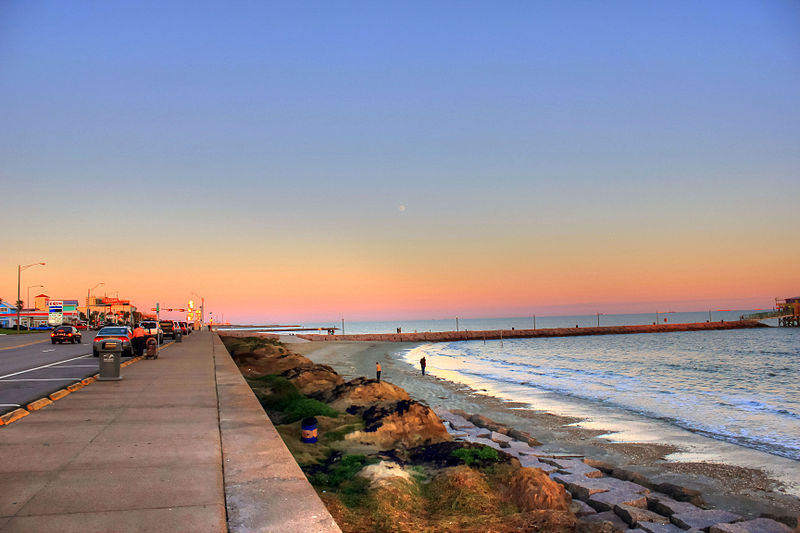
In a proactive measure against natural disasters and flooding, the city of Galveston is planning two significant water infrastructure projects, with a total estimated budget of $59.7 million. The projects are part of a strategic initiative to enhance floodwater management along the historic Galveston seawall, a region with a history of flooding from storms and hurricanes.
The first project, named the 14th Street Drainage Pump Station, will install about 14,000 feet of pipes, outfalls, manholes and pumps from 14th Street to 17th Street. Larger reinforced concrete boxes and pipes will also be added.
Plans also call for a state-of-the-art pump station to be built at the terminus of the storm drain system along the Galveston Ship Channel. The station will feature a mechanical trash rake and concrete barriers. An auxiliary sump pump is also planned, complemented by an overhead crane and hoist system. A control building with the ability to operate in emergencies will also be built.
The total cost for the pump station is projected at $41.6 million. Federal Emergency Management Agency’s (FEMA) Hazard Mitigation Grant Program (HMGP) awarded the city $37.5 million for the project. An additional $4.2 million will come from local funds.
The second project, named the Causeway Waterline, will include 8,600 feet of 30-inch waterline on the Galveston Causeway bridge and approximately 4,340 feet of 30-inch water line along Interstate 45. An above-ground pressure reducing station and metering station will also be built. Plans also call for replacing culverts, replacing asphalt pavement along the I-45 frontage road and concrete pavement on the causeway bridge access road on Galveston Island.
The estimated cost stands at $18 million, with the federal Community Development Block Grant Mitigation (CDBG-MIT) program contributing $8 million, supplemented by a $10 million contribution from FEMA.
Click here for more
(Photo by Yinan Chen.)
| |
Dave Porter
Executive Director
Williamson County Economic Development Partnership
| |
Public career highlights and education: I have 40 years of economic development experience from chambers of commerce, departments of commerce to economic development corporations in markets like Wichita, Raleigh, Asheville, Austin, Orlando to currently with the Williamson County Economic Development Partnership. I hold a degree in business administration from Wichita State.
What I like best about my public service: Helping people improve their lives through better-paying jobs.
The best advice I’ve received: Never take myself seriously, plus be nice and be kind.
People might be interested to know: I almost turned down my first economic development job because of my fear of public speaking.
One thing I wish more people knew about the Williamson County Economic Development Partnership: How unique Williamson County is by having eight diverse cities with incredible economic development talent.
|  | |
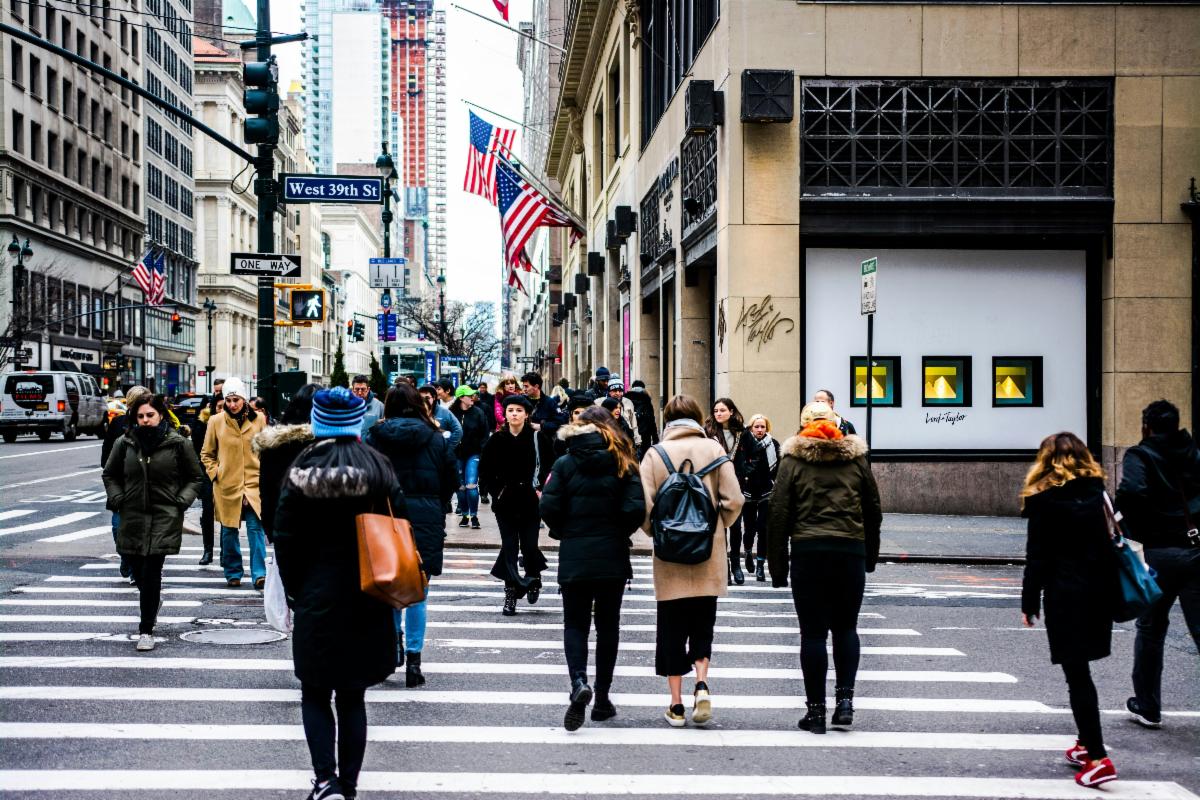
The demand for walkable urban real estate in the United States far exceeds supply, and high prices are making it accessible only to those with substantial housing budgets, according to a recent study that confirms what most people who have recently shopped for housing already know.
Foot Traffic Ahead 2023, a report released by non-profit Smart Growth America and Places Platform LLC, ranked the top metro areas by their walkable urbanism, considering factors such as commercial rent premiums, multifamily rental rates and for-sale home prices.
Smart Growth America, a nonprofit organization that focuses on climate change, racial equity and creating healthy communities, said the housing was available for those who could afford it, but not necessarily for those who most needed it.
The report found that 19.1% of the total U.S. real Gross Domestic Population (GDP) and 6.8% of the U.S. population are in walkable urban places that represent just 1.2% of total landmass of the top 35 U.S. metros.
“This is notable as it is illegal to build walkable urban densities and mixed-use development on much of the 98.8% of land that is car-dependent due to restrictive zoning policies in most metropolitan areas,” Smart Growth America said.
Tools to address high prices and short supply include zoning reform to increase walkable urban land supply and expansion and investment in affordable housing, Smart Growth America said.
Click here to see the 20 most-walkable cities in the U.S.
(Photo by Vlad Hilitanu.)
| |
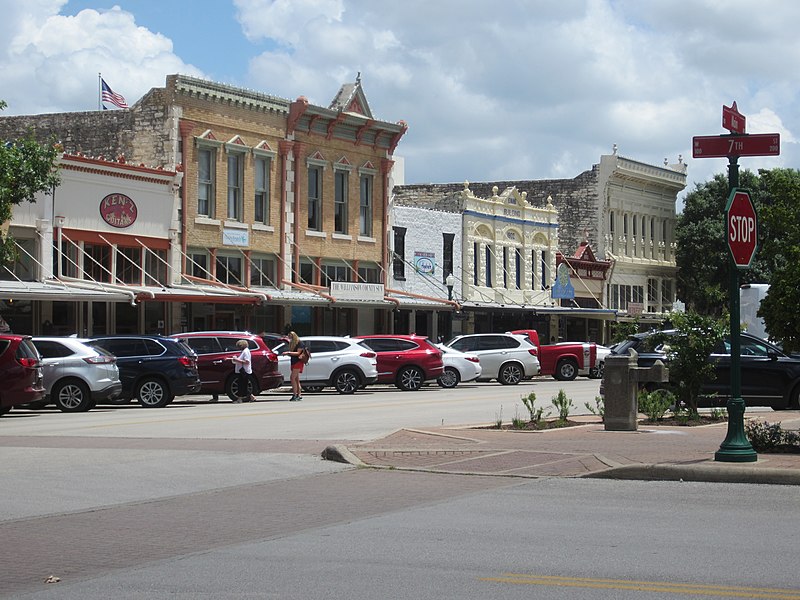
The city of Georgetown is moving ahead with $31.6 million in sidewalk repairs, including $22.8 million in fixes to gaps near the city’s roadways and greenspaces. The upgrades, outlined in a master plan approved in January, are part of an effort to assess pedestrian infrastructure and promote a safe city.
City officials said fixes to public school projects will take priority, with $7.7 million in repairs slated for sidewalk segments that offer direct access to schools.
Georgetown will also direct $22.8 million toward repairing sidewalk network gaps, targeting fixes to segments located along arterial roadways or to those potentially providing access to Georgetown’s 83 miles of trails.
The city will also spend $1 million on capital improvement projects that don’t require right-of-way (ROW) acquisition, professional engineering and are segments less than 200-feet in length. A separate project to complete the downtown’s sidewalk network is budgeted for $775,000.
Click here for more
(Photo by Another Believer.)
| |
Austin is proceeding with a $14 million project to modernize the Old Lampasas Dam, according to a recent update by city officials.
The project to ensure the safety of nearby residents and improve water quality is currently in the permitting phase, with construction expected in the fall of 2024. The city will ask contractors to submit bids in the spring.
Built in 1984, the facility safeguards nearly 30 structures and two roads downstream from the dam on a Bull Creek tributary. Tropical Storm Hermine damaged the dam’s primary outlet pipe in 2010. That, in combination with “poor construction” materials, has resulted in erosion and the formation of “numerous holes” on the upstream slope of the dam, described by the city as “unsafe.”
Construction plans include replacing the existing 60-inch diameter spillway with a 42-inch diameter pipe and installing a new intake structure and low flow riser upstream of the dam. The project also calls for installation of a new Flood Early Warning System and replacing the existing wastewater line upstream of the dam’s centerline.
Click here for more
(Photo courtesy of the city of Austin.)
| |
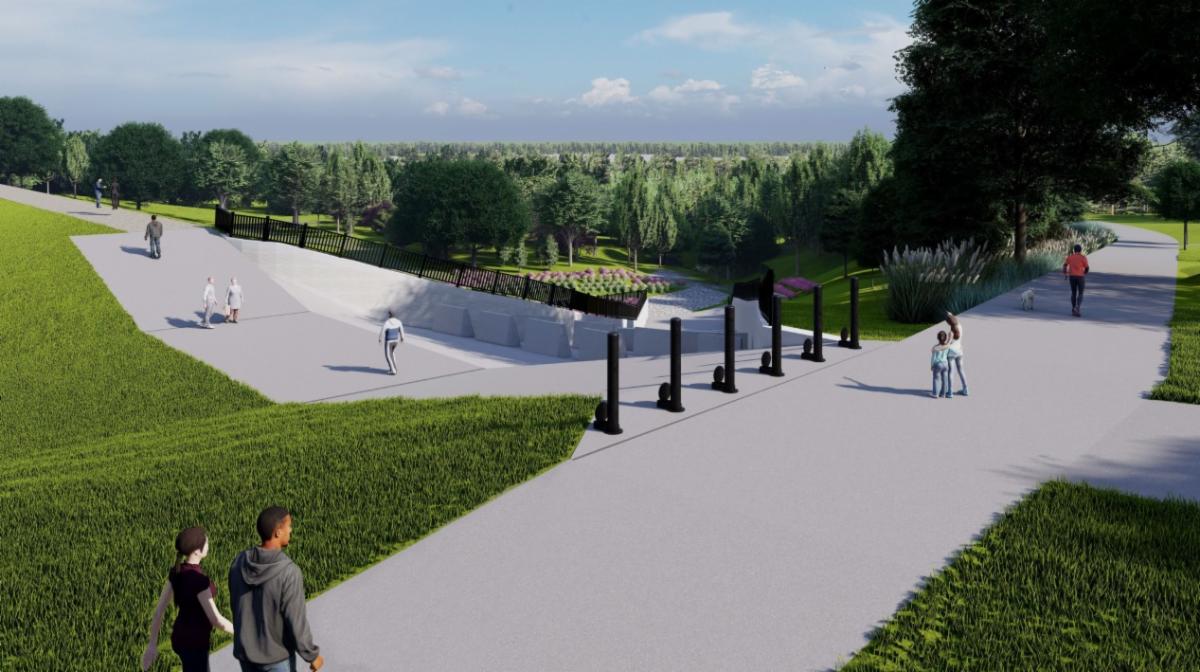
The Texas Parks and Wildlife Department (TPWD) has awarded $20.6 million for upgrades to 40 community parks statewide, including a trio of million-dollar grants to support separate projects in San Antonio, Fort Worth and Dallas.
The competitive Local Park Grants will support the development of nature trails, native gardens, playgrounds, dog parks, splash pads, sports fields and other park amenities. Money from the program is disbursed to governments on a 50-50 reimbursement match basis. Once funded, sites must always remain open to the public and be properly maintained.
A combined $4.3 million will go to three big Texas metros, while 21 communities with populations under 500,000 will receive grants. Another 16 towns with populations less than 20,000 also will receive funds.
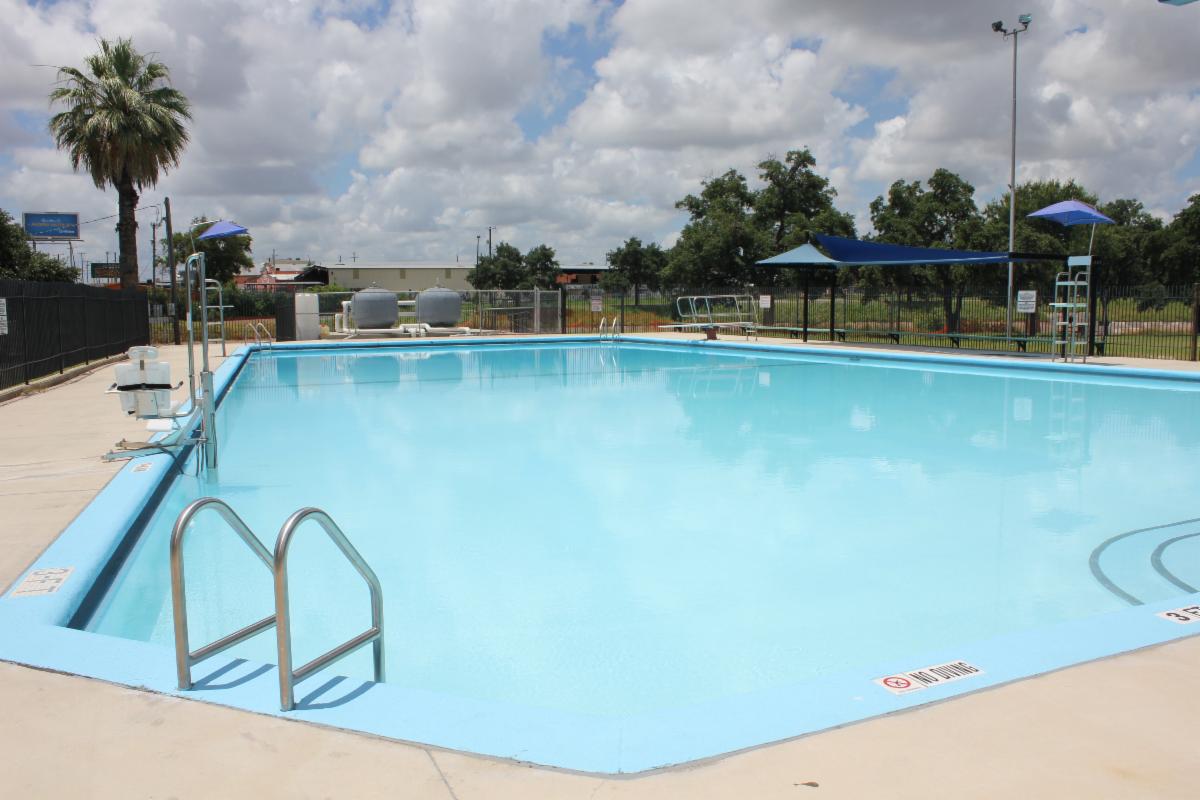
San Antonio will get the TPWD maximum grant of $1.5 million to support the city’s $5.25 million Cassiano Park Revitalization Project. Plans call for expanding shade and native landscaping in the 2.89-acre greenspace and adding infrastructure to improve access to the park’s pools. Construction is slated for spring 2025.
Fort Worth will also receive $1.5 million to transform a decommissioned golf course into a nature-based space for recreation. The $5.5 million Sycamore Park Improvements project will include repurposing a water hazard into a wetland to improve water quality in Sycamore Creek. The project is in the engineering phase, with construction scheduled to start in spring of 2025.
Click here for more
(Photo: A pool at San Antonio's Cassiano Park. Courtesy of the city of San Antonio.)
| |  |
 | |
Cyberattacks on state and local governments are on the rise, according to a recent study conducted by a nonprofit organization that helps governments protect themselves against security threats.
The National Cybersecurity Review (NCSR), conducted in 2022 and 2023, showed an increase in attacks during that time, including malware, ransomware and other suspicious activities that affected state, local, tribal and territorial (SLTT) government organizations.
Part of the reason for the rise is that many government organizations are still formalizing their cybersecurity programs, according to the Center for Internet Security (CIS), which conducted the study.
Factors such as time, staffing and resources are among the reasons some organizations haven’t finalized their processes and procedures to protect against attacks. For example, implementing a successful vulnerability-management plan requires extensive testing — something many short-staffed entities may not have time to do, the CIS said.
A shortage or unavailability of cybersecurity professionals are also key challenges for many government organizations.
Areas of attack where government organizations saw increases include:
- Malware, including a 148% increase in cyberattacks involving remote access trojans (RATs), a 27% increase in cryptominers and a 35% increase in infostealers.
- Ransomware incidents went up 51% from 2022 to 2023.
- Non-Malware, including a 37% increase in command shell activity and a 30% increase in suspicious SSL certificates.
- Security incidents detected by CIS Endpoint Security Services (ESS) went up 313%.
Click here for more
(Photo by Sigmund on Unsplash)
|  | 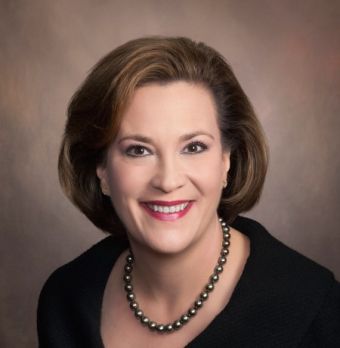 | |
The University of Texas System has appointed Julia Rathgeber as vice chancellor for government relations, effective Feb. 1. Her role will include bridging communication between the UT System and Texas Legislature on policy and budget issues as well as connecting with other state entities to manage the UT System’s federal relations.
Rathgeber was the vice president of governmental and regulatory relations and business development for Berkshire Hathaway Energy for the past two years. She has more than 30 years’ experience working in Texas government.
Her titles have included chief of staff for Speaker of the House Dade Phelan, as well as deputy chief of staff for Gov. Greg Abbott and Lt. Gov. David Dewhurst. She was also president and CEO of the Association of Electric Companies of Texas.
Rathgeber, who attended UT for her undergraduate degree and Juris Doctor (JD), will replace Stacey Napier, who served as vice chancellor from November 2018 until January 2024. Napier was recently appointed general counsel to the UT System Board of Regents.
Click here for more
(Photo courtesy of the UT System.)
|  |  | |
The Austin-Bergstrom International Airport (ABIA) is the first in the nation to be outfitted with the Federal Aviation Agency’s (FAA) Tower Simulation System — a cutting-edge air traffic training platform designed to support air traffic controllers and ensure safe plane arrivals and departures.
Central to the new technology is the system’s visual database to enhance safety by simulating air traffic scenarios on an airport’s layout, operations and airspace. The simulators will be installed in 95 towers nationwide, the last of which will be deployed by December 2025.
The tech rollout follows a 2023 National Transportation Safety Board report detailing a February ABIA incident – described as a runway incursion with overflight – between two planes operated by Federal Express and Southwest Airlines.
The new simulators will provide “real scenarios” to train staff on the National Airspace System (NAS), which provides service to more than 45,000 flights and 2.9 million airline passengers, FAA officials said. The new technology will also shorten how long it takes for controllers to achieve full certification at air traffic facilities, federal officials said.
The rollout is part of a concerted effort to support improvements to air traffic control and safety nationwide after the NAS delivered a 2023 safety assessment and series of recommendations to the FAA.
Click here for more
(Photo courtesy of the FAA.)
|  | |
The city of Kyle has chosen Jesse Elizondo as its next assistant city manager. Elizondo officially started his role Jan. 2. He previously served as director of Administrative Services for the city of Burleson, Texas. Elizondo brings 12 years of public sector experience to the role.
| |
Jack Thompson has been hired as the city of La Grange’s city manager. Thompson is the assistant city manager for Crowley, Texas, a position held since 2017. He will assume his duties Feb. 26, replacing Fred Bell. He brings 12 years of municipal experience to the role, last serving as the economic development director for the city of Burleson between 1996 and 2002.
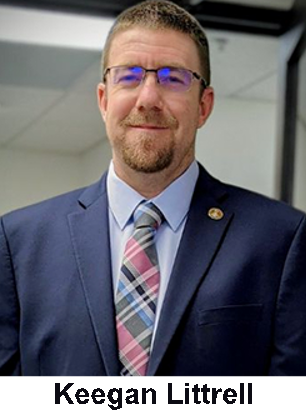
| The city of University Park has filled two leadership roles, appointing Keegan Littrell as director of public works and Katie Barron as director of engineering. | |
Littrell brings 13 years of municipal engineering experience to the role, currently serving as city engineer for Henderson. Prior to that, he worked as public works director for Boulder City, Nevada, and Bullhead City, Arizona. He replaces Jacob Speer, officially assuming his duties Feb. 21.
| |
Barron has been a city engineer with University Park since 2019. She brings 20 years of private sector consulting engineer experience to the position. She began her role Jan. 24.
| |
Gov. Greg Abbott announced these appointments and reappointments from Jan. 26 through Feb. 1:
Commission on Law Enforcement
Conor Harvey - Houston
Justin West - League City
Janna Atkins - Abilene
Justin Berry - Austin
| |
Texas Government Insider is a free weekly newsletter detailing important happenings throughout the state and summarizing current political issues relevant to individuals interested in government.
Publisher: Mary Scott Nabers
Editors:
Adam Rollins
Dave Doolittle
| | |
|
|
Check out our
social media links!
|
|
Help us share this message.
To ensure delivery and proper formatting of the newsletter, be sure to add editor@spartnerships.com to your safe senders list. Otherwise, the newsletter may be flagged as spam and automatically routed to your junk e-mail folder.
| |
|
For news or calendar items: editor@spartnerships.com
For information about SPI's products and services: sales@spartnerships.com
© 2024 Strategic Partnerships, Inc. All rights reserved.
| | | | | |