|
There will be no column today.
Mary's column will be back next week!
| |
The Astrodome, an iconic stadium landmark that’s been largely abandoned since 2009 – may be revitalized through a $1 billion redevelopment plan.
The Astrodome Conservancy, a nonprofit overseeing the site’s refurbishment, unveiled its vision for the facility through a Nov. 13 news release. The nonprofit, in partnership with an architecture firm, conceptualized 450,000-square-feet of revenue-generating space surrounded by restaurants, retail, office and commercial space and future mixed-use development.
The facility’s redevelopment will feature the installation of an updated flexible arena space dedicated to hosting events and entertainment. The dome would contain four state-of-the-art buildings in addition to parking, storage, service areas and animal handling facilities beneath the ground floor.
To preserve the landmark’s legacy, the nonprofit will integrate a cultural museum into the facility’s design. Plans also call for a hotel and dedicated tenant areas. Designs include a dynamic boulevard cutting through the venue, connecting the Astrodome with neighboring facilities within NRG Park.
The redevelopers plan to incorporate and restore features significant to the facility’s iconic image, making an effort to retain the stadium’s historic nature. The nonprofit anticipates fostering public-private partnerships (P3), focusing on community spaces and sustainability as the project advances.
The Astrodome is located in NRG Park, a 350-acre development that includes the NRG Stadium, Center and Arena. The other park tenants are currently negotiating future lease contracts in anticipation of major renovations and upgrades. The nonprofit's Astrodome vision will be proposed as a component of the park’s holistic master plan, and once fully approved will be factored into future lease negotiations.
(Photo courtesy of the Astrodome Conservancy.)
|  | |
The Round Rock Independent School District (RRISD) will invest $789.3 million to make sweeping improvements to facilities districtwide. The projects will prioritize key infrastructure improvements, upgrading IT infrastructure, replacing roofing and HVAC units, improving sports fields and enhancing campus security.
The district will allocate the lion’s share of the funds - $355 million – to support general districtwide improvements. Notably, RRISD will build a districtwide stadium to serve all schools. Additional projects include upgrades to plumbing, electrical and HVAC systems; buying a districtwide Career and Technical Education (CTE) Center; campus renovations and expansions, instituting ADA-compliant upgrades to playgrounds and buying buses.
The largest singular project will be Round Rock High School’s $137.4 million investment in infrastructure repair, replacement and expansion. The school will use the funds to demolish and replace buildings and make infrastructure improvements to the school’s roof, plumbing, ceiling, wall finish, parking, cafeteria and drainage.
The project will include building field restrooms, a scoreboard, improving field structures, courts, track and locker rooms and converting baseball and softball turf. The district will also replace and upgrade the IT system, electronics and technologies for the facility, students, faculty and staff. Plans include renovating the fine arts area, band tower and improving the fire alarm and security system.
RRISD will spend $74.1 million for similar work at Stony Point High School. The school will build classroom additions to replace portables and expand the JROTC program. Plans include improving the campus’ plumbing, floors, roofing, greenhouse, HVAC units, cafeteria, casework and cabinet, wall finish and irrigation system. Like Round Rock High School, Stony Point will also replace and upgrade the IT system, electronics and facility technologies.
The district will replace the school’s scoreboard, improve the field structures, replace the track, improve the press box and convert the baseball and softball turf. Plans also include building an addition to the dance suite, improving the fire alarm system and enhancing the school’s security system.
(Photo courtesy of Kara Nuzback.)
| |
The city of Conroe - with support from the Houston-Galveston Area Council (H-GAC) - will commit $193 million to expand and widen a nearby essential highway. Construction on Old Conroe Road is expected to begin in 2026.
The project will prioritize expanding Old Conroe Road to a total of 5.7 miles, providing new connections to local amenities and improving transportation options for travelers. The two roadways relevant to the project – Sgt. Ed Holcomb Boulevard and Old Conroe Road - suffer from limited mobility, accessibility and inability to accommodate population growth.
To provide better traffic control and multimodal mobility, the city will widen both roads from two lanes to four. Plans to expand these roads include adding sidewalks and shared-use paths on either side, as well as integrated curb-and-gutter storm sewer infrastructure and drainage ditches to offset flooding and heavy rain.
The city will build a 1-mile-long bridge along the route, providing a safe four-lane crossing over the river. The bridge will include 10-foot-wide shoulders on either side and a concrete barrier separating the lanes. To expand multimodal accessibility and mobility, the project will incorporate a single shared-use path for non-motorized travelers.
A series of 12 stormwater detention ponds – totaling 113 acres – will provide ample drainage for all 5.7 miles of the road. Officials anticipate that, despite plans to buy 191 acres of right-of-way to support development, the project will not impact or displace any existing structures.
(Photo courtesy of Stedil.)
| |
The Texas Water Development Board (TWDB) will provide $32.4 million through 10 project grants to enhance water systems, replace lead pipes and improve wastewater infrastructure. The recipients will supplement the awards with local funds.
Thorndale will receive $14.9 million to build a well field in the Carrizo-Wilcox Aquifer. The project will develop an additional groundwater supply that the Davis Drive Water Treatment Plant will treat. The city will also build a transmission system to transport the raw groundwater and improve the treatment plant.
The River Acres Water Supply Corporation will use $4.3 million to identify and replace lead service lines.
A total of $4.1 million will go toward replacing a 75,000-gallon elevated storage tank in Slaton. The funds will enable the city to install advanced metering infrastructure to improve accuracy within its distribution system.
Lone Oak will receive $3.3 million to replace a facultative lagoon at its wastewater treatment plant. The replacement will be a higher capacity mechanical plant, designed to meet future city growth.
The Victoria County Water Control and Improvement District No. 2 will spend $2.3 million to replace cast iron water lines with PVC piping. The district will also build a 30,000-gallon ground storage tank.
(Photo courtesy of JackSellaire on Pixabay.)
| |
The University of Houston (UH) is pioneering development on innovative solutions to convert renewable energy sources into sustainable fuels.
The project – titled Printed Microreactor for Renewable Energy Enabled Fuel Production (PRIME-Fuel) – centers around creating a modular microreactor to convert carbon dioxide into methanol using solar, wind or similar renewable energy sources. Fossil fuels are an inherently limited resource, making this technology a potential breakthrough in cost-effective, sustainable fuel independence.
UH, alongside other collaborating organizations, will use cutting-edge mathematical modeling and printing technology to create the microreactor. The completed prototype will be able to produce 30 megajoules (MJ) of methanol per day. A critical aspect of the project lies in its production efficiency, capable of continually producing methanol even when the renewable energy supply drops below 5%.
Future versions of the microreactor could be scaled up to generate 225 tons of methanol per day at a 100-megawatt (MW) electricity capacity plant. The process to generate these fuels also has a significant environmental impact. The scaled-up version of the microreactor would mitigate 88% of associated greenhouse gas (GHG) emissions that would typically be produced.
Currently, the market for low-carbon fuels sits at approximately $10 per gallon. The PRIME-Fuel project provides a cheaper alternative that produces methanol fuel with lower production costs. Large-scale production of the microreactor would mean that, not only could cheap fuel be reliably produced, but smaller communities would also be able to take advantage of affordable, clean long-term energy storage solutions for renewable resources.
Praveen Bollini, associate professor of chemical engineering at UH, is the university’s researcher attached to the project. Professor Bollini will provide his expertise to create novel catalysts designed to improve carbon dioxide conversion and methanol yield. Once completed, the project team anticipates scaling up and commercializing the technology.
(Photo courtesy of Ousa Chea on Unsplash.)
|  | |
The Federal Highway Administration is making up to $876 million available through 2026 to improve surface transportation system safety and better protect them against hazards caused by climate-related events.
Projects covered under the FHWA’s PROTECT Discretionary Grant Program include making highways, public transportation, pedestrian facilities, ports and intercity passenger rail more resilient to climate change, sea level rise, flooding, extreme weather events and other natural hazards.
Click here for more information about the PROTECT NOFO
(Photo courtesy of SouthernOculus.)
| |
Ports in California are on the path to becoming more environmentally friendly thanks to a billion-dollar grant from the federal government.
The U.S. Environmental Protection Agency (EPA) has announced that seven California ports are set to receive over $1 billion through the EPA’s Clean Ports Program to build of zero-emission port infrastructure and implement climate and air quality planning projects.
Click here to learn more about the port projects receiving funding
(Photo courtesy of Siva Seshappan.)
| |
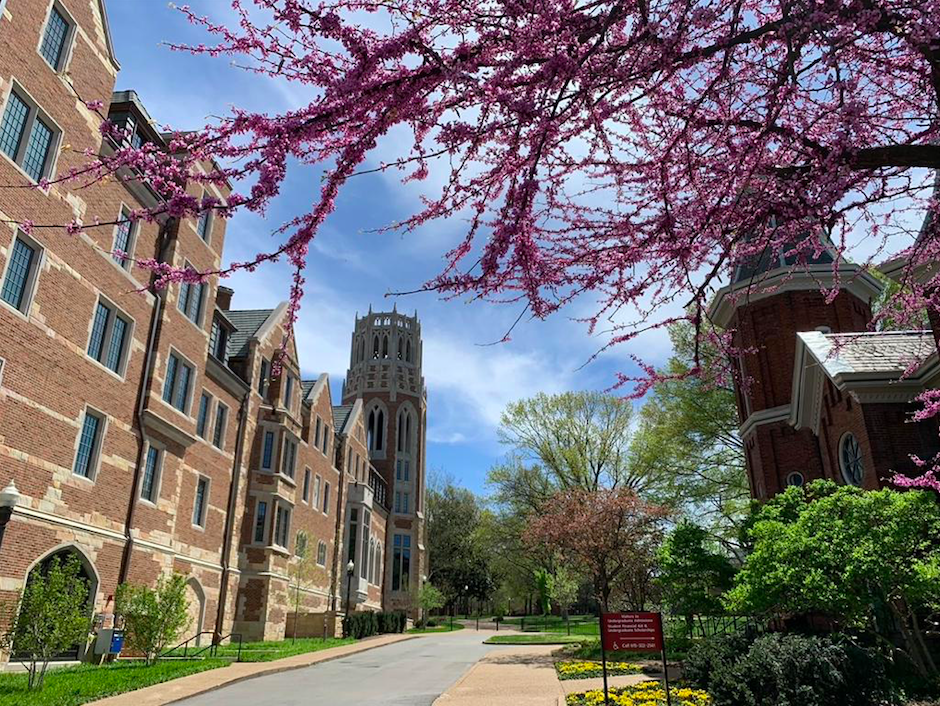
Vanderbilt University plans to transform its central neighborhood with the construction of four new residential colleges. The major project would add housing for more than 1,300 students by 2028. The expansion represents the latest phase in the university’s push to build residential communities and reshape student life as well as the geography of the campus area.
The project builds on Vanderbilt’s recently completed West End Neighborhood transformation, which wrapped up in August 2024 after 12 years of development. The centerpiece was replacing the 1,200-person Carmichael Towers dormitories, which were imploded in 2019 and 2021, with four modern residential colleges.
Click here for more information about Vanderbilt University’s upcoming projects
(Photo courtesy of BugsMeanee.)
| |
New York City is looking to dramatically speed up its transportation infrastructure projects through artificial intelligence and enhanced data collection. Mayor Eric Adams today announced “How NYC Moves,” a comprehensive plan containing 21 recommendations to streamline the planning and review processes for major transportation projects using emerging technologies and improved data collection methods.
The plan, developed in partnership with Cornell Tech’s Urban Tech Hub, looks to transform how the city conducts transportation analysis – a portion of the project review process that currently adds substantial time and cost to development projects.
Click here to learn more about NYC’s plans to leverage cutting-edge technology to accelerate transportation development
(Photo courtesy of Nicola Vidali.)
| |  |
|
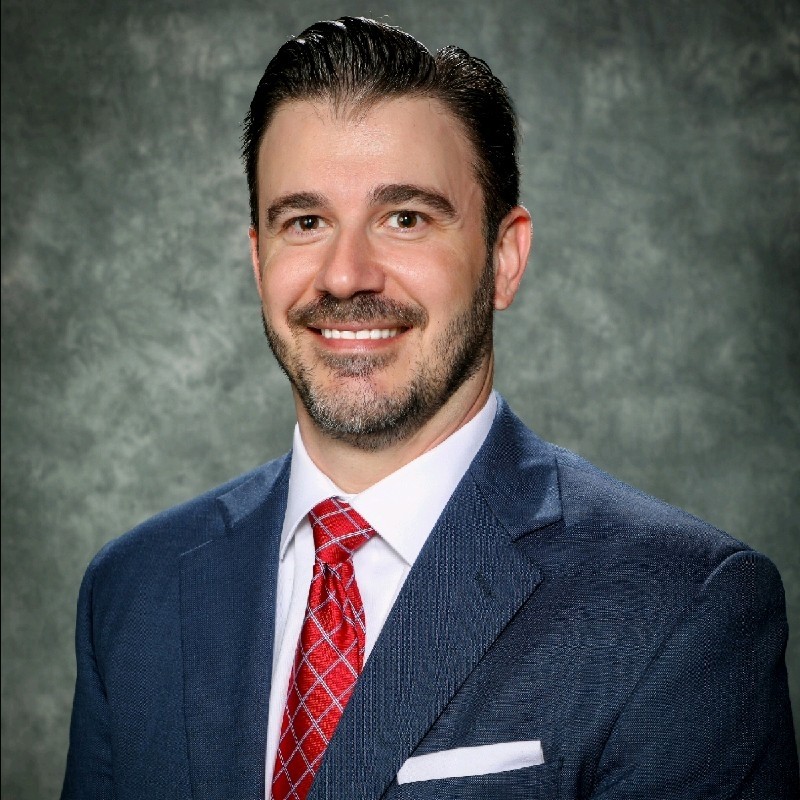
The Texas A&M University (TAMU) System Offices has named Chris Court as its next chief information officer (CIO). Before moving up to oversee the entire TAMU System, Court was executive director for TAMU. He also served the university as director of IT for The Bush School and ACIO as well as a senior IT administrator.
Court – the current mayor of Kurten – will be responsible for all IT systems and resources across the TAMU System’s 11 universities and eight state agencies. As CIO, Court will help increase information security, develop technology growth strategies, manage data and ensure the system’s IT infrastructure can support ongoing university needs and goals.
|  | 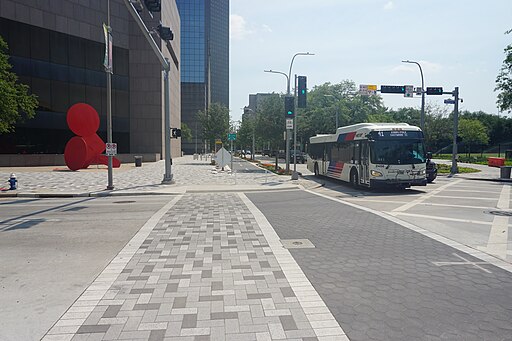 | |
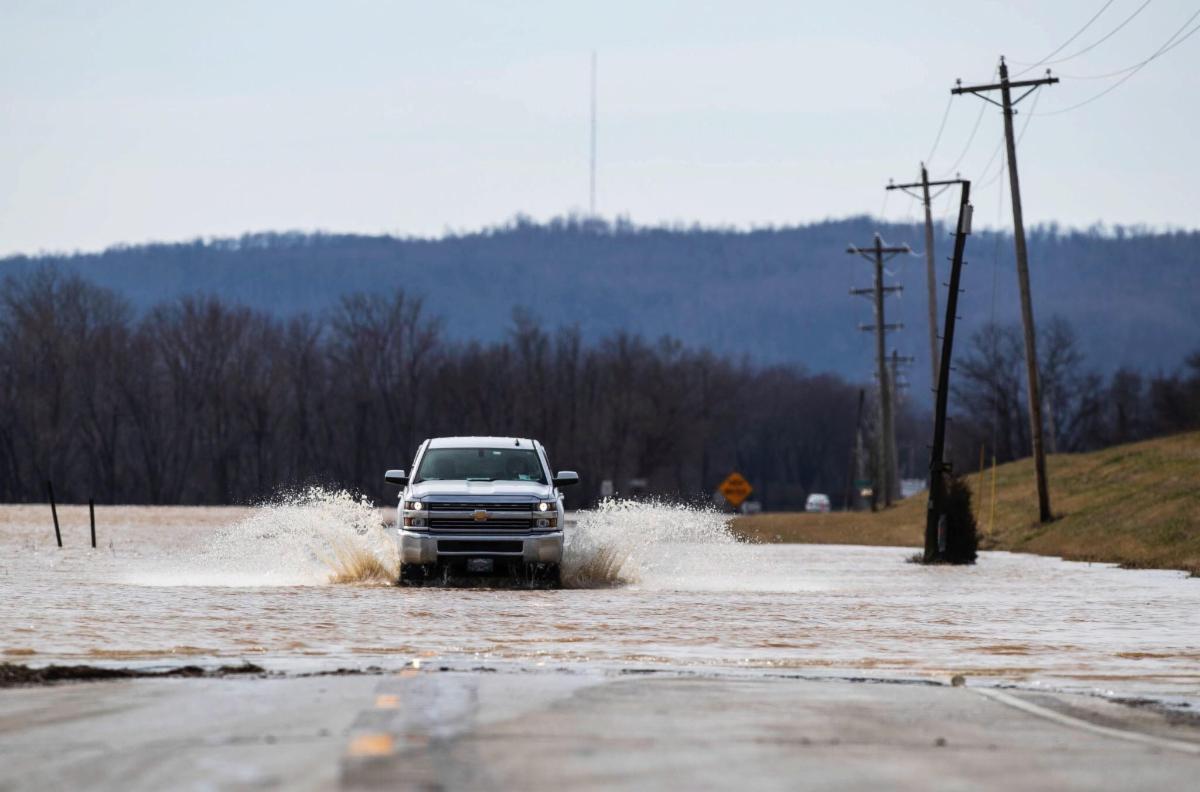
The city of Houston will invest $72.5 million to reconstruct and modernize street infrastructure along two neighborhood corridors. The projects are currently in the design phase, with construction expected to break ground in 2027.
The $48 million Gessner Corridor Reconstruction project will prioritize enhancing local multimodal capabilities while implementing safety measures for drivers and non-motorized travelers alike. Like many Houston roads, the Gessner Corridor is outdated and must be modernized to handle population growth and increased traffic.
Reconstruction activities will center around repaving the roadway to enhance pavement quality and install a continuous sidewalk for pedestrians and bicyclists. To better accommodate increased vehicular traffic, the city will widen certain sections of the road from four lanes to six.
The project incorporates updates to the road’s utility infrastructure, including adding more storage capacity to keep the drainage system up-to-date for future runoff and flood events. The city will also improve local lighting and protect and/or replace as many of the nearby trees as feasible.
Houston will invest an additional $24.5 million to make critical updates to a pair of road segments along Westheimer and Elgin. The project will update lane configuration and pavement infrastructure. These improvements will address and repair deteriorated pavement, convert the current configuration to two lanes with a center turn lane and create a two-way turn lane to access driveways.
As part of the updates, the city will widen the sidewalks and enhance the quality of pedestrian and bicycle amenities with median refuges and raised crosswalks. Transit systems will benefit from improved bus stop amenities, upgraded traffic signals and modernized street lighting. In addition, there will be sweeping improvements to the area’s storm sewer system and install water lines.
(Photo courtesy of Michael Barera.)
|  | |
VIA Metropolitan Transit, the transit authority serving San Antonio and Bexar County, has chosen a new organization leader. After a unanimous vote from the authority’s Board of Trustees, Jon Gary Herrera will assume the mantle of president and CEO.
The VIA Board of Trustees named Herrera as the lone finalist out of three during an October meeting. Herrera will officially succeed Jeffrey Arndt in the position Jan. 3, 2025. Arndt announced in August that he would be retiring after 13 years of service leading VIA. He will step down at the end of the year, closing out a 40-year-long career in the transportation industry.
Stepping into the role, Herrera will oversee the second largest transit system in Texas. He has been serving as the agency’s senior vice president of public engagement for the past seven years, playing an essential role in securing funding to support VIA’s ongoing plans.
Herrera will take over during an ambitious period for the authority, which is currently working to break ground on the VIA Rapid Green Line - the region’s first Advanced Rapid Transit corridor. Additional lines are in the works to break ground in the coming years, starting in 2027.
|  | The Texas Department of Criminal Justice (TDCJ) is changing the makeup of its executive leadership team. The new appointments will be instrumental in ensuring the agency achieves the goals set out in its 2030 Plan. | |
Jason Clark will take over as chief programs officer. He most recently served as the agency’s chief of staff; a position held since May 2018. Clark originally transitioned from broadcast journalism to become a public information officer with the TDCJ in 2006. He would continue to cultivate his career with the TDCJ, advancing into roles as director of public information and deputy chief of staff.
| |
Bobby Lumpkin has been appointed chief operating officer (COO) of the agency. As COO, Lumpkin will oversee resource optimization and process streamlining to improve operations. After starting as a correctional officer with TDJC in 1990, Lumpkin advanced his rank to major before transitioning to assistant warden in the Correctional Institutions Division. Lumpkin would later rise to become the department’s accreditation manager, manager, deputy division director, director of manufacturing and division director.
| |
On Oct. 1, Rebecca Clemons was promoted to county manager – the first to hold the newly created position. Clemons has been with the county for nearly 18 years, most recently as senior director of human resources. She has also held roles in the County Judge’s Office, Budget Office and County Auditor’s Office.
| |
After serving as interim city manager since April 2024, Teresa Chandler has taken over as Nolanville’s permanent city manager. Prior to her promotion, Chandler served as Nolanville’s city secretary. She officially began her tenure Nov. 7. She replaced Kara Escajeda in the role.
| |
Gov. Greg Abbott announced these appointments and reappointments from Nov. 8 through Nov. 14:
There are no new appointments.
| |
Texas Government Insider is a free weekly newsletter detailing important happenings throughout the state and summarizing current political issues relevant to individuals interested in government.
Publisher: Mary Scott Nabers
Editors:
Adam Rollins
Jerrod Kingery
| |