Volume 22, Issue 1 - January 5, 2024 | |
|
In past years, it was likely more difficult for companies to categorize renovation and repair projects as highly attractive. That might not be the case anymore. Public entities throughout the U.S. are designing extremely large renovation projects, and without a doubt these upcoming projects will be attractive to firms of all types and sizes. Repair and maintenance costs related to public assets and government facilities represent a substantial proportion of government spending. A decade ago, government officials spent 55% of all infrastructure funding on maintenance and repair. Now, however, more than 60% of the total funding is spent on repairs, renovation and upkeep. That represents billions of dollars each year that will be spent on large projects such as the ones described in this column.
A 50,000-square-foot construction project is slated at Indiana University-Purdue University. It will expand and enhance lab space to address the growing needs in the school’s STEM research and instruction. The $60 million expansion will also include renovations to existing labs. The project will address comprehensive upgrades to critical equipment - mechanical, electrical, plumbing and air-exchange systems. It will also include integrating cutting-edge technology needed to modernize, upgrade and improve lab operations.
This project is part of a larger investment of more than $250 million, which will be spent to promote the university’s scientific research on curing disease. The investment, one of the largest by leading universities nationwide, will also fund two new research institutes, recruit additional life sciences faculty and further support the development of other new and renovated facilities. The design phase for this project will occur in 2024, and solicitations will be issued as soon as it is completed. Currently, it appears that work on the project will begin in early 2025.
The University of Nebraska’s Board of Regents recently approved an extensive $450 million renovation of the university’s Memorial Stadium. The funding allocation coincides with the stadium’s centennial. The initiative will include project components designed to accomplish numerous goals, including drawing families to sports events, enhancing the experience for spectators and preparing the stadium for the next century of use.
Major renovations will include demolishing parts of the south stadium and installing general-seating chairs, adding more seating capacity in the west and east stadiums and creating a 360-degree main-level concourse. ADA compliance will be a high priority, along with expanded concession space, enhanced restrooms and other amenities. The university will provide at least $50 million from its internal lending fund, and other funding will come from other sources.
Click here for more
| |
The Trinity Park Conservancy (TPC), a non-profit dedicated to connecting the Trinity River with Dallas communities, will build a $325 million park through a public-private partnership (P3) with the city of Dallas. TPC recently released designs for the 250-acre public park, called Harold Simmons Park. TPC will build the park to the west of downtown Dallas. Construction will begin later this year.
The Trinity River will weave through the heart of Harold Simmons Park, dividing its 200-acre nature preserve. Greenspace plays a key role in the project’s design, including a natural green floodplain kept in check by large levees on the park’s east and west banks. TPC will plant 1,500 trees to mitigate heat island effects and provide natural shade, as well as expand the West Overlook landscape with over 3,000 shrubs.
The West Overlook will be the signature park entrance, featuring a 40,000-square-foot event lawn capable of hosting 3,000 visitors. An event building will accommodate public and private events with a welcome center, educational classrooms and an upper-level rooftop. The park will also provide a 1,000-foot shed shade structure and a land bridge connecting visitors with the overlook lawn, levee and river. The overlook area will connect to the Commerce Street Bridge.
A play cove featuring a cable ferry, six 2-story interactive towers, bridges, slides and other climbing features is also planned. The cove will include an upper level providing views of the play and wetland areas of the park. In addition, the TPC will include shaded seating, bathrooms and concessions below the play cove.
Click here for more
(Photo: Rendering of the Harold Simmons Park event lawn. Courtesy of the Trinity Park Conservancy.)
|  | |
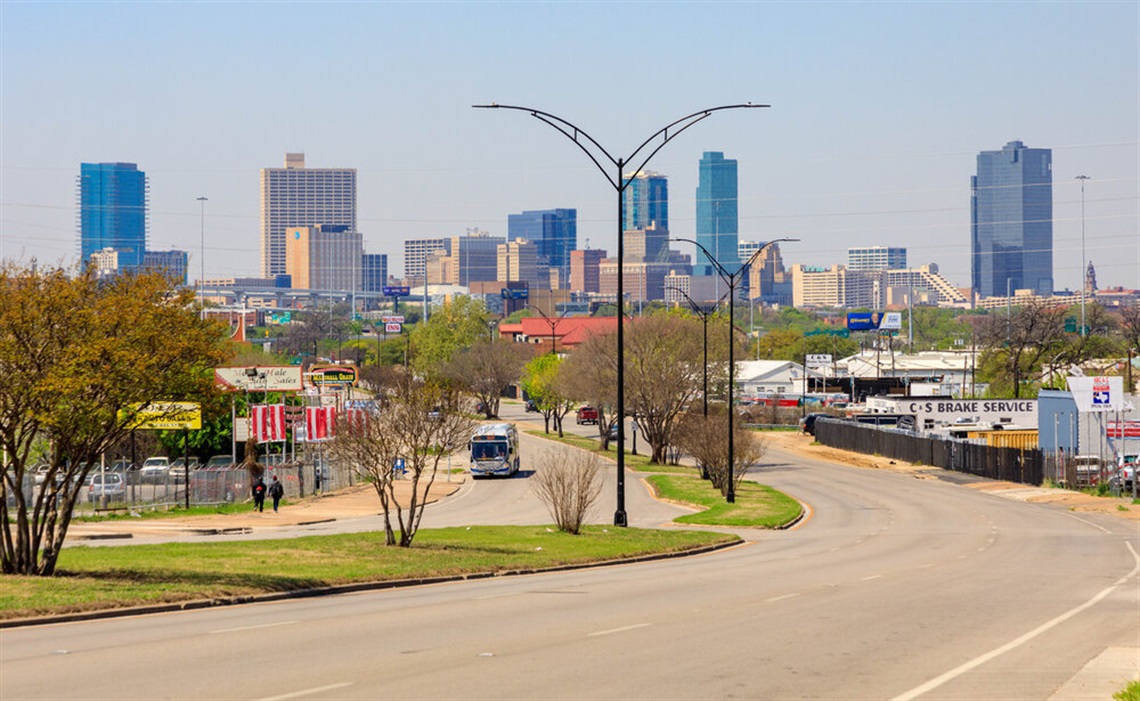
The city of Fort Worth has canceled its contract with a developer that was working on a mixed-use redevelopment project that will include retail, housing and office space in the city’s historic southside.
The Evans and Rosedale Redevelopment Project, which would introduce more than 300 housing units, was originally announced in 2018. City officials cited “unacceptable delays” as the cause for termination, fueled by inflation and increased interest rates. “Key deadlines have not been met — even following extensions,” city officials said.
Fort Worth is currently looking for a new developer for the project and says the $70 million originally allocated for the contract is still available. City officials hope to start construction by 2025.
Click here for more
(Photo courtesy of the city of Fort Worth.)
| |
The Sharyland Water Corp will receive a $17.9 million loan from the Environmental Protection Agency (EPA) for infrastructure upgrades that will minimize water loss and deliver safe drinking water for 87,000 residents of Hidalgo County in southeast Texas.
The funding comes from the Water Infrastructure and Innovation Act (WIFIA), a long-term, low-cost federal program that has allocated $20 billion in financing to support water and wastewater infrastructure projects since it was enacted in 2014.
The loan will go toward $37 million in planned infrastructure updates that include enhancements to pump stations, chemical feed facilities, storage infrastructure and electrical systems at two water treatment plants. The upgrades will bolster the existing system’s reliability, help minimize water loss and keep water rates affordable for the corporation’s customers, which include the communities of Mission, McAllen and Edinburg. In addition, the WIFIA loan will go toward replacing several miles of water mains.
Click here for more
(Photo courtesy of Swanky Fella on Unsplash.)
| |
Ron Hudson
Director of Facilities Division
Texas Department of Criminal Justice
| |
Public career highlights and education: Being a division director for the Texas Department of Criminal Justice is quite the career highlight. After graduating from Sam Houston State University with a bachelor’s degree in business administration, I started my career as a correctional officer. Advancing throughout TDCJ during my 31 years of service has allowed me the immense opportunity to provide guidance and knowledge to the future of the agency.
What I like best about my public service is: Having the inspiration of making a difference in the lives of the inmate population. I am given the opportunity to work in various divisions that teach life and marketable job skills. I see that development put into motion when an individual is released, which enhances their successes and reduces the rate of recidivism. Getting to envision the transformation is what public service is all about.
The best advice I’ve received is: Early on in my career, I attended a Leadership conference hosted by a former executive director. I wrote down a quote he used that said, “Leadership is having the strength and courage in your convictions and having the ability to see those convictions manifest into reality.” Throughout my career I have reflected on this advice often.
People might be interested to know that: Early in my career, I was an accountant, which led me to be a division accountant in Manufacturing and Logistics Division, where I played an instrumental role in developing an accounting system that is utilized today within the Texas Correctional Industries. In my personal time, I served on the Board of Stewards at the First United Methodist Church in Madisonville, volunteered with Madisonville Little League and the Madisonville County Fair Association.
One thing I wish more people knew about the Texas Department of Criminal Justice is: The good that the agency does as far as the people that work here and for the inmate population. So much of what is public perception is farthest from the truth. This agency really cares about its people and the inmates that it serves. The safety of the public is the TDCJ’s No. 1 priority.
|  | |
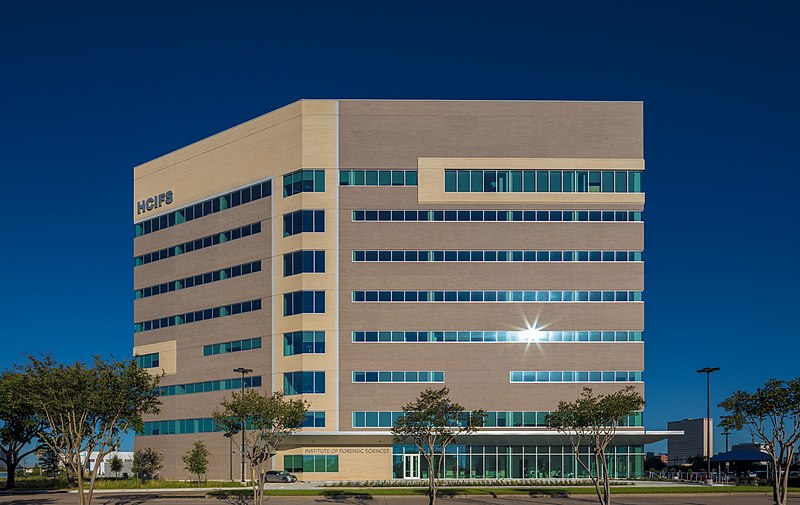
Harris County’s Institute of Forensic Sciences (IFS) has been awarded a $12.1 million federal grant to renovate and expand the facility that provides medical examiner and crime laboratory services for the Houston area. A Congressional subcommittee awarded the grant in December, an official from U.S. Representative Al Green’s office told Government Market News.
The $20 million project will consolidate medical and crime lab services and includes relocating and expanding the Forensic Genetics (DNA) Laboratory, currently located off-site at 2450 Holcombe Blvd.
The project will help tackle funeral home and criminal case backlogs that require increased DNA testing capacity. Upgrades will also be made to firearms identification systems.
Click here for more
(Photo courtesy of Michelelynnarnold.)
| |
The U.S. Department of Energy (DOE) is investing $2.5 billion in carbon capture and has advanced three demonstration projects for funding.
The three projects combined will receive up to $890 million through the Bipartisan Infrastructure Law. Upon completion, they are anticipated to remove about 7.75 million metric tons of carbon emissions from being released – the equivalent of 1.7 million gasoline-powered vehicles. The projects are geographically diverse and located in North Dakota, California and Texas.
More than one-quarter of the U.S.’s carbon emissions come from the power sector, so the projects will use new technologies and updated infrastructure to remove carbon dioxide from the energy production process. Managed by the DOE’s Office of Clean Energy Demonstrations (OCED), these projects will test how this technology can be further expanded to reach U.S. goals of having carbon-free energy production by 2035 and net-zero emissions by 2050.
Click here for more
(Photo courtesy ADIGUN AMPA on Unsplash.)
| |
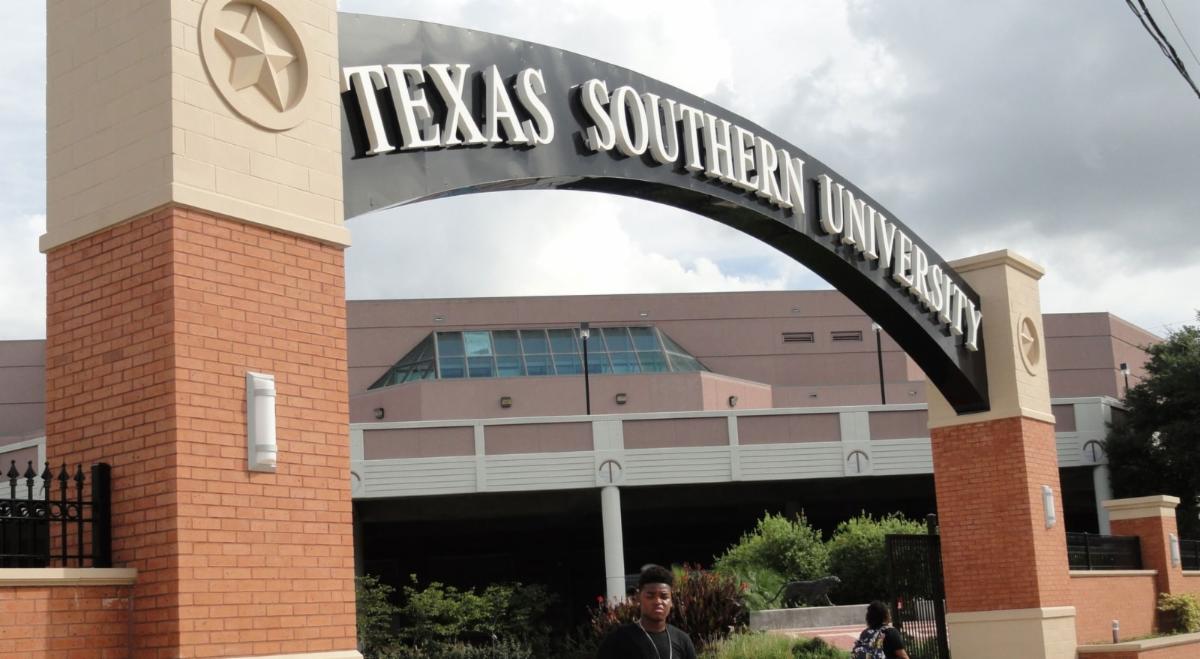
Houston’s Texas Southern University (TSU) is among 11 organizations nationwide that will serve as grantmaking entities for an Environmental Protection Agency program designed to simplify the grant-funding process for underserved and marginalized communities.
TSU’s Bullard Center for Environmental and Climate Justice will receive $50 million, which it will then redistribute as subgrants to community-based organizations (CBOs). As a historically black university, TSU is a model candidate for the EPA’s Environmental Justice Thriving Communities Grantmaking Program (EJTCGM).
Each of the 11 grantmakers will serve as pass-through entities and will develop their own systems for who gains access to funding and how the money will be distributed.
For TSU, that means forming an advisory committee composed of subject-matter experts, academics and leaders of successful environmental-justice CBOs. The committee will review applications and approve funds for a variety of activities, including small local clean-ups, local emergency preparedness and disaster-resiliency programs, air quality and asthma-related projects, healthy homes programs and projects addressing illegal dumping.
Click here for more
(Photo courtesy of the Bullard Center for Environmental and Climate Justice.)
| |
El Paso will use a $9.9 million U.S. Department of Transportation (USDOT) grant to improve safety along the North Yarbrough Drive corridor, a major north-south road that runs between Interstate 10 and U.S. Route 62 on the city’s east side.
El Paso is one of 385 communities receiving grants from USDOT’s five-year, $5 billion Safe Streets and Roads for All (SS4A) program. The federal agency announced SS4A grants worth a combined $817 million in December.
The funds will help implement the city’s Vision Zero strategy, which seeks to reduce roadway deaths to zero across El Paso. Other cities such as Minneapolis, Las Vegas, and Philadelphia have also committed to Vision Zero and received SS4A grants.
Between 2017 and 2021, almost 200 pedestrians were killed on El Paso roadways, and 649 were seriously injured, according to the Vision Zero draft action plan.
Click here for more
(Photo courtesy of the city of Colorado Springs.)
| |  |
 | |
Lubbock’s City council has signed a three-year contract with sustainability-focused tech company Rubicon Global to install tablets and other monitoring devices in its fleet of 60 solid-waste collection vehicles.
Rubicon’s portal and mobile app platform will allow the city’s Solid Waste Department to monitor collection routes in real-time to confirm service and to re-assign vehicles as needed. The smart technology will also ensure routes are completed on schedule, while providing specific vehicle data such as speed, location, idle time and vehicle diagnostics.
The city has been using the technology as part of a nine-month pilot program. Across the nation, governments are increasingly using “smart city” technology to enhance the quality of life for residents. For example, Washington, D.C., is upgrading its entire streetlight network of more than 75,000 lights to LEDs. The project also involves installing remote monitoring technology, brightness control and wireless access points to expand the city’s WiFi network.
Click here for more
(Photo courtesy of the city of Lubbock.)
|  | |
Gov. Greg Abbott has appointed Keith Halman to the Department of Information Resources (DIR). His term will expire Feb. 1, 2025.
The DIR offers purchasing support and policy insights to help all levels of Texas government find and securely implement modern technology. It also sets strategic direction for IT statewide, analyzes cybersecurity risks, assists with technology procurement and purchasing, and collaborates with state technology vendors.
Halman is the associate vice chancellor and chief information officer (CIO) for the Texas Tech University System and serves as the interim CIO for Texas Tech University in Lubbock.
|  | |
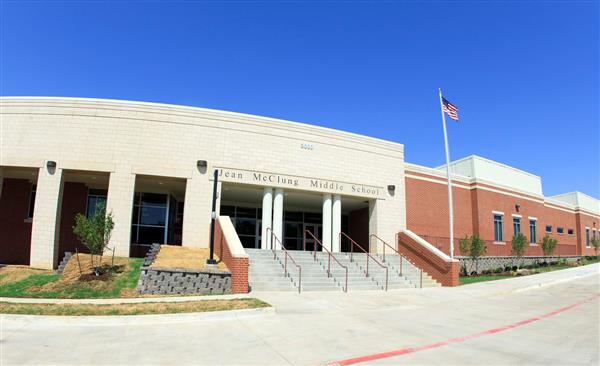
Construction is expected to get underway in 2024 on one of two middle school renovation projects voters approved as part of a 2021 bond package.
Work on Jean McClung Middle School includes interior renovations and adding a secured front entry vestibule. Other additions to the school in Fort Worth’s Handley neighborhood include new Special Education and Visual Arts classrooms. The $28.7 million project is currently in the design phase, with construction expected to begin in the third quarter of this year.
Voters also approved renovations to William James Middle School in the city’s El Poly Pyramid neighborhood. Plans include new separate rooms for band, orchestra and choir, plus new science labs. Other additions include a secured front entry vestibule and a new weight room at the auxiliary gym.
Click here for more
(Photo: McClung Middle School. Courtesy of the Fort Worth Independent School District.)
| |
On Jan. 4, residents of the city of Hutto were introduced to Alberta Barrett, the city’s next finance director. Previously serving as the city of Del Rio’s finance director, Barrett brings over three decades of local government finance experience to the role.
| |
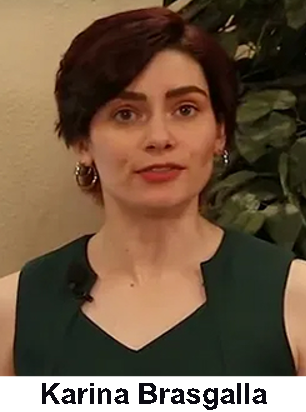
The city of El Paso has promoted Karina Brasgalla to serve as the interim director for the Economic and International Development Department. Brasgalla has worked with the city since 2017, starting in the Planning and Inspections Department. She most recently held the assistant director position for the Economic Department.
| |
Lynn Clouser took over the role of mayor pro tem for Missouri City from Floyd Emery. The City Council appointed Clouser during its Dec. 18, 2023, meeting. She assumed the role effective immediately and will continue to serve until December 2024. Clouser has held a seat on the City Council since 2020.
| |
Michael Marrero will assume his duties as the city of Cleburne’s city manager Jan. 16. Marrero previously served as the city of Odessa’s city manager. He will replace outgoing City Manager Steve Polasek following his retirement. Marrero brings 29 years of municipal government experience to the role.
| |
Gov. Greg Abbott announced these appointments and reappointments from Dec. 29 through Jan. 4:
Texas Pharmaceutical Initiative Governing Board
Mike McKinney, M.D. - Bryan
Goldina Erowele, Pharm.D. - Missouri City
Tony Schell - Austin
Task Force On Consolidation Of Workforce And Social Services
Courtney Arbour - Austin
Leslie Cantu - Poteet
Sylvia Kauffman - Austin
Texas State Board Of Pharmacy
Garrett Marquis - Dallas
Randy Martin, Pharm.D. - Fort Worth
(both reappointed)
Rick Fernandez - Argyle
Julie Spier - Katy
Texas State Board Of Examiners Of Psychologists
(all reappointed)
Herman Adler - Houston
Ryan Bridges - Houston
Andoni Zagouris - McAllen
| |
Texas Government Insider is a free weekly newsletter detailing important happenings throughout the state and summarizing current political issues relevant to individuals interested in government.
Publisher: Mary Scott Nabers
Editors:
Adam Rollins
Dave Doolittle
| | |
|
|
Check out our
social media links!
|
|
Help us share this message.
To ensure delivery and proper formatting of the newsletter, be sure to add editor@spartnerships.com to your safe senders list. Otherwise, the newsletter may be flagged as spam and automatically routed to your junk e-mail folder.
| |
|
For news or calendar items: editor@spartnerships.com
For information about SPI's products and services: sales@spartnerships.com
© 2024 Strategic Partnerships, Inc. All rights reserved.
| | | | | |