Volume 22, Issue 3 - January 19, 2024 | |
|
After working for the past 25-plus years to help companies be successful in selling to government, I get questions daily about what it takes to be successful in the public sector marketplace. This column’s objective is to provide some “Best Practices for Success” because I firmly believe it is in the best interest of all parties, including taxpayers, to make collaborations and public and private sector interactions as successful as possible.
The U.S. government marketplace is the largest transactional market in the world. Is it competitive? Absolutely! It is also unlike any other sector, and I say this often to companies – “Don’t jump into this space until you understand it well because there are too many landmines to be avoided and too many mistakes that you should not make.”
Companies that best understand the market space are the most successful. It is rarely the size of a company that determines its success rate. Instead, firms that are most successful understand how to interact with public officials, communicate well, build credibility, respect the politics and navigate the bureaucracy well.
So, where to start? Because there’s too much to share in one short column, I will address how to get started. It includes tips that we pass on when we engage with new clients to help them be more successful.
Click here for more
|  | |
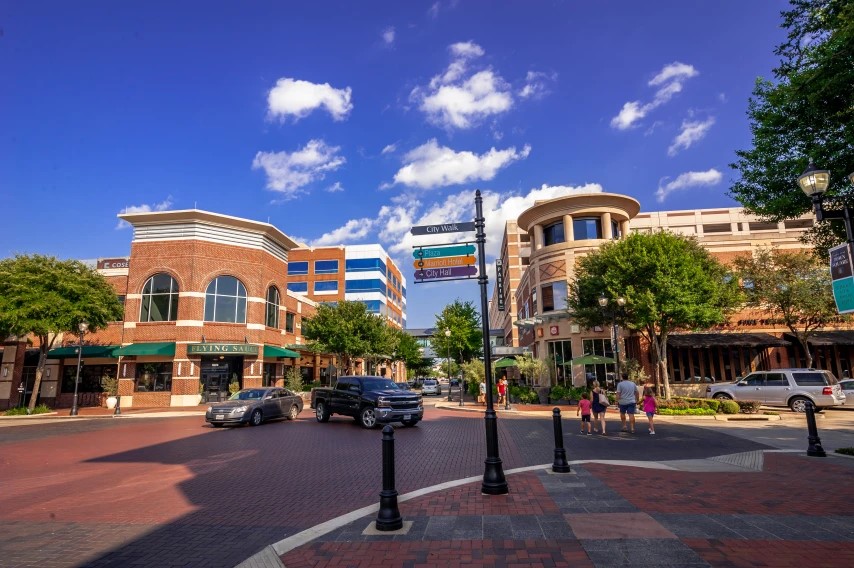
A traffic system that uses artificial intelligence is expected to improve traffic flow and public safety in the Houston-area city of Sugar Land.
The detection system fuses radar, video and vision AI technologies to identify and track vehicles, pedestrians and bicycles as they enter intersections. If it detects stalled vehicles and accidents, the system will send an automated notification to the traffic management center and law enforcement.
It can also measure how long a vehicle or pedestrian waits at an intersection as well as what percentage of vehicles arrive during red or green lights. The system will also detect and record vehicles as they run red lights. All collected data is saved in the cloud for later use.
Click here for more
(Photo courtesy of Fort Bend County.)
| |
The Texas Water Development Board (TWDB) is seeking input on how to implement and distribute $1 billion from the voter-approved Texas Water Fund. The 88th Texas Legislature created the $1 billion fund in 2023 to support water supply projects across the state.
The TWDB must allocate no less than 25% of the $1 billion to the New Water Supply for Texas Fund, which is designed to implement innovative water supply strategies such as marine and brackish water desalination. A portion of the funding must also be used to support water infrastructure projects in rural areas and municipalities with less than 150,000 people. The funds must also go to projects that feature substantially completed permitting, water conservation strategies and water-loss mitigation projects.
TWDB is seeking feedback on how to best allocate the fund’s $1 billion. It should be noted that the new administrative rules are not required to implement the fund. The TWDB will gather input through three surveys that went live Jan. 18.
Click here for more
(Photo courtesy of Waldemar on Unsplash.)
| |
Willis Independent School District (ISD) officials are asking voters to approve a $218.1 million bond measure in May to upgrade a high school, build a stadium and add activity centers. The projects will accommodate student growth and expand recreational opportunities. Early voting runs from April 22 to April 30, with election day May 4.
Proposition A would allocate $102.7 million to expand the high school’s ninth-grade wing to accommodate an additional 1,200 students. The proposition would also fund construction of a transportation center, parking lot upgrades and general infrastructure at the school.
Proposition B would provide $68.6 million to build an 8,500-seat stadium and athletic complex. The facility would occupy 62 acres near the high school. It would include concessions, large restroom facilities and a fieldhouse. Plans also call for a community room to host meetings, banquets and special events.
Click here for more
(Photo courtesy of HIM Nguyen.)
| |
The Texas Water Development Board (TWDB) awarded $41.2 million to four projects to improve water and wastewater systems. The projects include improving water treatment plants, building treatment systems and relocating water lines.
The Sharyland Water Supply Corp., which services Hidalgo County, will receive $35.9 million to relocate approximately 26.5 miles of waterlines. The project will also improve functionality, create redundancies and increase treatment capacity at two water treatment plants. The funding comes from the Drinking Water State Revolving Fund (DWSRF), including $25.9 million in loans and $10 million in principal forgiveness.
The Millersview-Doole Water Supply Corp. will receive $2.5 million in principal forgiveness from the DWSRF to help plan, design and build a treatment system and chlorine dioxide system. The corporation, which serves four counties in Central Texas, will use any remaining funds to improve its pump station sites.
Click here for more
(Photo courtesy of Ivan Bandura on Unsplash.)
| |
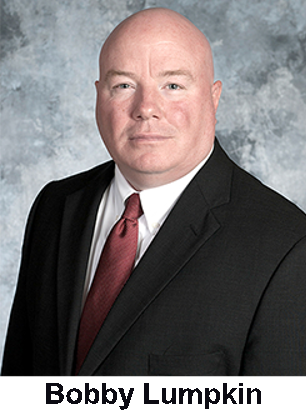
Bobby Lumpkin
Director of Correctional Institutions Division
Texas Department of Criminal Justice
| |
Public career highlights and education: I am a 33-year veteran of the Texas Department of Criminal Justice and currently hold the position of Director of the Correctional Institutions Division. Over the years, I have gained extensive knowledge and experience through various roles within the department. My journey began in 1990 as a correctional officer, and I progressively climbed the security ranks. I have also served as the Deputy Director in Private Facilities Contract Monitoring Oversight Division and as the Division Director of the Manufacturing, Agribusiness and Logistics Division.
In my current role, I oversee 92 prison and jail facilities, as well as departments such as Classification and Records, the Safe Prisons Management Office, and the Security Threat Group Office. Additionally, I serve as the President for the National Correctional Industries Association and the Texas Corrections Association. I am also a member of the North American Association of Wardens and Superintendents and actively support the Correctional Peace Officers Foundation. In the past, I have held the position of Chairman of ACA’s Correctional Industries Committee and served as a commissioner on the Commission on Accreditation for Corrections.
I hold a Bachelor of Science degree in Criminal Justice and a Master of Science in Criminal Justice Leadership and Management, both from Sam Houston State University.
What I like best about my public service is: Daily opportunities to be a difference maker with the thousands of employees I serve with, and the men and women incarcerated in our facilities.
The best advice I’ve received is: A mentor once shared, “As a leader always remember your career path and the experiences, both rewarding and challenging, along the journey.” This has made me a stronger communicator and early on, inspired my desire to be a servant leader.
People might be interested to know that: Graduated from a rural high school with less than 30 classmates with intention to be a high school football coach before discovering my path of public service within state government.
One thing I wish more people knew about the Texas Department of Criminal Justice is: Our agency, with the assistance of our internal/external stakeholders, has been invested in the successful reentry of thousands of men and woman for many years now. This investment directly impacts public safety and has resulted in a 20% recidivism rate, which is one of the lowest in the country.
| |
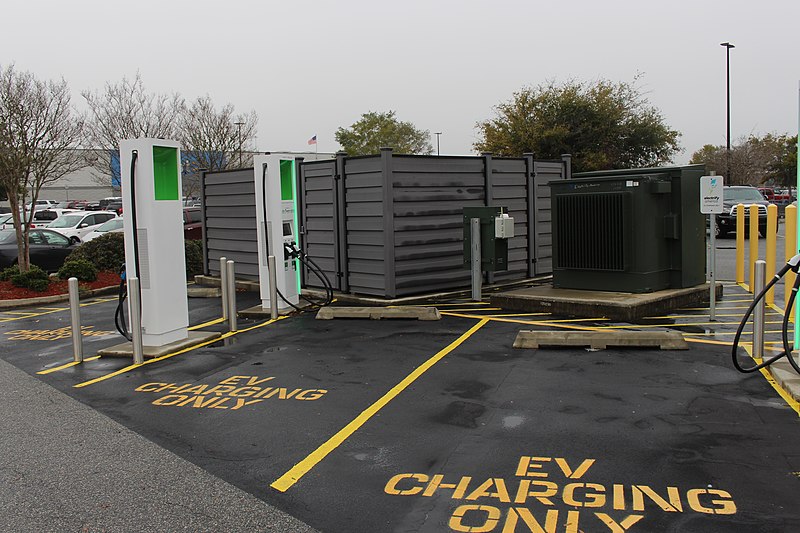
The Department of Transportation is releasing almost $150 million in grants to improve existing electric vehicle charging stations in 20 states. The funds are part of a larger effort to build out an EV charging network nationwide.
The grants, split up in 24 awards, come from the National Electric Vehicle Infrastructure (NEVI) Formula Program, created by the Bipartisan Infrastructure Law (BIL) and will help replace, repair or otherwise bring EV charging stations up to code.
NEVI is a $5 billion program and has an initial goal of funding designated Alternative Fuel Corridors for electric vehicles to expand the EV charging network along the Interstate Highway System.
Grant recipients will use the money to increase the reliability and accessibility of the current EV charging network by addressing issues with EV charging infrastructure, totaling almost 4,500 ports.
Click here for more
(Photo courtesy of Michael Rivera.)
| |
The U.S. Department of Energy (DOE) will commit $104 million for energy conservation and clean energy projects at 31 federally owned facilities nationwide.
The funding comes from DOE’s Assisting Federal Facilities with Energy Conservation Technologies (AFFECT) program. The money is the first of three disbursements from a $250 million allocation for the program in the Infrastructure Investment and Jobs Act passed by Congress in 2021.
The AFFECT program, which was created in 1992 assists federal agencies to reduce energy consumption through building electrification, geothermal heat pumps, on-site solar generation, battery energy storage and other initiatives.
The projects are expected to double the amount of current on-site carbon-free electricity at federal facilities, resulting in 27 megawatts of additional energy, leverage more than $361 million in private investment at these sites and serve as a demonstration model for other federal agencies, according to a DOE statement.
Click here for more
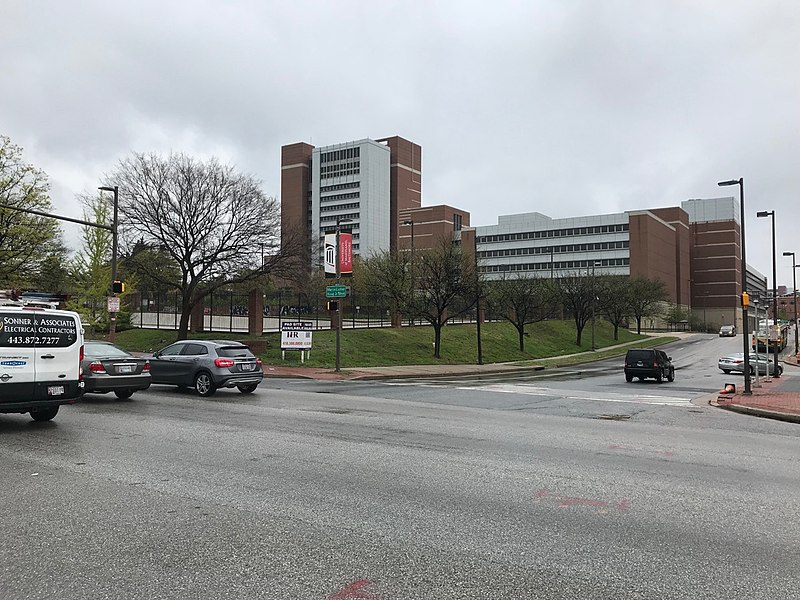
(Photo: The Social Security Administration headquarters in Baltimore. Courtesy of Eli Pousson.)
|  | |
Woodside Energy has donated $12.5 million to Rice University to create the Woodside-Rice Decarbonization Accelerator, a program that will commercialize innovative decarbonization technology. The funding establishes a five-year technology collaboration between Rice and Woodside to find ways to reduce greenhouse gas emissions and develop lower carbon solutions.
The Houston-based initiative will fast-track the commercialization of climate technologies, focusing on products derived from captured carbon dioxide and methane. Specifically, researchers hope to leverage cold plasma technology, which uses partially ionized gas at reduced pressure to break down carbon dioxide.
There are approximately 65 gigatons of CO2 emissions produced per year. Plasma is a resource that is already used at scale in semiconductor industries and medical applications. As an ionized gas, cold plasma is ideal for breaking down CO2 and using its components. The result may be used to produce better batteries, transistors and other materials for energy technologies.
The accelerator aims to create a greener world and achieve Net Zero environmental impact by making breakthrough green technologies more readily available.
Click here for more
(Photo: Rice University President Reginald DesRoches speaks at the official initiative announcement. Courtesy Jeff Fitlow of Rice University.)
| |  |
|
Gov. Greg Abbott has appointed Thomas Gleeson chair of the Public Utility Commission of Texas (PUC), which regulates the state's electric, water, wastewater and telecommunications utility industries. Gleeson’s term is set to expire Sept. 1, 2029.
Gleeson has worked for the PUC for over 15 years in various roles, most recently as executive director since 2020. He has also served as chief operating officer, director of finance and administration and a fiscal project manager.
“Thomas Gleeson’s longtime service at PUC and wealth of knowledge make him the ideal choice for Chair of the Commission,” Governor Abbott said in a statement.
|  |  | |
The Environmental Protection Agency (EPA) has formally proposed a final rule to implement a plan to curb excessive methane emissions by oil and gas companies.
The oil and gas sector is the largest industrial source of methane emissions in the United States, responsible for approximately one-third of total U.S. methane emissions.
The $369 billion Inflation Reduction Act (IRA), which aims to reduce carbon emissions by 40%, was passed in 2022. Under the law’s Methane Emissions Reduction Action Plan, companies who report carbon emissions of more than 25,000 metric tons will pay $900 per ton for their methane output beginning this year. Companies will pay $1,200 more in 2025 and $1,500 in 2026 and beyond.
The final plan details how the EPA expects states to eventually enforce the new law. The final rule will take effect 60 days after it is published in the Federal Register.
The EPA will give states two years to create a plan to implement the new regulations.
Click here for more
(Photo courtesy of Anne Nygard on Unsplash.)
|  |  | |
City Council members in the North Texas town of Celina have signed off on developing a 9-acre urban park, called Ousley Park. The project has an estimated $22.5 million cost, with $14 million allocated to building the park and $8.5 million for restoring a nearby stream, called Doe Branch Creek.
Ousley Park’s master plan calls for a basketball pavilion, pickleball courts and an outdoor fitness center. The design also features a splash pad and an all-abilities playground, both covered by shade canopies, and a large fountain placed at the park’s main entry point. The park includes an open-air performance pavilion and a pair of separated spaces for large and small dogs.
The park also will feature art, athletics history and memorial walks, pedestrian bridges and a treehouse observation deck. The city will invest in the park’s greenspace by building community and pollinator gardens, preserving and adding riparian areas, incorporating open space and creating a nature playground.
Click here for more
(Photo courtesy of the city of Celina.)
|  | |
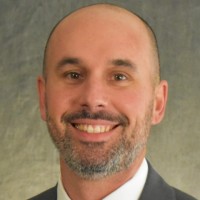
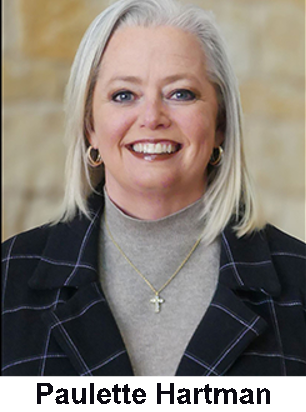
On Jan. 8, the North Richland Hills City Council named Paulette Hartman as city manager. Hartman joined the city as an assistant city manager in July 2014 and became deputy city manager in October 2018. Hartman brings 28 years of government experience to the role. She officially assumes her duties April 1.
| |
The Del Rio City Council voted unanimously to appoint Assistant City Manager Manuel Chavez to serve as interim city manager as the search for a new lead administrator for the city begins. Chavez took over the role from John Sheedy, who resigned Jan. 9.
| |
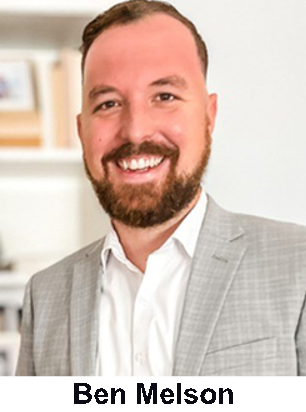
Ben Melson began his tenure as Lone Star College’s vice chancellor of strategic engagement and communications Jan. 8, 2024. Melson brings extensive experience with government relations, advocacy policies and strategic communications.
| |
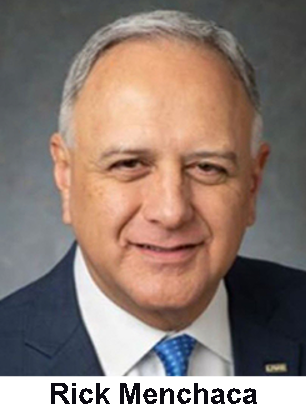
The Texas Board of Trustees has welcomed Rick Menchaca to the Municipal Advisory Council (MAC). The latest member of the Board, Menchaca brings 22 years of city management experience to the role. He began his career as an analyst for the city of Lubbock and later served as the city manager for San Marcos and Midland.
| |
Gov. Greg Abbott announced these appointments and reappointments from Jan. 12 through Jan. 18:
Sabine River Authority Board Of Directors
James W. “Bill” Bruce - Orange
(both reappointed)
Thomas Beall - Milam
Cliff Todd - Long Branch
| |
Texas Government Insider is a free weekly newsletter detailing important happenings throughout the state and summarizing current political issues relevant to individuals interested in government.
Publisher: Mary Scott Nabers
Editors:
Adam Rollins
Dave Doolittle
| | |
|
|
Check out our
social media links!
|
|
Help us share this message.
To ensure delivery and proper formatting of the newsletter, be sure to add editor@spartnerships.com to your safe senders list. Otherwise, the newsletter may be flagged as spam and automatically routed to your junk e-mail folder.
| |
|
For news or calendar items: editor@spartnerships.com
For information about SPI's products and services: sales@spartnerships.com
© 2024 Strategic Partnerships, Inc. All rights reserved.
| | | | | |