|
A brownfield property is an abandoned site that has been contaminated by previous industrial use. Many brownfield properties are the former sites of dry-cleaning firms, manufacturing plants or gas stations. To be used, the site must be remediated and made safe.
The Environmental Protection Agency (EPA) has funded remediation projects for years and recently announced another $233 million for new projects, some of which are outlined in this column. The federal funding support is available for efforts to redevelop underutilized public assets and other properties that need to be sanitized to protect public health and the environment.
Many cities and counties benefit from economic revitalization by transforming polluted and abandoned properties. The EPA will soon announce even more funding allocations this year, and the upcoming awards will range from $500,000 to $4 million per project.
City officials in Houston, Texas, will soon launch a brownfield remediation and redevelopment project on the former Velasco Street Incinerator site near Buffalo Bayou. The contaminated property is in an area historically impacted by industrial pollution. The project will be designed to remove a toxic ash heap left behind from decades of incineration. Once the polluted dirt is removed, the land will be capped and converted into a community park. Contracting solicitations will be issued soon because the remediation work will begin later this year.
Officials in Franklin County, Massachusetts, were awarded $10 million in EPA funding to remediate what was once known as the Strathmore Mill Complex. It contains 10 dilapidated buildings and is polluted with petroleum, heavy metals and toxic chemicals. The project calls for work to begin with demolishing the abandoned buildings on the site. Then, the project calls for stabilizing a hydroelectric plant within the complex. The objective will be to restore the area so that a four-acre municipal riverfront park can be developed, and it will connect to an existing bike path. The site will also be ready for other uses, including light manufacturing, retail and professional offices. Road improvements will be required, and a closed pedestrian bridge will be restored. The project is currently in the final stages of design and demolition work is scheduled to begin in 2025.
Click here for more
| |
Texas A&M University (TAMU) in College Station will build a $250 million multidisciplinary hub to house laboratories, classrooms and research facilities. Construction is expected to begin in August 2025.
The Aplin Center project will build an approximately 200,000-square-foot, three-story facility on an 8-acre site to advance the university’s reputation as an educational pioneer for research and cutting-edge technology. The structure will include nearly 20,000 assignable square feet, including two covered pavilions for outdoor activities and three elevators.
The university will feature spaces for advanced laboratories and interactive classrooms. The facility will provide dedicated amenities, tools and resources to support research in enology, fermentation, coffee production, meat science and dairy production. Plans include building seven classroom kitchens to house between 30 to 300 students each.
The facility will dedicate two classrooms as demonstration kitchens for food preparation, cooking, sampling and beverage tasting. Plans include installing a multi-station kitchen for group instruction, a product development kitchen for experimentation and innovation and a sensory kitchen suite to serve products and conduct research.
Plans include allocated spaces for the university’s Aggieland Visitor Center, Benz School of Floral Design and the Center for Retailing Studies in the Mays Business Schools. The visitor center will feature a large welcoming lobby, a 200-person theater, walking and golf cart tour access, student tour guide space, a call center and offices for admissions councilors.
The university will integrate retail and restaurant components into the facility, where the Center for Retailing Studies will manage the retail space and a third party will run the restaurant. The project will include additional programming spaces for conferences and events, a microbiology lab, a group tasting room and a virtual reality (VR) room.
The project will incorporate extensive green space into its design, featuring an open green space west of the facility and maintaining the existing live oak trees. The university will remove the parking lot that currently occupies the chosen space for the Aplin Center. After removing the existing parking lot, plans include paving the site, building parking and installing drainage systems and utilities.
(Photo courtesy of Clem Onojeghuo on Unsplash.)
| |
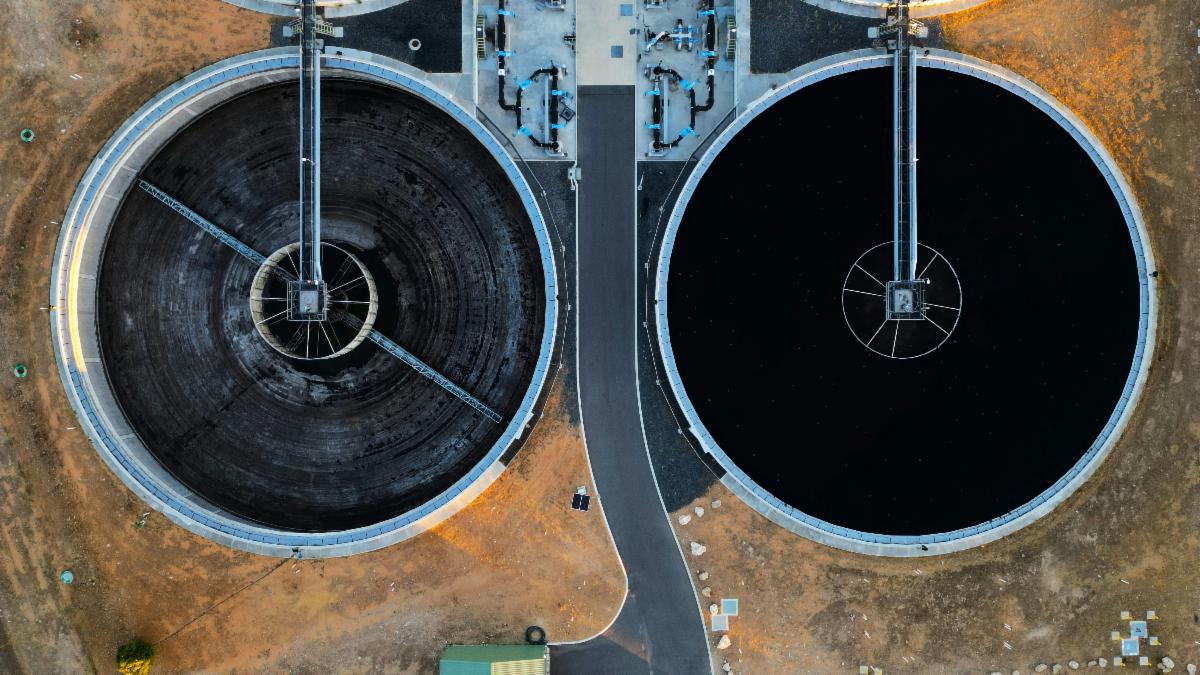
Water utilities across the state agree that there is a pressing need to upgrade aging infrastructure to preserve the efficacy and safety of water sources. A recent survey revealed that 70% of utilities believe the Texas Legislature has not committed enough attention or resources to adequately support water infrastructure and supplies.
The Texas Water Infrastructure Network (TXWIN) and Collaborative Water Resolution (CWR) conducted a 2024 survey to identify trends and challenges in water infrastructure needs and decision factors. The survey indicates a consistent, resounding understanding that the Texas Legislature should consider investing in a permanent funding stream for water infrastructure and policies.
The survey results include critical data from 246 water utility companies on key areas of concern and driving needs. The feedback shows that the most important investment needed to sustain Texas’ population growth and ensure regulatory compliance is a major investment in infrastructure. The survey also determined that:
- 92% reported that their current or projected revenues were stable or increasing.
- 76% had increased their budgets for construction costs due either to inflationary or supply chain issues.
- 63% had delayed projects.
- 75% are interested in pursuing funding from the new Texas Water Fund or the new Texas Water Supply Funds.
- 81% support dedicated revenues for water similar to transportation.
The study found that water utilities prefer to solicit the Texas Water Development Board (TWDB) for financial assistance. Approximately 68% applied for water infrastructure funding through TWDB, and 75% expressed an interest in applying for support from the 2023 Texas Water Fund.
(Photo courtesy of Iain Kennedy on Unsplash.)
|  | |
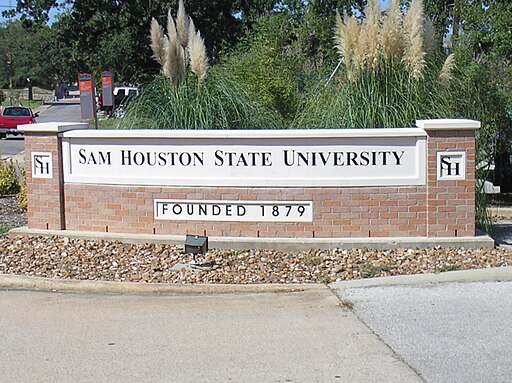
Sam Houston State University (SHSU) will spend $24.7 million to build an university-owned, revenue-producing hotel. Construction is expected to begin in September 2025.
The SHSU Hotel will be an upscale, university-owned facility that will feature approximately 120 guest rooms. The building will include a hotel lobby to welcome guests, a reception area and seating arrangements. In addition, the layout will feature elevators and elevator lobbies connecting guests to all floors.
The hotel will dedicate between 5,000 and 10,000 square feet of meeting rooms in various sizes. The university will equip each room with modern audio-visual technology for meetings, conferences and events. The hotel will also feature an administrative office to manage operations and act as a hub for staff and administration.
The university will factor in back-of-house spaces to support daily operations, including laundry, housekeeping and maintenance facilities. The hotel’s kitchens will include state-of-the-art amenities for banquets and room service. The SHSU Hotel will include restaurants, bars and pre-function spaces to provide comfortable waiting areas between events, conferences and functions.
Plans include adequate public restrooms located throughout the hotel. In addition, the project will build amenities such as a fitness center, pool and a dedicated lobby for retail, business centers and other future amenities at street level.
(Photo courtesy of Bigguill.)
| |
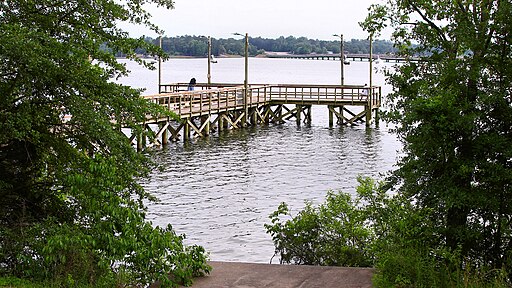
During its Sept. 12 City Council meeting, Abilene officially approved the $49.3 million Lake Fort Phantom master plan.
The plan outlines eight city-owned locations included as part of the project’s scope. The architect developed a clear development roadmap highlighting five focus areas from these locations as the project’s highest priorities:
- Johnson Park Area.
- Sea Bee Park Area.
- Southeast Boat Ramp.
- Boulder Bay and Northeast Beach.
- The Promenade.
The Johnson Park area will feature numerous recreational amenities, including disc golf courses, enhanced beaches, sports courts, dedicated swimming areas and adventure towers. The project will include dedicated shallow and deep fishing zones, boat launch spaces, a harbor and trailer parking. The city will include areas for tent camping, trails, a lodge and restrooms.
The park design includes kayak, paddle and row routes, greenspace, fishing piers, covered boat slips and a public art peninsula. The city will build a signature marina, a restaurant, a dog park and commercial and mixed-use spaces. The project will include building a Texas Department of Transportation (TxDOT) rest stop and government offices with lake access. The park will connect to the Promenade, a planned decomposed granite trail along the shoreline.
Sea Bee Park will prioritize greenspace, including preserve zones, habitat restoration zones and equestrian, bird, wildlife, fishing and stargazing trails. The project will build on existing amenities by adding waterfront vistas, flex space, enhanced boat launching space, parking areas and tent camping.
The city will expand educational and interactive features, including an environmental education area, discovery area, nature center, offices, mist garden, urban agriculture space and spectator zone. Plans include dedicating areas for commercial and mixed-use development.
The Southeast Boat Ramp will feature kayak, paddle and row routes, dedicated swimming areas, fishing zones, an enhanced beach, docks and boat phasing spaces. The project will build an enhanced and expanded boat launch area, parking, a stop-in, restrooms, an overlook and a silo park. The area will include picnic spaces, a tent and primitive camping spot and a space dedicated to commercial and mixed-use development.
Boulder Bay and Northeast Beach include several similar amenities, such as kayak, paddle and row routes, swimming areas, beaches, boat launches and fishing spots, piers and zones. The plan includes building RV and tent camping areas, parking spaces, flex space, a preserve zone and scenic overlooks.
The project will build a drive-in theater, restrooms, yard games area, clubhouse, signature play space, a central pavilion and event lawn. The city will build a signature pavilion, install cargo nets, establish a food truck park and lay down trails.
(Photo courtesy of Larry D. Moore.)
| |
SPI welcomes Sam Hogue as its newest consulting partner. Sam has served in public education in Texas and New Mexico for 34 years. He began as a high school science teacher and coach in 1991 before going on to serve 23 years as an administrator at both the campus and district levels. Sam has been a middle, high school, early college high school principal and an instructional specialist, secondary director and deputy superintendent at the district level.
Sam has been a member of various district-level committees which addressed district finance, facilities and bond planning, as well as restructuring. Through Raise Your Hand Texas, he was selected to attend a summer symposium at Harvard University for high school redesign. Sam earned recognition for his leadership being selected as 2011-2012 Texas Association of Secondary Principals (TASSP) Region 19 High School Principal of the Year, and received the 2006 Outstanding Administrator Award from Area 19 PTA.
As principal at Sun Ridge Middle School, the campus was listed in December 2006 and 2007 issues of Texas Monthly as one of “Best Schools in Texas” for comparable improvement data gathered by National Center for School Accountability. His leadership extended to the local and state levels as he was Region 19 Coordinator and a member of TASSP Board of Directors 2006-2007. Sam was also selected to represent Fabens ISD on the Texas State Parks and Recreation Hueco Tanks community involvement committee.
Sam holds an Ed.D. in Education Administration from The University of Texas at El Paso, an M.Ed. from Sul Ross State University, and a B.A. in Secondary Education from The University of Akron. He was an adjunct professor for Sul Ross State University and a consultant mentoring secondary administrators. Sam looks forward to continuing to contribute to the field of education and serving his community in various capacities in the years to come.
| |
Jim Reed
Chief Information Officer
Central Texas Council of Governments
| |
Public career highlights and education: My professional highlights include service as a Captain in the U.S. Army, working in both the private and public sector, working with state and local governments, culminating in my current role here at CTCOG.
What I like best about my public service is: Public service offers me the opportunity to work on issues that impact people daily. For me that means being in relationships with the public to grow trust in what can be accomplished by working together.
The best advice I've received: “Seek to understand before seeking to be understood.” I try to put this into practice daily. By listening to what is important to others rather than making my point, I have found insights into how to resolve issues and conflicts.
People might be interested to know that: I was one of the first Apache helicopter pilots in the world. That model is now in a museum, but it was exciting and new back then!
One thing I wish more people knew about the CTCOG: Regional councils of governments cover every municipality in Texas. Each one is locally owned and operated and is a wealth of information and resources. They exist to serve the public, so engage them with your needs.
| |
The Public Utility Commission of Texas (PUCT) has approved a new reliability standard for the Electric Reliability Council of Texas (ERCOT) region. Establishing this standard will enable regular evaluations of the grid’s capacity to meet power demand and assist both the PUCT and ERCOT in identifying potential market or reliability improvements needed in the future.
Under the rule adopted by the commission, the ERCOT grid must satisfy three criteria to comply with the reliability standard:
- Frequency: The ERCOT region should not experience a grid outage due to insufficient power supply to meet demand more than once every ten years on average.
- Duration: Any potential grid outage caused by inadequate power supply should be expected to last less than 12 hours.
- Magnitude: The amount of electricity lost during any hour of a potential outage due to inadequate power supply should be less than the amount of electricity that can be safely managed during such an outage.
The rule also establishes a procedure for regularly evaluating the ERCOT region’s reliability, starting in 2026. Every three years, ERCOT will be required to assess if the power system is meeting the reliability standard. It must also determine if the grid is expected to continue meeting that standard for the next three years.
Should ERCOT find that the system does not meet the standard, it must report suggested modifications to the market to address the issue and detail the potential costs of these changes. The PUCT will then allow public feedback for 30 days on the ERCOT assessment.
Additionally, if ERCOT indicates that the system does not meet the reliability standard, the independent market monitor (IMM) must carry out its own review, and commission staff must offer their recommendations on possible market design changes and their associated costs. The PUCT will then examine ERCOT’s assessment, the IMM’s review, staff recommendations and public comments to decide if any adjustments to the market design are needed.
Commissioners also signed off on a Value of Lost Load (VOLL) for the region served by ERCOT, which estimates the value of electric reliability to consumers. Based on a survey of customers and an analysis by ERCOT, the commission set the VOLL at $35,000 per megawatt-hour. This value will assist the PUCT in assessing future market or reliability enhancements.
Further information related to reliability standard’s development, as well as the VOLL and consumer survey, is available online.
(Photo courtesy of Braden Wagner on Unsplash.)
| |
Rice University (RU) has developed an AI framework that uses existing tools and resources to deliver real-time flooding and road condition reports.
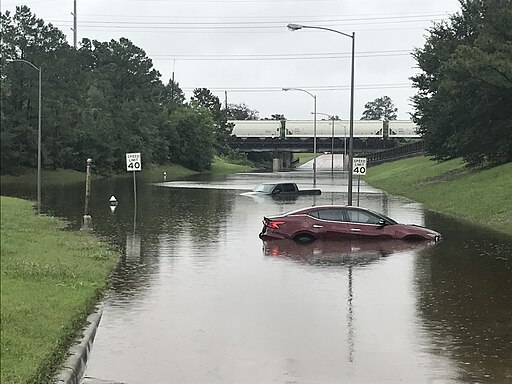
Cities, counties and states currently have few reliable systems in place that can evaluate flood-prone road conditions with the speed and precision needed to keep residents updated at a moment’s notice. While tools – including traffic cameras, water-level sensors and social media data – can provide valuable insights, they are not designed to work in conjunction or directly monitor dynamic flooding conditions. As a result, flooding fatalities due to mobility-related incidents remain high across the nation.
RU engineers developed the Open Source Situational Awareness Framework for Mobility using Data Fusion (OpenSafe Fusion) as a feasible solution to flood monitoring gaps. Instead of deploying new technologies, OpenSafe Fusion repurposes existing individual reporting mechanisms and public data sources to gauge dynamic road conditions during flooding events.
Situational awareness and emergency response are impeded by the limited number and capabilities of existing data sources. These individual frameworks are beneficial and useful for certain applications. However, they aren’t the comprehensive situational awareness solution needed to mitigate safety risks, enhance emergency response times and inform drivers on road conditions.
- Social media provides updates on road and weather conditions but struggles with bias and misinformation.
- Traffic cameras can capture visual roadway flood conditions but are restricted to select watchpoints.
- Satellite and aerial platforms are slow to transmit data and are frequently unavailable due to inclement weather.
- Deploying a dedicated sensor network designed to improve situational flood level awareness would be prohibitively expensive to operate and maintain at scale.
Instead of using these direct and indirect observation sources individually, OpenSafe Fusion fuses them into a combined automated information network. By fusing the observations gathered from multiple existing real-time sources, the system uses a collective data mosaic that overcomes disparate source limitations. The system uses machine learning and artificial intelligence (AI) to monitor thousands of roads in real-time from several sources, including:
- Traffic alerts.
- Cameras.
- Traffic speed.
- Water-level sensors.
- Citizen portals.
- Crowdsourcing.
- Social media.
- Flood models.
Importantly, the OpenSafe Fusion system does not solely rely on autonomous AI to function. The model leans on the human element to manage the network, providing key oversight to ensure the veracity and accuracy of all information and predictions. RU engineers will continually hone and refine the system with different scales and resource availability to further improve road condition analysis and efficacy during floods.
(Photo courtesy of urban.houstonian.)
|  | |
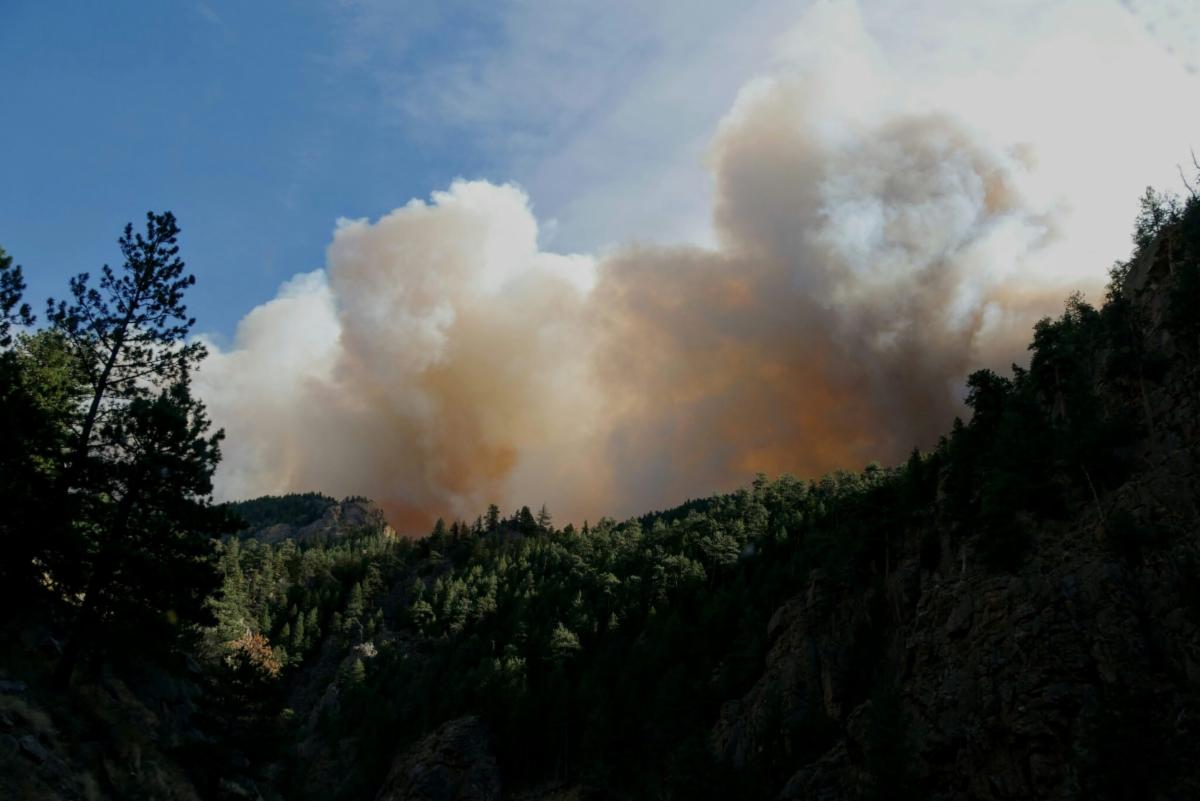
In the midst of another active wildfire season, the Department of the Interior is allocating $236 million to support wildland fire management nationwide through fiscal year 2025. Goals include reducing wildfire risk, improving wildland firefighter training, boosting efforts to rehabilitate burned areas in partnership with others and the furthering of wildfire science.
The announcement comes during a U.S. wildfire season that has burned more acreage to date than in any year since 2018. The National Interagency Fire Center’s daily update on Tuesday showed 62 active large fires – none of which is contained – have consumed nearly 1.5 million acres.
Click here to learn more about wildfire management funding
(Photo courtesy of Malachi Brooks on Unsplash.)
| |
The ongoing maintenance and upkeep of water infrastructure is key to the delivery of clean water to communities across the nation, which is why the U.S. Environmental Protection Agency (EPA) is announcing an additional $7.5 billion in funding available through the Water Infrastructure Finance and Innovation Act (WIFIA) program.
This program will provide long-term loans to assist communities with essential water infrastructure projects. These projects are designed to protect water resources such as drinking water, stimulate local economies and generate over 60,000 well-paying jobs – all at a reduced cost.
Click here to learn about where the EPA is investing in water infrastructure
(Photo courtesy of Swanky Fella on Unsplash.)
| |
The U.S. Economic Development Administration (EDA) is now accepting applications for its fiscal year (FY) 2024 Build to Scale (B2S) program, which will provide up to $50 million in matching grants to organizations focused on helping entrepreneurs develop and scale technology-driven businesses. The program also supports employees through the creation of new, high-quality jobs tied to innovative technology products and services.
New tech discoveries thrive in environments that offer resources, support and institutions to help businesses overcome challenges between an idea and a successful product. Technology-based economic development makes investments that help entrepreneurs grow their technology-driven businesses, which in turn create good jobs, boost economic opportunities and build future industries.
Click here to learn more about the tech funding opportunity
(Photo courtesy of ThisisEngineering on Unsplash.)
| |  |
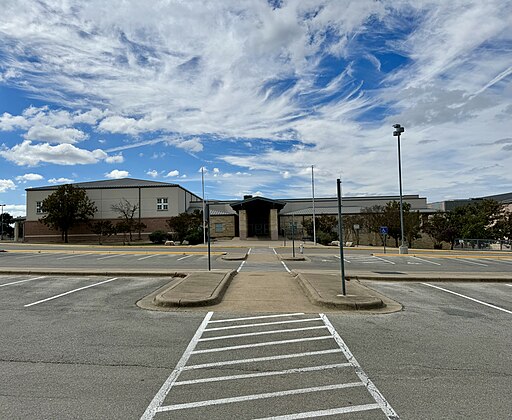 | |
The Allen Independent School District (ISD) will invest $419.1 million in a series of projects to improve safety and security infrastructure, renovate facilities, enhance bus transportation and build recreation facilities for schools. Voters will have a chance to vote on these projects in the bond election Nov. 5, 2024.
If approved, the district will make major renovations across seven schools. Plans include redesigning learning spaces to accommodate modern teaching methods. The district will renovate the schools’ flooring, wall coverings, lighting, plumbing and HVAC. In addition, the projects will remediate foundation issues to close gaps between walls, floors, hallway lockers and doors.
A portion of the funds will support safety and security improvements across district campuses. The projects include installing and upgrading the security camera systems, expanding cameras to additional campus areas and developing central lockdown capabilities. The district will also deploy intruder alert systems and reconfigure the main entrances to improve secure visitor entry points.
Allen ISD will replace defibrillators, fire alarms, fire suppression and fire panels that have reached the end of their useful life cycle. The district will also improve the life safety systems and upgrade various campus technologies.
Plans include building a multipurpose extracurricular facility for athletics, fine arts and education. The complex will offer indoor practice space and protection during extreme heat, cold and other inclement weather events. Other amenities will include lecture-hall style classrooms, simultaneous-use space, locker rooms and training and recovery areas. The district will also buy additional buses and transportation safety equipment.
(Photo courtesy of Slamforeman.)
|  |  | |
The city of Austin will use $10.5 million to implement pedestrian safety measures across the city. The funds, in addition to the city’s $2.5 million matching contribution, will go toward the total project’s $13.9 million cost.
The Safer Transportation Routes using Inclusive, Demonstrative and Equitable Solutions (STRIDES) project will prioritize enhancing crossings at 50 Austin intersections. These locations are among the city’s highest-priority crossing gaps on the high-injury network. Plans include integrating rectangular rapid flashing beacons, pedestrian crossing islands, curb extensions and pedestrian hybrid beacons to protect local residents.
Austin intends to use several Proven Safety Countermeasures and low-cost strategies to further protect pedestrians, including using quick-build solutions to slow vehicle speeds. These approaches will ensure the city will reduce roadway deaths and serious injuries due to traffic accidents.
The project will use demonstration projects to test soft road closures with temporary, cost-effective traffic calming and placemaking solutions. These plans will help encourage and promote the city’s Living Streets Program. The initiative is designed to support community-led initiatives to make streets comfortable and safe for gatherings, walking and recreation.
USDOT allocated the funds through the Safe Streets for All (SS4A) grant program. The SS4A program is a five-year, $5 billion initiative that helps local, rural and tribal communities remediate some of the most dangerous roads in the country to prevent deaths and serious injuries. This award will be the city’s third, adding onto its $22.9 million award in 2022 and $288,000 grant in 2023 to advance ADA transition projects for trails and crossings.
Austin is one out of 453 projects that will receive a share of the recently announced $1.1 billion. This is the second round of SS4A funding for Fiscal Year 2024, with the first round releasing $63 million in May. Since 2023, the program has allocated $2.7 billion from the available $5 billion. USDOT expects to open the third and final round of Fiscal Year 2024 awards in November.
(Photo courtesy of Leo Okuyama on Unsplash.)
|  | Gov. Greg Abbott has appointed Catherine Bellah and Walter Coppersmith, III to the Department of Information Resources (DIR). DIR delivers technology solutions for state and local entities and coordinates, oversees and directs information resources management within the Texas government. | |
Bellah is the CEO of an operational and strategic consulting firm. She brings more than two decades of legal, operational and executive experience to the role. Bellah has worked at the highest levels of government, previously serving as principal deputy general counsel of the U.S. Department of Commerce, deputy assistant to the president and deputy White House staff secretary.
She is a member of the state bars of Texas, California and Washington D.C. Bellah holds a Juris Doctor from The University of Texas School of Law and a Bachelor of Arts in English and Sociology from the University of Richmond.
| |
Coppersmith is the current CEO of a custom software development company that builds training and simulation software for the Department of Defense. In addition, he is a member of the state bar associations for both Texas and Maryland, Entrepreneurs’ Organization and is a board member of the Round Rock Chamber of Commerce.
Coppersmith has a Master of Business Administration from the Wharton School at the University of Pennsylvania, a Juris Doctor from Samford University Cumberland School of Law and a Bachelor of Science in Electrical Engineering from The Citadel.
|  | |
On Sept. 6, Texas Commission on Environmental Quality (TCEQ) Chairman Jon Niermann was chosen as president of the Environmental Council of the States (ECOS). ECOS is a national association composed of state and territorial environmental agency leaders.
ECOS assists state environmental agencies and their leaders in the decision-making process to protect and improve public health and the environment. The organization provides insight and guidance on environmental issues of national importance, offering critical support to foster quality relationships between federal and state agencies.
As president, Niermann will oversee the coalition’s main goals to spearhead the role of states in environmental management and promote the exchange of ideas, view and experiences among states. He will also support environmental management cooperation and coordination and help communicate state positions on relevant issues to Congress, federal agencies and the public.
Prior to joining TCEQ, Niermann worked as the assistant attorney general and chief of the Environmental Protection Division at the Texas Attorney General’s Office. He was an environmental attorney before stepping into the public sector. Niermann has earned a Master of Business Administration and Juris Doctor from the University of Oregon and a Bachelor of History from the University of California at Santa Barbara.
| |
The United States Department of Agriculture (USDA) is announcing new funding for the Agricultural Conservation Easement Program (ACEP) for fiscal year 2025. Through the USDA’s Natural Resources Conservation Service (NRCS), this program supports landowners and other entities in conserving, restoring and protecting wetlands, productive agricultural lands and grasslands at risk of being converted to other uses.
NRCS accepts applications for ACEP Agricultural Land Easements (ACEP-ALE) and Wetland Reserve Easements (ACEP-WRE) on a rolling basis. Interested parties should apply by either Oct. 4 or Dec. 20 at their local NRCS office to be considered for the two state-led funding cycles. Any application submitted to NRCS that wasn’t funded in fiscal 2024 will be automatically reconsidered during the October funding cycle.
Click here for more information on the NOFO
(Photo courtesy of Sixflashphoto.)
| The city of McKinney has chosen Margaret Li and Phillip Hubbard as directors of two city departments. | |
Li began her role as director of Housing and Community Development on Sept. 4. She brings more than a decade of experience in project management to the role. Li most recently served as deputy community development director in South Pasadena, California.
| |
Hubbard took over as director of Code Services on Sept. 9. He brings more than 11 years of municipal experience to the role, specializing in code compliance. Hubbard previously worked in code compliance roles in Eugene, Oregon; Chandler, Arizona; and Corvallis, Oregon.
| |
The city of Anna Economic Development Corporation (EDC) has appointed Natasha Roach as assistant director of economic development. Roach brings more than 12 years of municipal experience to the role. She most recently served as assistant director of Little Elm’s EDC and Chamber of Commerce.
| |
Jason Huntley, Ph.D., has been selected as senior associate dean of faculty affairs and faculty development at Texas A&M University College of Medicine. Dr. Huntley previously served as associate dean of faculty affairs and development at the University of Toledo, the latest in his 14-year career with the university. Dr. Huntley began his tenure Sept. 1, 2024.
|  | |
Gov. Greg Abbott announced these appointments and reappointments from Sept. 6 through Sept. 12:
Indigent Defense Commission Governing Board
William “Bill” Gravell, Jr. - Georgetown
Emily Miskel - McKinney
Onestar National Service Commission
William “Bill” King - Wimberley
Michelle Brewer - Silsbee (reappointed)
Texas Medical Board District Three Review Committee
Surendra Varma, M.D. - Lubbock
Pediatric Acute-Onset Neuropsychiatric Syndrome Advisory Council
Summer Gainey, Ph.D. - Anderson
Texas Early Learning Council
Shruthi Arismendez, Ph.D. - Pflugerville
Family Practice Residency Advisory Committee
Kendall Baker, D.D. - Houston
School Land Board
David Eyler - Midland
(all reappointed)
Marcella Burke - Houston
Gilbert “Gil” Burciaga - Austin
James “Brad” Curlee - Round Rock
494th Judicial District Court
Kathryn Lanigan Pruitt - Frisco
Texas State Board Of Public Accountancy
Grant Coates - Fort Worth
James “Jim” Trippon - Houston
Department Of Information Resources
Walter Coppersmith, III - Round Rock
Catherine Bellah - Dallas
|  | |
Texas Government Insider is a free weekly newsletter detailing important happenings throughout the state and summarizing current political issues relevant to individuals interested in government.
Publisher: Mary Scott Nabers
Editors:
Adam Rollins
Dave Doolittle
| |