|
Throughout America, healthcare facilities have been aging for years. Most are long overdue for modernization, and many need to be replaced because they can no longer meet the needs of the communities they serve.
Public healthcare infrastructure is funded through a combination of federal, state and local government sources. In recent years, the federal government has increased funding for healthcare, but the last large allocations were made several years ago. Approximately $1 billion was allocated through the American Rescue Plan, and it was earmarked for renovation or the construction of new health centers.
Some state legislatures are funding healthcare infrastructure, but not all. The state of Texas allocated $11.7 billion for behavioral health in the most recent legislative session and $2.3 billion to that statute, which carried a mandate to modernize the state’s hospital system and expand inpatient capacity. Due to recent state or local funding, many upcoming health-related opportunities will soon be launched.
The University of Maryland’s Shore Regional Health will benefit from a $540 million investment in a new Regional Medical Center. Replacing the outdated Easton hospital, the new 325,000-square-foot, six-floor facility will provide 147 private rooms and incorporate state-of-the-art medical services tailored to the region’s needs. It will feature expanded specialty centers, including a Cardiac Intervention Center, Behavioral Health Center and Birthing Center. The site, located on over 200 acres near Route 50, will offer improved accessibility with ample parking and efficient emergency transport options via ambulance and helicopter. The new facility will serve the growing healthcare needs of 170,000 residents across five rural counties.
The project has gained significant backing and financial support, including an additional $100 million commitment from the state. Construction is scheduled to start in 2025.
The University of Nebraska Medical Center (UNMC) received approval from its Board of Regents to proceed with planning a $2.19 billion academic medical center in Omaha. This initiative will be the largest in the university's history, and it will modernize and significantly expand the system’s healthcare facilities and research capabilities. Construction is expected to begin in 2025, and detailed plans being developed now will be in place by the end of 2024.
Click here for more
| |
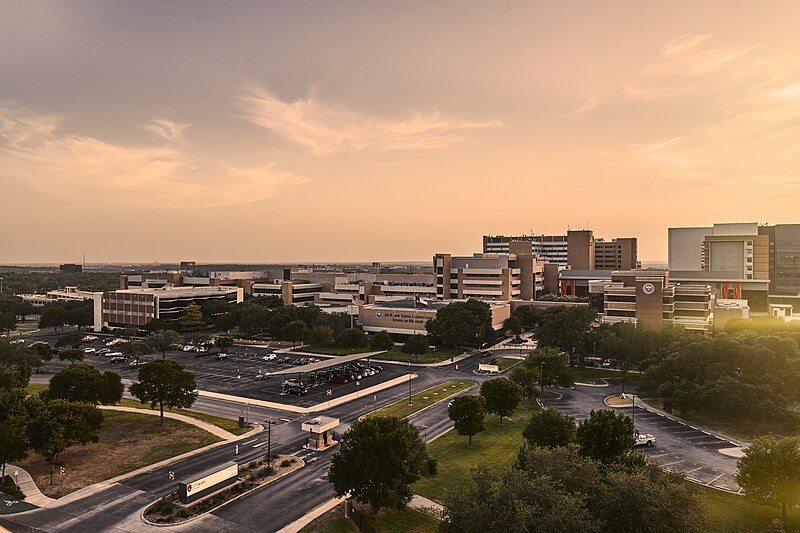
The University of Texas San Antonio and UT Health San Antonio will integrate into one unified institution by 2025 following action taken today by the University of Texas System Board of Regents.
In a related motion, the board voted to appoint UT San Antonio President Taylor Eighmy as president of the new aligned university once it’s accredited.
UT Health San Antonio, the largest academic health research institution in South Texas, ranks in the top 3% globally for NIH funding. UTSA, a top tier (Carnegie R1) research institution, educates 35,000 students across seven colleges and interdisciplinary schools.
The merger will enhance the potential of both institutions, transforming San Antonio and South Texas into a global hub of academic and research excellence, the board of regents said.
The combined institution would become the third-largest research university in Texas, with annual research expenditures nearing $470 million to go with six federally funded research and development centers.
The merger is not the first for the UT System. Other realignments, mergers and expansions include The University of Texas Rio Grande Valley and its medical school, the merger of UT Tyler with UT Health Science Center Tyler, the recent acquisition of Stephen F. Austin State University as a UT institution, the creation of a UT MD Anderson hospital and new UT Austin hospital on the UT Austin campus, and a recently announced planned expansion of UT Arlington into west Fort Worth.
(Photo courtesy of Floresr19.)
| |
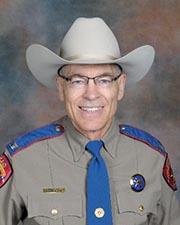
Director Steve McCraw, Texas’ top law enforcement officer, will retire from the Texas Department of Public Safety (DPS) at the end of 2024. He has led the agency for the past 15 years, making it the capstone of his 47-year-long law enforcement career.
McCraw first joined DPS in 1977, starting as a highway patrol trooper before working his way up to DPS narcotics agent. He would later transition to the FBI in 1983, operating as a special agent based in Dallas. He continued working as a federal agent for more than two decades.
As an FBI agent, McCraw worked across all corners of the country, including Pittsburgh, Los Angeles, Tuscon, San Antonio and Washington, D.C. He served in a variety of roles, including supervisory special agent, unit chief of the Colombian/Mexican Organized Crime Unit, assistant special agent in charge in Tuscon and assistant director of the Office of Intelligence.
McCraw eventually returned to state government as director of Texas Homeland Security in 2004. He held that role for the next five years before accepting his current director role. McCraw has a Bachelor of Science and Master of Arts degrees from West Texas State University.
|  | |
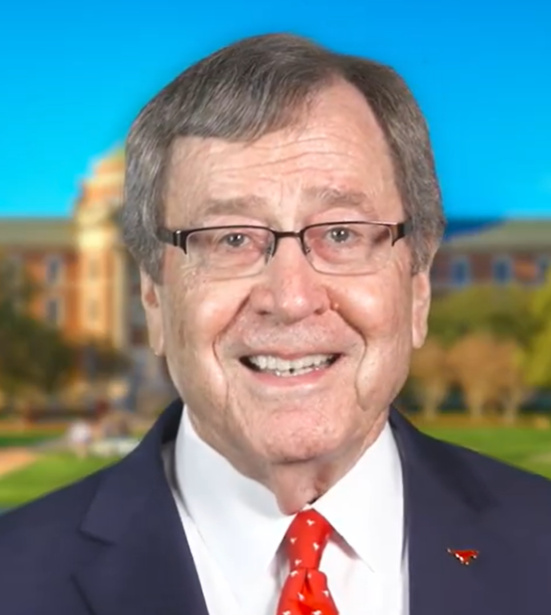
R. Gerald Turner, the long-time president of Southern Methodist University (SMU), will officially retire from his role at the end of the current academic year. Turner announced Aug. 21 that he would be transitioning away from his current office to president emeritus June 1, 2025, where he will support the next president full-time.
Turner has served as SMU’s 10th president since 1995. Throughout his 30 years in the role, he has overseen tremendous growth and development within the university.
Turner is responsible for growing the university’s enrollment to more than 12,000 students, creating a 30-year Master Plan and developing SMU’s to better service its student body, faculty and staff. Under his care, the university has increased the enrollment of underrepresented students by more than 30%, quadrupled the endowment to $2.03 billion and greatly increased the number of doctoral students.
The SMU Board of Trustees is immediately launching its search for the university’s 11th president. Chairman David Miller and Vice Chairman Richard Templeton will lead the search committee. The committee has already partnered with an executive search firm to find the university’s next leader.
His time at SMU was the latest role in Turner’s higher education career. Prior to joining the university, Turner was chancellor of the University of Mississippi for five years. He has also served in administrative roles at the University of Oklahoma and Pepperdine University.
| |
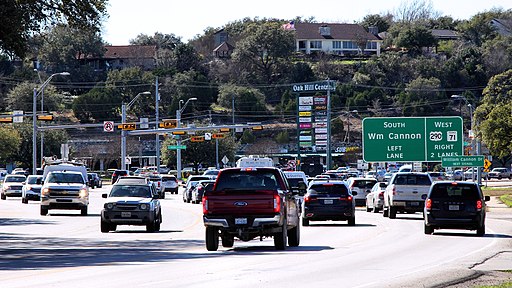
The city of Austin has successfully reduced injuries or fatal crashes involving left-turning vehicles at intersections by between 47% and 72%, according to a recently published report. As part of the Vision Zero program, the city adjusted or upgraded traffic signal timing, phasing, signage or infrastructure at select locations to better protect drivers and prioritize safety.
The most recent Vision Zero initiative centered around Austin Transportation and Public Works (TPW) developing Left Turn Protection Guidelines (LTPG) to standardize how left turn protection is implemented at traffic signals. Over the past 14 months, TPW installed more than 100 protected left turns following these guidelines at select locations across the city.
The crash data gathered from 73 of these intersections showed that there has been a 72% reduction in Opposite Direction-Left Turn (OD-LT) crashes. There has also been a significant decrease in other crash types at those locations compared with other signalized intersections. This indicates that protected left turns improve overall driving safety beyond mitigating OD-LT crashes alone, the city said.
Implementing low-cost safety countermeasures are effective and critical components to supporting the city’s Vision Zero goals, the report concludes. TPW will evaluate more than 1,100 active traffic signal intersections to deploy LTPG over the next two years.
The LTPG are the latest example of the city’s efforts to save lives on the roadway. The Vision Zero program released a report in 2022 analyzing the crash data at 18 intersections that received low-cost protected left-turn changes. These improvements included flashing yellow arrows, enhanced signage and replacement signal heads. Since the time that report was published, there has been a 47% reduction in annual OD-LT injury and fatal crashes at those locations.
Vision Zero is the city’s goal to reduce the number of people hurt and killed by crashes each year. TPW implements street improvements, policy changes, enforcement and education to bring injury and fatality crash rates down to zero. Austin adopted the program in 2015 and joined the Vision Zero Network, standing with other cities across the nation to end traffic-related deaths and injuries.
(Photo courtesy of Larry D. Moore.)
| |
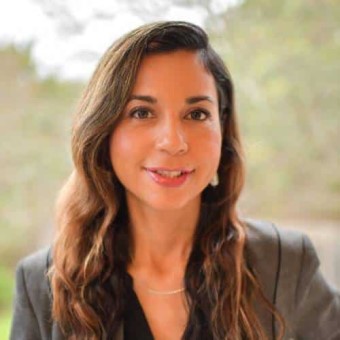
Helen Ramirez
City Manager
City of Brownsville
| |
Public career highlights and education: I am the first female to serve as city manager of Brownsville since it was incorporated in 1853. I joined the city in March of 2019 as deputy city manager while simultaneously serving, for a short period of time, as executive director and CEO of the Greater Brownsville Incentives Corporation (GBIC). I earned a Bachelor of Science in City and Regional Planning from California Polytechnic State University - San Luis Obispo.
What I like best about my public service is: Effecting change every single day. You see the tangible results of your actions in local government – from the fixed pothole, to the new zipline at our zoo, to hosting 10,000 amateur athletes and 30,000 guests at the Games of Texas we hosted in July.
The best advice I've received: Do not wait until you’re 50 to have No Fear! Be yourself, tragedy, loss, failure, wealth, being a woman, does not define you, no matter your age. It is how you respond to failure that marks your future.
People might be interested to know that: I love soccer! I grew up playing soccer during a difficult time in my life when I lost my mother at a very young age. It is a sport that brought and continues to bring me incredible happiness.
One thing I wish more people knew about the the city of Brownsville: Local government is the closest form of government to our communities, and there is an incredible amount of pressure and purpose to fix all the needs of our communities. We cannot be successful without having good regional, state and federal relationships.
| |
The Texas Department of Transportation (TxDOT) will reopen the application window for entities to buy, install, operate and maintain Direct Current Fast Charge (DCFC) equipment across the state. The window will open Sept. 16, 2024, and close Oct. 28, 2024.
Texas will distribute $407.8 million from the National Electric Vehicle Infrastructure (NEVI) program to support electric vehicle (EV) infrastructure projects. TxDOT has identified 34 study areas along Alternative Fuel Corridors eligible for the reopened competitive grant program. Eligible applicants include individuals, corporations, organizations, business trusts, partnerships, associations or other legal private entities.
The Texas EV Charging plan is a comprehensive framework designed to support EV infrastructure along select interstate routes, non-interstate routes and urban areas. Selected projects will receive funds to deploy DCFC equipment no further than 50 miles apart along Alternative Fuel Corridors. Goals for the state’s EV Charging plan include:
- Building redundancy to support 1 million EVs once completed. Drivers will have multiple options for charging their vehicle while traveling across the state.
- Installing charging connectors along Alternative Fuel Corridors that provide a minimum of 150 kilowatts (kW) of power for vehicles.
- Ensuring all stations must have a minimum of four ports, capable of providing at least 600kW simultaneously. Stations must have long enough cables to accommodate all EVs, adequate lighting, signage and instructions for usage.
- Ensuring DCFC stations have at least one pull-through space to accommodate light-duty vehicles pulling trailers or RV campers.
- Developing outreach materials to educate the public on good charging habits, station locations, usage, equipment capability and how to provide feedback.
- Evaluating stations and adjusting the network based on information provided by equipment owners.
The NEVI program is a nationwide initiative to expand EV charging infrastructure along Alternative Fuel Corridors. To participate in the program, TxDOT submitted its Texas EV Infrastructure Plan to the Joint Office of Energy and Transportation for approval.
(Photo courtesy of Marek Studzinski on Unsplash.)
| |
The University of Texas at Arlington (UTA) will receive $4.2 million from the National Science Foundation (NSF) to support a collaborative research project to develop advanced materials for semiconductors and biomaterials.
UTA will collaborate with Grambling State University (GSU) and the Northwestern University (NU) Materials Research Science and Engineering Center (MRSEC). The partnership will create an undergraduate-to-graduate materials research pathway and career opportunities for minority-serving institutions.
The PREM award will support two research sectors. The first focuses on creating novel polymeric biomaterials for practical application in computing, neuromorphic devices and biological and molecular sensing. The study will examine how to transport electrons across mixed-dimensional structures made of multiple materials, ranging from zero-dimensional (0D) to three-dimensional (3D) materials. The project team will determine how complex products can use different types of chemicals and materials to increase energy efficiency.
The second sector focuses on studying stimuli-responsive smart biomaterials and cell-free bioprogrammable materials. The research team will experiment on how to use different stimuli to change materials, such as transitioning a hydrophobic material to hydrophilic. The study will also develop ways to synthesize cell-free bioprogrammable materials to mimic living tissues. The results of this study could provide groundbreaking results for materials for drug delivery, tissue repair and regeneration and related biomedical applications.
The funds come from the Partnerships for Research and Education in Materials (PREM) program. PREM is dedicated to advancing innovative scientific initiatives through partnerships with minority-serving institutions and research centers. The NSF recently distributed $50 million across 15 projects to support the research and development of unique, cutting-edge materials.
(Photo courtesy of Ousa Chea on Unsplash.)
| |
The city of Celina will build a $7.2 million fire station as part of a 24-acre Public Safety Campus Master Plan that was recently updated to introduce a Fire Safety Town. The safety town will help provide hands-on safety training and education for kids. The fire station is in the design phase, with construction expected to begin in summer 2025.
The city will build Fire Station No. 4, a 12,000-square-foot facility featuring three pull-through apparatus bays with overhead entry doors and bi-fold exit doors. The building will include metal security gates on the roll-up entry doors, an on-site fueling station and a 100% backup generator. The project will build 10 sleeping quarters, a secured lighted parking area and a training tower.
The fire station is the current project in development as part of the Public Safety Campus’ holistic vision for the next several years. The campus will consolidate several of the city’s emergency services, providing a centralized space to better serve the surrounding community. The two-story, 26,400-square-foot safety town is the latest addition to the master plan.
While the city is still hashing out design details, officials were inspired by the Frisco Fire Safety Town and will recreate a similar concept on the Celina Public Safety Campus. The Frisco site includes a scaled-down version of the city, complete with road features such as crosswalks and roadways.
The master plan details a comprehensive site layout containing a variety of emergency facilities, amenities and services. The plan includes a police building, two asset buildings with a planned expansion, academy, fire administration building and shooting range. The city will also build a jail which may eventually expand to connect with the police building.
The layout includes both public and secure parking areas, providing more than 500 parking spaces. The campus will include several dumpsters and generators across its parking lots as well as a fueling island and shade trees. The plan includes a public playground, a tree grove, a dog run and two water detention areas.
(Photo courtesy of Larry D. Moore.)
|  | |
As old pipes crack and crumble and new water and wastewater facilities come online, a three-decade old formula still determines how billions in federal clean water funds are distributed to states, despite major shifts in population and infrastructure needs. A new report from the Government Accountability Office (GAO) suggests it’s time for an update.
The Clean Water State Revolving Fund (SRF), administered by the Environmental Protection Agency (EPA), is a critical source of funding for states addressing water infrastructure challenges. However, the GAO report recommends changes to bring the funding structure established in 1987 into the 21st century with an updated formula that more accurately represents the needs of states.
Click here for more information about the water revamp study
(Photo courtesy of Andres Siimon on Unsplash.)
| |
The U.S. Environmental Protection Agency (EPA) has announced $27 billion in grants through three competitions under the Greenhouse Gas Reduction Fund. These grants come from EPA’s $14 billion National Clean Investment Fund (NCIF), the $6 billion Clean Communities Investment Accelerator (CCIA) and the $7 billion Solar for All program.
Together, they will establish a nationwide financing network for clean energy and climate solutions. Since their selection in April, recipients have collaborated with the EPA to meet federal requirements and refine their workplans. Now that the funds are available, communities can start accessing the resources needed to develop cleaner, more sustainable economies.
Click here to learn more about The Greenhouse Gas Reduction Fund programs
(Photo courtesy of Bryan Williams on Unsplash.)
| |
In an effort to increase automotive autonomy nationwide, the U.S. Department of Transportation (USDOT) has released a plan to speed up the integration of technology that allows vehicles to communicate with other vehicles and roadside infrastructure.
The plan, entitled Saving Lives with Connectivity: A Plan to Accelerate V2X Deployment, supports the federal government’s ongoing commitment to reducing roadside deaths and serious injuries.
Click here to learn more about USDOT’s V2X integration plan
(Photo courtesy of Jules Nieves on Unsplash.)
| |  |
|
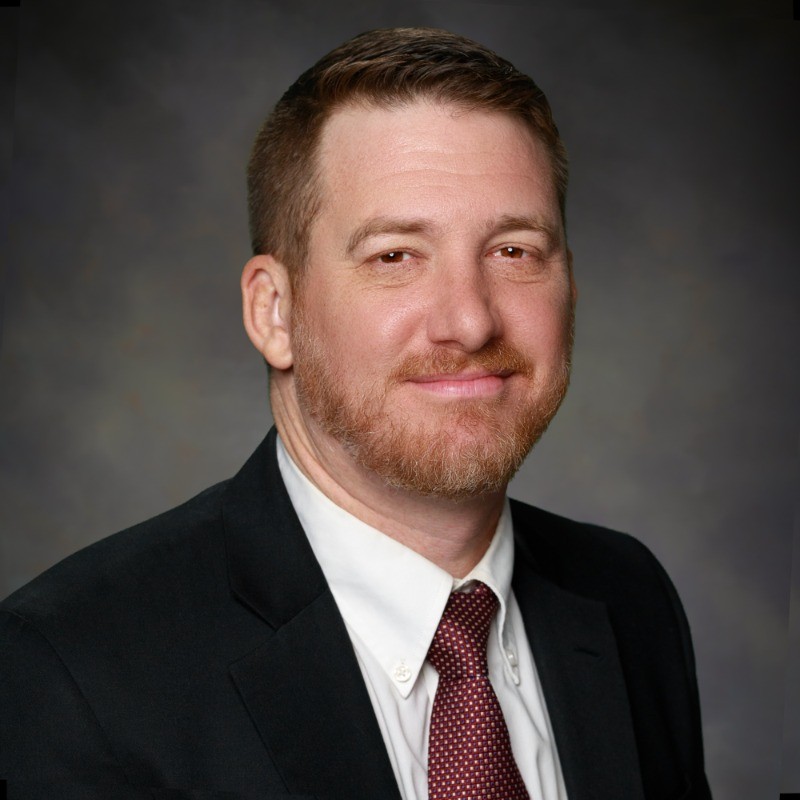
Mike Toomey has been appointed as Texas House Speaker Dade Phelan’s chief of staff. The Speaker’s Office confirmed the appointment in a call with Strategic Partnerships Inc. on Friday.
Toomey is the only person in Texas history to serve as chief of staff for three Texas governors. He worked under Gov. Bill Clements from 1989 to 1990 and Gov. Rick Perry from 2002 to 2004. He also served as senior adviser and chief operating officer to Gov. Greg Abbott’s Strike Force to Open Texas in 2020.
“Mike is a storied titan of Texas politics, and his impressive experience in the public and private sectors—combined with a legendary work ethic and reputation as a seasoned strategist—make him exceptionally well-suited to lead our team,” Speaker Phelan said in a quote to Quorum Report. “As we welcome Mike to our office, I also want to express my deepest gratitude to Enrique Marquez for his outstanding service and dedication the last several years.”
Toomey has a decades-long history operating in both public and private capacities with the Texas House. He previously served as a three-term Texas House member and chairman of the House Judiciary Committee. Before his most recent appointment as chief of staff, Toomey worked as a governmental relations specialist.
| 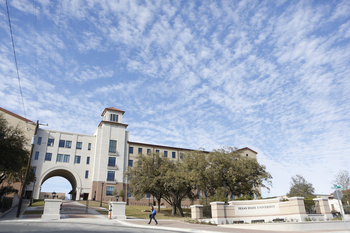 | |
Texas State University (TXST) will establish the system’s first official international campus in Mexico. During its Aug. 9 meeting, TXST approved a contract with Texas State University Mexico (TXSTM) – led by a private third-party group – to operate and maintain an educational facility in Santiego de Querétaro, Mexico.
The collaboration will enable TXSTM to provide TXST degrees. Although the Mexico campus has existed for seven years, the partnership will establish the university as a satellite campus and a recognized part of the Texas State University System.
As part of the collaboration, TXSTM will integrate an “American-style” education system, using TXST curricula, pedagogy and teaching methods to educate students. TXST will administer the academic programs, overseeing the decision-making process for admission requirements, subsequent academic decisions for enrolled students and faculty qualifications.
TXST will set the tuition rates for the Mexico campus, which expects to pay $18 per semester hour to cover academic administration of the program. The agreement will generate approximately $10 million in revenue for TXST over the next decade.
With the contract approved, TXST will work on recruiting students. TXSTM is expected to begin classes in fall 2025. TXSTM is located 775 miles south of the San Marcos-based university and is 136 miles northwest of Mexico City.
(Photo courtesy of JRWG.)
|  | 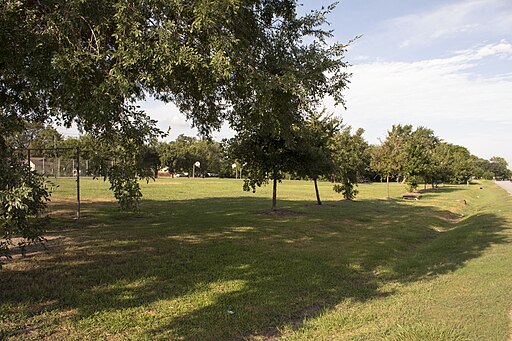 | |
The College Station City Council has officially approved the $20.9 million Texas Independence Park Master Plan. The city collaborated with Texas A&M University (TAMU) to develop the master plan. No construction timeline has been announced.
The project will incorporate and expand on existing elements within the park’s parameters, including greenspace, restrooms and trails. As part of the project, the city will expand the existing multi-use walking trail system across the park. The trails will connect with all park elements, using concrete paths to emphasize accessibility and the park’s natural elements.
One of the largest project investments will be a destination play experience area that includes a playground. The city plans to build two bike parks adjacent to the play area. The city will also build two disc golf courses and expand the current pond into a fishing pond.
The park will feature a dog park split into two areas: one for small dogs, one for large. Both parks will feature washing stations and other amenities for dogs. The master plan includes dedicated space for general site work, picnic areas and additional parking.
The city has already submitted the master plan to secure a TPWD matching grant to support construction. The city will find out if it is approved for the grant in spring of 2025.
(Photo courtesy of 0x0077BE.)
|  | |
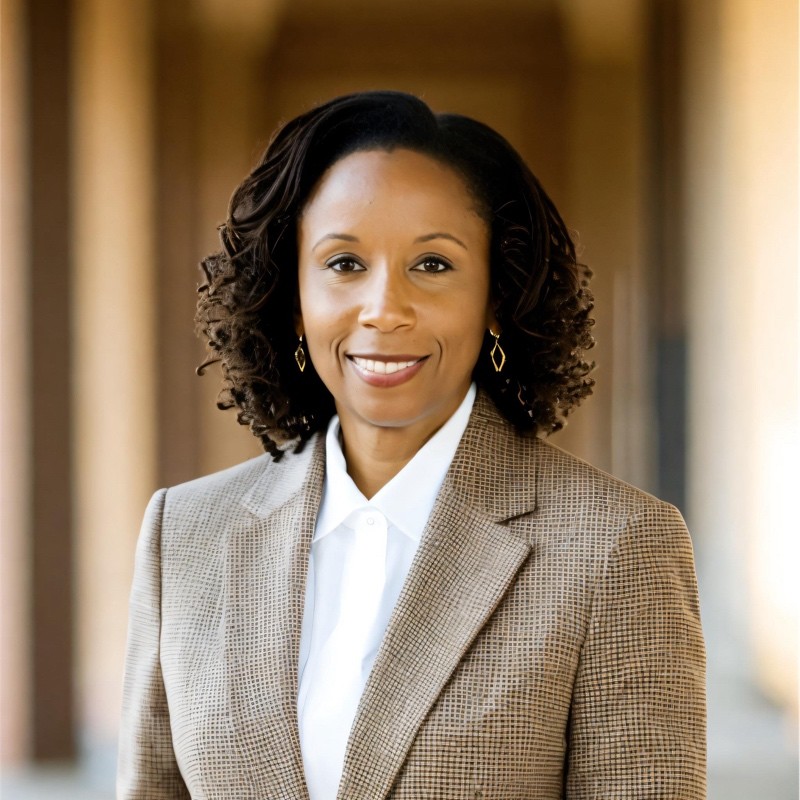
The city of El Paso has chosen Dionne Mack as its next city manager. Mack currently serves as the city’s deputy city manager. On Aug. 19, the City Council voted 6-2 to promote her to the permanent role.
Mack has been with the city for 13 years, originally as library director in 2011. She was appointed to deputy city manager July 17, 2017, making her the first Black person to hold the position. Before moving to El Paso, Mack served as executive director of the Brooklyn Public Library in New York City.
Mack’s 28-year-long public service career started in 1996 at the Brooklyn Public Library as a librarian. She would later become the interim executive director and chief of staff for the public library system. As executive library director, Mack oversaw 60 libraries serving Brooklyn, providing essential services for 2.5 million people.
Mack will begin her tenure as city manager Sept. 3, 2024. She will be the third city manager in El Paso’s history, overseeing the city’s quality of life and maintaining its public service departments. The city adopted a council-manager form of government Feb. 7, 2024, officially establishing the city manager role. Mack will replace Tommy Gonzalez in the role.
|  | |
The Department of the Interior (DOI) has announced $775 million in grants for 21 states to address legacy pollution that will be used to clean up orphaned oil and gas wells and well sites, building on more than $1 billion already awarded. The initiative is spurring economic growth, preventing harmful methane leaks and mitigating environmental and public health risks from surface and groundwater resources vital to communities and ecosystems.
As part of the Bipartisan Infrastructure Law (BIL), $4.7 billion in total is earmarked for plugging orphaned wells. The funds are distributed to states through initial grants, formula grants and performance grants.
Click here to learn more about how the DOI is tackling pollution
(Photo courtesy of Hillebrand, Steve, USFWS.)
|  | |
On Aug. 20, Zach Goodlander was sworn into his role as city manager of Fulshear, which is near Houston. Goodlander has been serving as acting city manager since Feb. 12, taking over responsibilities from Jack Harper. He has worked with the city since 2019, starting as director of planning. He most recently served as Fulshear’s assistant city manager.
| |
Isaac Tawil will be McAllen’s next city manager. Tawil will replace Roel Rodriguez in the role. He brings more than 13 years of municipal government experience to the position, most recently serving as McAllen’s city attorney since 2021. Tawil will begin his tenure Sept. 13.
| |
The city of Richardson has promoted Chris Shacklett to permanent director of economic development. Shacklett has been serving as interim director since February 2024. Before taking over as the economic development director, Shacklett was assistant director of development services. He has worked with the city for the past 17 years.
| |
Paul Menzies has been appointed Wichita Falls’ acting city manager. Menzies most recently served as assistant city manager for the past seven years. He will be the acting city manager until an interim is found.
|  | |
Gov. Greg Abbott announced these appointments and reappointments from Aug. 16 through Aug. 22:
Texas Southern University Board Of Regents
Benjamin Kohlmann - Dallas
Texas Medical Board
Luisa del Rosal - Dallas
Garry Crain - San Marcos
Zach Jones, M.D. - Frisco
Linda Troncoso - El Paso
(all reappointed)
Sharon J. Barnes - Rosharon
George De Loach, D.O. - Livingston
Manuel Quinones, Jr., M.D. - Helotes
David Vanderweide, M.D. - League City
Governor’s Committee On People With Disabilities
Billy Blanchard - Victoria
(all reappointed)
Kori Allen - McKinney
Evelyn Cano - Pharr
Emma Faye Rudkin - Boerne
Benjamin Willis - Lumberton
Sabine River Authority Board Of Directors
Richard “Blair” Abney - Marshall
Crime Victims’ Institute Advisory Council
Heather Ayala - Grand Prairie
Forrest Mitchell - Corpus Christi
(all reappointed)
Melissa Carter - Bryan
Hillary England - Pflugerville
Matthew L. Ferrara, Ph.D. - Austin
Lindsay Kinzie - Keller
Jeffery “JD” Robertson - Wimberley
David Schwartz - Bellaire
San Antonio River Authority Board Of Directors
John Yochem, Jr. - Goliad
|  | |
Texas Government Insider is a free weekly newsletter detailing important happenings throughout the state and summarizing current political issues relevant to individuals interested in government.
Publisher: Mary Scott Nabers
Editors:
Adam Rollins
Dave Doolittle
| |