Volume 22, Issue 28 - July 19, 2024 | |
|
Unexpected disasters of every type are extremely costly. It might be surprising to realize that earthquakes in the U.S. cost about $15 billion annually in economic losses. While earthquakes are less common, there have been 28 earthquakes reaching a magnitude of 6 or greater in the past decade.
Most of the risk is concentrated on the country’s West Coast, but other states – including Tennessee, Missouri, Kentucky, Illinois and Arkansas – are all vulnerable to earthquake risk. Efforts to mitigate the risk of floods, storms, wildfires and earthquakes before they happen are not only crucial but also very cost-effective, with federal funding support to back projects with this objective. FEMA’s Disaster Relief Fund provides funding assistance for the aftermath of disasters. In the 2024 budget, Congress allocated $20 billion for disaster cleanup and repair. Still, based on the average needs of annual disaster relief over the last 10 years, budget analysts say another $16 billion will likely be required this fiscal year.
Mitigation projects of all types are in the planning stages as government officials try to ward off some of the anticipated wreckage that is projected to occur this year.
The California Department of Transportation has announced plans to replace a pair of northbound and southbound bridges in Stockton. The $900 million bridge project will replace structurally deficient structures over the Stockton Channel. The existing bridges are thought to have been damaged by seismic activity. New bridges will be constructed to meet current design standards, including bridge rail reinforcement and broader shoulders to accommodate disabled vehicles and law enforcement personnel. The existing deck will be replaced, and all superstructure elements will be strengthened. The bridge piers in navigational waters will be fitted with fender systems, and a new standalone offramp will be constructed. When complete, the bridges will be rated to accommodate commercial transportation and meet all modern seismic safety standards. The project is in the final planning and design phases. Construction is scheduled to begin in late 2026.
The Union Station Federal Courthouse in Tacoma, Washington, will undergo extensive renovation to modernize the 106-year-old building to meet seismic safety standards. This $79 million project will involve improving the facility’s building systems, new equipment, seismic structural bracings and security system enhancement. The roof will be inspected before repair work begins to determine potential additional work. Currently in the planning phase, this initiative will likely have a construction launch early in 2025.
City leaders in Portland, Oregon, will choose a contracting firm to renovate or replace the Keller Auditorium in 2024. A 2020 study revealed that the historic 107-year-old building could collapse if an earthquake occurred. The project carries an estimated cost between $236 million and $290 million. Components of the effort will include the construction of a grand fountain plaza, a 3,000-seat main theater and the addition of a new, smaller performance space. Seismic reinforcements will be included for all structures.
Click here for more
|  | |
Texas Comptroller Glenn Hegar will not release a formal revision of the Certification Revenue Estimate (CRE) this year. Hegar said the general revenue-related (GR-R) collections through the first 10 months of Fiscal Year 2024 align with the 2024-2025 CRE issued in October 2023.
CREs are created to revise estimates made in the Biennial Revenue Estimate (BRE) to reflect legislative activity and economic information that have occurred since the BRE’s publication. The BRE estimates the amount of available revenue for spending in Texas’ next two-year budget cycle.
While not all revenue sources align with their original estimations, the Office of the Comptroller determined that the state’s GR-R revenue collections have not deviated enough from estimates to warrant a revised CRE. Hegar noted in his July 17 letter to state leadership that past years have substantially deviated from estimates due to the pandemic and surging inflation, requiring formal revisions.
“As always, there are risks and uncertainties that could cause the economy and revenue collections to deviate from our expectations,” Hegar said. “But at this time there are no signs of imminent recession or accelerated expansion that would necessitate a revision to our outlook for continued economic growth at a modest pace.”
If no further legislative action is taken ahead of the 89th Legislature, the Office of the Comptroller estimates the state will have a Fiscal Year 2024-2025 ending balance of $21.2 billion. However, because supplemental appropriations are expected, Hegar anticipates the actual ending balance will be approximately $20 billion.
(Photo courtesy of the city of Austin.)
|  | |
University of Florida President Ben Sasse has announced his retirement, citing his wife’s health.
The former senator from Nebraska has served nearly two years as president. His resignation will be effective July 31. He has asked the Board of Regents to initiate a search for a new president.
“My wife Melissa’s recent epilepsy diagnosis and a new batch of memory issues have been hard, but we’re facing it together,” Sasse said in a statement.
The board plans to move “quickly and thoughtfully to an announce an interim president” while searching for a new president.
| |
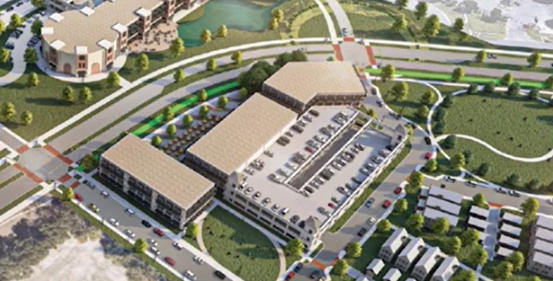
The city of San Marcos is seeking financial advisory services for an upcoming public-private partnership (P3) to build a City Hall complex and revitalize the local corridor and neighborhoods. The city has already hired an architect to perform a Comprehensive Space Study for the City Hall structure to determine parking needs, building size and a cost estimate. Responses to the Request for Qualifications (RFQ) are due by Aug. 8, 2024.
San Marcos plans to build the new City Hall complex across the street from the current City Hall. The Hopkins Street Corridor, which serves as a primary gateway to the city, includes the public library, activity center, skate park, dog park and other city facilities. The complex will include enough space to accommodate and centralize city departments.
In addition to building a City Hall complex and revitalizing the corridor, the project will be critical for promoting development that meets market and community needs. The city will ensure the area will offer safe, connected multi-modal transportation and support connectivity and walkability. The project will also enhance the area’s natural beauty and environmentally protect the San Marcos River.
The financial adviser for the City Hall complex RFQ will develop a financially feasible and realistic vision for revitalizing the area. The conceptual land plan must meet the city’s goals, and the adviser will create a preliminary concept for private development on the existing City Hall tract. The city should have a clear understanding of the various tools and approaches used to accomplish the city’s vision and recommendations for potential transaction structures with a master developer.
The city plans to form a second P3 to redevelop the current City Hall site. The developer for that project will build a mixed-use development. San Marcos has not released estimated costs or a construction timeline for either City Hall project.
(Photo courtesy of the city of San Marcos.)
| |
The Federal Transit Administration (FTA) has awarded $63.4 million to three Texas transit agencies to modernize aging fossil fuel-powered bus fleets with low- and no-emission replacements.
Sun Metro – the city of El Paso’s Mass Transit Department – will receive $30.6 million to buy a fleet of compressed natural gas buses and build bus canopies. The department will replace its current buses that have outlived their useful life. The modernized buses will help Sun Metro provide more reliable service, reduce harmful emissions and improve environmental justice for underserved communities.
The Texas Department of Transportation (TxDOT) will use $26.9 million to enhance transit access and services across 30 regional transportation districts. TxDOT will replace transit vehicles, finish bus facility projects and bring transit fleets to a state of good repair to support transit access and reliability in rural areas.
The Corpus Christi Regional Transportation Authority (CCRTA) will spend $5.9 million to buy low-emission compressed natural gas buses to replace its aging diesel fleet. The replacement vehicles will service historically disadvantaged areas with high ridership. In addition, CCRTA will use the funds to provide workforce development training to sustain a long-term fleet of bus drivers.
The funds come from the third round of the FTA’s Bus and Low- and No-Emission grant program. The program was established to help state and local governments buy or lease zero- and low-emission transit buses and associated supporting facilities. The latest round allocated $1.5 billion to support 117 projects across 47 states to help progress the nation’s goal to reduce air pollution and attain zero emissions by 2050.
The FTA has awarded almost $5 billion over the past three years to modernize America’s transit system. The investments have paved the way for a cleaner future by replacing and modernizing transit buses and creating technology to support the transition to zero-emissions. This funding round prioritized projects that strengthen U.S. bus manufacturing to standardize bus models, reduce costs and accelerate vehicle delivery. To date, the U.S. has manufactured more than 4,600 of these modernized transit buses.
(Photo courtesy of the FTA.)
| |
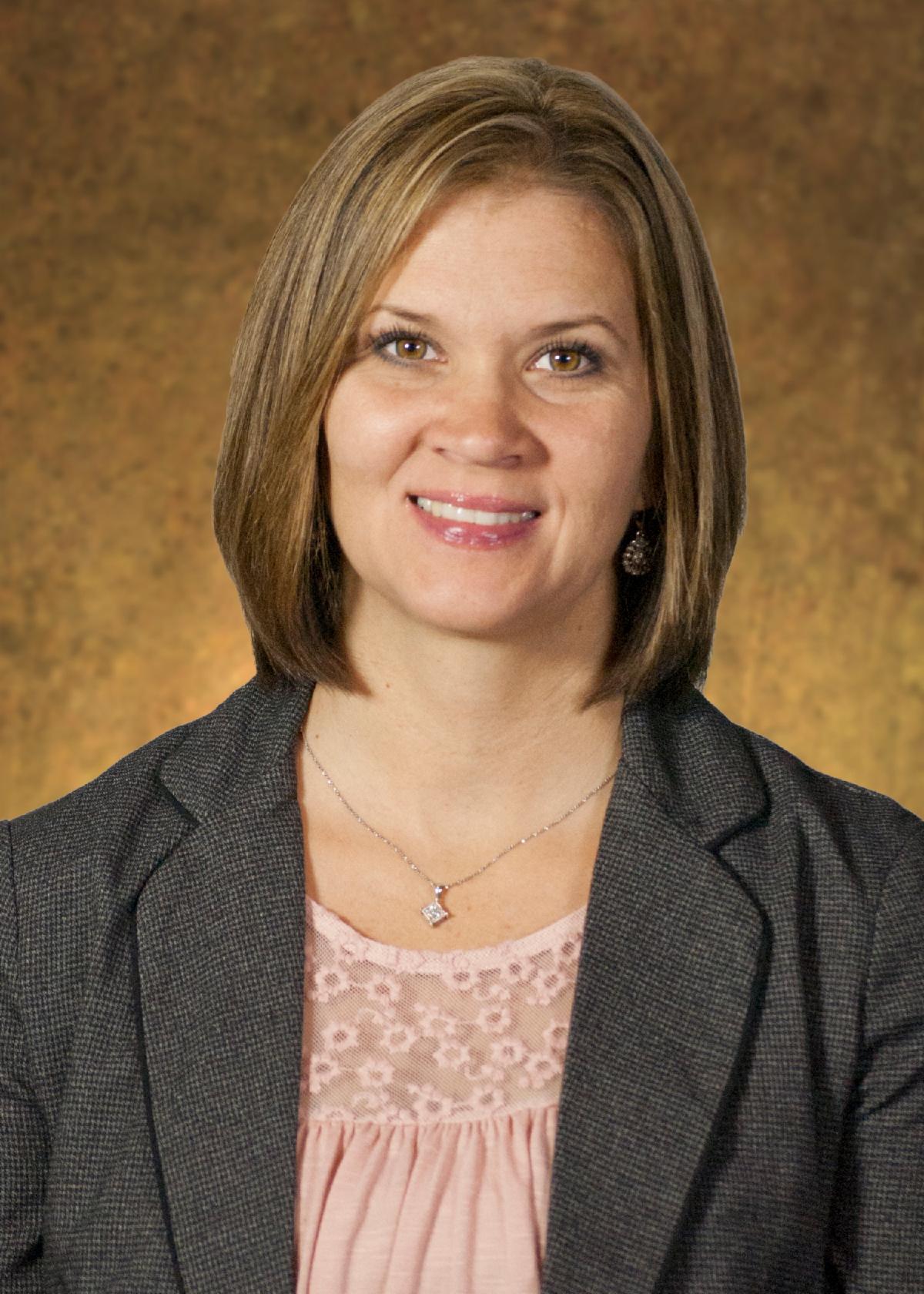
Robin Hardaway
Director of Group Benefits
Employees Retirement System of Texas
| |
Public career highlights and education: I graduated from Southwest Texas - now Texas State University – with a degree in health care administration. I started my state career right out of college with the Department of Health and Human Services, now HHSC. I moved to the Employees Retirement System in 2001 as a retirement counselor. From there, my role at the agency evolved throughout the years until my current position as director of the Customer Benefits Division, where I oversee the administration of pension and benefits to the State of Texas employees and retirees and certain higher education employee and retirees.
What I like best about my public service is: Serving those public employees who are themselves serving the state. I want to make sure each of those public servants experience exemplary service from ERS and receive the benefits they have worked so hard to earn.
The best advice I've received: You never know what somebody's day is like. Treating them with kindness can really change the trajectory of their day for the better. That’s advice I have instilled in anybody who has come to my department -- I have actually seen it work!
People might be interested to know that: I love to water ski. I spent a lot of time at my grandparents’ lake house while I was growing up and water skiing is what you did at my grandparents’ lake house.
One thing I wish more people knew about the Employees Retirement System of Texas is: We are serving Texans who serve Texas. What a lot of people do not know is that we pay over $3 billion annually in retirement dollars to annuitants. That money goes to more than 120,000 annuitants, most of whom still live in Texas. We have annuitants in 253 of the 254 Texas counties.
| |
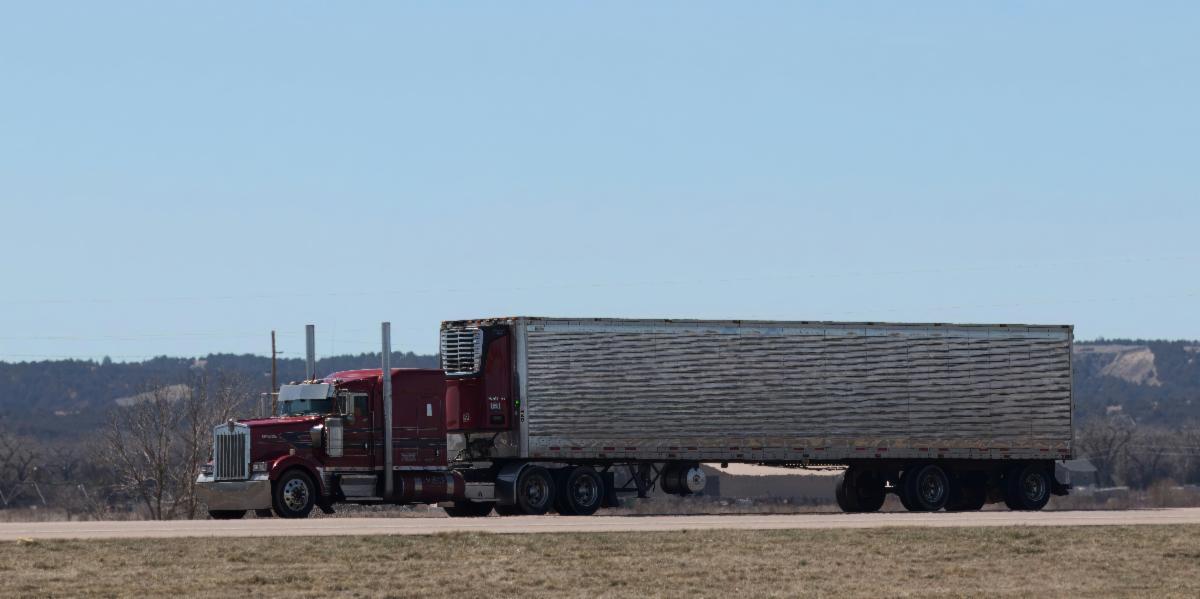
The U.S. Department of Transportation (USDOT) has released a report detailing its strategies and actions to decarbonize the transportation industry and achieve net-zero greenhouse gas (GHG) emissions by 2050.
The transportation sector produces the largest portion of the United States’ GHG emissions out of all industry, accounting for approximately 33% of all emissions. GHG emissions are the biggest contributors to climate change, with expected rising temperatures, sea level rise and extreme weather resulting in trillions of dollars in damage and growth potential for the nation’s foreseeable future.
Click here to learn more about USDOT’s decarbonization plan
(Photo courtesy of Preston A Larimer on Unsplash.)
| |
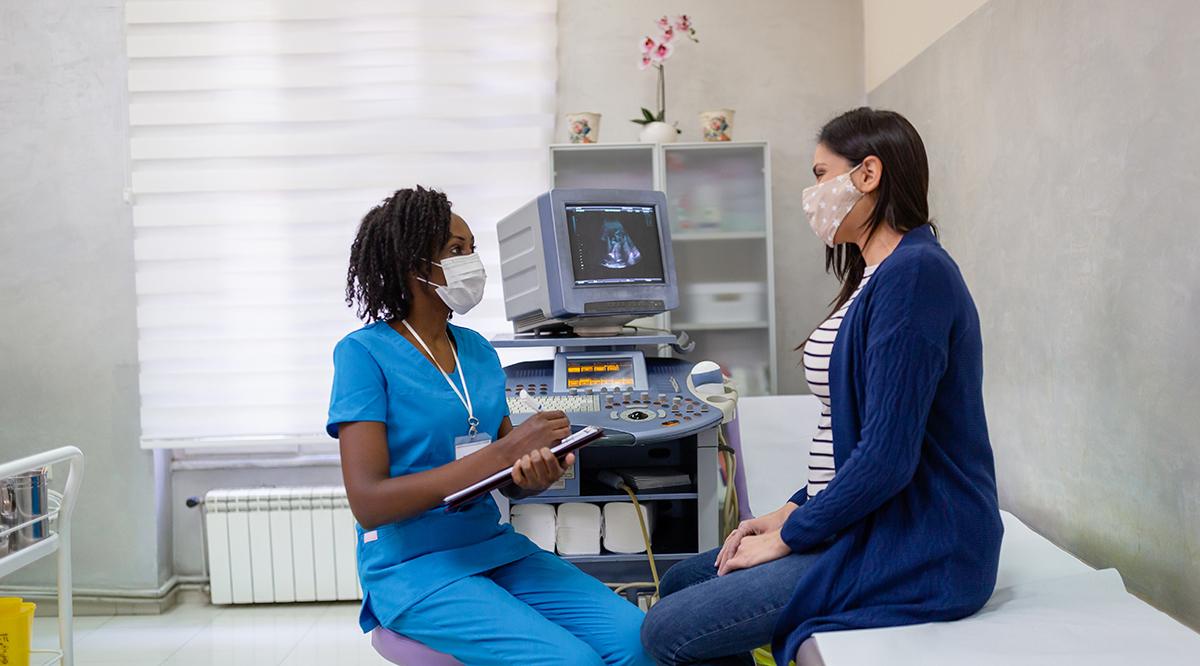
The University of Texas Medical Branch (UTMB) in Galveston and Texas A&M University will use $7.5 million from the National Center for Advancing Translational Sciences (NCATS) to create a center for promoting women’s and pregnancy health research.
The universities will establish the Translational Center for Microphysiological Systems Based Drug Development Tools for Pregnancy and Women’s Health. The center is one of four receiving awards from NCATS and is the only one that will center on pregnancy and women’s health research.
The center will manage administration and finances, integrate research, ensure quality control of drug development tools, get FDA approval for technologies and translate research into commercial applications. In addition, the universities will ensure research knowledge will be disseminated to researchers, government agencies and industry end-users.
Over the next five years, the universities will advance cutting-edge technologies to gain in-depth insights into female reproductive organs. Microphysiological Systems (MPS), also known as organ-on-a-chip, is an already developed technology that replicates all aspects of the human females’ reproductive anatomy used during pregnancy. The initiative will turn MPS devices into drug development tools.
NCATS is a part of the National Institutes of Health, dedicated to advancing and innovating methods to accelerate and optimize research. The organization prioritizes improving the translational process to ensure medical treatments can reach patients faster.
(Photo courtesy of the Association of American Medical Colleges.)
|  | |
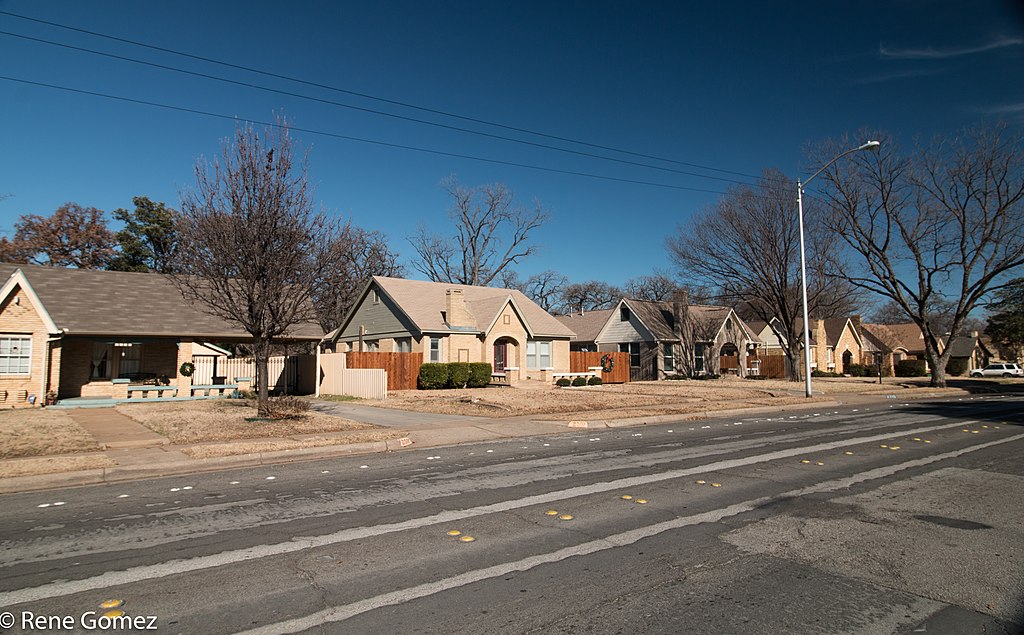
The Department of Housing and Urban Development (HUD) has awarded Fort Worth $5 million to expand housing supply and lower housing costs. The city will use the funds to build and redevelop affordable housing in underserved and historically challenged areas.
Currently, approximately 109,000 Fort Worth’s households spend more than a third of their income on housing. Fort Worth will help alleviate those burdens by identifying and removing barriers that traditionally prevent the city from improving its housing supply, availability and affordability.
One of the primary housing barriers is a lack of capital for affordable housing. Fort Worth will need at least $3.5 billion to ensure that renters who make under 60% of the Area Median Income (AMI) can afford rental housing. In addition, the cost of land and property in the city is extremely high compared with the rest of the state. Finally, local land-use policies and regulations are restrictive and prevent the city from easily building homes.
Fort Worth will use the $5 million to help overcome these obstacles. The city will finance multifamily housing, streamline approval processes for affordable housing development and redevelop existing parcels for housing and transit-oriented development.
Notably, the HUD award will allow the city to develop a neighborhood pattern book of pre-approved plans for infill housing. The book will help reduce the cost of architectural services and building permitting for developers. The city will also create a Unified Development Ordinance to coordinate land use regulations and implement policies that incentivize housing affordability. Currently, the city has several ordinances that make it difficult to navigate land use and subdivision regulations.
Fort Worth will also create a capital pool to financially support multifamily housing in High Opportunity Index areas. High Opportunity Index areas are spaces where it has been historically difficult to develop affordable housing due to land cost, land-use policies and neighborhood tensions. The city will also create a formal land bank to encourage affordable housing redevelopment.
HUD allocated the funds through the inaugural Pathways to Removing Obstacles to Housing (PRO Housing) program. The initiative provides financial support to communities to help them address local housing barriers and develop affordable housing in underserved regions.
Fort Worth is one of 21 applicants to receive a portion of the $85 million in PRO Housing Fiscal Year 2023 awards. Recipients will use the funds to update housing plans, revise land use policies, streamline permitting processes, allocate construction funds and implement strategies to create housing-forward communities.
(Photo courtesy of Renelibrary.)
| |
U.S. Department of Energy (DOE) has released a roadmap for a new artificial intelligence initiative, marking a significant step in the government’s approach to effectively implementing the rapidly evolving technology. The Frontiers in Artificial Intelligence for Science, Security, and Technology (FASST) initiative seeks to develop AI capabilities for applications in scientific discovery, energy research and national security.
Interest in AI has surged in recent years. Technological advancements have led to systems that can process vast amounts of data, recognize patterns and generate human-like text or images. As private companies and other nations intensify their use of AI, the U.S. government is seeking to maintain its technological edge in this crucial field.
Click here for more information about the DOE will use AI to advance research
(Photo courtesy of Glenn Carstens-Peters on Unsplash..)
|  | |
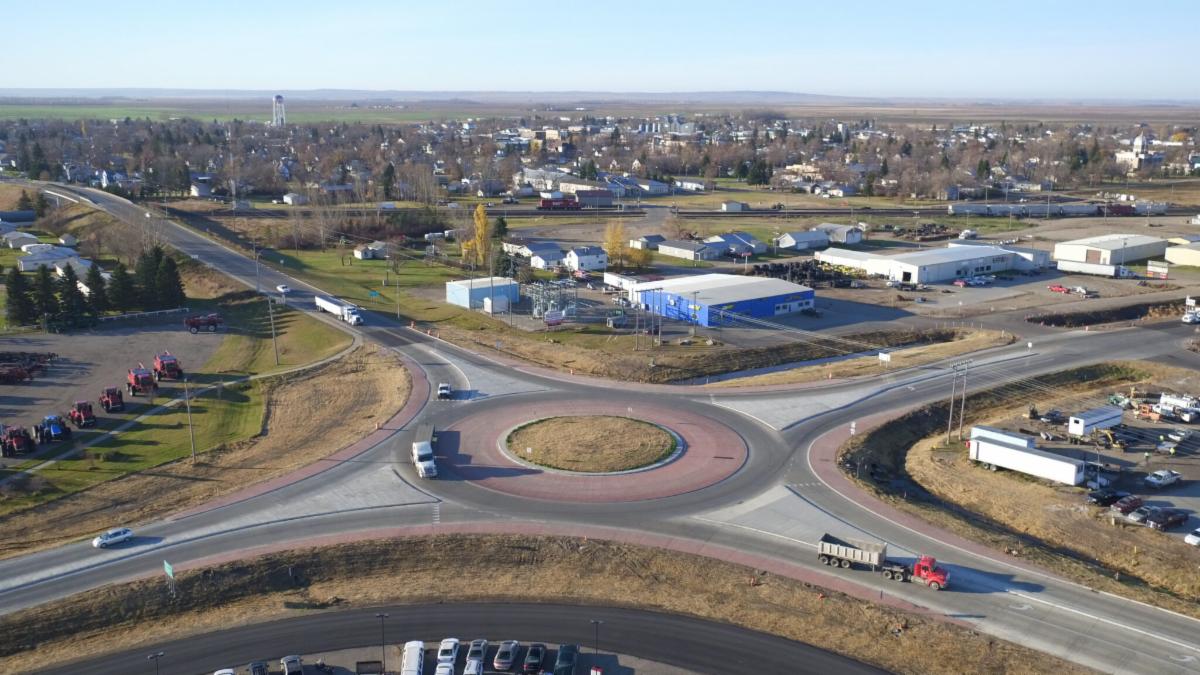
Roundabouts have significantly decreased serious injuries from vehicle crashes throughout North Dakota, according to a recently published study from the state’s Department of Transportation (NDDOT). The findings align with other nationwide studies on the effects of roundabouts on fatal and serious crashes.
According to the NDDOT report, severe injury and fatal crashes have decreased by 59%, and the total number of crashes has dropped by 33%. The study assessed the safety performance of roundabouts by comparing crash rates and severity before and after their completion. The analysis included data from 12 roundabouts within the state’s road network.
Click here to learn more about the vehicular safety study
(Photo courtesy of America's Transportation Awards.)
| |  |
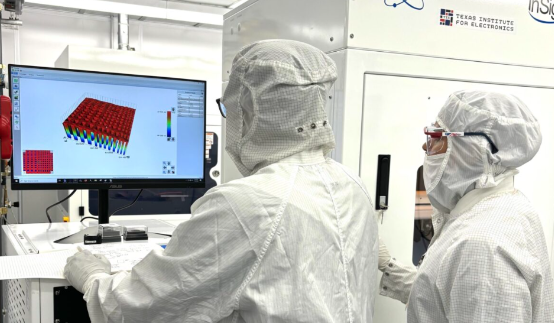 | |
The Defense Advanced Research Project Agency (DARPA) will invest $840 million into the Texas Institute for Electronics (TIE) at The University of Texas (UT) at Austin to advance cutting-edge semiconductor microsystems manufacturing. The investment builds on $552 million already provided by the Texas Legislature.
The funds come from the Next-Generation Microelectronics Manufacturing (NGMM) program. The initiative will establish a dedicated center to advance U.S.-based manufacturing and R&D of three-dimensional heterogeneously integrated (3DHI) technologies.
3DHI represents the next stage in microelectronics technology, stacking components manufactured in separate facilities that contain different semiconductors and materials. These components are layered into a single complex package that uses three dimensions to drastically improve performance and function.
TIE will create the first-ever national consortium for microelectronics manufacturing, establishing a national open-access fabrication facility for 3DHI technologies. The center will allow TIE and DARPA to accelerate design innovations and improve microsystem testing, reliability and security.
Technology developed through the center will allow the Department of Defense (DOD) to develop defense systems that are high performance, low power, lightweight and compact. These may include radar, satellite imaging and unmanned aerial vehicles. While mainly intended to support the defense sector, technologies made through the center will be used for a broad array of applications.
The project will be split into two phases, each 2.5 years in length. During Phase 1, TIE will build the center's infrastructure and fundamental capabilities. Phase 2 will jumpstart engineering of 3DHI hardware prototypes and automate processes.
TIE is a UT Austin-supported consortium of state and local government, semiconductor and defense electronics companies, national labs and academic institutions. The institute has spent the past three years developing a strategic vision for the 3DHI fabrication center alongside key semiconductor partners. TIE’s NGMM team is composed of 32 defense electronics and leading commercial semiconductor companies and 18 nationally recognized academic institutions.
(Photo courtesy of UT.)
|  | |
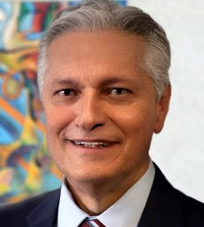
The Houston City Council has officially approved Vonn Tran as the city’s planning and development director. Mayor John Whitmire nominated Tran for the position July 5.
Tran brings more than two decades of experience working in the commercial real estate industry. She has extensive knowledge of Special Districts, including Management Districts, Tax Increment Reinvestment Zones (TIRZs) and Municipal Utility Districts (MUDs).
As planning director, Tran will be responsible for implementing ordinances that affect development and neighborhoods. She will lead transportation planning, streamline operations and collaborate with the Houston Archeological and Historical, Planning and Tower commissions.
Tran has a Bachelor of Architecture from Gerald D. Hines College of Architecture and an MBA from Bauer College of Business with a focus in finance.
|  | |
The Electric Reliability Council of Texas (ERCOT) has selected Gilbert Hughes to take over as vice president of public affairs. Hughes will leave his role as vice president of external affairs with American Electric Power to join ERCOT. He brings more than four decades of experience in the electric utility industry to the role.
|  | 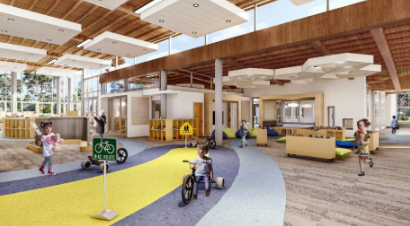 | |
The Leander Independent School District (LISD) will build a $60 million early childhood learning center. The project is currently in the design phase. Construction is expected to begin in March 2025.
The district will design the 100,000-square-foot facility to accommodate approximately 600 prekindergarten students. The childhood center will consist of five learning pods that feature literacy areas, free play stations and meals.
The center will include several spaces for education and recreation. The building includes a main entry, secondary entry and several side entrances to access outdoor spaces and for emergencies. The layout includes a media center, gym and kitchen. The facility will also include admin offices, a special education space, a Parents as Teachers area and a Child Development Center.
LISD will build the structure on 12.9 acres of land, which includes 70,000 square feet of outdoor play space. The play areas will include gardens, trike tracks, covered porches and nature, turf and free-play areas. The layout also includes playgrounds, storage spaces and a water detention pond.
As the district continues to develop the project’s final design, LISD will consider plans for water collection and additional site and building learning opportunities. The city of Leander is located 26.3 miles northwest of Austin.
(Photo courtesy of LISD.)
|  |  | |
The Lyndon B. Johnson (LBJ) School of Public Affairs at The University of Texas (UT) at Austin is launching its first undergraduate degree after exclusively serving graduates for more than 50 years. The Bachelor of Public Affairs program will foster leadership, policy analysis, data analytics, communication and organizational management skills.
As public sector job growth continues to rise, UT is preparing the next generation for careers in public service. The program will provide comprehensive education and courses in public affairs, providing undergraduate students with professional training to develop innovative policy solutions to resolve real-world challenges.
In the program, students will study the ethics of working in public affairs; why public policies are required; how policies are proposed, adopted and implemented; and how to calculate the costs and benefits of policies. The School of Public Affairs will encourage students to specialize in policy domains to highlight their skill sets and experience in the job market.
The School of Public Affairs will start accepting applications for the program Aug. 1, 2024. The program’s inaugural class will begin in the fall of 2025. Students interested in applying may visit the LBJ School’s site for more information.
(Photo courtesy of UT.)
| |
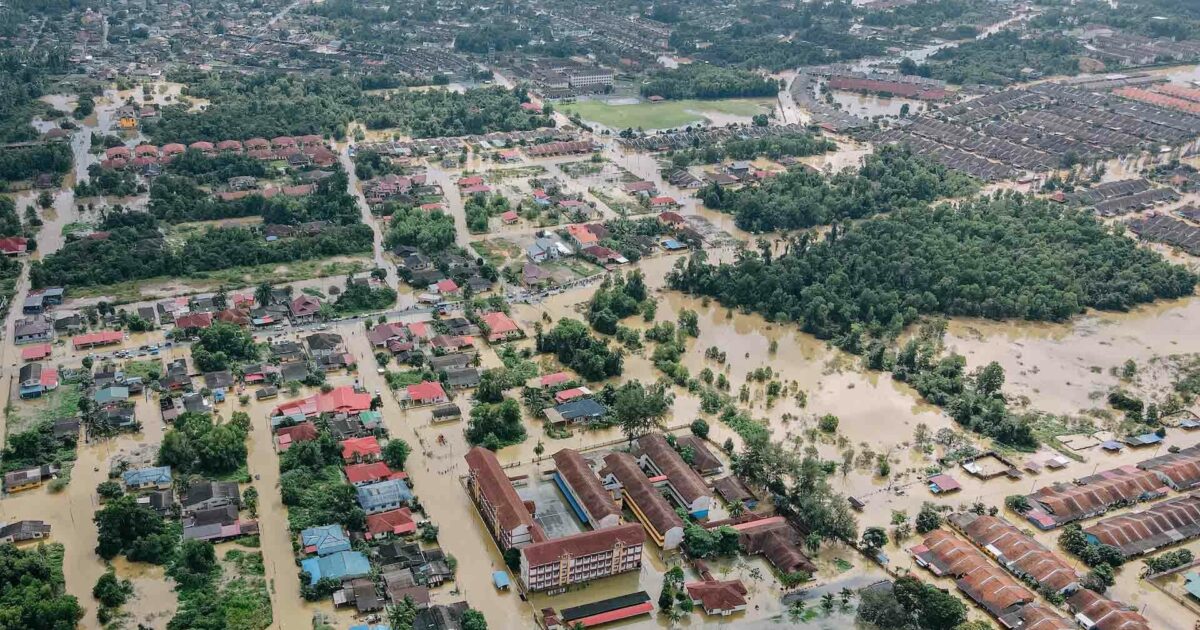
The Federal Emergency Management Agency (FEMA) has issued a Final Rule that provides a flexible framework designed to protect structures against damage and casualties from flooding. The Federal Flood Risk Management Standard (FFRMS) applies to FEMA-funded projects that involve new construction, significant improvements or repairs to substantial damage.
In recent years, recurring floods have endangered lives and property, and as climate change continues to accelerate, historical-data-based approaches have become outdated. The FFRMS is informed by the best available science to improve FEMA’s standards by incorporating both current and future flood risks.
Click here for more information about FEMA’s new disaster framework
(Photo courtesy of the city of Virginia Beach.)
| |
The city of Kyle has officially welcomed David Lopez to lead its Parks and Recreation Department. Lopez brings more than two decades of experience in parks and recreation to the position. He most recently served as an executive leader for the city of Dallas. He has also worked as an executive overseeing parks and planning for the cities of North Richland Hills and Burleson. He began his tenure July 10.
| |
Michelle Henley has been promoted to take over the city of Buda’s public information officer role. Henley brings more than 10 years of experience in live production, journalism and strategic communications to the role. She has been serving as interim public information officer since May 2024. She will officially begin her role July 22.
| |
Gov. Greg Abbott announced these appointments and reappointments from July 12 through July 18:
There are no new appointments.
| |
Texas Government Insider is a free weekly newsletter detailing important happenings throughout the state and summarizing current political issues relevant to individuals interested in government.
Publisher: Mary Scott Nabers
Editors:
Adam Rollins
Dave Doolittle
| | |
| |
| |
|
|
Check out our
social media links!
|
|
Help us share this message.
To ensure delivery and proper formatting of the newsletter, be sure to add editor@spartnerships.com to your safe senders list. Otherwise, the newsletter may be flagged as spam and automatically routed to your junk e-mail folder.
| | | | |