Volume 22, Issue 27 - July 12, 2024 | |
|
Earlier this month, the Federal Emergency Management Agency (FEMA) announced $1 billion for 656 new climate resiliency projects. The capital was awarded to support projects that address infrastructure risks and prepare for future natural disasters, including flooding, drought, earthquakes and extreme heat.
Approximately $395 million will be invested in 28 flood-control projects designed to eliminate or reduce damage. More than $236 million will be awarded to 30 utility infrastructure-protection projects that make improvements, such as upgrading power poles, burying electrical lines, adding backup power generators to essential facilities and elevating pump stations. The upcoming contracting opportunities will not launch for months, but most will move quickly due to urgent critical needs.
The city of Crisfield, Maryland, received $36 million for a flood mitigation project. The work will create a circle of flood protection infrastructure around the city by raising the current flood protection barriers by more than 3 feet. When completed, the city will be protected from flooding if water flows are 5 feet above sea level.
The overall initiative is to protect both sides of the city, but this first funding allocation is designated only for work on the city's south side. Design work will include both areas, but there could be a lag between work until the second tranche of funding is awarded. Elements of the project's first phase include tide gates, elevated roadways and improved drainage systems. The proposed elements of the second phase will consist of similar improvements and a new pump station. Construction will begin in 2026.
City officials at Del Mar, California, will move forward with several phases of a project to bury power lines underground throughout the city. The total cost of this project could be as much as $100 million. The benefits include increased reliability of utility services and reduced fire hazards from sparking power lines. This month, a $10 million contract was awarded for Phase 1A of the project, and the next phase of this effort has a projected cost estimate of $16.6 million. Pre-bidding for this phase will begin in August, with the goal of awarding a contract by November 2024. The plan is to convert 11,200 feet of overhead lines to about 14,300 feet of underground line. Over 70 poles will be relocated or removed. The work will involve 152 properties and 114 residences.
Click here for more
|  | |
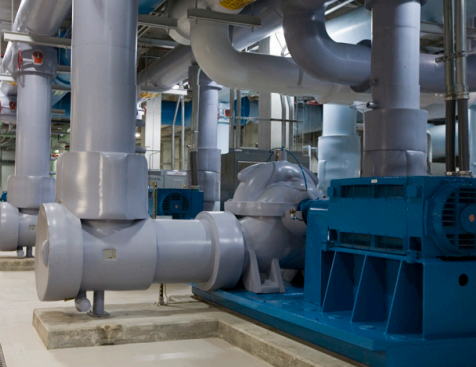
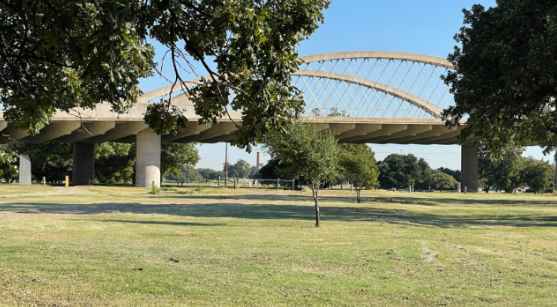
Austin Energy is looking to expand use of district cooling in areas of the city it has established infrastructure for the service.
The Downtown District Cooling System is one of three district energy systems owned and operated by the city. The District Energy & Cooling program started serving its first customer in 2001 and as of June 2023 served 73 customers, covering 25 million square feet of space.
Buildings using the service include residential towers, office buildings, hotels, Whole Foods, the Austin Convention Center, City Hall and the Austin Community College Highland Campus. The Downtown District Cooling System is the largest of the three systems, consisting of four district cooling plants connected by 8 miles of piping and cooling more than 18 million square feet. The other two systems service The Domain and Mueller areas.
Austin Energy’s chilled water system improves energy efficiency by using a large thermal energy storage system to create ice or cold water at night when electricity costs are lower. The stored ice or cold water is then used to produce chilled water the following day. By shutting down large chillers and most pumps on hot summer afternoons, this system reduces the electric load on during peak demand times.
(Photo courtesy of Austin Energy.)
|  | |
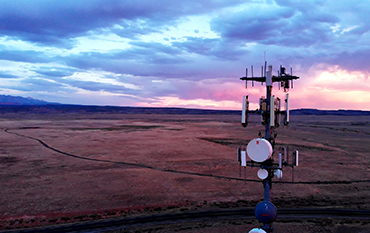
The Texas Comptroller of Public Accounts (CPA) is making $729.9 million available to build last-mile broadband connections for more than 97,000 underserved locations across the state.
The CPA’s Broadband Development Office (BDO) has opened a Notice of Funding Availability (NOFA) for the Bringing Online Opportunities to Texas (BOOT) 2 Program. This will be the second round of funding for the BOOT program. The NOFA for BOOT 2 is scheduled to close Aug. 26, 2024. Awards will range between $1 million and $125 million.
The BOOT program is a competitive grant initiative to deploy and expand broadband infrastructure projects in historically socio-economically disadvantaged areas. These communities either have limited or no access to broadband services. Projects that receive funding will provide and improve high-speed internet service to households and businesses.
Eligible participants to submit a proposed project for funding include:
- Political subdivisions of the state.
- Commercial broadband service providers.
- Non-commercial broadband service providers.
- Partnership of any of the above.
Entities that receive awards are not required to match funds. However, applicants who include matching funds as part of their submission will receive preferential consideration.
The BDO selected two counties in each of the state’s 12 economic regions to be eligible for the BOOT 2 Program. All projects will be limited to a single eligible county, but applicants can bid on multiple counties to serve. In addition, participants must provide a narrative supporting why the project is necessary. Submissions must include:
- An executive summary that provides an abridged view of the project.
- A project description that includes offered service speeds, technical details, technologies used and cost details.
- A description of prior experiences with federal or state grants for deploying broadband services or infrastructure.
- A proposed pricing strategy for broadband services.
- A low-cost option for customers.
- A description of how the project will impact the community, including how it will increase broadband adoption through digital literacy programs, efforts to increase access to devices, pricing transparency and workforce development.
- A statement of how the middle-mile infrastructure will be non-discriminatorily accessible for other providers.
Finished projects must deliver reliable services that provide symmetrical internet speeds of 1 gigabit per second (Gbps). However, if topography, geography or cost would make achieving that quality of service unfeasible, the CPA may approve projects that meet or exceed 100 megabits per second (Mbps). Participants must complete their proposed projects by Dec. 31, 2026.
The CPA made up to $120 million available through the program’s first round in 2023. From that amount, BOOT 1 allocated $12.3 million to grant recipients. The program is funded in part by the Coronavirus Capital Projects Fund (CPF) and state revenue.
(Photo courtesy of the CPA.)
| |
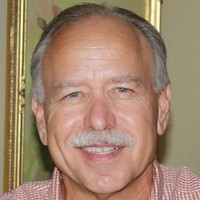
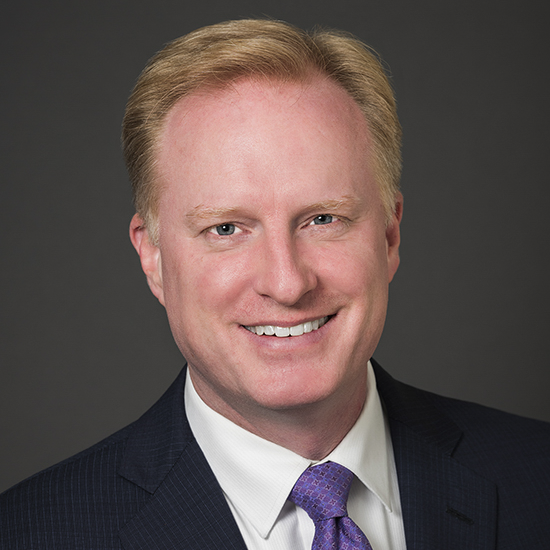
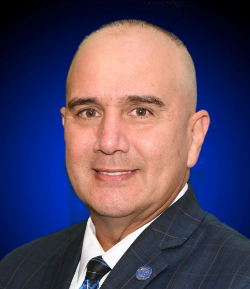
The SPI Team is pleased to announce the appointment of Jeff Nash as its new chief of staff. Jeff brings with him over 40 years of impressive experience in finance, marketing, and management. His career has focused on banking, consulting, database management, and development. His previous responsibilities have ranged from executive officer, founder, leader and chief executive. Jeff also understands the complex intersections of public- private sector transactions and was a part of the SPI Team in its earlier years.
Jeff is founder and principal of 3G Partners, a financial and management consulting practice focused on performance improvement, training, leadership evaluation and development, workouts, growth and capital solutions. An extension of 3G, 3G Partners Healthcare Management, received the contract to manage Longhorn Village, a continuous care retirement community through its acquisition by Brazos Presbyterian Homes, Inc. Jeff currently serves as Vice Chair of the BPHI Board of Directors.
Prior to 3G Partners Jeff led the successful effort to sell Austin based Treaty Oak Bank. He was involved with the bank from its inception serving as President and CEO of both the bank and its parent holding company Treaty Oak Bancorp, Inc. Jeff lead the growth of the bank from $7 million in total assets to greater than $150 million. He continued to lead the organization through the economic turndown of 2008-2010 to reach the successful sale of the business to Carlile Bancshares, Inc.
Jeff is a lifelong resident of Austin and received B.B.A. and M.B.A. degrees from The University of Texas. He is an active civic leader having served on and chaired numerous community boards including the SafePlace Foundation, Swan Songs, The University of Texas Alumni Association, Rodeo Austin, Texas Bankers Association, the Long Center for Performing Arts, the Austin Lyric Opera, Ballet Austin and the American Heart Association, where he was honored with a research grant in his name. He has served as campaign co-chair for the United Way and as Vice Chair for the Greater Austin Chamber of Commerce, where he received the “Outstanding Board Member Award.”
| |
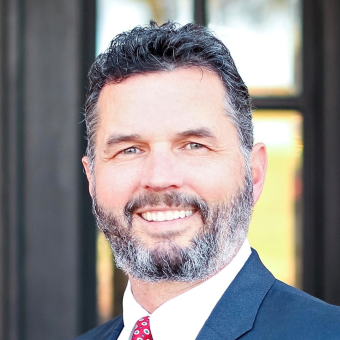
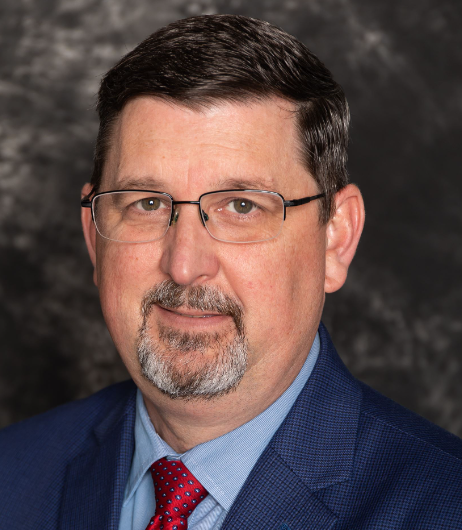
Frank New
County Judge
Rockwall County
| |
Public career highlights and education: I was elected as a Rockwall County judge Jan. 1, 2023. Before Rockwall County, I served for six years on the Heath City Council. I’ve earned a Bachelor’s Degree from Northeastern State University and an associate’s degree from Connors State University.
What I like best about my public service is: Protecting the quality of life that citizens have worked hard and sacrificed to achieve.
The best advice I've received: From my father: In most competitive situations you can just outwork your opponent.
People might be interested to know that: I am a member of the Texas Advanced Nuclear Reactor Working Group. We are charged with coming up with an implementation strategy for advanced nuclear reactors.
One thing I wish more people knew about Rockwall County is: County government is the most effective level of government. It is the one that lives with the constituents but also reaches the state level. It is the level of government that is most responsive to its citizens.
| |
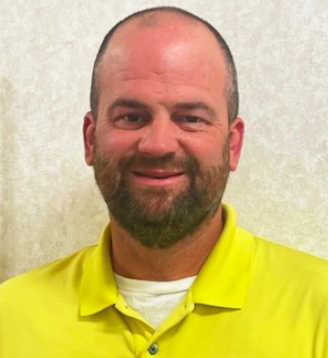
Dr. Dena Walton has 30 years of experience in Grants and Federal Contract Acquisition, Management, Compliance, Business Development, Marketing, and Strategy. She has served as Sr. Director of Federal Data Management and Contract Compliance for the past four years. Prior to that she managed compliance and subcontractors for a $25 billion CMS healthcare quality improvement contract and developed the successful proposal for the CMS Qualified Entity Certification Program for Medicare Data Acquisition, a certification held by only 25 companies nationwide.
Dr. Walton served as Director of Sponsored Programs at a Tier One Biomedical Research University where she managed a $30 million funding portfolio. She also worked as a Sr. Consultant for a University Administration Information Systems and Services Department and spent 10 years as an Adjunct Associate Faculty member teaching marketing, technology and capstone courses.
As a Sr. Business Development Manager for four years, she helped secure over $3 billion in state and federal grants, bonds, and contracts for higher education, healthcare, tribal, and non-profit entities. She led funding strategies for state and local governments and higher education in Alaska, Montana, North Dakota, and South Dakota, acquiring funds from FCC, US Dept of Educ., NIH, NSF, USDA, and others.
Dr. Walton spent 15 years at a large technology company, developing go-to-market strategies for new products and services. She also led market research intelligence teams. Her work identified new market industries, generating over $4 billion in net new revenue. For the past 20 years, Dr. Walton has served as a state, federal, and international peer grant reviewer. She is an “invited reviewer” for the U.S. Departments of Education, Health and Human Services, and the Department of Labor. She holds a Bachelor’s degree in Business Education, an MBA in Marketing and International Business, and a Doctorate in Business Administration.
| |
The Fort Worth City Council recently approved an Urban Forest Master Plan, establishing it as the official framework for managing the city's urban forest in the future, a project started in 2022.
As the 12th largest city in the United States and one of its fastest growing, Fort Worth loses up to 2,500 acres of natural open space each year. To mitigate the effects of rapid development, the master plan details ways to proactively and equitably manage, preserve and expand the tree canopy.
Key components of the plan include identifying partners interested in urban forest growth, pinpointing priority planting and preservation areas, reassessing the citywide tree canopy goal and recommending amendments to the Urban Forestry Ordinance.
The Texas Trees Foundation, City of Fort Worth Development Services Department, Park & Recreation Department, and other city departments, worked together on the creation of the plan, coming up with 10 recommendations:
- Conduct a comprehensive inventory of public trees in rights-of-way, parks and other public property.
- Develop and implement changes to tree regulations, standards and best practices to support Fort Worth’s tree canopy and sustainability goals.
- Expand and strengthen cooperation among departments to ensure adequate staffing, training and integration of urban forest considerations into city plans, programs and policies.
- Strengthen existing relationships and support new partnerships with neighborhoods and community organizations throughout the city.
- Coordinate, create and implement a public communication, education and engagement plan focused on Fort Worth’s urban forest.
- Develop and implement a strategy to maintain sustainable funding and resources to achieve desired levels of service for urban forest programs and management.
- Support and expand plans for maintenance, risk management, and resiliency of public trees.
- Create plans for tree planting, preservation and maintenance to grow a resilient and equitable urban forest with 30% canopy cover.
- Develop protocols for monitoring the urban forest to identify and address pests and other threats throughout the city.
- Strengthen, expand and increase awareness of programs and strategies that utilize or repurpose urban wood waste generated from public tree operations.
The master plan included substantial public input gathered through meetings with an 18-member steering committee, city staff, six industry-related focus groups, a bilingual online survey, interviews, social media postings and public engagement events, collecting suggestions from 2,300 residents and 55 participating organizations.
(Photo courtesy of the Texas Trees Foundation.)
|  | |
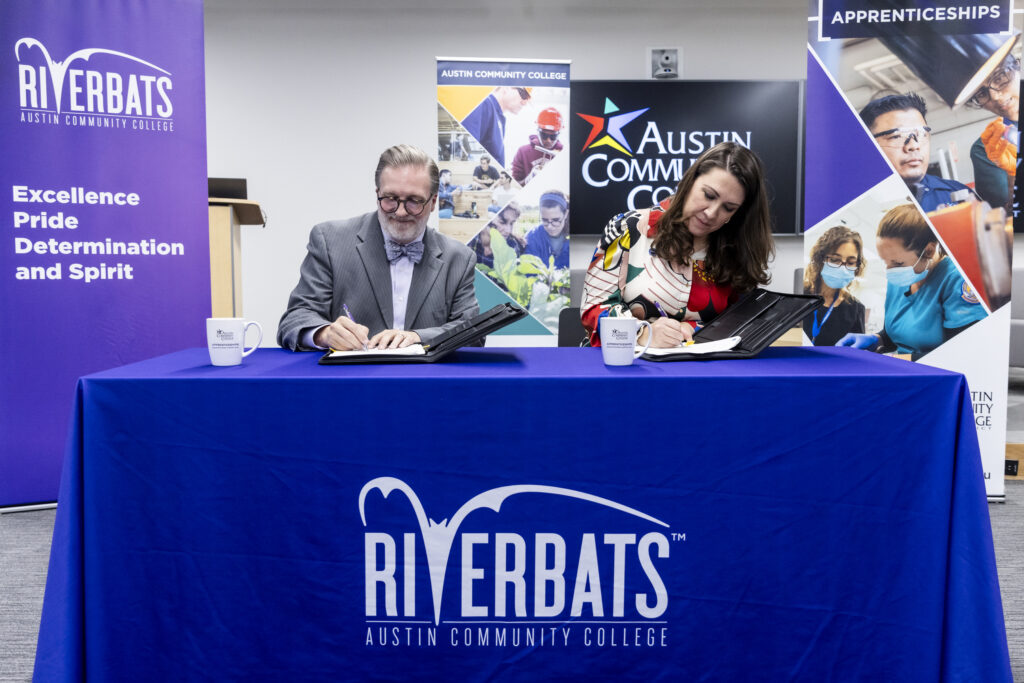
Austin Community College (ACC) and the Texas Department of Information Resources (DIR) are collaborating to launch a groundbreaking pilot program for technology and cybersecurity apprenticeships. The college and state agency officially signed an agreement launching the program June 28.
The Cybersecurity Apprenticeship Program will provide training to develop student cybersecurity and technology skills to meet the tech industry’s evolving needs. ACC will offer computer science courses from fast-track competency-based education (CBE) programs among other accelerated options to streamline the path to an associate degree in Computer Information Technology and Computer Science.
ACC will provide training, while DIR will be the employer for apprentice students. The system will blend academic learning with practical, real-world experience, providing a unique method for training state agency employees.
The partnership between ACC and DIR aligns with House Bill 584, a piece of legislation passed in 2023 to develop the state information resources workforce. The bill laid the groundwork to enable public junior colleges or public technical institutes to provide state information technology credentials to students. The legislation will help shore up a dwindling cybersecurity workforce through one-year apprenticeships.
ACC has seven departments already involved in the college’s apprenticeship program, partnered with more than 25 industry organizations. The pilot program between ACC and DIR will provide a template that will be used with all partners for the foreseeable future. The college will partner with the Texas Parks and Wildlife Department next.
(Photo courtesy of ACC.)
| |
The U.S. Department of Transportation’s Federal Railroad Administration (FRA) has announced a Notice of Funding Opportunity (NOFO) for more than $1.1 billion in Railroad Crossing Elimination (RCE) Grant Program funding. This is the only competitive discretionary grant program focused on enhancing the safety and efficiency of railroad crossings.
The RCE Program funds projects that construct grade separations, upgrade safety devices at crossings or close at-grade crossings where roads and train tracks intersect. Addressing collisions and blockages at grade crossings has been a top priority for the FRA, especially as increasing train lengths lead to more frequent and prolonged blockages.
Click here for more information about the rail safety NOFO
(Photo courtesy of craig kerwien on Unsplash.)
|  | |
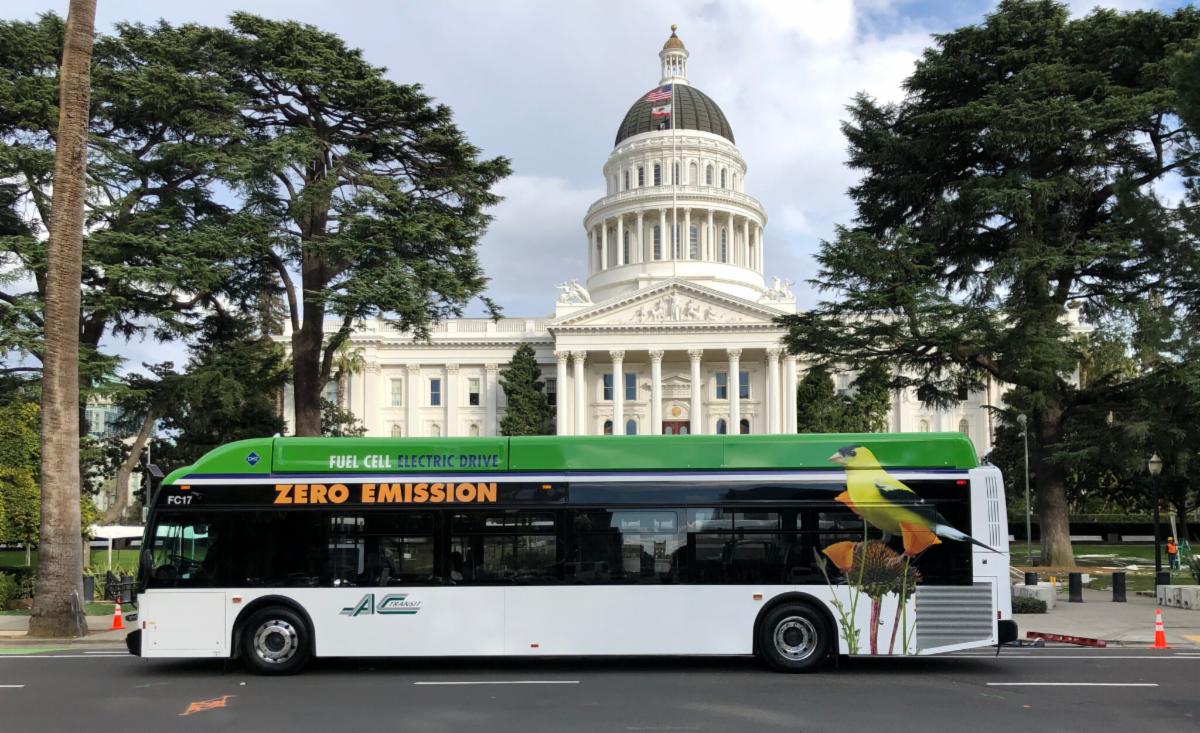
The U.S. Department of Transportation’s Federal Transit Administration (FTA) has announced approximately $1.5 billion for 117 projects to enhance public transportation across 47 states. Under the Bipartisan Infrastructure Law (BIL), the FTA has allocated nearly $5 billion over the past three years to replace and modernize transit buses in the U.S.
Some 80% of the funded buses will be outfitted with zero or low-emission technology, reducing air pollution and contributing to achieving zero emissions by 2050. These initiatives also support the Justice40 Initiative, which aims to ensure that 40% of the overall benefits from federal investments in climate, clean energy, clean transportation and other areas are directed to disadvantaged communities marginalized by underinvestment and burdened by pollution.
Click here for more information on USDOT’s investment in the nation’s public transit
(Photo courtesy of the California Air Resources Board.)
| |  |
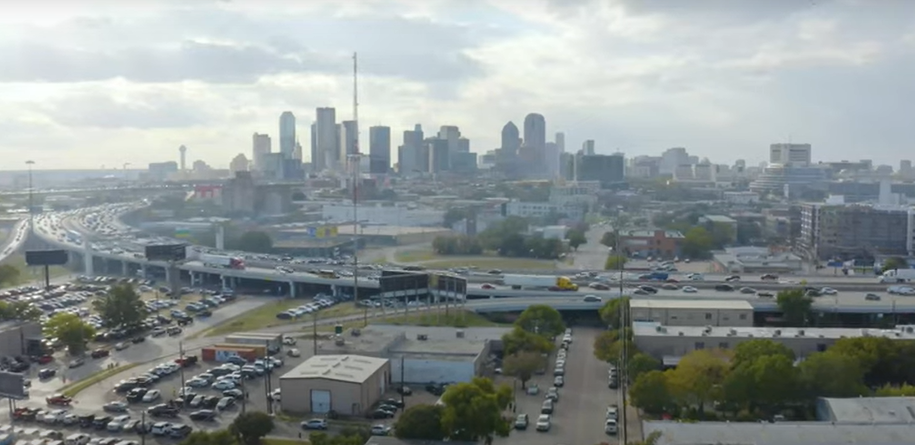 | |
The U.S. Department of Transportation (USDOT) has awarded Dallas County $25 million to advance the Dallas County Inland Port (DCIP) Multimodal Connectivity Project. The project will upgrade and widen roads to increase safety and improve mobility. Construction is expected to begin in April 2027.
The county will widen a series of roads from two-lane roadways to four-lane divided facilities. Plans include building shared-use paths and sidewalks along the stretch of road. In addition, the county will install intersection upgrades, signage, alert signals, pavement markings and enforcement measures to increase safety.
The improved roads will be more resilient to extreme weather and natural disasters. In addition, the county will increase mobility and accessibility along the roadways, providing travelers with more affordable transportation options and improving system-wide connectivity.
USDOT allocated the funds through the Rebuilding American Infrastructure with Sustainability and Equity (RAISE) grant program. The RAISE program invests in community projects to build and renovate critical transportation infrastructure projects across the country.
The DCIP project is one of 148 projects that will receive a portion of the recently announced $1.8 billion in RAISE funding for Fiscal Year 2024. Including the latest round, USDOT has invested $7.2 billion across 550 projects through the RAISE program since it was established.
(Photo courtesy of the Southern Dallas County Inland Port.)
|  | |
Kyle Hogan will assume the role of COO for the port of Corpus Christi. Hogan has spent the past three decades serving in the military, most recently as a commander for the Corpus Christi Army Depot. As COO, Hogan will oversee Engineering Services, Port Operations, Police and Security, Emergency Management and Channel and DMPA Development.
He will succeed Clark Robertson on Aug. 12, 2024. Hogan will work alongside Robertson until his official retirement Sept. 3, 2024.
The port of Corpus Christi is the third largest in the United States. It serves as a critical gateway to international and domestic maritime commerce. In addition, the port’s railroad and highway network provides essential connectivity and transportation via three North American Class-1 railroads and two major interstate highways.
|  | 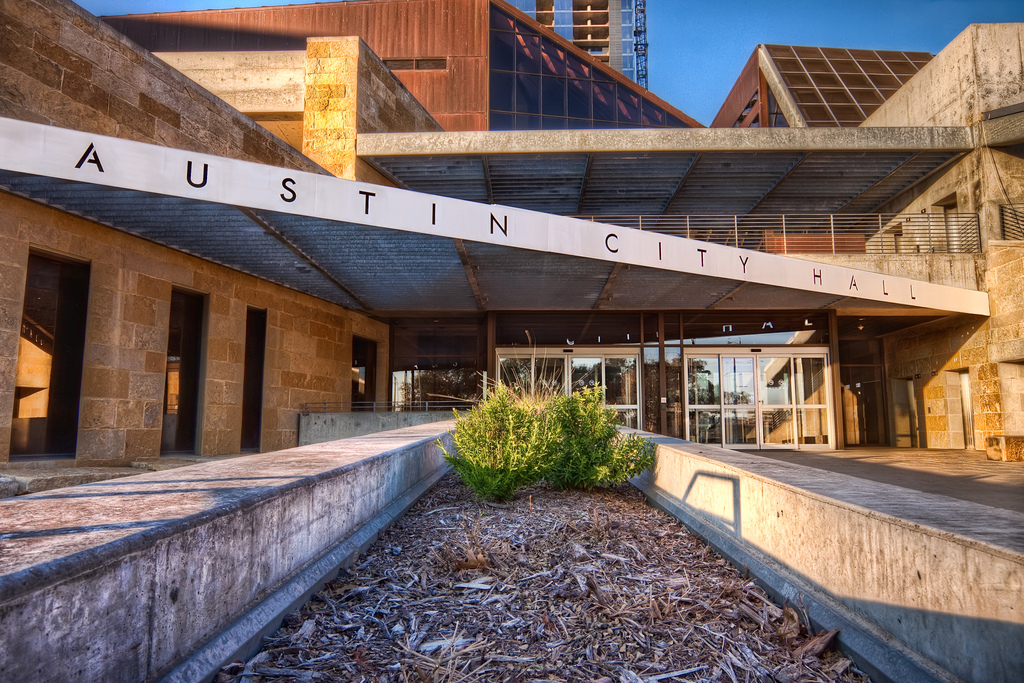 | |
The Austin City Council has approved changes to the land development code to increase housing options, support equitable development along the Project Connect light rail and create regulations for electric vehicle (EV) charging stations. The amendments will go into effect throughout the summer and into the fall.
EV charging stations: A new zoning category was created to define where EV charging stations can be located and to prevent them from becoming clustered in residential or high-density areas.
Transit-oriented development: On July 15, an amendment supporting transit-oriented development and income-restricted housing along the Project Connect Phase 1 light rail corridors will go into effect.
Reducing building height restrictions: On July 15, an amendment revising height restrictions and placement of buildings based on their proximity to single-family homes will go into effect.
Decreasing minimum lot size: On Aug. 16, the HOME Phase 2 amendment reducing the minimum lot size for single-family homes from 5,750 square-feet to 1,800 square-feet goes into effect. In areas identified as high-risk for wildfires or displacement, the effective date will be delayed until Nov. 16 to properly address those concerns.
The planning commission and City Council can initiate amendments to the land development code. Public hearings are held by the planning commission and city council through the code amendment process.
(Photo courtesy of the Office of the City Architect.)
|  | |
Harrison Keller, Ph.D., has been officially approved as president of the University of North Texas (UNT). Dr. Keller currently serves as the commissioner and CEO of the Texas Higher Education Coordinating Board. He will be the university’s 17th president, effective Aug. 1, 2024.
The Board of Regents selected Dr. Keller as the lone finalist for the role June 7, 2024, in the UNT Regents’ search for a president after Neal Smatresk, Ph.D., retired. The board’s decision to finalize Keller’s appointment came at the end of the required 21-day waiting period before the UNT Regents could officially name him president.
UNT Chancellor Michael Williams led the presidential search advisory committee, culminating in Dr. Keller’s recommendation for the position. Dr. Keller brings more than 27 years of higher education, management and public service experience to the role.
Dr. Keller has served as commissioner and CEO of the Texas Higher Education Coordinating Board since 2019. Before that, he worked at The University of Texas at Austin for more than a decade as a professor, vice provost for higher education policy and research, executive director and deputy to the president for strategy and policy.
As UNT president, Dr. Keller will function as the university’s CEO, managing its administration and operations and developing the institution’s vision and strategic objectives. He will help ensure that UNT maintains a high degree of academic excellence, bolster its student-focused identity and strengthen its portfolio of research, scholarship and creative activity.
|  | |
The state fund intended to expand Texas’ power grid is likely to double to match demand for electricity that’s expected to increase by 100% over the next six years.
State officials will consider boosting the Texas Energy Fund from $5 billion to $10 billion, Gov. Greg Abbott and Lt. Gov. Dan Patrick announced in a joint statement.
Click here to learn more about the state’s power grid expansion plans
(Photo courtesy of James Wainscoat on Unsplash.)
|  | |
The U.S. Department of Commerce has announced a Notice of Intent (NOI) to solicit research and development (R&D) activities that will help establish and accelerate domestic capacity for advanced semiconductor packaging.
The CHIPS for America program plans to allocate up to $1.6 billion to fund innovation across five R&D areas, as described in the vision for the National Advanced Packaging Manufacturing Program (NAPMP). Through potential cooperative agreements, CHIPS for America aims to provide multiple awards of around $150 million in each research area, leveraging private sector investments from industry and academia.
Click here to learn more about the CHIPS program
(Photo courtesy of Anne Nygård on Unsplash.)
| |
Ronnie Rivera will become general manager of Eagle Pass International Bridge System, effective July 17, 2024. He currently serves as the city’s public relations director. He joined the city in 2019 as a grant writer within the Finance Department. He will replace Homero Balderas.
| |
On July 2, the Paris City Council unanimously voted to make Robert Vine interim city manager. Vine currently serves as Paris’ deputy city manager. He joined the city in 2022 as assistant city manager. He will succeed Grayson Path. Vine will officially assume his duties July 12.
| |
Dalhart has hired J.J. Oznick to assume the city manager role. Oznick currently serves as city manager of Eastland, Texas, a position held since 2021. Prior to Eastland, he worked for almost 21 years as the fire chief for Vernon, Texas. Oznick will take over the role from Interim City Manager Ken Nickel. His first day is Sept. 1, 2024.
| |
Gov. Greg Abbott announced these appointments and reappointments from July 5 through July 11:
There are no new appointments.
| |
Texas Government Insider is a free weekly newsletter detailing important happenings throughout the state and summarizing current political issues relevant to individuals interested in government.
Publisher: Mary Scott Nabers
Editors:
Adam Rollins
Dave Doolittle
| | |
| |
| |
|
|
Check out our
social media links!
|
|
Help us share this message.
To ensure delivery and proper formatting of the newsletter, be sure to add editor@spartnerships.com to your safe senders list. Otherwise, the newsletter may be flagged as spam and automatically routed to your junk e-mail folder.
| | | | |