|
There are significant opportunities on the horizon, with hundreds of millions of dollars still available for reservoir and water pipeline projects. This funding, which must be claimed by 2026, is a testament to the commitment and support for these crucial projects.
Conveyance programs have money waiting to support reservoir and pipeline projects, with approximately $233 million in available funding. The Dam Safety Program has about $127 million to support projects strengthening dams and providing safer emergency drainage channels and spillways. The WaterSMART program also has millions to support efforts to manage drought by increasing water supply through projects such as canal piping.
The Bipartisan Infrastructure bill provided the Bureau of Reclamation with a total of $8.3 billion for all types of water infrastructure projects, including rural water, water storage, conservation and conveyance, nature-based solutions, dam safety, water purification and reuse, and desalination. Since 2021, that program has awarded almost $3 billion for 440 water-related projects.
There are several other federal programs and agencies that provide funds to support reservoir and conveyance projects. Many state legislatures have also appropriated funds for water projects. This is all because America has significant water infrastructure needs that must be addressed.
City leaders in Aurora, Colorado, will oversee an initiative to build a 93,000-acre-foot reservoir with the capacity to provide water for 400,000 households. The objective is to meet the city’s growing water demand and provide drought-resistant water storage. The reservoir project is projected to cost $600 million. Four dams spanning approximately 2 miles in total length will be built, and a pipeline will connect the new reservoir to the nearby Spinney Mountain Reservoir.
Officials at the water districts of Kane County and Washington County in Utah will soon launch a $36.8 million watershed project to create water resources for residents located near the town of Orderville. The project will deliver a new water storage reservoir designed to hold approximately 6,000 acre-feet of water. Kane County will benefit from improved efficiency of water delivery, and Washington County will receive additional water supplies. The reservoir is also expected to improve irrigation systems in the area and create opportunities for water-based recreation. When completed, it will also have created an opportunity to add a hydroelectric plant in the future. A second environmental study related to this project is under way and will be finished before 2024, so additional efforts are likely. Construction is slated for 2025.
Click here for more
|  | |
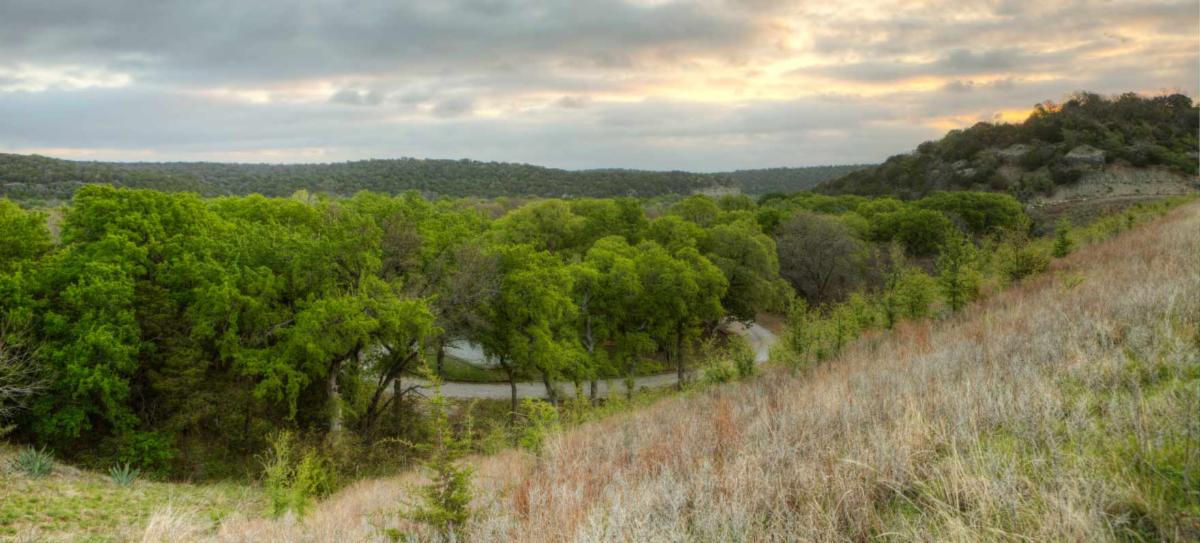
Travis County has finalized a $90 million deal to acquire more than 1,500 acres of privately owned land and turn it into a public park. County commissioners expect to turn the undeveloped land, located near State Highway 71 and Hamilton Pool Preserve, into a destination for hikers and bicyclists.
The county was able to buy the land from the landowners using $276 million approved by voters in November 2023. The owners had received multiple bids from developers as high as $130 million for the land. Travis County won the bid due to the owners’ desire to preserve the land for wildlife conservation and the underlying Trinity Aquifer.
It will take a few years before construction will begin, according to Travis County officials. The county is working on a master plan for the area, which will likely include trails, parking and restrooms for visitors. The park will play a critical role in protecting the environment by absorbing rain, replenishing aquifers and directing excess run-off to Lake Travis.
The 1,500-acre purchase is just the latest addition to Travis County’s public park system. The county also bought the 475-acre Castletop property, which butts up against Milton Reimers Ranch Park. The plot was appraised at $45 million and would be developed for 950 homes. The family who owned the land opted to sell it to Travis County at a discounted $40 million to preserve it for public use.
Travis County commissioners expect to merge the Castletop property with Milton Reimers Ranch Park. The expanded parkland will provide more trails, picnic areas and other amenities as well as further protect local wildlife and water sources.
(Photo courtesy of Brian Deitch with Travis County Parks.)
| |
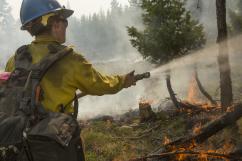
The state of Texas received $38.8 million from the United States Department of Agriculture’s (USDA) Forest Service to establish programs, buy equipment, train personnel and develop protection plans to mitigate wildfire risk.
The USDA’s Forest Service will deliver the funds through the Community Wildfire Defense Program (CWDP) – an initiative designed to help vulnerable communities and Tribes plan for and lower wildfire risk. The USDA recently delivered $250 million across 158 projects to develop community wildfire protection plans (CCWP) and remove overgrown vegetation that can fuel fires.
Jasper County will receive $10.2 million to support the Jasper County Fuels Mitigation Program. The funds will ensure the county can buy equipment to clear vegetation along roads, removing a fuel source that would aggravate wildfires. Plans include creating fire breaks and helping wildfire professionals educate and support high-risk property owners to implement wildfire risk and mitigation efforts. Jasper County will also develop a CCWP.
Jefferson County will use $9.6 million for its Fuels Mitigation Program. Plans include buying equipment, clearing vegetation along roads and hiring technical specialists to help property owners understand and prepare for wildfires. In addition, the county will develop a CWPP to reduce wildfire risk and build resiliency.
The city of Cisco will spend $9.1 million to establish the Joint Fuels Mitigation Program. The program will mitigate wildfire fuels for several low-income communities in Eastland County. Plans include employing specialists to create educational initiatives, buy equipment to establish firebreaks and reduce fuel loads around high-risk infrastructure and structures.
Eastland County will receive $9.1 million for its CWDP implementation project. The county will create an urgent hazardous fuels mitigation program with equipment, training and personnel. Plans include clearing vegetation along roads, training county personnel on how to mitigate wildfires and hire specialists to educate homeowners and assess property. Trained specialists will also help homeowners create defensible space and deploy impactful wildfire mitigation measures. The county will use a portion of the funds to develop a CWPP.
(Photo courtesy of the USDA Forest Service.)
|  | |
The Joint Office of Energy and Transportation, a collaboration between the U.S. departments of Energy and Transportation, is taking a major step toward preparing America’s transportation network for electric vehicles, with the announcement of $1.3 billion to expand the EV charging network. The grant application is open to state, regional, Tribal and local government entities until Aug. 28.
The investment is the single largest grant round for electric vehicle charging infrastructure to date, according to the announcement from the Department of Energy. The funding is made possible by passage of the 2021 Infrastructure Investment and Jobs Act, and the grant is funded through two Federal Highway Administration programs, the National Electric Vehicle Infrastructure program and the Charging and Fueling Infrastructure discretionary grant program, which will administer the $1.3 billion.
Click here to learn more about the EV NOFO
(Photo courtesy of the Joint Office of Energy and Transportation.)
| |
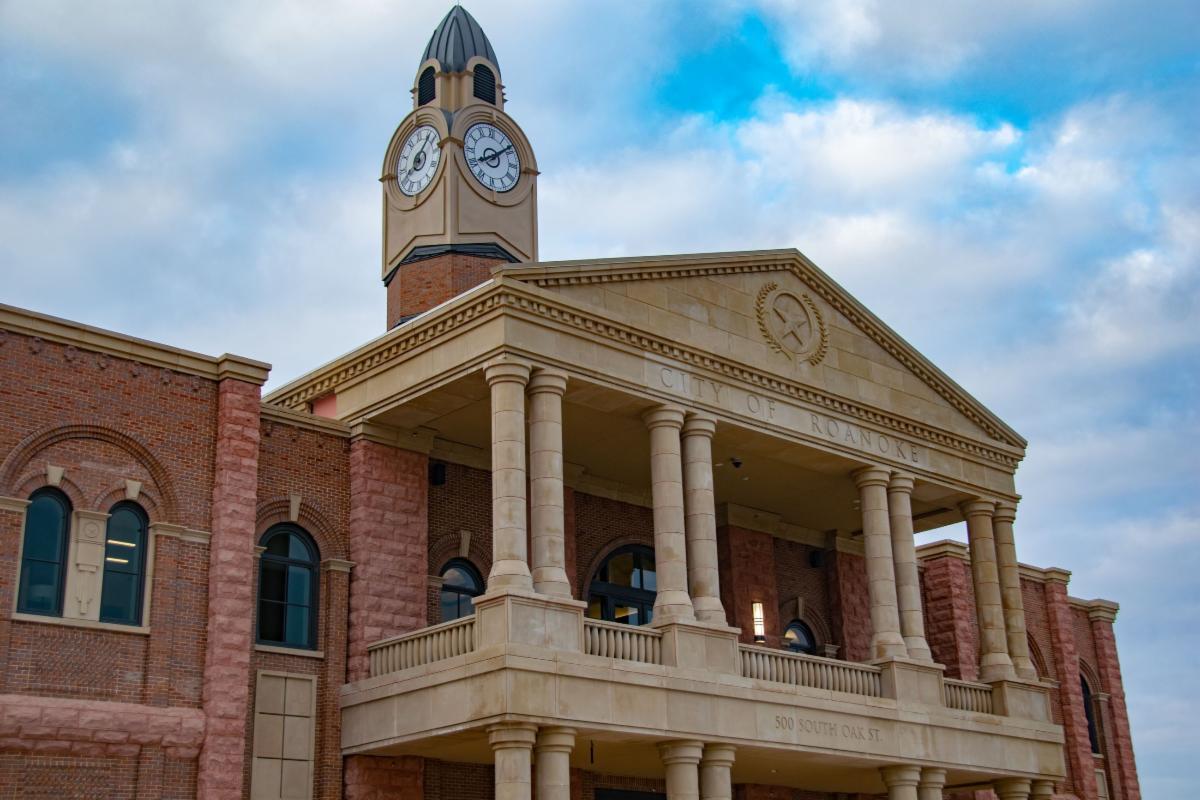
The city of Roanoke will build a $13 million parking garage on a nearly 1-acre site to provide additional parking for retail, restaurants and other mixed uses. Construction is expected to begin in April 2025.
The city will build a four-level garage structure containing 420 parking spaces. The structure will also mark the entrance to the city’s main district and supplement existing parking needs. The project will include façade treatments to distinguish the building.
Plans include the potential for approximately 6,000 square feet of retail space on the structure’s ground floor. The garage will be naturally ventilated and will feature a landscaped pedestrian entry plaza on the ground level.
The building will include conduits that will provide power and data for a future Parking Access Revenue Control System (PARCS). The city will perform boundary, topographic and tree surveys in addition to platting services.
(Photo courtesy of the city of Roanoke.)
| |
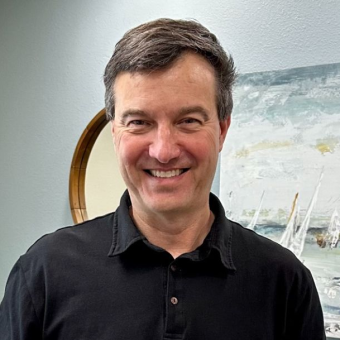
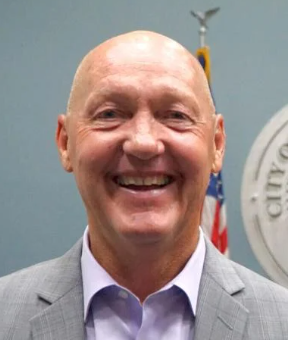
Dean Huard
City Manager
Village of The Hills
| |
Public career highlights and education: I began my education at Southwestern Oregon Community College, where I learned first-hand how to make a difference in a small community. I later transferred to the University of Oregon, where I majored in political science. Simultaneously, I received my commission as an Army logistics officer and recently retired after 34 years of combined National Guard, Reserves and Active Duty. After my Army career, I was lucky to have found a career as a city manager.
What I like best about my public service: As Teddy Roosevelt alluded to in his famous “In the Arena” quote, I like being a part of the solution to local problems sets. For years, I was a part of strategic planning that assisted the country in contingency operations such as combat tours in Iraq, Kuwait and the Afghanistan refugee operation. Now it is just as exciting to help cities become better communities.
The best advice I ever received: Our general would say to us, “be able to work outside your comfort zone.” We don’t grow professionally if we aren’t willing to accept that it’s OK to not be good or proficient at everything.
People might be interested to know that: While living in San Diego during the filming of Top Gun, our house was Viper’s house in the movie. My dad was in the Coast Guard, and we were lucky enough to live temporarily at the Point Loma Lighthouse.
One thing I wish more people knew about local government: One of the reasons I wanted to transition to local government from the military was that during my process I met so many people, veterans and non-veterans who never said no to my questions. It was one of the most enriching experiences to be mentored by others who wanted to see me succeed. Local government is the place to be if you want to continue to serve and work with some of the most selfless citizens in the country.
|  | |
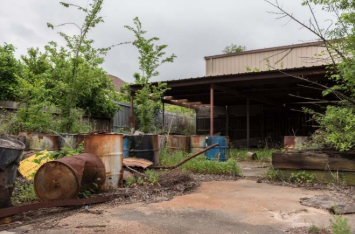
Texas will use $7.7 million from the Environmental Protection Agency (EPA) to assess and cleanup brownfields across the state. The funds will help Texas cities and organizations transform abandoned and once-polluted properties into developed community assets.
The EPA awarded the funds through the Brownfields Multipurpose, Assessment and Cleanup (MAC) Grant Program and the Revolving Loan Fund (RLF) Grant Program. Both the MAC and RLF programs provide recipients with funds to conduct a range of activities. These can include developing brownfield site inventories, engaging communities, assessing environmental site assessments, developing cleanup and reuse plans and performing cleanup activities.
The Houston Land Bank (HLB) received a $5 million cleanup grant and $500,000 assessment grant to rehabilitate the Velasco Incinerator Property. Between the 1930s and late 1960s, the facility deposited a thick layer of ash and fill materials below ground on the property. The waste contains elevated arsenic levels, lead, mercury, dioxins and furans, according to multiple environmental assessment activities conducted since 2006.
The HLB will clean up the 4.6-acre site, remediating up to 35 feet of incinerator waste. The assessment grant will allow the bank to inventory sites and conduct environmental site assessments. The organization will develop two cleanup plans, one reuse plan and engage with the community in the Northeast and East End neighborhoods. The assessment sites include a 100-acre undeveloped overgrown area in a residential neighborhood, 17 vacant residential lots, a 12-acre inactive railyard, a 4.5-acre waterfront portion in an industrial manufacturing site and a 1.8-acre former auto service facility.
The EPA will distribute the remaining $2.2 million to the cities of Dallas, Balcones Heights, Fort Worth, Hamilton and Freeport.
The cities of Balcones Heights, Fort Worth and Freeport will receive a combined $1.45 million to conduct environmental site assessments and identify and prioritize additional sites. The cities will develop cleanup plans, perform visioning sessions, develop site reuse assessments and redevelopment plans and engage the local communities.
The city of Hamilton will use $500,000 to clean up the Grogan Street Nursing Home. The building has been vacant since 1997. It is currently contaminated with inorganic pollutants.
Dallas will receive $250,000 in supplemental funds from the RLF program to continue the city’s work in cleaning up and redeveloping brownfield sites. Dallas has a high-performing RLF program that has severely depleted its available funds. The federal support, in addition to $1 million that the EPA previously awarded, will allow the city to continue remediating brownfields in underserved areas.
The funds are a part of a $300 million investment in nationwide brownfield projects. The EPA will support 178 communities using 181 grant awards to reclaim and repurpose once-polluted properties.
The Brownfields Program is part of the federal Justice40 Initiative, which aims to ensure that 40% of the overall benefits of specific federal investments reach areas burdened by pollution and underinvestment. More than 80% of the applications selected for funding under the MAC and RLF Supplemental programs focus on areas containing disadvantaged communities.
Since it was established 1995, the Brownfields Program has allocated nearly $2.7 billion in grants to evaluate and clean up contaminated properties. The program typically allocates around $60 million annually; since passage of the BIL it has risen by nearly fourfold. Much of the funding for this grant cycle — approximately $160 million — stems from the legislation, and the increased funding has raised the limits for MAC grants from $500,000 to $5 million per award.
(Photo courtesy of the city of Houston.)
| |
Most Americans want an alternative to the current flat gas tax rate, according to a survey of over 2,500 American adults conducted by Mineta Transportation Institute (MTI).
Since 2010, MTI’s annual surveys have gauged opinions on federal transportation funding, including support for raising the gas tax or implementing mileage fees. A flat fee for all transportation is the least popular option this year, with support from only 39% of respondents.
Click here for more information gas tax alternatives
(Photo courtesy of Erik Mclean on Unsplash.)
|  | |
The Texas Parks and Wildlife Commission (TPWC) will use $4.5 million to support 16 trail construction and maintenance projects statewide. The money comes from the National Recreational Trails Fund (NRTF), a program that supports trail construction, renovation and acquisition.
A nonprofit in Crockett County received two grants to support projects at the Escondido Draw Recreation Area. The first grant will allow the nonprofit to renovate and build new and existing trails, signage and a trailside bathroom. In addition, the grant will help the organization conduct resource surveys, property surveys, employ professional services and rent equipment. The second grant will help the nonprofit buy trail maintenance equipment, vehicles, equipment repair services, parts and tools.
The city of Madisonville received money to renovate a 1.1-mile trail. In addition, the city will build a 0.8-mile crushed limestone trail for the Lake Madison Trail project. TPWC awarded a grant to Laredo for the first phase of the Santa Fe Park Hike and Bike Trails project. The project will feature 0.62 miles of multiuse asphalt trail with a concrete bridge, header and retaining walls.
The city of Jefferson will use its grant to support the Jefferson Recreational Trails Rehabilitation project. The city will renovate a repair an existing 1.2-mile stretch of decomposed granite trail and boardwalk. The Palo Pinto Mountains State Park will receive funds to build 6 miles of multiuse natural surface trails.
Hays County will use its share of the funds to support the Presa Grande Segment of the San Marcos Outer Loop Trail. The trail will include a 1.8-mile multiuse natural surface trail featuring benches, a bridge and a trailhead kiosk. The county received a second grant for the Great Springs Project for the Emerald Crown Trail. Plans include building a 1.41-mile multiuse decomposed granite trail.
(Photo: Palo Pinto Mountains State Park. Courtesy of TPWD.)
| |
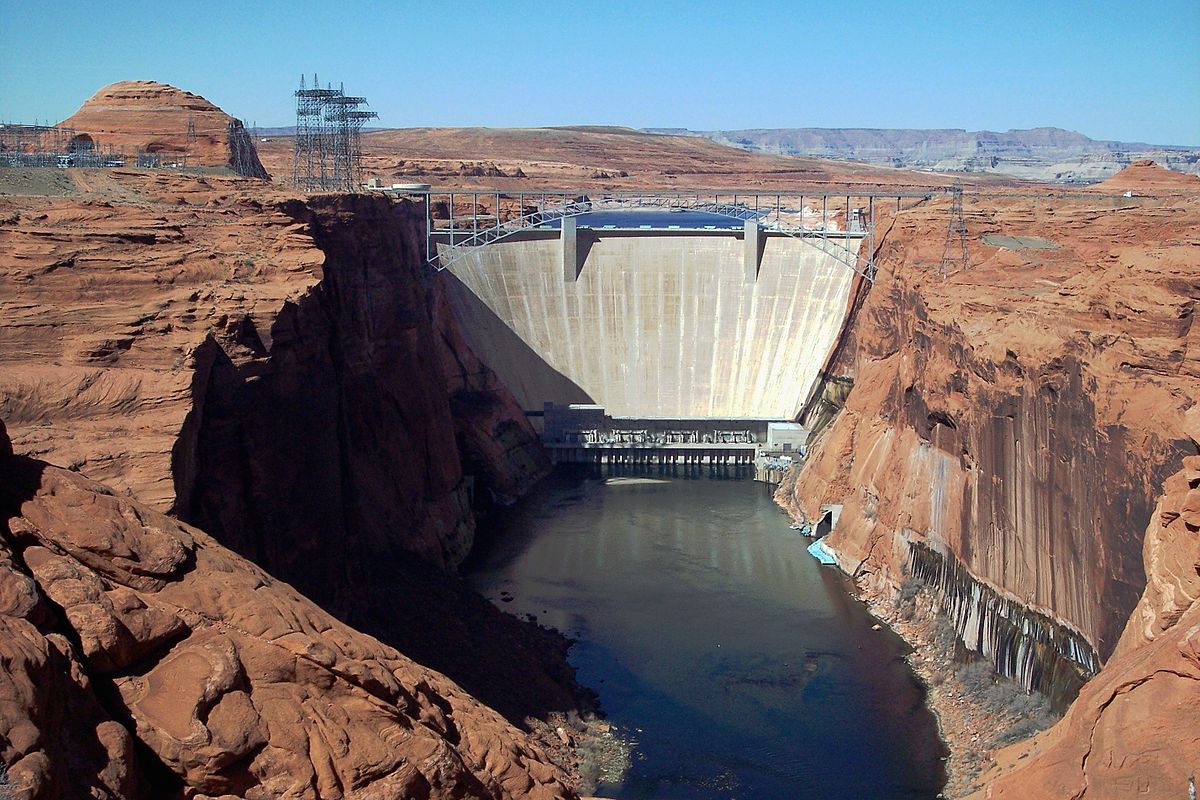
As the energy grid evolves to incorporate more variable solar and wind power, hydropower will play a crucial role in maintaining grid reliability and stability. Yet a challenge facing hydropower is how to meet the increasing demand for energy while minimizing its environmental footprint.
The HydroWIRES Initiative, a project of the U.S. Department of Energy’s Water Power Technologies Office, is exploring strategies for managing water releases to achieve both energy and environmental goals, reducing the environmental impact of hydropower facilities while supporting power generation.
Click here to learn more about hydropower’s impact on the environment
(Photo courtesy of Adbar.)
| |  |
 | |
The city of Georgetown will use $63.6 million to build bridges and reconstruct roads. All projects are currently in the design phase, and construction is expected to be completed by 2027.
Georgetown will use $31.5 million to widen and reconstruct an existing roadway. As part of the DB Wood Road Phase 2 project, the city will transform the road into a four-lane, divided roadway with left- and right-turn lanes. The roadway will also feature a storm sewer and open-ditch drainage system.
In addition, the city will build a shared-use path for pedestrians and bicyclists on one side of the road. Plans include widening the existing bridge that crosses over the nearby river. Construction is expected to begin May 26, 2025.
The city will spend $18.3 million to build two pedestrian bridges over the San Gabriel River. The bridges will feature three bents to support the structure. Plans include building retaining walls on the north and south ends of the bridges. The bridges will connect existing pedestrian and bike networks and enhance the river’s green areas, corridors and trails. Construction will begin in December 2025.
The city will use $13.8 million to improve Rockride Lane and increase safety. Plans include expanding the two-lane road to 87 feet and widening existing travel lanes by an additional foot. In addition, the city will add a two-way turn lane between the north-south travel lanes and a shared-use path on the side of the road. Construction is expected to begin May 31, 2025.
(Photo: Austin Avenue Pedestrian Bridge. Courtesy of the city of Georgetown.)
|  | 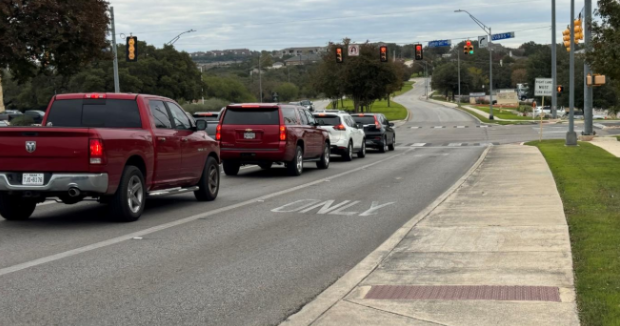 | |
The city of San Antonio will use $20 million to improve roadway infrastructure, traffic flow, drainage and pedestrian safety. All projects are currently in the design phase, and construction is expected to be completed by 2027.
The city will use $9.3 million to build roads and improve drainage on Evans Road. The road currently has insufficient drainage infrastructure, narrow sidewalks, and nonstandard curbs. The city will install an underground storm sewer system that includes underground pipes, inlets and a box culvert.
Plans also include reconstructing the roadway. The city will resurface the pavement, widen sidewalks and install curbs and gutters to improve drainage. In addition, San Antonio will create a pedestrian crossing to increase safety and mobility. Construction will begin in fall 2025.
The city will spend $5.6 million to reconstruct roadways, improve drainage and upgrade utilities along Dorsey Drive. Currently, the road has no sidewalks, extensive asphalt cracking. In addition, many driveways use gravel rather than concrete and the street has poor drainage.
Plans include improving the street’s drainage infrastructure with underground storm, water and gas pipes. The city will build sidewalks, install curbs, resurface driveway approaches and plant topsoil along walking paths. In addition, the city will replace and adjust utilities along the road. Construction will begin in fall 2025.
San Antonio will use $5.1 million to improve intersections and roads in the Stone Oak Area. Several roads have lane configurations that cause heavy congestion for traffic, limited lines of sight and unsafe road crossings.
The city will reconfigure lanes at two intersections in the Stone Oak Area to include an additional right-turn lane, two through-lanes and a dedicated left-turn lane. Plans also include improving traffic signals, sidewalks and curbs.
Plans to increase pedestrian safety near Peacemaker Road and Bush Middle School include creating pedestrian crossings and installing three traffic signals. The city will also build a turnaround and modify a median to improve traffic flow and reduce conflict points. Construction will begin in fall 2025.
(Photo courtesy of the city of San Antonio.)
|  |  | |
Sam Houston State University (SHSU) will spend $29.9 million to build an Active Learning Center (ALC) that will feature additional teaching, collaboration and community spaces. The ALC will enhance education and support SHSU’s Professional and Academic Center for Excellence (PACE) program. Construction is expected to begin in April of 2025.
The university will demolish the existing Academic Building III to make room for the 38,732-square-foot ALC. The building will consist of a hybrid high-bay, one-story area and a two-story structure. The first floor will feature three high-bay areas, collaboration space and learning studios. The second will host the office suites and learning studios.
The facility will include lobby and commons areas, assorted student study spaces and a self-serve food and drink area. The university will build a large staircase to provide an alternative to the building’s elevators.
The ALC will have student spaces and instructional areas spread between both floors. The instructional spaces will include two “parliament-style” active lecture halls, four learning studios and a flat-floor and tiered collaboration classroom. All classrooms will support protected Wi-Fi connections and provide easy access to projection equipment. The building’s layout also includes triage rooms to provide faculty prep and post-class breakout spaces.
The PACE office suite will include workstations and office space for staff members. The area will offer open collaboration space and a multipurpose mock teaching and conference space. In addition, the university will include a beverage alcove, workroom, reception desk, waiting area, bullpen and storage area in the suite’s design.
(Photo courtesy of SHSU.)
|  | |
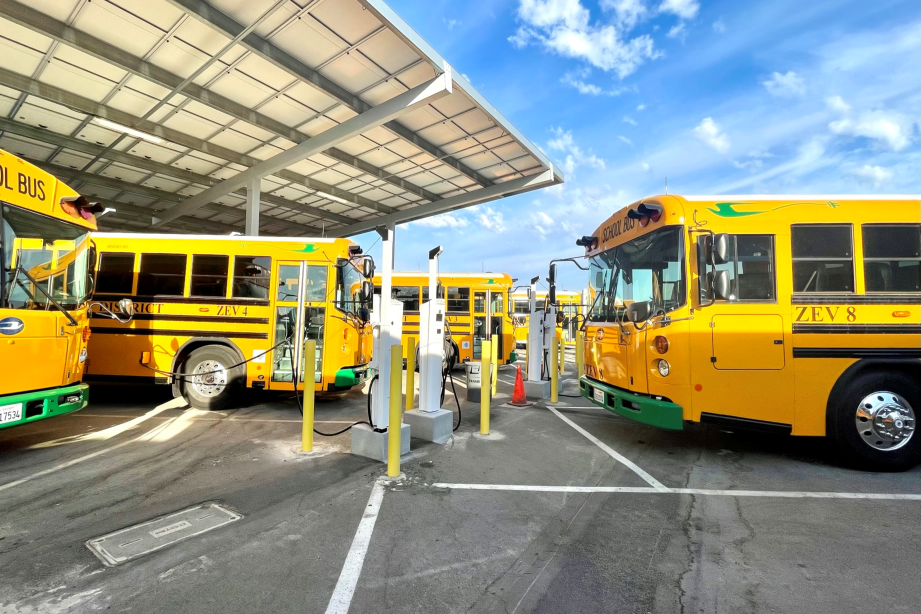
Approximately 3,400 clean-energy buses will be distributed to 530 school districts across the nation through an Environmental Protection Agency program designed to clean the air by getting older, diesel-fueled buses off the roads.
The 2023 Clean School Bus Program will distribute a total of $900 million to the districts, which will use the funds to purchase the new buses, 92% of which will be fully electric, the EPA said.
Click here to learn more about the funding recipients
(Photo courtesy of the Electric School Bus Initiative.)
| |
Thomas Muñoz will serve as acting director of public safety and homeland security for the city of Houston. Muñoz most recently served as deputy director for this department and will remain as the emergency management coordinator for the Office of Emergency Management. He will replace George Buenik until a permanent director is hired.
| |
Keith Collins will be the Electric Reliability Council of Texas’ (ERCOT) vice president of market operations. Collins brings more than 25 years of market operations and electric power industry experience to the role. He previously served as vice president of the Market Monitoring Unit for a Little Rock, Arkansas, electric utility company. Collins will assume his duties June 17.
| |
The Pharr City Council has promoted Cynthia Garza-Reyes to assistant city manager. Garza-Reyes brings more than 15 years of federal and municipal government experience to the role. She previously served the city as director of external relations since 2015.
| |
Gregory Nyhoff has come out of retirement to serve Mount Pleasant as its city manager. Nyhoff brings 28 years of city manager experience. He previously served cities in Michigan, Colorado and California. Nyhoff replaced Ed Thatcher in the position.
| |
Gov. Greg Abbott announced these appointments and reappointments from May 24 through May 30:
Texas Board Of Nursing
Manny Cavazos - Manor
Mary Grace Landrum - Houston
Nancy Lewis - Buchanan Dam
| |
Texas Government Insider is a free weekly newsletter detailing important happenings throughout the state and summarizing current political issues relevant to individuals interested in government.
Publisher: Mary Scott Nabers
Editors:
Adam Rollins
Dave Doolittle
| |