|
Cities and counties throughout the U.S. are launching economic development initiatives that will generate new sources of revenue for government coffers. Projects of all types are currently underway, and many more initiatives designed to boost economic vitality are in the planning stages. Funding support is available from more than a dozen federal programs that offer financial assistance for efforts that result in job creation, public revenue generation, asset recycling and quality-of-life initiatives.
Most of these types of projects fall into the multi-million-dollar categories, and they all require private sector collaboration. Prime contractors are wise to add local subcontractors to their pursuit team. Examples of projects already scheduled follow.
Board members of the Port of Cleveland recently approved plans for a $100 million park project. The initiative is part of the city’s North Coast Master Plan, which outlines upcoming and ongoing projects that focus on creating a commercial and recreational hub along the shore of Lake Erie. The overall objective is to create revenue generation options, which will be done by revitalizing a 23-acre area.
The park project will include redesigning and redeveloping the 80-year-old shoreline area around the Cleveland Browns Stadium. When completed, the effort will facilitate various types of four-season recreation activities and sunset vistas will be available. A land bridge will be built to provide convenient access to the city’s downtown mall and areas for future development will be prepared. An environmental stabilization effort will be completed to remove 250,000 cubic yards of unstable soil from the area so that a new bulkhead along the riverbank can be created.
The project is currently in its design stage, and bidding for the construction work will happen later in 2024. Once additional funding has been acquired, other related projects within the North Coast Master Plan will be announced. When the project is completed, new businesses and many visitors will be able to enjoy the amenities, which will result in revenue increases for the city.
Click here for more
|  | |
San Antonio is partnering with the University of Texas at San Antonio (UTSA) to determine which areas of the city are most affected by extreme heat and how to direct resources to mitigate the city’s urban heat island.
To address the heat island effect, San Antonio launched a Cool Pavement pilot in 2023. The pilot uses a water-based asphalt treatment that coats pavement to reflect more sunlight and absorb less heat. The pilot will help the city determine which treatments are the most efficient and effective. Now, the city will expand its Cool Pavement program by working with UTSA’s Sustainable Pervasive Urban Resilience (SPUR) Center.
San Antonio and UTSA have launched three research projects to measure and identify heat islands throughout the city. The first program allowed the partnership to determine which neighborhoods were at greatest risk by measuring relative heat with socioeconomic factors such as income and race. The remaining studies measured temperature, humidity and product performance to help advance the Cool Pavement pilot.
The city and the SPUR Center will use the collected data to implement coordinated measures to mitigate heat. These include investing in green infrastructure, shade structures, water features, energy efficiency and cool materials.
Once complete, the pilot program will relieve some of the hottest parts of the city, raising the quality of life and extending the lifespan of local infrastructure. The program emphasizes sustainability and resiliency to combat climate change, aligning it with the city’s 2019 Climate Ready, Climate Action and Adaptation Plan.
(Photo courtesy of the city of San Antonio.)
| |
As Fort Worth explores the potential of urban rail, Mayor Mattie Parker has formed a committee in conjunction with Trinity Metro to investigate the city’s options.
The Mayor’s Urban Rail Committee Supporting Economic Development & Tourism is composed of representatives from the business, tourism and transportation sectors. It has three objectives:
- Assess the feasibility of a fixed-rail system to facilitate movement across Fort Worth's entertainment districts, considering factors such as projected ridership, associated costs and funding sources.
- Investigate financial strategies to construct and operate such a rail system.
- Identify any legislative requirements and priorities pertaining to economic development and tourism-focused rail projects.
In collaborating with Trinity Metro, both entities will share consulting expenses for the committee's research to thoroughly explore the potential of urban rail in enhancing the city's transportation landscape.
The committee’s formation comes as Amtrak continues to explore high-speed rail with Texas Central Partners between Dallas-Fort Worth and Houston. Current plans call for the fastest average train speed in the world at 189 mph and a top speed of 205 mph, covering 240 miles in an hour and a half.
(Photo courtesy of Trinity METRO.)
|  | |
The city of Houston will transform Main Street into a pedestrian-friendly area that will repurpose vehicular lanes into dynamic public spaces, enhance safety and create a unique identity for Houston’s downtown space. The project is currently in the design phase, with construction beginning in 2025. No estimated cost has been released.
The city will collaborate with an organization representing businesses in the downtown district to design, build and manage the More Space: Main Street 2.0 program. In 2021, the city approved an initiative to temporarily transform seven blocks of Main Street into a promenade supporting local businesses, pedestrian traffic and activities. The success of the original More Space: Main Street initiative led to the Houston City Council making the program permanent and closing portions of the road to vehicle traffic.
The More Space: Main Street 2.0 project will expand on the first iteration of the program to convert additional blocks into pedestrian-centered infrastructure. Plans include raising the roadway to be the same level as the sidewalk, removing the curb and creating a cohesive area. Making the drive lane flush with the sidewalk will allow the city to maintain the existing drainage infrastructure.
In addition, the raised street will establish flexible outdoor spaces for walking, sitting, planting and events. Plans include creating outdoor rooms along Main Street to provide flexible, comfortable spaces for socializing, dining and gathering. The street will include ample shading using dedicated structures, trees and awnings.
Main Street will feature ADA-compliant pedestrian crossings with textured pavement and squared corners to slow down turning vehicles. The street's design will use bollards, planters, reflectors, lighting features, low concrete domes and paving treatment to differentiate between pedestrian and vehicular areas.
The street will include dedicated lanes for trains and emergency vehicles. Plans include creating green buffers between the travel lanes and the promenade to increase safety and maximize room for pedestrians. The Houston Downtown Management District (HDMD) and the Metropolitan Transit Authority of Harris County (METRO) will manage and maintain the road and promenade.
(Photo courtesy of Downtown Houston+.)
| |
The federal government has partially approved Texas’ request for a Major Disaster Declaration.
On May 15, Texas sent a letter requesting approval for Federal Emergency Management Agency (FEMA) support programs to assist individuals and counties harmed by recent storms. Since April 26, severe weather and flooding has caused more than $58 million in damage to public infrastructure and taken multiple lives.
The partial approval allows Texas residents and governing bodies to apply for emergency financial assistance through the FEMA Individual Assistance Program (IAP) and Public Assistance Program (PAP). The federal government partially approved the IAP for Texas on May 17 and later amended the disaster declaration May 23 for PAP approval.
The federal government approved seven out of 28 counties to be eligible for the PAP. The remaining counties are still under review. Counties can use PAP funds to repair and replace damaged infrastructure from the storms. The funds could be used for debris removal, emergency protective measures, roads and bridges, water control facilities, public buildings and contents, public utilities, parks, recreational and other facilities.
IAP funds can be used for temporary housing, emergency home repairs, uninsured and underinsured personal property losses, disaster legal services, disaster unemployment assistance and medical, dental and funeral expenses caused by the disaster.
The federal government approved 15 counties to take part in the assistance program. In addition, the federal government authorized additional FEMA resources and small business disaster support for the approved counties.
(Photo courtesy of Kelly Sikkema on Unsplash.)
| |
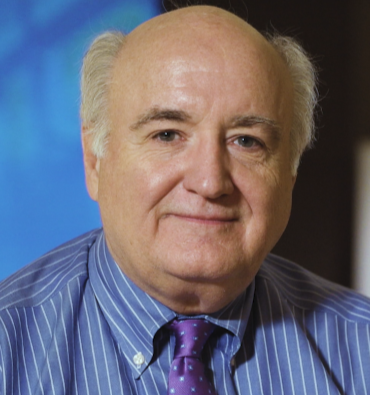
Kathy Turner Jones
General Manager
Prairielands Groundwater Conservation District
| |
Public career highlights and education: I earned my Bachelor of Arts and Sciences in Business with a Finance Minor from the University of the Southwest in Hobbs, New Mexico, graduating Summa Cum Laude. Later, in 2017, I completed my Master of Water Management at Texas A&M University, specializing in the Water Management and Hydrological Science Program.
I joined the Prairielands Groundwater Conservation District in March 2019, bringing with me 29 years of experience in groundwater management. Before that, I served as the General Manager of the Lone Star GCD in Montgomery County from its inception in 2002 until 2019. During my time there, I initiated data-driven projects that advanced hydrologic research, engineering planning, and water usage analysis, while also developing effective regulatory policies.
What I like best about my public service: Public service provides me the opportunity to actively engage in collaborative efforts that promote dialogue, innovation and shared solutions to address complex water challenges, ensuring a resilient and prosperous future for our communities.
The best advice I ever received: One of the most impactful pieces of advice I've received is to "step out of my comfort zone." When we challenge ourselves, push our boundaries, and step into the unknown, that's where real progress occurs.
People might be interested to know that: As a native Texan, my roots run deep in the agricultural landscape, having been raised on a cotton farm driving tractors and understanding the land and the importance of water.
One thing I wish more people knew about the Prairielands Groundwater Conservation District is: One aspect I wish more people knew is the vital role groundwater conservation districts play in local water management and sustainability. These districts are not just regulatory bodies; they are community-driven entities tasked with safeguarding and responsibly managing groundwater resources within their jurisdictions. Moreover, groundwater conservation districts are empowered by state law to implement measures that protect aquifers, regulate pumping, and promote conservation efforts.
|  | |
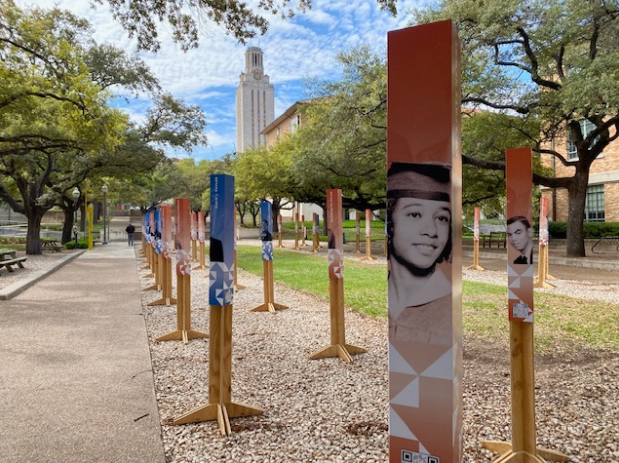
The University of Texas at Austin (UT) will spend $35 million to renovate the university’s East Mall. The project will enhance drainage infrastructure, improve campus walkability and commemorate historical students, faculty and staff members. Construction will begin Dec. 30, 2024.
As part of the project, UT will remediate drainage issues and enhance the East Mall’s greenscape. The project will include upgrading the site’s storm sewer infrastructure. In addition, the university will implement rain gardens with vegetation to collect water and direct overflows.
UT will install green stormwater infrastructure, address new and redeveloped impervious cover that impedes water collection and absorption and plant shade trees. The university will renovate the site’s hardscape to improve walkability and pedestrian access between the campuses east and west sides.
Once completed, the East Mall will help bridge academic and public use zones. UT will also replace the existing fountain with a fountain honoring the historical figures that inspired the project.
The Precursors - “We Are Texas East Mall” project is a multiphase project that began in 2023 after the university installed an interactive installation celebrating early Black students. These students were pioneers that broke segregation barriers in the 1950s and paved the way for the modern university. The Board of Regents approved the next phase of the project May 9, 2024, to progress the East Mall buildout.
(Photo courtesy of UT.)
| |
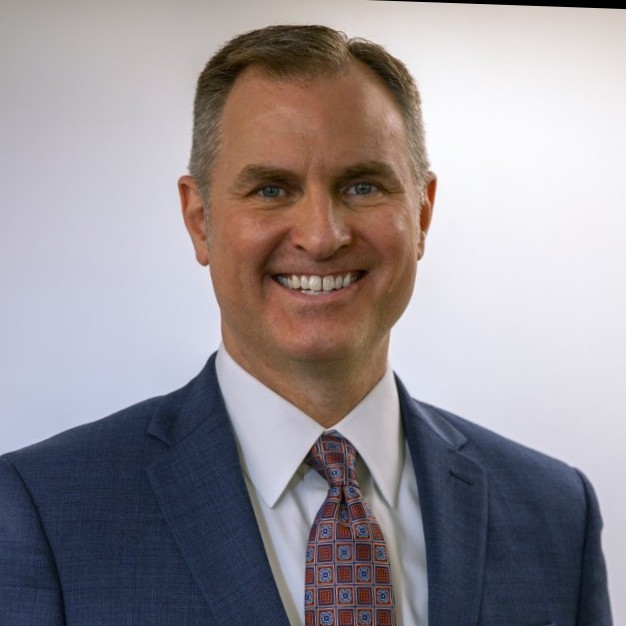
Austin Cowan joins the Strategic Partnership, Inc., team as a sales and public relations consultant. Austin’s career is distinguished by his rich experience marketing digital products and services in both the political marketing space and the new home construction industry.
Austin, originally from San Antonio, holds a Bachelor of Science in Public Relations and Mass Communication from Texas State University in San Marcos. During his time in school, he wrote news articles and led the creation of a new column for a local radio station’s blog.
Austin has a strong background in digital marketing, consulting, creative campaigns, and digital outreach. These attributes make him an invaluable asset to SPI and clients will benefit from his experience working with the private and public sectors.
|  | |
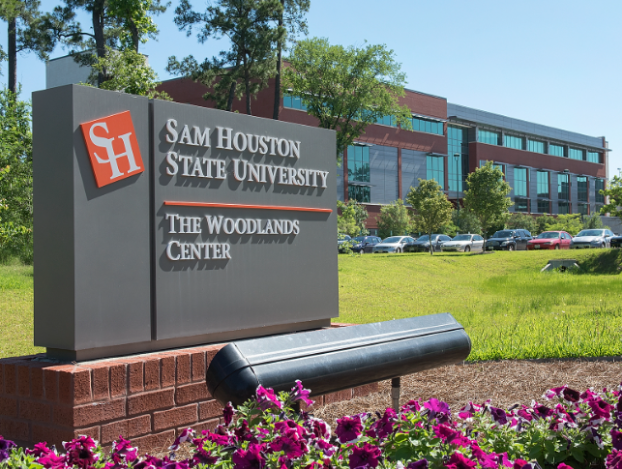
Sam Houston State University (SHSU) will use $9.2 million to renovate The Woodlands Center to expand classroom space, increase enrollment capacity and improve instructional capabilities. Once complete, the center will house and support the School of Nursing and add capacity for up to 720 students. Construction is expected to start in January of 2025.
SHSU will renovate approximately 40,000 square feet of the existing center. The majority of the renovation work will transform the building’s third and fourth floors to accommodate the School of Nursing.
The university will start by building a third skills lab on the fourth floor that matches the capabilities of the other existing labs. In addition, SHSU will install a standardized patient suite containing four patient rooms with staging and control areas.
The project will include a simulation suite on the third floor. The university will organize the suite into three clusters based on a new model of integrated simulation and debrief. Each cluster will feature one medical prep, one control room, four debrief areas and four simulation rooms. The university will build additional office spaces near the simulation suite.
Plans include renovating six classrooms on the second floor and two on the third. These classrooms will become active learning classrooms.
(Photo courtesy of Sam Houston State University.)
| |
The Department of Homeland Security (DHS) released a Notice of Funding (NOFO) for $500 million in capitalization grants from the Safeguarding Tomorrow through On-going Risk Mitigation Revolving Loan Fund program (Safeguarding Tomorrow RLF).
The Safeguarding Tomorrow RLF provides governments with loan assistance to address climate change and natural disasters at the community level. The program is funded by the Infrastructure Investment and Jobs Act (IIJA).
Click here to learn more about the NOFO
(Photo courtesy of Shelby County, Tennessee.)
| |
A project to build a combination library and community center with electric vehicle chargers near a bus and train station in Mt. Vernon, Washington, is the first to benefit from a new Department of Transportation loan program that focuses on placing important community resources within walking distance of public transportation.
The DOT recently approved its inaugural Transit-Oriented Transportation Infrastructure Finance and Innovation Act loan for up to $26.8 million for the Mt. Vernon Library Commons project. The building will encompass half a city block in downtown Mount Vernon and will be located a short walk away from Skagit Station – Skagit County’s multi-modal transportation center.
Click here to learn more about the DOT’s new loan program
(Photo courtesy of USDOT.)
| |
More Texas bond propositions tend to fail in elections that include high-profile races – such as for governor or president – than in elections with mostly municipal and county contests, a survey of Texas elections shows.
The survey focused on elections in 20 Education Service Center (ESC) regions in Texas since 2022. It was conducted by Austin, Texas-based procurement consulting firm, Strategic Partnerships Inc. (SPI), which publishes Government Market News.
Click here to learn more about what makes or breaks a bond
(Photo courtesy of Joshua Woroniecki on Unsplash.)
| |  |
|
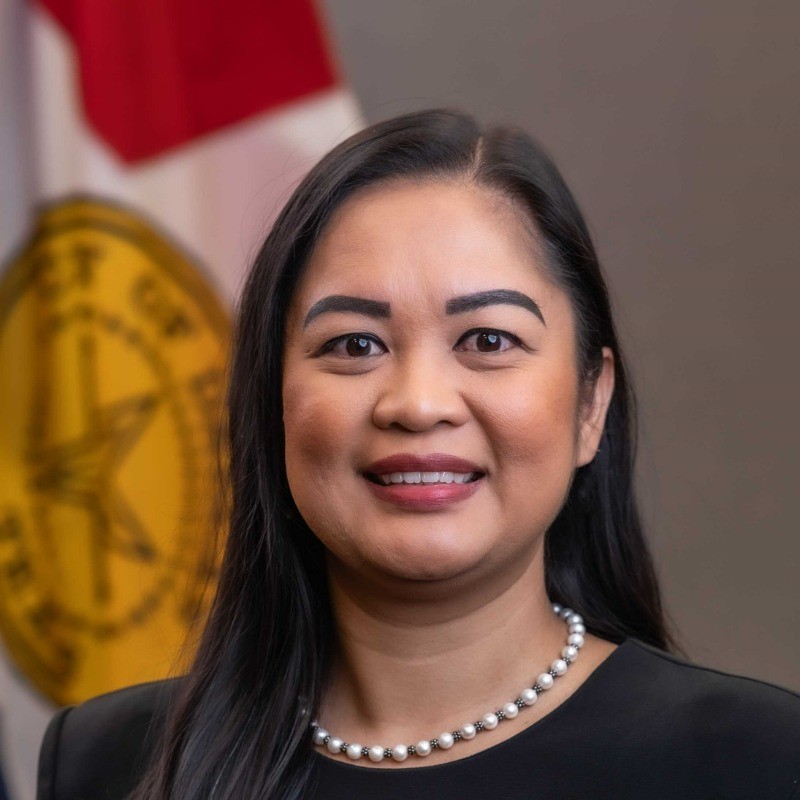
Connie Corona has been promoted to executive director of the Public Utility Commission of Texas (PUCT). She was unanimously voted to the position during the agency’s May 23 meeting. As one of her first official duties, Corona promoted Barksdale English to replace her as deputy executive director.
Corona has worked at PUCT for 12 years, originally joining in 1997 as a policy analyst before leaving to pursue private market opportunities. She returned to PUCT in 2017 as division director for competitive markets. She became deputy executive director in December 2020.
Corona has served as interim executive director since Feb. 1, 2024. She took over the role from Thomas Gleeson after he stepped down to be chair of PUCT. As permanent executive director, Corona will oversee and manage the agency’s operations, including regulation of Texas utilities, legislation, compliance and customer complaints.
| |
English, who most recently served as chief program officer, started working with PUCT as chief of staff to a former commissioner in 2018. He would later be promoted to director of the Division of Compliance and Enforcement.
PUCT was founded in 1975 to regulate the state’s electric telecommunication and water and sewer utilities. In addition, the agency oversees respective legislation and provides assistance to customers.
| The city of Austin will welcome Jon Fortune and Genesis D. Gavino, two Dallas top-level city executives, to its ranks in June. Both worked under T.C. Broadnax, the former Dallas city manager who recently took over the same role in Austin. | |
Fortune, the current deputy city manager of Dallas, will join Austin as its deputy city manager. He also previously served as Dallas’ assistant city manager overseeing public safety and was assistant city manager in Denton for 17 years.
As Austin’s city manager, Fortune will help manage and direct city departments and organization-wide initiatives. He will bring 34 years of government experience to the role. Fortune will officially assume responsibilities June 10.
| |
Gavino will leave her role as chief of staff for the Dallas city manager to accept a position as special assistant to the Austin city manager. She has previously served Dallas as a resilience officer, deputy resilience officer and assistant to the city manager and chief of staff. Gavino brings more than a decade of public sector experience to the role.
Gavino will be the first to hold the newly created special assistant role. As special assistant, she will support the city manager in driving change and implementing strategic initiatives and partnerships. Her first day will be June 3.
|  | |
The Texas Higher Education Coordinating Board (THECB) has added a new member to the organization. Juan Nevarez, an executive vice president in the energy sector, was officially appointed to the board May 21. In addition, Richard Clemmer and Welcome Wilson, Jr., were reappointed. All three terms will expire Aug. 31, 2029.
The THECB is responsible for leading and coordinating the Texas higher education system. The board helps ensure resources are used effectively and efficiently and are critical to the development of an education long-range master plan. Board members guide policy, administer grant funding programs and optimize transitions between postsecondary education to higher education institutions and the workforce.
| |
Nevarez has 26 years of experience in the oil and gas business. He serves on the Texas Tech University System Foundation Board of Directors and is a member of the Texas Tech Engineering Dean’s Council, Texas Tech Petroleum Industry Advisory Board, Professional Engineer Exam Committee, Society of Petroleum Engineers and ADAM Energy Forum.
| |
Clemmer is a chairman and board member for multiple private technology companies. He is also a member of the Whitacre School of Engineering Advisory Board and vice chairman of For Inspiration and Recognition of Science and Technology.
| |
Wilson is president and CEO of a real estate development firm. He currently serves as chair of the Alamo Trust. Wilson also holds a position on the board of directors of the Remember the Alamo Foundation, Greater Houston Partnership and the Texas Business Hall of Fame. He is the former vice chair of the University of Houston System Board of Regents.
| |
Dallas Interim City Manager Kimberly Bizor Tolbert has appointed Elizabeth Saab to chief of strategy, engagement and alignment (CSEA). Tolbert created the first-of-its-kind position to replace the City Manager’s Office chief of staff position and help streamline the city’s organization structure.
Saab brings 14 years of experience working in journalism and public sector management positions. She previously served as external affairs director for the city of Dallas from 2018 to 2022. Saab returns to Dallas after working as an external relations manager for a consulting company. Her first day as CSEA will be May 28, 2024.
| |
The city of DeSoto has hired former Dallas Assistant City Manager Majed Al-Ghafry to fill its city manager role. Al-Ghafry brings more than 35 years of experience in the public and private sectors to the position. He has also served as assistant city manager for the city of El Cajob, California, and public works director for San Antonio. He will replace Brandon Wright.
| |
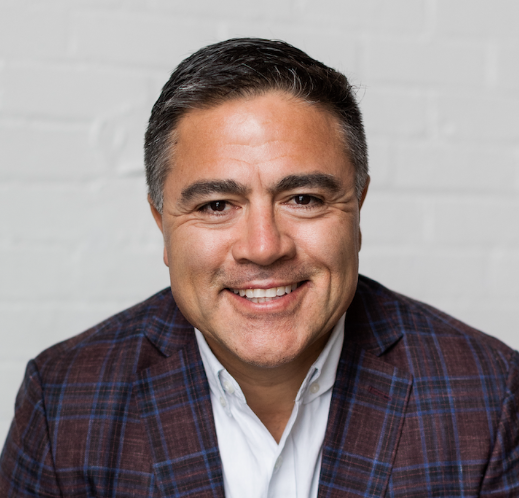
Anthony Satarino has been promoted to director of economic development for the Celina Economic Development Corporation (CEDC). Satarino previously served as the city’s director of strategic services. He brings 17 years of economic development and community management experience. He will begin his tenure in June 2024.
| |
The U.S. Department of Transportation is seeking input on ways it can harness the potential of artificial intelligence to improve transportation systems. In a request for information issued this week, the DOT said it wants stakeholders to submit comments within the next 60 days on ways to incorporate AI to improve all transportation modes and to provide feedback on emerging challenges and opportunities of incorporating AI in the transportation sector.
Artificial intelligence has already shown its promise to revolutionize the transportation sector. Over the past year, self-driving cars have begun rolling across U.S. cities. In addition to private industries, the government has also taken an interest in AI technology at the state and federal level.
Click here for more information on how AI will be used to innovate U.S. transportation
(Photo courtesy of Joey Kyber on Unsplash.)
|  | |
Gov. Greg Abbott announced these appointments and reappointments from May 17 through May 23:
Texas Academy Of Mathematics And Science Advisory Board
Michael “Andy” McDowall - Seguin
Grayson County Regional Mobility Authority
William “Bill” Douglass - Sherman (reappointed)
Texas State Board Of Examiners Of Marriage And Family Therapists
Lee Hampton - Bellaire
Texas Higher Education Coordinating Board
Juan Nevarez - Dallas
Richard Clemmer - Austin
Welcome Wilson, Jr. - Houston
Stacy Hock - Austin
Task Force On Infectious Disease Preparedness And Response
Jennifer Shuford, M.D., - Austin
Texas Council For Developmental Disabilities
Lisa Marenco - El Paso
Roni Jo Frazier - Porter
Shana Halvorsen - Houston
Beatrice Degree - Missouri City
Barbara Knighton - Spring
Andrew Crim - Fort Worth
Robert Schier, III - Elgin (reappointed)
Radiation Advisory Board
Joe Markham - Keller
David Dutton, D.V.M. - Comfort
Sandra Ramirez - Houston
Suresh Pillai, Ph.D. - College Station
Jeanette Ruiz, M.D. - Austin
Sam Kannappan - Houston
(both reappointed)
William "Will" Pate, DrPH - League City
Kevin Raabe - Floresville
|  | |
Texas Government Insider is a free weekly newsletter detailing important happenings throughout the state and summarizing current political issues relevant to individuals interested in government.
Publisher: Mary Scott Nabers
Editors:
Adam Rollins
Dave Doolittle
| |