Volume 22, Issue 17 - May 3, 2024 | |
|
Approximately $14.4 billion is spent each year to repair, rehabilitate or replace bridges in America. However, that annual amount has increased and will continue to increase because the backlog of critically needed bridge repairs is estimated to be $125 billion. Of about 50,000 bridges with very significant issues awaiting attention, an estimated 40% can be rehabilitated, but at least 35% will require a complete replacement. Many of the bridges in America were constructed about the same time during the bridge-building boom of the 1950s. That correlated with the country’s expansion of suburbanization and development of the Interstate Highway System. Unfortunately, those bridges are now reaching the end of their service life.
Obvious regional patterns relate to the immediate need for bridge repairs and replacements. Many bridges located in Iowa and West Virginia have immediate needs. Bridge repairs are also slated soon for Pennsylvania and Louisiana, but major bridge repairs are needed nationwide.
Officials in Lee County, Florida, are developing plans to replace the Cape Coral Bridge, which crosses over the Caloosahatchee River. The Board of Commissioners has decided to proceed with the several phases outlined in a project plan. One component includes the construction of two parallel bridges, each with three lanes. A U-turn under the two new bridges will be developed, along with a pedestrian bridge over the roadway. The projected cost for this effort is $301 million.
However, another element of the project will alter the roadway leading over the existing bridge. Cape Coral Parkway will be expanded to six lanes adjacent to the river and widened. A dividing barrier will be installed between traffic traveling in different directions, and two intersections near the bridge will be improved.
The Alabama Department of Transportation has announced plans to replace the 60-year-old Woolsey Finnell bridge in the city of Tuscaloosa. The bridge carries more than 50,000 motorists daily and must be widened to accommodate the continual traffic growth. The new bridge project, estimated at a cost of $125 million, will require almost 2 miles of construction across the Black Warrior River to provide eight vehicle traffic lanes. Bicycle and pedestrian lanes, a pedestrian walkway to the bridge and land work will be included. Current plans call for construction to be done in three phases. Phase 1 will clear the construction zone and add pavement and additional support piers. Phase 2 will relocate traffic, remove the current bridge, and pave a new middle span. Phase 3 will stripe the new road and realign traffic. The project is currently in the planning phase, and officials hope to begin construction in 2025.
Click here for more
|  | |
Arlington, a city of 340,000 people nestled between Dallas and Fort Worth, has been a driving factor in the continued economic growth of the North Texas Metroplex.
The city, the fastest growing metro in the country based on 2022 Census numbers, is home to multiple global businesses, a University of Texas system campus and a large sports and entertainment district.
In recent years, the city has been expanding its reach beyond tourist attractions and into emerging transportation technology. For example, the city has partnered with Overair, a vertical takeoff and landing (eVTOL) developer, to establish a vertiport network at the Arlington Municipal Airport.
“We’re the can-do city. I think that’s why we’ve attracted so many incredible businesses and sports teams and everything else,” Arlington Mayor Jim Ross said on Episode 9 of “The Connection: Partnering Private and Public Entities,” a companion podcast of Government Market News.
Click here to read more about Arlington’s future
(Photo courtesy of the city of Arlington.)
| |
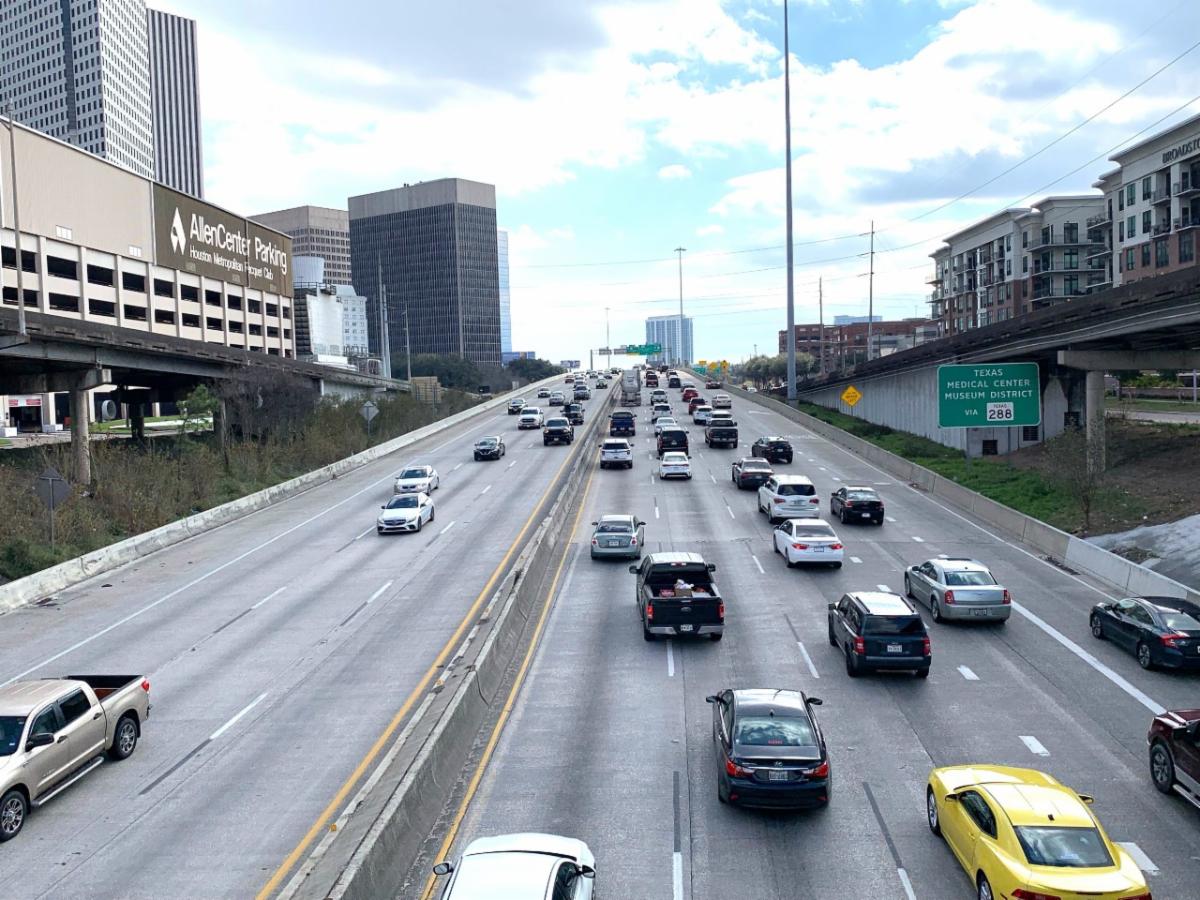
The Houston-Galveston Area Council (H-GAC) has plans for $18.77 billion in road projects that they released in their most recent Transportation Improvement Plan (TIP). The TIP covers projects approved for public funding and are likely to break ground in the next four years.
Created by H-GAC's Transportation Policy Council, the TIP is specifically for transportation projects needing federal action and other regionally significant initiatives. It implements long-term plans within financial constraints and addresses multiple transportation modes and jurisdictions.
The bicycle and pedestrian, roadway and transit projects will help create a safe and reliable multimodal transportation system throughout the area, according to the council.
The TIP also requires a public commentary period, which ends May 24, so residents of the 13 counties can have a say in which projects are implemented. H-GAC last released a TIP in 2022, which covered projects from 2023-2026, some of which carry over into the current plan.
Some of the most significant projects include:
- $3.16 billion for the North Houston Highway Improvement Program (NHHIP) which includes rebuilding Interstate 45 North and improving I-10 and I-69.
- $1.57 billion for new rapid transit and bus routes.
- $798.97 million for Grand Parkway.
(Photo courtesy of TxDOT.)
| |
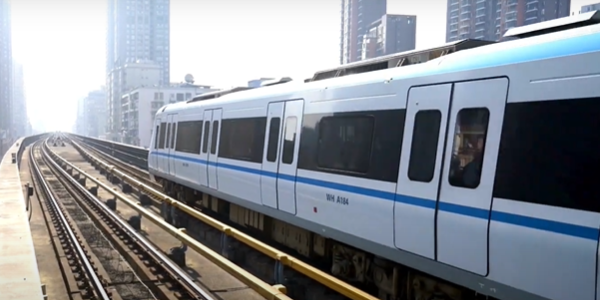
A high-speed rail line that would connect Houston and Dallas that has been in the works since 2016 appears to be gaining speed. A private company focused specifically on this connection and Amtrak are evaluating a potential partnership for a train service that would cover 240 miles in less than 90 minutes.
Almost 100,000 people make the commute between Houston and Dallas-Fort Worth multiple times a week. Although Interstate 45 connects the two cities, and 17 direct flights run between them each day, a high-speed train route would offer the quickest and most environmentally sustainable transit option. The train would have an average speed of 187 MPH, the fastest in the world, and is estimated to remove 100,000 tons of greenhouse gases emissions annually.
Click here for more details about the possible high-speed rail line
|  | |
Texas’ predicted growth over the next six years will place tremendous strain on the state’s electric grid. To meet Texas’ energy needs, the Electric Reliability Council of Texas (ERCOT) is entering a New Era of Planning to develop innovative solutions and adapt to long-term challenges caused by increasing energy loads.
Currently, new large loads are being added to the ERCOT system more rapidly and in greater quantities than have been historically recorded. The increased size and speed of large loads entering the grid is difficult to handle. ERCOT estimates the projected population growth and electricity demand will reach 152 gigawatts (GW) by 2030.
In addition, Texas’ mixture of energy generators – gas, solar, wind, battery and more – are more diverse and geographically disbursed from load centers than they’ve been. The rate of large loads and the spread of generation sources slows down how quickly Texas can adapt and transmit power where it needs to go.
ERCOT will prioritize processes and solutions to connect generation and load, allowing it to match Texas’ unprecedented rates of growth and energy demand. These solutions include:
- Exploring methods to process battery generation and interconnect it with existing sources.
- Collaborating with Transmission Service Providers (TSPs) to develop methods of identifying large load locations.
- Working with TSPs to increase visibility and gather information from distribution system.
- Creating demand response protocols that are reliable, established and scalable to meet future growth.
ERCOT’s current suite of tools and programs to meet demand include weatherization standards and inspections, scheduled maintenance planning approvals, Fast Frequency Response Service (FFRS) and Firm Fuel Supply Service (FFSS). The agency aims to develop additional tools such as Real Time Co-Optimization, a Performance Credit Mechanism (PCM), Dispatchable Reliability Reserve Service (DRRS) and a new Reliability Standard.
The Public Utility Commission of Texas (PUC) will support ERCOT’s planning efforts using loans from the Texas Energy Fund. The Fund is a constitutional amendment passed Nov. 7, 2023, that set aside $7.2 billion to develop dispatchable energy supplies.
(Photo courtesy of ERCOT.)
| |
Keith Halman
Associate Vice Chancellor and CIO
Texas Tech University System
| |
Public career highlights and education: I am currently associate vice chancellor and chief information officer for the Texas Tech University System as well as interim vice president and chief information officer for Texas Tech University. I have the honor of being appointed to the board of directors for the Texas Department of Information Resources by Governor Abbott. I hold a Master of Science in Business Administration from Texas Tech University, where I majored in Management Information Systems as an undergraduate.
What I like best about my public service: It has always been part of my nature to try to be as helpful as I can. Public service has been a way for me to leverage my experience and skills with information technology services in ways that aren’t obvious but are critically beneficial to large groups of people. In my years serving in Higher Education, I have enjoyed being part of institutions that truly can help to change lives for the better by unlocking the potential of our students, and creating positive, generational change.
People might be interested to know that: I love design and learning about why things are built the way they are. Most people pass by things every day that are taken for granted but have really truly interesting stories or purposes. I think in some ways it helps to remind me about how much effort people put into humble things every day to make life better for the rest of us and that truly valuable creativity isn’t always found in the flashiest things.
One thing I wish more people knew about the Texas Tech University System is: As I work for the Texas Tech University System, most people are well aware of our educational and research missions. But most people aren’t aware of the impact of having our institutions in their communities when it comes to supporting local infrastructure and many other types of services. Our institutions are like small cities with many different service areas that regularly partner for services with local government, healthcare providers, business partners, school districts, etc., so that the overall impact of what we do benefits people in many more ways beyond teaching students or conducting research.
|  | |
The U.S. District Court for the Northern District of Texas vacated a Federal Highway Administration (FHWA) rule that would have required the state to measure and create greenhouse gas (GHG) emissions reduction targets.
The decision follows the FHWA’s final ruling November 2023, that created a framework to track GHG performance for state departments of transportation (DOTs) and metropolitan planning organizations (MPOs). The ruling would also establish a flexible system for agencies to set their own targets for reducing GHG emissions on interstate and national highway systems.
Texas filed a lawsuit against the ruling, claiming that the FHWA exceeded its authority and acted without congressional authorization. The court ruled in favor of Texas, refusing the federal GHG performance measure. The court determined that performance measures of interstate and national highway systems should only be concerned with infrastructure travel effectiveness, not vehicular environmental outputs.
The lawsuit is the latest in state objections to the federal measure. In December 2023, Kentucky challenged the FHWA on behalf of 21 states. Kentucky stated that the ruling was “arbitrary and capricious” and overstepped the FHWA’s authority. According to the court statement, “the FHWA may not create a performance measure that forces states to set declining targets in CO2 tailpipe emissions on the National Highway System.”
The plaintiffs withdrew their initial injunction after the FHWA extended the deadline for states to submit initial targets and reports until March 29, 2024. Kentucky’s case against the federal ruling is ongoing.
(Photo courtesy of FHWA.)
| |
The city of San Antonio will use $20.1 million to enhance neighborhood roadways, expand streets, install drainage systems and improve pedestrian safety. The projects are a part of the San Antonio 2022-2027 bond program. All projects are currently in the design phase, and construction is expected to be completed by 2026.
The city will use $12 million to improve roadways and drainage at Watson Road. The current road has multiple points of structural failure, poor drainage and is unable to support new housing and commercial development. San Antonio will increase multimodal safety along the corridor and expand the existing road to four lanes.
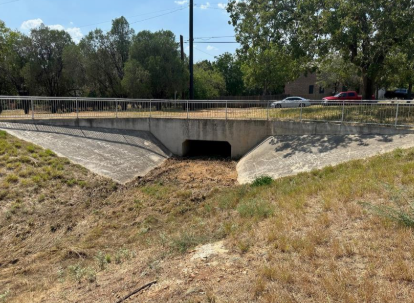
As part of expanding the roadway, the city will build a raised center median, sidewalks, curbs and driveway approaches. Plans include installing a shared use path and relocating utilities. The city will build roadside inlets, an underground storm drain and 13 concrete culverts to improve drainage. Construction will begin in summer 2026.
San Antonio will spend $8.1 million for the second phase of the Oak Haven Area Streets and Drainage project. Currently, streets in the Oak Haven neighborhood have several damaged low water crossings, drainage issues and unmaintained roadways. The city will reconstruct the streets and improve the area’s drainage infrastructure.
Plans include installing concrete headwalls and baffle blocks that will slow down water velocity during storms. In addition, the city will build rock gabion mattresses to stabilize soil, prevent erosion and manage the flow of water. The city will also install rock riprap along neighborhood culverts and slopes to protect structures from water damage and scouring.
The city will control street flooding by installing inverted street crowns in the middle of the roadway. These, combined with grate inlets, will catch and convey water to a dedicated underground storm drainpipe. The city will also build concrete flush header curbs to protect the street from flowing water. Construction will begin in summer 2025.
(Photo courtesy of the city of San Antonio.)
|  | |
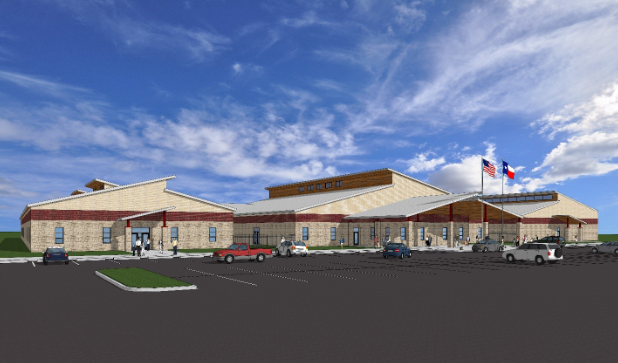
The city of Boerne will build an $11.3 million sustainable fire station to accommodate community members while providing rapid response for emergencies. The city recently approved a contract with an architectural firm to design the building. Construction will begin in spring 2025.
Fire Station No. 2 will be an approximately 15,000-square-foot, 3-pull facility that will feature multifunctional, flexible architecture that will serve multiple purposes. The building will hold up to 20 people and accommodate two crews at a time. The bunk areas will be large enough for up to eight firefighters and one officer per shift, plus additional space for volunteer firefighters.
The station will include a lobby, public restroom and a watch room with a dual purpose as the front of house. It will feature a dual-purpose community and training room, wellness room, day room for kitchen and dining, theater with raised seating and fitness room. Plans include an outdoor living area, office space, a shower and restrooms.
The city will include an apparatus bay featuring three bays, vestibule, bunker gear, dirty laundry room and a dirty shower and restroom. The station will also feature an SCBA/compressor, electrical and riser room, EMS storage and shop.
The station will feature a public meeting space and library satellite services kiosk to meet the needs of the community. Once completed, the station will function as an educational and recreational hub, providing Wi-Fi and mobile units to expand accessibility and outreach.
The facility includes numerous multipurpose design features, maximizing space utility and functionality for training, storage and community use. Some of the multipurpose features include areas for general storage, equipment maintenance and multi-use spaces for activities and functions.
Fire Station No. 2’s design will emphasize sustainability. This includes incorporating a One Water reclamation system to effectively use and manage water resources. The city will also utilize a cistern system for increased water conservation and reuse. Finally, the station will comply with aquifer source sustainability standards, ensuring it effectively protects the local aquifer from overuse and groundwater waste.
(Photo courtesy of the Boerne City Fire Department.)
| |
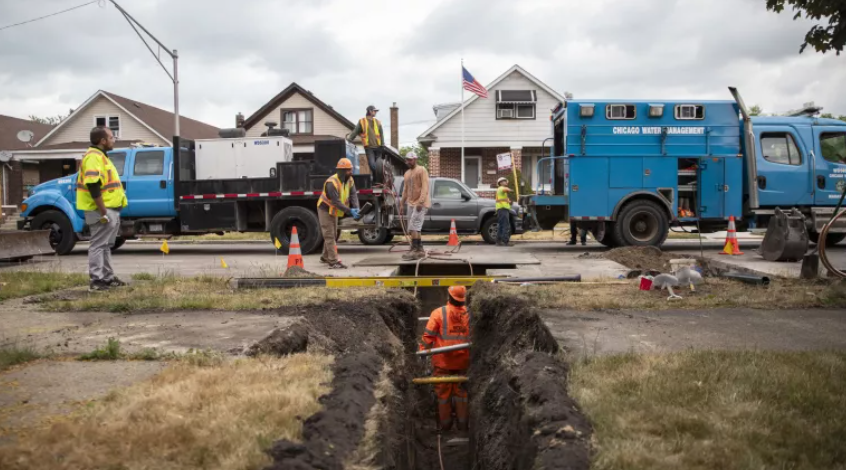
The Environmental Protection Agency (EPA) is administering $3 billion to every state and territory to replace lead pipes.
The funds are administered through the Lead Pipe and Paint Action Plan and are a portion of $15 billion from the Bipartisan Infrastructure Law (BIL) dedicated to the program.
The federal government established the Lead Pipe and Paint Action Plan in 2021 to help communities replace lead pipes and remove lead paint in the next decade.
Click here to learn more about the funds
(Photo courtesy of the Natural Resources Defense Council.)
| |  |
 | |
Texas will receive $249.7 million to provide more than 40,000 households in disadvantaged communities with solar power over the next five years. The Texas Solar for All Coalition (SFA) - a group of Texas municipalities dedicated to creating access to affordable, dependable clean energy for more than 11 million people – will administer the funds.
The SFA will use the funds and tax credits to support families with affordable, accessible clean energy sources. The coalition will deploy solar power, battery storage and energy efficient solutions to multifamily and single-family homes to improve resiliency to power failures and sustainability.
The funds will also help provide workforce training to underserved residents, support minority- and women-owned businesses and empower local community organizations. The program will prioritize families in Harris County. The SFA may also expand the program to other Texas jurisdictions to transform solar access, create community wealth and savings, develop equity opportunities and promote clean energy jobs.
The U.S. Environmental Protection Agency recently provided $7 billion to 60 entities to bring solar energy to more than 900,000 households in low-income, disadvantaged communities. The money comes from the Greenhouse Gas Reduction Fund, a $27 billion program dedicated to combatting climate change.
(Photo courtesy of Vivint Solar on Unsplash.)
|  | |
Angelica Rosales has been appointed to the Governor’s Commission for Women. She will serve her term until Dec. 31, 2025.
Rosales is currently project director for a construction company, the latest in her 23-year-long career. She holds leaderships positions for several nonprofit organizations, serving as director of the Texas Lyceum and a member of the El Paso Chamber and El Paso Hispanic Chamber of Commerce. She is also a governing board member of the Hospitals of Providence East Campus and a board member for the Border plex Alliance and El Paso Community College Foundation.
The Governor’s Commission for Women was established in 1967 to protect and empower women across Texas. The commission is responsible for developing a strategy and implementation plan to promote women-owned businesses and combat human trafficking.
|  |  | |
Voters in the Bowie Independent School District (BISD) will decide the future of a $65.8 million bond to build a school, renovate existing campuses and expand facilities. Election day is May 4.
If approved, the district would build an intermediate school capable of housing up to 600 students. Plans include building an International Code Council (ICC) 500 storm-rated shelter capable of housing the entirety of the student body, faculty and staff. The district would also build a cafeteria, kitchen and pick-up/drop-off area.
BISD would implement safety and security measures to meet or exceed Texas Education Agency (TEA) requirements. The fully code-compliant campus would include feature ballistic-rated glass entrances. The district would keep the existing cafeteria for the school’s multipurpose facility. In addition, the district would use the existing gym for community and school use.
The district would renovate the junior high campus. The district would also renovate the existing administrative suite as a sixth-grade wing. BISD would build an ICC 500 storm-shelter and an instructional gym with seating. Plans include building a traffic control area with an attached street for pick-up/drop-off.
Plans include renovating the administrative suite into an assembly and performance area. The district would also renovate the classrooms and science labs to meet TEA requirements and the locker rooms to be ADA compliant. BISD would build a field house at the athletic fields, renovate the existing school facility for secondary programming and build an administrative suite with ballistic-rated glass main entrances.
The district would ensure the junior high campus meets or exceeds TEA requirements for safety and security. Plans include making the facility fully code compliant and that all campus buildings are connected.
BISD would expand the elementary school with a parking lot for the pick-up/drop-off area. The district would also rework the pick-up/drop-off area to increase pedestrian safety. Plans include installing covered walkways, a bus lane loop and additional staff parking. The BISD high school would receive a weight room facility, a restroom building and additional handicapped parking next to the baseball/softball complex.
(Photo courtesy of Bowie ISD.)
|  | |
The U.S. Department of Energy is looking to use artificial intelligence technology to help speed the adoption of clean energy sources in the fight against climate change.
The agency is also researching potential benefits for electric grid stability, while studying the challenge of meeting new energy demand from AI data centers.
The AI initiatives come in the wake of a renewed federal emphasis on responsible use of artificial intelligence. Earlier this year, the White House Office of Management and Budget released its AI-related policy for federal agencies, which includes public disclosure of all the ways each agency uses artificial intelligence.
Click here to learn how AI will be used as clean energy expands
(Photo courtesy of Nyttend.)
|  | |
The city of College Station has promoted Anthony Armstrong to director of planning and development services. Armstrong has worked at the department since 2016, starting as a graduate engineer. He was later promoted to land development administrator in 2021. He will officially assume the role in early May 2024.
| |
After being selected as the lone finalist for the position April 4, Quintin Shepherd has been officially hired as superintendent for the Pflugerville Independent School District (PISD). Shepherd previously served as superintendent for Victoria ISD. He brings 18 years of public education experience to the role. Shepherd will begin his tenure May 28, replacing Douglas Killian.
| |
Demi Engman will replace Chris Boone as director of planning and community development for the city of Beaumont. Engman started her career with the city in 2018, having served as a planner, senior planner and planning manager. She briefly served as a senior planner for the city of Dayton in 2020 before returning to Beaumont.
| |
Shaye Murphy has been selected to assume the superintendent role for the Rankin Independent School District (ISD). Murphy previously served as chief administrative officer for Gunter ISD. He brings 22 years of experience to the role. He took over the role from Samuel Wyatt.
| |
Gov. Greg Abbott announced these appointments and reappointments from April 26 through May 2:
Texas Facilities Commission
Robert H. Clay - Houston
Governor’s Commission For Women
Angelica Rosales - El Paso
| |
Texas Government Insider is a free weekly newsletter detailing important happenings throughout the state and summarizing current political issues relevant to individuals interested in government.
Publisher: Mary Scott Nabers
Editors:
Adam Rollins
Dave Doolittle
| | |
| |
| |
|
|
Check out our
social media links!
|
|
Help us share this message.
To ensure delivery and proper formatting of the newsletter, be sure to add editor@spartnerships.com to your safe senders list. Otherwise, the newsletter may be flagged as spam and automatically routed to your junk e-mail folder.
| | | | |