|
The U.S. Environmental Protection Agency (EPA) recently announced more than $1 billion in funding for 110 Superfund projects. The upcoming project sites are scattered throughout the country. All locations are contaminated by industrial waste, and remediation is critically needed. Usually, the agency orders the responsible party to remediate the site, but when no party can be identified, the EPA conducts the clean-up work. The EPA funds the project and selects private-sector firms to provide the services.
This funding allocation is the third and final installment from the Bipartisan Infrastructure Law (BIL) for the Superfund program. Initially, Congress appropriated a total of $3.5 billion. The new funding supports 25 new projects and additional work on 85 ongoing cleanup efforts.
A brownfield project is located on a site where hazardous substances have been environmentally contaminated, and the land is unusable until it has been cleaned. The EPA’s Brownfields Program still has about $1.2 billion at its disposal to remediate sites contaminated by substances such as lead, petroleum and asbestos. However, not all remediation projects are funded by federal programs. Regional funding is often also found for remediation efforts.
The EPA plans a $45 million cleanup project for the Bear Creek area, a site next to the Sparrows Point Peninsula in unincorporated Baltimore County, Maryland. The peninsula was formerly the home of steelmaking and shipbuilding industries and the ground and surrounding water is contaminated with sediments and toxic chemicals. Because the longtime owner of the property declared bankruptcy in 2001, it fell to the EPA to clean up the area.
This project will involve dredging the creek floor to remove hazardous materials in the sediment. Then, the floor will be covered with a cap of 2 feet of new sand. Due to the contaminants involved — including polychlorinated biphenyls (PCBs), heavy metals, arsenic and grease — this project will remain on the National Priorities List until the clean-up is completed. That effort is scheduled to start in the summer of 2025.
Click here for more
|  | |
Two Texas transportation authorities have received federal planning grants for transit-oriented developments (TOD) that will provide sustainable multimodal transit hubs, increase housing options and improve mobility.
Austin’s Capital Metro Transportation Authority (CapMetro) and the city of McAllen are two of 20 recipients across 16 states that will receive a share of the $17.6 million from the Federal Transit Authority (FTA). The money is part of the latest funding from the FTA’s Pilot Program for Transit-Oriented Development (TOD) Planning.
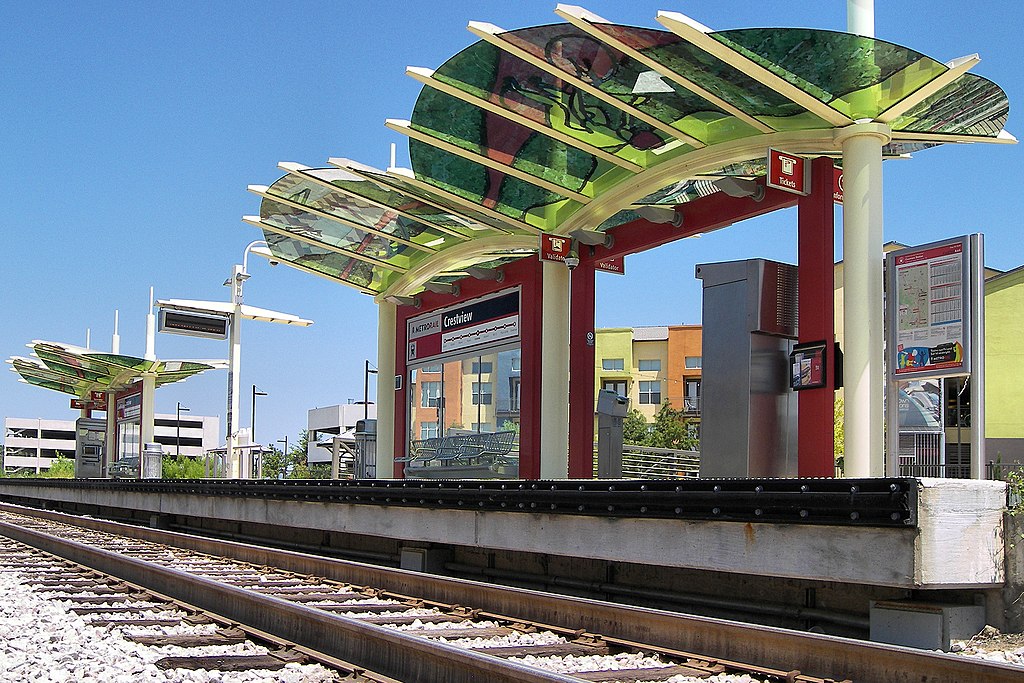
CapMetro, in partnership with the city of Austin, will receive $1.5 million to plan TOD near a sustainable multimodal transit hub at the CapMetro Rail Crestview Station. The grant enables CapMetro to determine how expanding the station will increase ridership and gauge potential service impacts, platform design and light rail transit connectivity. CapMetro will integrate the hub with 5.5 acres of affordable housing in an adjoining property.
The city of McAllen will receive $500,000 to develop the Metro McAllen North-South Bus Rapid Transit (BRT) Corridor TOD Master Plan. McAllen will use the funds to plan TOD initiatives around two transit stations connected by four local bus routes, including a proposed BRT corridor. The city plans to support housing and enhance walkability near the city’s Central Station. Plans include exploring mixed-use development and multimodal connections for transit services at the newly constructed North Transfer Station.
The pilot program prioritizes ways to improve economic development, promote multimodal connectivity and accessibility, improve pedestrian and bicycle access and enable mixed-use development near transit stations. The program was created to help improve public transportation in America’s communities by integrating land use and transportation planning with core capacity transit capital investments.
(Photo courtesy of Larry D. Moore.)
| |
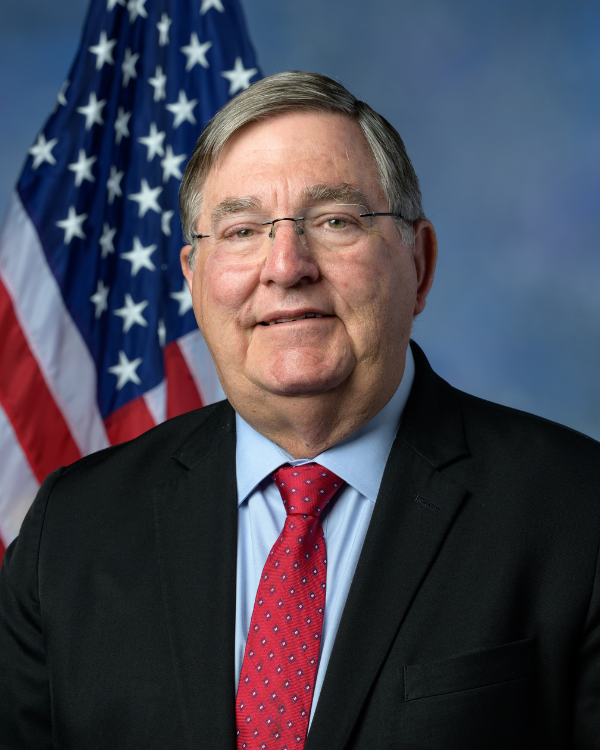
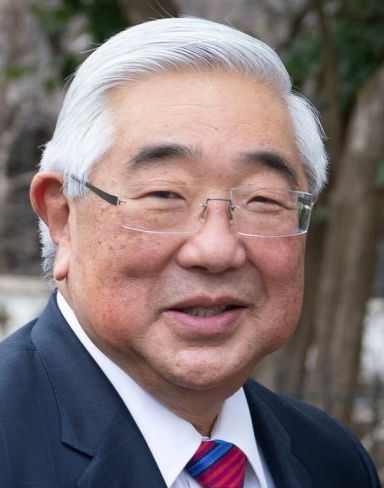
U.S. Rep. Michael C. Burgess, M.D., a Republican who represents North Texas, has been named chairman of the House Rules Committee, which sets the terms for amendments and debate on bills.
Burgess will replace U.S. Rep. Tom Cole (R-Oklahoma), who became chair of the Appropriations Committee from Texas’ Kay Granger (R-Fort Worth), who is leaving office at the end of the year.
Burgess, a physician from Pilot Point, has served in the U.S. House since 2003 and is the senior member of the House Energy and Commerce Committee. He is also a member of the subcommittees on Health, Oversight and Investigations, and Energy.
| |
The city of Houston will use $43.4 million to improve sidewalks and drainage in the Gulfton and Kashmere Gardens neighborhoods. The project will address historic underinvestment and barriers in the two neighborhoods, providing the local community with greater mobility, resiliency and greenspace.
The U.S. Department of Transportation (USDOT) recently provided the funds to the Gulfton and Kashmere Gardens Resilient Sidewalks project through the Neighborhood Access and Equity (NAE) grant program. Construction is expected to begin in winter 2026.
The NAE program is designed to improve walkability, safety and affordable transportation access in disenfranchised communities. The Gulfton and Kashmere Gardens Resilient Sidewalks project is one of 132 nationwide that will receive a portion of the $3.3 billion USDOT awarded for Fiscal Year 2023.
The funds will help the city improve sidewalks, drainage and tree cover in the neighborhoods. These improvements will help create climate-resilient streets and establish a multimodal mobility network for underserved communities. Currently, there aren’t enough sidewalks to ensure residents can safely and easily travel. The lack of tree coverage means there are few ways to relieve heat, improve air quality or restore mental health. In addition, flooding is a consistent concern.
The city will build ADA-compliant sidewalks, high-visibility crosswalks, protected bike lanes and shared-use trail connections. Plans include building a pedestrian bridge, installing lighting, replacing intersection signals and extending curbs to create safety buffers.
The city will add trees and landscaping, storm sewer lines and inlets and enhance overall corridor drainage. In addition, plans include installing intersection green stormwater infrastructure (GSI) curb extensions and corridor GSI tree trenches and rain gardens.
(Photo courtesy of the city of Houston.)
| |
The Texas Health and Human Services Commission (HHSC) officially opened its $357 million replacement facility for San Antonio State Hospital on April 9. In addition to replacing the existing facility, HHSC also renovated a separate building, adding an additional 40 beds.
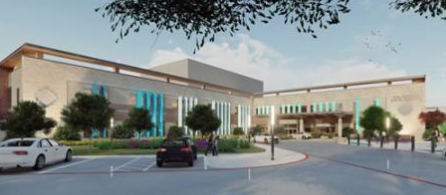
The three-story, 454,000-square-foot hospital includes a 300-bed non-maximum-security unit. It also features single-person rooms, plenty of natural light in patient rooms and common areas and dedicated outdoor spaces to promote health, recovery and well-being.
The hospital offers a variety of therapeutic, recreational and social services and outlets to help prepare patients to return to the outside world. The facility includes a music room, beauty salon, canteen, library, gym, greenhouse, chapel and teaching kitchen.
(Photo courtesy of HHSC.)
|  | |
The city of San Antonio will use $34.5 million to improve mobility, drainage and multimodal connections on seven roads. The projects are a part of the San Antonio 2022-2027 bond program. All projects are currently in the design phase, and construction is expected to be completed by spring 2028.
The city will spend $18.9 million to improve pedestrian mobility and safety along Culebra Road. The current road has a deteriorated drainage system, is prone to flooding and has sidewalks in poor condition. The project will include replacing the storm sewer system, reconstructing the entire roadway and building a shared-use path.
Plans also include updating sidewalks, installing ADA ramps and building curbs and driveway approaches. The city will replace and adjust utilities along the road. Installing signals, pedestrian markings and a mid-block crossing are also planned. Construction will begin in winter 2026.
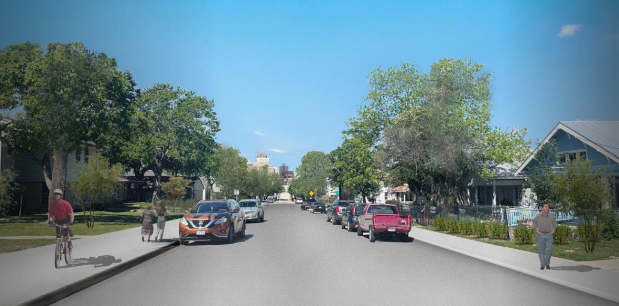
The city will use $7 million to improve roadway accessibility and connectivity along six streets in the city’s eastside area. The roads are old, with broken sidewalks, curbs, non-compliant wheelchair ramps and no connectivity for bikes and pedestrians. The city will repair and improve the existing streets by building sidewalks and curbs, install pavement markings, plant trees, reconstruct the roadway and build multimodal connections to eastside parks. Construction will begin in spring 2025.
The Hays Street Bridge Connections project will help connect eastside area streets with the rest of the city. The project will receive $8.6 million to acquire open space and develop multi-use trails along the city’s creek, green and urban corridors. The city will build a mile-long, 12-foot-wide shared-use path for pedestrians and bikes.
The concrete trail will feature ADA accessibility, trees, natural shading, lighting and silva cells. Silva cells are raised, modular pavement structures that use soil to support large trees and manage stormwater in urban environments. Construction will begin in spring 2025.
(Photo courtesy of the city of San Antonio.)
| |
The Federal Highway Administration has made $830 million in grants available for projects that secure transportation systems against extreme weather events. The funds will flow to 80 projects across the nation to help prepare transportation infrastructure for the impacts of flooding, extreme heat, sea-level rise and other weather events that are becoming more common because of climate change.
The funds come from a Department of Transportation grant program PROTECT, which focuses on safeguarding against extreme weather through upgrades to ground transportation infrastructure.
Click here for details on which projects received funds
(Photo courtesy of Brian Wangenheim on Unsplash.)
| |
Peter Sakai
County Judge
Bexar County
| |
Public career highlights and education: I graduated from the University of Texas in 1976 and the UT School of Law in 1979. My legal career began in the Bexar County District Attorney’s Office. Next, I opened my own law practice before becoming Associate Judge of Children’s Court. I then spent four terms as the 225th State District Court judge. My commitment to helping vulnerable children and families led me to create the Family Drug Court, the Early Childhood Court and the College Bound Docket for foster children. After retiring from the bench, I felt I had more to give to my community and ran for Bexar County Judge. My four-year term began on Jan. 1, 2023.
What I like best about my public service: I enjoy resolving Bexar County’s complex issues, particularly in the areas of public safety, public health and economic development. We have created a great environment for our business partners, from corporations to small business owners. We also have had success with law enforcement and the court system by giving them additional resources. Expanding drug treatment programs is another priority as we work to strengthen the core of our community.
The best advice I’ve received: It came from my father. He taught me to always maintain family values. Those start with honesty, hard work and being humble. Those values have served me well throughout my entire political career.
People might be interested to know that: I’m a former jock. I played all sports growing up and into adulthood, including pickup basketball and softball. I continue to follow sports today and think the lessons learned apply to all facets of life. Those include leadership, teamwork, decision making and perseverance. You never quit until the game ends.
One thing I wish more people knew about Bexar County is: We are a diverse, compassionate entity with a strong commitment to protecting children and families. We are dedicated to making the county the best place in Texas to live, work and learn. What we do now will have a lasting impact on generations to come.
|  | |
The Houston suburb of League City updated its water and wastewater master plans on March 26. The water plans were last updated in 2018.
The plans were designed to ensure the city can provide adequate water supplies and handle increased wastewater flow through projects designed to accommodate growth. The city hopes to finish building out its water and wastewater infrastructure by 2040.
The population is expected to grow by 2.5% over the next 10 years and more than double by the anticipated buildout year. As part of the master plans, the city will ensure that the water system meets Texas Commission on Environmental Quality (TCEQ) requirements.
The city currently faces challenges with operating multiple small water wells and booster stations, aging infrastructure and pipelines that function as both transmission and distribution lines. The city’s wastewater infrastructure includes 78 lift stations and two water reclamation facilities.
League City currently has access to 28 million gallons of water per day. However, the plans estimate that the city will need to supply an additional 20 million gallons per day (MGD). In addition, while the city has emergency well capacity, the city is restricted to 10% of the total annual water supply from groundwater sources without facing fines.
To help address outstanding issues, League City developed five- and 10-year plans outlining its future water supply, infrastructure and operational needs. City officials are also working on an agreement to reserve the projected 20 MGD capacity from the Southeast Water Purification Plant (SEWPP). The city will use $156 million and coordinate with Houston to expand the SEWPP’s capacity, ensuring League City can meet future demands and long-term needs.
The city will expand the Southwest Water Reclamation Facility to eight MGD by 2028 and further expand its treatment capacity to 12 MGD during the buildout planning period after 2033. League City will modify and improve its wastewater infrastructure to increase system reliability, simply system operations, convey peak we weather flows and reduce surcharging and sanitary sewer overflows.
In the plan, League City's immediate upgrades - some of which are currently ongoing – include a $12.85 million well, generator and booster pump station for Calder Road South, $12.63 million for raw water storage, a $5.23 million chemical feed storage building and $4.54 million for water lines on the city's west side.
(Photo courtesy of Bro Takes Photos on Unsplash.)
|  | |
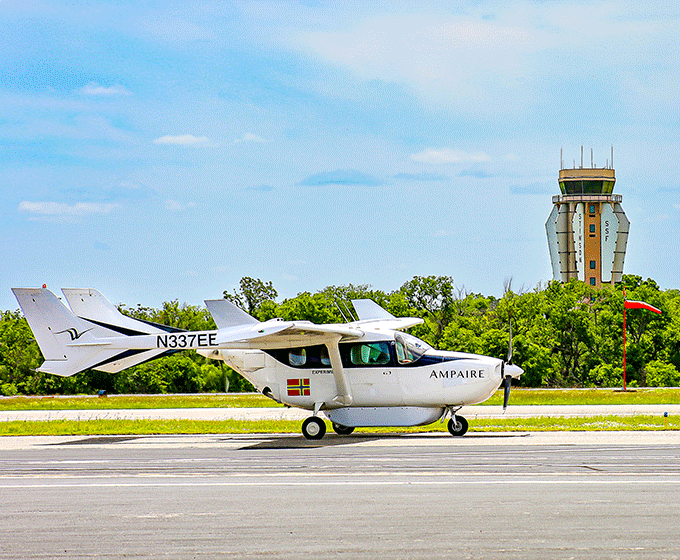
The University of Texas at San Antonio (UTSA) has partnered with the Department of Energy (DOE), the city of San Antonio and CPS Energy to help decarbonize the aviation sector. It is the first time an international airport will collaborate with the DOE’s Advanced Research Projects Agency – Energy (ARPA-E).
The four entities have entered a memorandum of understanding (MOU) to research and develop sustainable aviation technologies, battery innovations, electric vehicle charging enhancements and power-related solutions to reduce aircraft pollution.
In addition to these efforts, UTSA and CPS Energy have presented research aimed at leveraging a city-scale grid digital twin. This technology will help evaluate how effectively operations are being conducted, ensure that different systems can work together and strengthen cybersecurity measures, while measuring the performance of electric and hybrid aircraft.
The MOU allows the entities to collaboratively identify research opportunities, develop technologies, demonstrate their effectiveness and deploy them. The overarching goal is to advance sustainable aviation technologies within San Antonio and surrounding areas.
(Photo courtesy of UTSA.)
| |
The Environmental Protection Agency is making nearly $1 billion available to help states and territories meet new federal standards for drinking water.
The announcement was made this week in tandem with the EPA’s first-ever national, legally enforceable drinking water standards to prevent communities from being exposed to per-and-polyfluoroalkyl substances (PFAS. The funds will help states and territories implement PFAS testing and treatment at public water systems and help owners of private wells address PFAS contamination.
Click here for more details on the funds and drinking-water standards
(Photo courtesy of Imani on Unsplash.)
| |  |
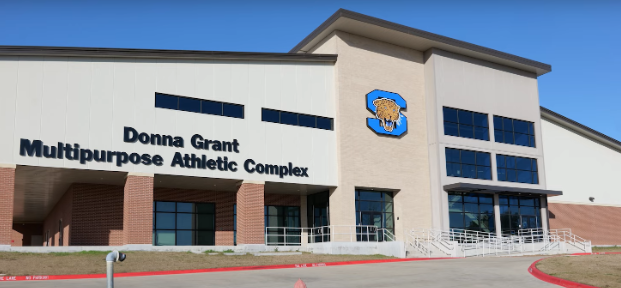 | |
Voters in the Mansfield Independent School District (MISD) will decide on a $777 million bond to renovate school facilities, renovate a stadium and improve fine arts and multi-purpose athletics complexes. Early voting will take place between April 22 and April 30. Voting day is May 4.
If approved, Proposition A would allocate $584.5 million to renovate choir rooms at three middles schools and build orchestra space for six middle schools. The bond would help add space for instructional and certification programs at the Ben Barber Innovation Academy – the district’s Career and Technical Education Academy. The district would also convert classrooms to computer labs at Ben Barber.
MISD would use the funds to resurface and install lights at the high school tennis courts, resurface middle school tracks, build covered batting cages and install turf at baseball and softball fields across five campuses. The district would also renovate the weight rooms and replace bleachers and scoreboards for the middle school practice fields.
The district would build an early learner’s academy for children to provide interactive, engaging visual learning experiences. In addition, MISD would replace infrastructure across all campuses, including HVAC, roofing, plumbing, electrical, flooring, fire alarm systems, pavement, lighting, kitchen equipment and playground surfaces. The district would also renovate the Sixth Avenue and Main Street facilities, buy replacement buses and build a bus shop and bays.
Plans would include investing in technology infrastructure by making end-of-life replacements for battery backup units, Voice-over-Internet-Protocol (VoIP) phones, network cabling, data center equipment and wireless infrastructure. The district would also install disaster recovery equipment and a network fiber ring to increase network resiliency.
The district would upgrade and replace cameras, access points and fire sprinklers across all campuses to improve safety and security. In addition, MISD would install additional weapons detection systems and improve the MISD police station and Safety Operations Center. Plans would include improving police training, department debriefing, upgrading dispatch, promoting additional camera monitoring, creating secured storage and providing a dedicated, secured and equipped space at all times.
Proposition D would provide $85 million to add additional classrooms, practice and rehearsal space for the band, cheer, dance, drill team and JROTC programs in the Fine Arts Multi-Purpose facility. The district would also install a spring floor to help prevent injury.
MISD would renovate the existing band hall to provide more functional space. The space would provide the orchestra with less need for volume control, capacity to grow the program and ensure students can receive individual and small group instruction. The district would also begin Phase 2 of the Multi-Purpose Athletic Complexes to build locker rooms, showers, offices and storage space.
Proposition E would provide $53 million for the district to proceed with Phase 3 of the Multi-Purpose Athletic Complexes. The district would install 50-yard indoor practice fields at all high schools. The fields would provide a safe space during inclement weather and provide additional practice and rehearsal for sports programming.
Proposition C would allocate $50.5 million to renovate stadiums and practice fields. MISD would renovate the 69-year-old RL Anderson Stadium to replace bleachers, locker rooms, a press box, home concessions, turf and parking lot lights. The district would renovate Newsom Stadium to improve safety and security and replace the field’s drainage system and turf. Plans include resurfacing tracks and replacing the turf and scoreboard at all high school practice fields.
Proposition B would offer $4 million to upgrade instructional technologies across all campuses. The district would replace old classroom projects with interactive panels. MISD would also install digital signage to replace end-of-life equipment at all office and reception areas districtwide.
(Photo courtesy of Mansfield ISD.)
|  |  | |
The city of Austin has a critical need to expand its construction workforce as it faces a looming $25 billion catalogue of major capital projects to be finished over the next few decades.
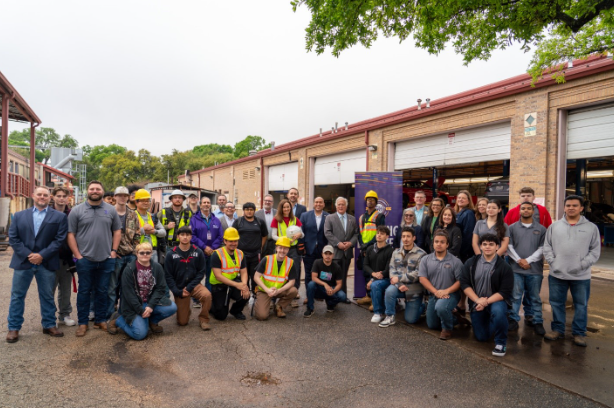
To help develop its workforce, the Austin City Council approved the Austin Infrastructure Academy (AIC) in early March to prepare the city for future expansion. Austin Community College (ACC) will build the physical structures housing AIC at the future Southeast Travis County campus. AIC will use ACC’s Riverside campus until its permanent home is built.
AIC will be a public-private academy pioneering the city’s next generation of construction and transportation workers. The Academy will ensure the city can develop the skilled workforce needed to deliver on projects including Project Connect, an airport expansion and reconstructing Interstate 35.
Austin will need to add 10,000 workers annually over the next 17 years to meet capital project needs. AIC will provide a centralized hub to support workers by removing obstacles that mitigate access to training and job opportunities.
ACC’s contribution will empower Austin to expand the region’s infrastructure by more than 81% by 2040. The academy will provide job placement and navigation, comprehensive recruiting services, governance to reflect stakeholder input and accountability and an evaluation framework to assess AIC’s overall workforce impact.
The Academy will support workers by providing access to childcare, education, job placement and other critical needs. AIC will also ensure that community-based programs are aligned with each other and with in-demand skills. Workers will receive job sequencing based on real-time needs to ensure workers can take advantage of local infrastructure opportunities.
(Photo courtesy of Austin Community College.)
|  | |
The Clean Water State Revolving Fund-Emerging Contaminants program is part of the national effort to ensure safe and clean water for all communities. Specifically, the program offers grants and vouchers for projects that that address contaminants such as per-and polyfluoroalkyl substances (PFAS) in water systems.
The program has issued a Notice of Funding Opportunity (NOFO) amounting to $430 million, the program is poised to award an unlimited number of projects that meet specific criteria.
Click here for details on the NOFO, including deadlines
(Photo courtesy of Ivan Bandura on Unsplash.)
|  | |
The collapse of the Francis Scott Key Bridge in Baltimore last month was a reminder of how vulnerable the nation’s infrastructure and economy overall can be to unforeseen accidents.
Following the accident, ports across the nation – including in Texas - are assessing what their risks are, and how to best pursue growth while ensuring smooth passage of goods and avoiding accidents.
Click here to learn more on how ports are focusing on safety, expansion
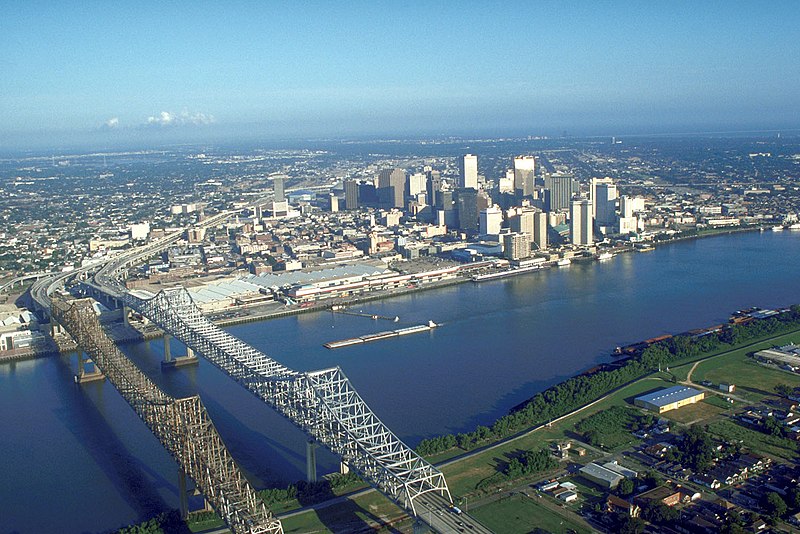
(Photo: The Crescent City Connection in New Orleans. Courtesy of Michael Maples, U.S. Army Corps of Engineers.)
| |
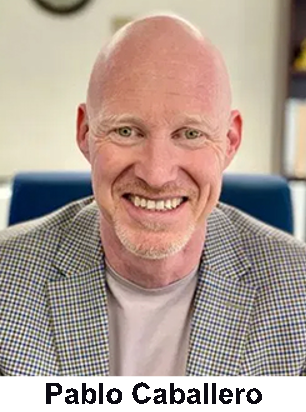
Interim Director Pablo Caballero was officially given the director role for the city of El Paso’s Parks and Recreation Department on April 10. Caballero has served as interim director since November 2023. He brings 25 years of experience developing and implementing sports and recreational programming to the role. He took over responsibilities effective immediately.
| |
On April 4, Teresa Chandler was appointed interim city manager of the city of Nolanville. Chandler previously served as Nolanville’s city secretary, the latest in six years of public sector experience. She replaced Kara Escajeda following her resignation April 1.
| |
Dr. Kimberley James was unanimously voted the final candidate for the Willis Independent School District’s (WISD) superintendent position April 1. Dr. James will replace Tim Harkrider after he left the role in 2023. She is the current deputy superintendent for curriculum and instruction for Corpus Christi ISD. She will officially take over the role after a 21-day waiting period, bringing more than three decades of public education experience with her.
| |
Juan Antonio Nevarez will take over the interim director role for El Paso International Airport on April 26. Nevarez is the airport’s current assistant director of aviation for operations and security, a role held since 2017. He has worked at the airport for more than two decades. He will replace Sam Rodriguez until a permanent director is found.
| |
Gov. Greg Abbott announced these appointments and reappointments from April 5 through April 11:
No appointments or reappointments were made.
| |
Texas Government Insider is a free weekly newsletter detailing important happenings throughout the state and summarizing current political issues relevant to individuals interested in government.
Publisher: Mary Scott Nabers
Editors:
Adam Rollins
Dave Doolittle
| |