|
Most people have heard about earmarks, but only a few citizens really pay attention to them. That should not be the case. The term earmark refers to federal spending for a specific project for a particular congressional district, locality or state. Members of Congress request this type of funding. In the most recent federal budget, Congress passed and approved more than $12 billion in Congressionally Directed Spending items. The funding was all tied to planned projects throughout America.
Because there are laws that make earmark requests transparent, it is not extremely difficult to track the funding requests to identify upcoming projects. Members of Congress must submit a request for an earmark that outlines the project to be funded. If the earmark is not removed from the final budget process, the project will benefit from a provision in the budget bill specifying which agency’s funding will be tapped. A few examples follow.
A new terminal will be constructed at the Presque Isle International Airport in Maine with the support of $20 million from a federal earmark. Overall, the new terminal has a cost projection of $30 million, but the earmark revenue will assist local officials in replacing an old terminal dating to the 1940s. The new facility will be designed to accommodate growth that has doubled over the past six years. The project is moving quickly, and contracting solicitations are expected in May or June of this year.
Officials at Kansas State University Salina will oversee a project to build an Aerospace Education Hub to support aeronautics innovation. The university received $28 million in earmark funding. Design work has not started, so the project is not yet ready for launch. Enthusiasm, however, is notable because this project is part of a larger initiative to expand the school’s Aerospace and Technology Campus. When completed, the university will host programs focused on unmanned aerial systems, advanced composite materials and aviation maintenance, including the Flight Test and Training Center, the Advanced Composites Laboratory and the Aviation Maintenance Training Center.
To better connect the California coastal cities of Oceanside, Del Mar, Carlsbad, Encinitas, Solana Beach and San Diego, a Memorandum of Understanding was established between the cities to plan, design, and build a 44-mile regional multi-use trail. The partnership then captured $132 million in an earmark for the project. The State of California State Active Transportation Program will also support the project. With funding in place, the project is moving but will likely be broken into phases because some parts of the overall effort will require an environmental study.
Click here for more
|  | |
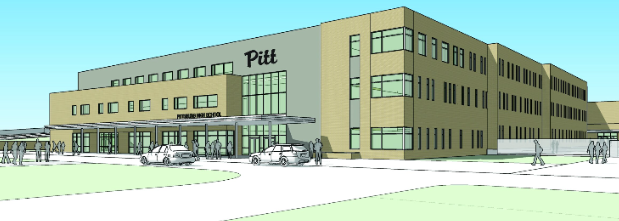
Pittsburg residents will vote on a $93.8 million school bond to build a high school, renovate a junior high campus and install a dedicated bus road. Early voting will be between April 22 and April 30. Election day is May 4.
If approved, Proposition A would allocate $74.4 million to build a nearly 130,000-square-foot high school. The building would contain 60 combined classrooms and labs, a gymnasium that doubles as a storm shelter, a cafeteria and a kitchen. The Pittsburg Independent School District (PISD) would build storm drainage and install utilities, security fencing, landscaping, walkways and a plaza.
Plans include building separate student and staff parking lots, drop-off and pick-up lanes, visitor parking and a dedicated bus lane connecting the west parking lot to the nearby street. The school would receive covered walkways from the pick-up and drop-off locations to the main building. The district would also relocate the existing football practice field.
Proposition B would allow PISD to use $19.4 million to build a cafeteria and kitchen facility with a storm shelter at the district’s junior high campus. Plans include converting the existing cafeteria into life skills, art and piano classrooms and restrooms. The district would expand the junior high with 12 additional classrooms.
PISD would replace the main building’s roof, the fire alarm system and install a fire sprinkler system. The project would include building a dedicated bus lane connecting the junior high building to the football stadium’s west parking lot. The district would also relocate the existing football practice field.
(Photo courtesy of Pittsburg ISD.)
| |
The Dallas-Fort Worth metroplex’s effort to bring more pedestrian-friendly development to the region got a financial boost in mid-March.
In partnership with the Texas Department of Transportation, the North Central Texas Council of Governments received $80 million to help fund the Bridging Highway Divides for DFW Communities initiative, which is dedicated to connecting DFW communities that were divided and displaced by highway development.
The state agencies received the funds from the U.S. Department of Transportation, which recently announced its awarding $3.15 billion for projects that connect neighborhoods that were split up by major highway projects through the Neighborhood Access and Equity Grant Program.
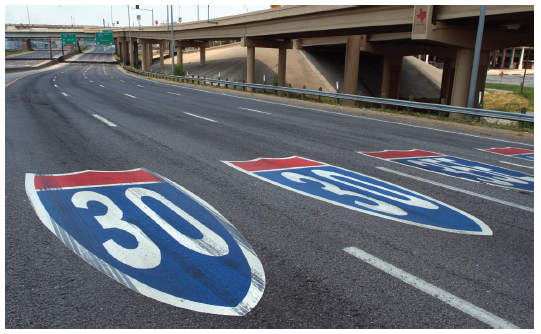
The DFW project will create four pedestrian caps in four locations. In Dallas, Interstate 30’s pedestrian cap project will get $20 million from the award. Downtown Dallas’ Klyde Warren Park will also receive $20 million for its pedestrian connection project. In Dallas’ Oak Cliff neighborhood, Southern Gateway Park was awarded $25 million, and State Highway 5 in McKinney received $15 million.
The I-30 project in Dallas includes installing support structures for three pedestrian caps for parks, which will be constructed in phases across the highway. They will be south of the Dallas Farmers Market and north of Old City Park.
The Klyde Warren Park development will extend an existing pedestrian deck park, creating additional space between Pearl and Akard streets. Once completed, the space will include a pavilion, open-air market, a festival staging area, indoor and outdoor entertainment areas, public green space and access to multimodal transportation options.
The Southern Gateway Park project will expand its current deck park located from South Ewing Avenue to South Marsalis Avenue. The expanded park deck will cover more than 5 acres over Interstate 35 East. The space will have a festival stage area, a pavilion, multi-use and open green space, interactive water features, a bicycle and pedestrian bridge with direct access to the Dallas Zoo and access to multimodal transportation.
A below-bridge pedestrian plaza that gives pedestrians access to both sides of SH 5 is planned for the McKinney project. This plaza includes a safe bicycle and pedestrian connection between Historic Downtown McKinney and East McKinney and connects Downtown McKinney to its future city hall.
(Photo courtesy of FHWA.)
| |
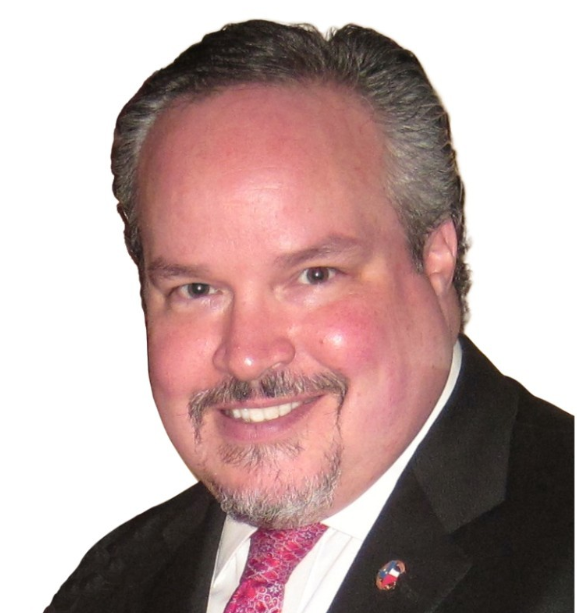
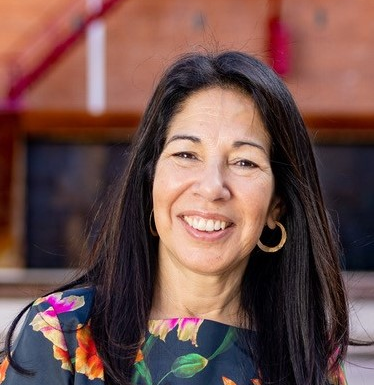
Gov. Greg Abbott has reappointed Leo Vasquez and appointed Cindy Conroy to the Texas Department of Housing and Community Affairs (TDHCA). Vasquez’s term will expire Jan. 31, 2029. Conroy’s will end Jan. 31, 2027.
TDHCA leads the state’s efforts to promote and preserve homeownership. This includes financing the development of affordable rental housing, and supporting community and energy assistance programs.
| |
Vasquez has worked with TDHCA since 2017 and was promoted to chairman of the board in 2020. He has served on numerous boards, including the U.S. Global Leadership Coalition’s Texas Advisory board and the Texas Policy Lab at Rice University.
Vasquez is a corporate finance and C-level business management consultant who previously served as the Harris County tax assessor-collector and voter registrar and chairman of the Texas Commission of Licensing and Regulation. He has also been the two-time gubernatorial appointee to the Texas Board of Criminal Justice.
| |
Conroy is currently director of community outreach and aide to the chairman of WestStar Bank in El Paso. She also is a board member of El Paso Matters, Pioneer Association of El Paso County, Customer Advisory Partnership of El Paso Electric and the State Bar of Texas Advertising Review Committee.
Abbott appointed Conroy to the Governor’s Commission for Women in 2020 and has reappointed her twice since then. Conroy has also been the president of El Paso Executive Forum and board member of Leadership Women. She brings 24 years of experience to the role.
|  | |
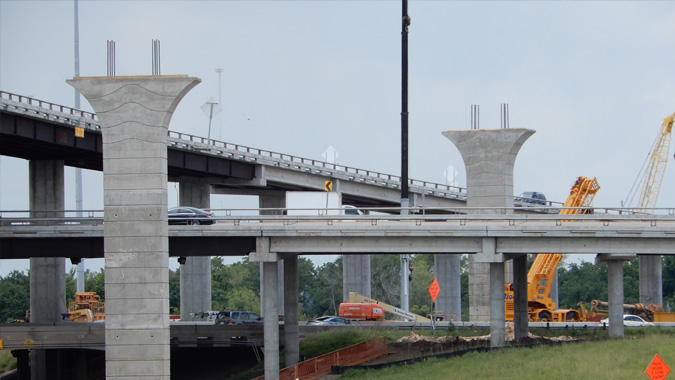
The Texas Transportation Commission has given the Texas Department of Transportation (TxDOT) permission to terminate a contract with a private company overseeing the Texas 288 Toll Lanes. The Commission will also create a nonprofit corporation to take over tollway operations and management.
Approval is the first step for TxDOT leaders to return control of the lanes to the state. Blue Ridge Transportation Group signed a contract in 2016 with TxDOT to build and maintain a tollway within Harris County. Commission approval will allow TxDOT to pay back the company $1.7 billion to assume custody of the lanes.
As of now, no further action has been taken on terminating the contract. While approval does not guarantee termination, the Texas Transportation Commission determined that “pursuing termination . . . is in the best interest of the department.” There is no timeline for when TxDOT will announce a final decision.
The Texas 288 Toll Lane was one of several public-private partnership (P3) development agreements Texas officials signed. It is the only P3 agreement of its kind in the Houston area. If TxDOT proceeds with extricating itself from the deal, commuters could potentially see lower toll prices going forward.
(Photo courtesy of Drive288 website.)
| |
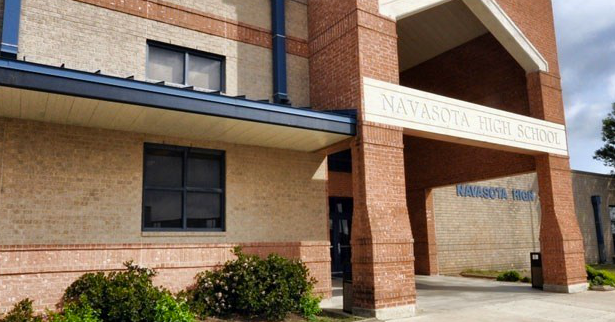
Voters in the Navasota Independent School District (NISD) will weigh in on a $74 million bond to build a school, expand and update facilities, enhance safety and prepare for future growth. Early voting will take place between April 22 and April 30. Election day is on May 4.
Proposition A would allocate $71 million to build an elementary school and to expand facilities districtwide. Plans include expanding cafeterias across multiple campuses, a dance facility at Navasota High School and a gym at High Point Elementary School.
The district would replace the roofs and ceiling grids at two schools, two gyms and a bus barn. NISD would replace and upgrade the HVAC systems at Webb and High Point elementary schools. In addition, the district would replace and upgrade classroom and hallway lighting, carpet, tile and whiteboards.
NISD would add security vestibules to increase safety across several school campuses. The district would also extend and widen the drop-off and pick-up driveway at High Point Elementary School. Plans include updating and replacing the playgrounds at High Point Elementary, Brule and Webb elementary schools.
(Photo courtesy of Navasota Independent High School.)
| |
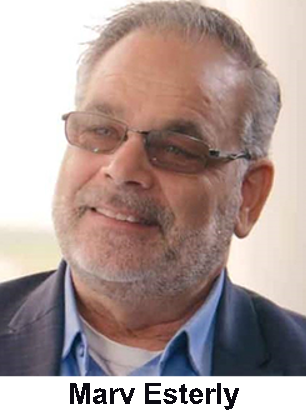
Marv Esterly
Aviation Director
Valley International Airport, Harlingen, Texas
| |
Public career highlights and education: My career in public service has been deeply rooted in the aviation industry, focusing on enhancing the efficiency, safety, and accessibility of air travel for the public. Now serving as the director of aviation at Valley International Airport, I have had the privilege of leading numerous initiatives aimed at expanding the airport's capabilities and services, thereby fostering regional growth and connectivity in the Rio Grande Valley. My educational background and work experience in aviation has been the cornerstone of my career, enabling me to blend practical knowledge with industry best practices to navigate the complexities of airport operations and development.
What I like best about my public service: The most rewarding aspect of public service, in my view, is the ability to make a tangible difference in the community. Whether it's improving airport facilities, introducing new routes, or working on sustainability initiatives, the impact of these efforts on enhancing the public's travel experience and supporting local development is profoundly gratifying.
The best advice I’ve received: Throughout my career in aviation and public service, I have been fortunate to receive numerous pieces of advice that have profoundly influenced my professional journey. However, one piece of advice that has consistently guided my approach and decision-making process is, "Don't come with problems, but with solutions to the problem." Applying this principle has led me to encourage my team to adopt a solution-oriented mindset. By doing so, we have been able to foster an environment where challenges are met with creativity and resilience, leading to more efficient, effective, and collaborative outcomes.
People might be interested to know that: I have spent much of my leisure time addicted to motorcycle racing, from Motocross to the Road Racing circuit. My passion for motorcycle racing has significantly enriched my career in aviation management, instilling in me critical skills such as quick decision-making under pressure, advanced risk assessment, and a keen focus on detail. This unique blend of determination, stress management and a continuous drive for excellence has not only influenced my approach to leadership but also enhanced operational efficiency and safety standards, proving that diverse passions can powerfully contribute to professional success.
One thing I wish more people knew about aviation management is: I wish more people understood the extensive collaboration and planning involved in aviation management. It's not just about planes and runways; it's about creating a seamless, safe, and enjoyable travel experience that requires the dedication of countless professionals working behind the scenes in concert with local, state and federal entities.
| |
Most states and territories have taken the necessary steps to receive federal funds designed to provide high-speed internet access nationwide. The funds – more than $42.45 billion – come from the Broadband, Equity, Access and Deployment (BEAD) program.
States and territories are required to create an initial proposal for how each will use their share of the funds. The initial proposal is broken down into two volumes, both of which must receive approval from the National Telecommunications and Information Administration (NTIA) before eligible entities can begin their final proposal.
Initial proposals identify areas that most need affordable broadband and detail a five-year plan for use of the funds. The NTIA will distribute funds, which come from the Bipartisan Infrastructure Law (BIL).
As of last month, all states have submitted both volumes for approval, and some are already working on the challenge process, which allows governments, nonprofits and service providers to challenge the eligibility of BEAD funding candidates. According to the BEAD progress tracker, 32 eligible entities are waiting for volume II approval, and 23 eligible entities are waiting for both volume I and II approval.
Louisiana has been a leader in the process, becoming the first state to receive approval on their Internet for All Plan and start the timer on their one-year deadline to develop a final proposal that will show how they awarded funds to sub-projects.
“As of today, the state of Louisiana is on the shot clock to allocate our funding to all of the different eligible entities over the next eight months or so,” Thomas Tyler, the deputy director of ConnectLA, said on “The Connection: Partnering Private and Public Entities,” a companion podcast of Government Market News. “We are quickly moving into the preliminary start of our grant round.”
To hear more about Louisiana’s approach to ensuring broadband access and allocating federal grants, listen to Episode 7 of The Connection.
(Photo courtesy of Kabiur Rahman Riyad on Unsplash.)
| |
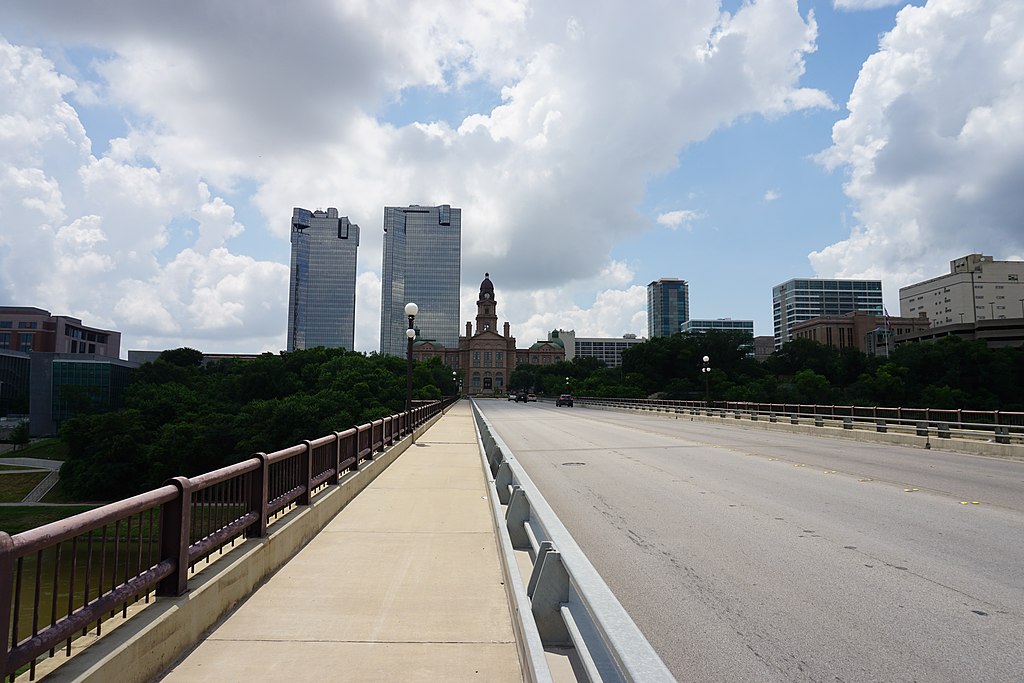
The city of Fort Worth will improve two roads to increase safety for pedestrians and bikes, enhance drainage and widen streets. The projects have a combined estimated cost of $56.3 million. Both are in the design phase, and the city estimates to finish the projects by 2026.
Fort Worth will use $29 million to build a concrete divide on the four-lane West Bailey Boswell Road. The city will widen the 1.8-mile stretch of road with a 16-foot raised median. In addition, plans include building 10-foot shared-use paths on the street’s east and west sides and additional shared-use paths on the road’s north and south sides.
In addition to expanding the road, the city will update traffic signals at five intersections. The project calls for turn lanes, continuous street lighting in the median and curb-ramps to improve accessibility. Finally, the city will improve flood drainage by building curbs and gutters along two adjoining streets. Construction is expected to begin in winter 2025.
The city will spend $27.3 million to reconstruct and widen WJ Boaz Road to a four-lane road. Fort Worth will build 10-foot multi-use trails for bikes and pedestrians on the roadway’s north and south sides. While working on the southside trail, the city will make exceptions and build approximately 6-foot sidewalks in designated sections to minimize impacts to property owners.
Fort Worth will improve drainage by eliminating roadside ditches, improving channels and installing culverts along the road. Plans include modifying traffic signals and installing LED streetlights. The design will prioritize preserving trees wherever possible and reduce overall impact to existing homes and parking areas.
City officials have not yet announced a construction start date for the WJ Boaz Road project. The date is contingent upon the city completing two other road projects.
(Photo courtesy of Michael Barera.)
|  | |
The Department of the Interior is making $320 million available to fund projects to help Tribal households and communities gain reliable access to clean drinking water.
The Inflation Reduction Act funds will be distributed through the Bureau of Reclamation to assist federally recognized tribes and tribal organizations with planning and building domestic water infrastructure.
Click here to learn more about the funding opportunity
(Photo courtesy of Andres Siimon on Unsplash.)
| |  |
 | |
The state of Texas officially launched the Texas Space Commission on March 26, 2024, to pioneer the state’s growth in space exploration, development and manufacturing. Gov. Abbott appointed the inaugural members of the Texas Space Commission Board of Director and the Texas Aerospace Research and Space Economy Consortium (TARSEC) Executive Committee the same day.
The commission will empower Texas companies to contribute to innovation in space exploration and commercial aerospace opportunities. It will prioritize integrating space, aeronautics and aviation industries into the Texas economy. It will also administer the Space Exploration and Aeronautics Research Fund, providing grants to eligible entities.
TARSEC will strengthen Texas’ position as a global leader in space travel. The agency will identify research opportunities for Texas’ civil, commercial and military aerospace activity. In addition, TARSEC will advance aeronautics research and development, astronautics, space commercialization and space flight infrastructure. Finally, TARSEC will further integrate the space, aeronautics, astronautics and aviation industries into the Texas economy.
The Texas Space Commission Board of Directors is comprised of nine appointed members:
- Gwen Griffin of Houston.
- Kathy Lueders of Brownsville.
- John Shannon of Houston.
- Sarah Duggleby.
- Kirk Shireman of Pearland.
- Evan Loomis of Austin.
- Heather Wilson, Ph.D., of El Paso.
- Nancy Currie-Gregg, Ph.D., of College Station.
- Brad Morrison.
TARSEC is also comprised of nine appointed members, including representatives from Texas’ higher education institutions:
- Stephanie Murphy of Seabrook.
- Matt Ondler of Houston.
- Bill Weber of Austin.
- Jack Fischer of Houston.
- Briad Freedman of Friendswood.
- Shey Sabripour.
- Robert Ambrose, Ph.D. of Texas A&M University.
- Daniel T. Jaffe, Ph.D. of The University of Texas.
- David Alexander, Ph.D. of Rice University.
(Photo courtesy of NASA on Unsplash.)
|  | |
Ghizlane Badawi has been appointed chief executive officer of Austin-Bergstrom International Airport (AUS). Badawi has served as interim CEO since January 2024.
The decision followed a year-long search to replace Jacqueline Yaft, who resigned as CEO in March 2023. Jim Smith was named interim CEO after Yaft resigned and left the position in January.
Badawi has been with AUS for 16 years and has held critical roles in the airport’s operations, including chief operation officer (COO), chief experience and performance officer and deputy CEO.
The CEO transition comes as the airport undertakes a multibillion-dollar expansion program consisting of more than 60 projects. Some of the projects are already underway, including work on a $165 million Barbara Jordan Terminal project to add three gates. Other notable upcoming projects include a $1.1 billion concourse and connecting tunnel system, a $160 million central utility plant and a $250 million for an airport facility. AUST will consider moving these projects into the design and construction phases starting April.
|  | |
Gwendolyn Tillotson-Bell has been appointed as the city of Houston’s next chief economic development officer (CEDO). Mayor John Whitmire announced the appointment March 26, noting Tillotson-Bell’s performance as an economic development leader. She replaced Andy Icken, who retired in early March after 18 years of service.
Tillotson-Bell has worked with the city of Houston for the past 17 years, 11 of which as deputy director for the Mayor’s Office of Economic Development. As CEDO, she is responsible for overseeing the city's economic growth, administration and recruiting businesses and investors.
During her 11 years working in the Office of Economic Development, Tillotson-Bell has contributed to the city’s growth and development. Some of her most notable development projects include the East River, Energy Corridor, Meow Wolf and City Park Workforce Housing Development.
Tillotson-Bell will lead the Office of Economic Development as it undergoes changes to its core function, collaborative partners and priorities. Under her leadership, the office will enact policies and developments designed to strengthen the city’s economic presence and better utilize existing resources.
|  | |
The Terrell Economic Development Corporation (TEDC) has appointed Carlton Tidwell president. He replaced former President Ray Dunlap following his retirement effective Jan. 12, 2024. As president, Tidwell will support the city of Terrell by promoting economic growth, fostering business development and enhancing the vitality and strength of the community at large.
"The Terrell Economic Development Corporation is confident that Carlton Tidwell's leadership will propel the organization to new heights, driving economic growth and enhancing the quality of life in Terrell,” TEDC Board Chairman Bruce Wood said. “His appointment marks the beginning of an exciting new chapter for the TEDC and the community it serves."
Tidwell has been a part of the Terrell community for 14 years, originally joining the Terrell Chamber of Commerce (TCOC) as vice president. He rose to president and chief executive officer (CEO) in 2016. Since arriving in Terrell, Tidwell has proven to be a driving force for the city’s economic development, innovation and business strategy.
Tidwell graduated with a bachelor's degree in business administration from Abilene Christian University. He has also graduated from the U.S. Chamber of Commerce Institute of Management Since then, he has spent two decades honing his business and leadership skills in the private sector and several prestigious economic development organizations.
| |
The Environmental Protection Agency (EPA) has released $20 billion in grants that will support projects that reduce greenhouse gases and air pollution.
The grants went to eight nonprofits and coalitions, who will distribute the awards to tens of thousands of projects that focus on delivering clean energy and furthering environmental justice.
Click here to learn about the projects receiving grants
(Photo courtesy of Marcin Jozwiak on Unsplash.)
| |
Austin city officials have unanimously approved T.C. Broadnax as city manager. He will begin his tenure May 6.
Broadnax, who announced his resignation as the Dallas city manager earlier this year, said he looked forward to serving in Austin.
Click here for more information about Austin’s next city manager
|  | |
Gov. Greg Abbott announced these appointments and reappointments from March 20 through April 4:
Family Practice Residency Advisory Committee
Zoey Wang - Houston (reappointed)
Board Of Pilot Commissioners For Harris County Ports
Bruce Oakley - Houston (reappointed)
Humanities Texas
(all reappointed)
Stacey Neal Combest - Huntsville
Elizabeth Johnson - Harlingen
Ellen K. Ramsey - Permian Basin
Education Commission Of The States
Representative Brad Buckley, D.V.M., - Salado
Senator Brandon Creighton - Conroe
Nursing Facility Administrators Advisory Committee
Carla Smith - Midland
Donna Stauber, Ph.D., - China Spring
Audrey Ramsbacher - San Antonio
Amanda Burnett - Bastrop (reappointed)
Texas Medical Board District Three Review Committee
(all reappointed)
Ogechika “Oge” Alozie, M.D., - El Paso
Taylor Gillig - Bedford
Gabrielle Rich, D.O., - Big Spring
Jobs And Education For Texans Grant Program Advisory Board
Robert Uhl - Farmers Branch
Texas Department Of Housing And Community Affairs
Cindy Conroy - El Paso
Leo Vasquez - Houston (reappointed)
State Board For Educator Certification
Bobbie Lynn Weir - Dallas
Texas County And District Retirement System Board Of Trustees
Ronald “Ronnie” Keister - Lubbock
(both reappointed)
Susan Fletcher - Frisco
Mary Louise Nicholson - Fort Worth
Texas Veterans Commission
Charles “Chuck” Wright - Frisco
Laura Koerner - Fair Oaks Ranch (reappointed)
Statewide Health Coordinating Council
David Lewis - Austin
Texas Public Finance Authority
Jay Riskind - Austin (reappointed)
Board Of Pilot Commissioners For Galveston County Ports
Jason Keeling - Hitchcock
Elizabeth Cross - Tiki Island
(both reappointed)
Arden “Trey” Hill, III - Friendswood
Terrilyn Tarlton-Shannon - Galveston
Specialty Courts Advisory Council
(all reappointed)
Jarvis Anderson - San Antonio
Elizabeth Rainey - Midland
Angela Tucker - McKinney
|  | |
Texas Government Insider is a free weekly newsletter detailing important happenings throughout the state and summarizing current political issues relevant to individuals interested in government.
Publisher: Mary Scott Nabers
Editors:
Adam Rollins
Dave Doolittle
| |