|
A federal program with a long name is in the process of allocating $5 billion to states for the installation of electric vehicle charging stations. The National Electric Vehicle Infrastructure Program (NEVI), administered by the Federal Highway Administration, is creating hundreds of contracting opportunities. The funding comes from the $1.2 trillion Bipartisan Infrastructure Bill passed by Congress, and it is available to every state.
Here’s how the program works - a local host and an EV charging station installer partner to apply jointly and request funding for EV charging projects in specific locations. The site host owns, operates and maintains the charging equipment. The private sector installer is solely responsible for installing the equipment and ensuring it operates correctly. The site host benefits from the acquisition of a profitable EV fueling station, which attracts customers and motorists, while the installer benefits from the value of the installation contract. Motorists with electric vehicles will soon find charging stations much more available.
Installers usually conduct work on multiple sites and one installer of EV charging infrastructure in Ohio recently received more than $80 million for equipment installations at about a dozen sites. States are on different timelines for awarding this type of funding but almost every state has funding to allocate through 2026.
There are strict guidelines for officials as to how the funding is allocated. Each state must build out or designate Alternative Fuel Corridors (AFCs). This network will be the priority for funding because it represents roadways where EV charging needs will be the greatest. According to federal guidelines, the corridors must have charging stations at least every 50 miles along the designated routes. Additionally, each station must provide at least four fast chargers capable of simultaneously charging four EVs at 150 kW. Once the prioritized routes have been served, the funding will be available for other locations.
Texas is the largest NEVI state, with a total of $407 million in funding to build out 3,615 miles of EV charging corridors. Texans were responsible for somewhat staggering numbers of electric vehicle purchases in recent years. In five years, electric vehicle registrations in the state rose from 18,000 to 105,000. However, the installations along the state’s Alternative Fuel Corridors are emerging somewhat slower than expected. The Dallas and Houston areas have more EV charging infrastructure than other areas, but the Texas Department of Transportation recently targeted other areas for first-round funding awards. The city of Round Rock will begin the planning phase in July, backed by over $86 million in funds for 2024. West and South Texas cities were also granted funding, and it appears that communities in designated county seat locations will soon seek private sector partners to install EV charging stations.
Click here for more
| |
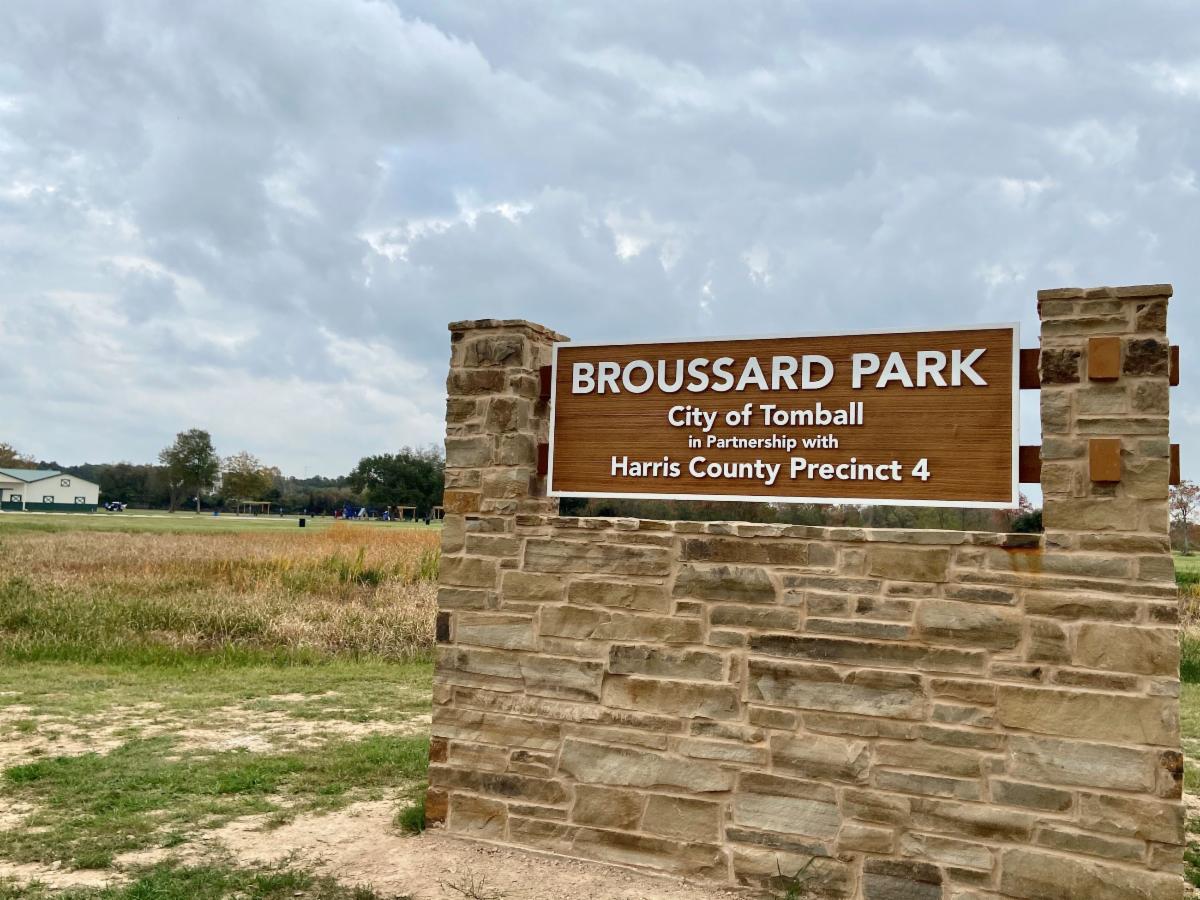
The Houston-area city of Tomball is pursuing a combined $108 million in parks, recreational and trails projects that would acquire property and revitalize existing recreational sites.
Recently adopted by city council, Tomball’s Parks, Recreation and Trails System Master Plan offers a host of recommendations for improving and expanding green spaces. It will serve as a guiding document over the next 10 to 15 years. The plan will help develop a comprehensive and connected system of parks, recreation facilities and trails.
The master plan prioritizes enhancing the downtown experience, festivals, parks, open spaces, recreation and trails for residents and visitors. A fully realized plan would help improve the community’s quality of life with a city-wide trail system that would ensure anyone can reach a park within a 10-minute walk. The plan also calls for exploring opportunities to expand Tomball’s park system.
Currently, Tomball owns 59 acres of greenspace with amenities, equating to approximately 4.9 acres per 1,000 residents. That’s less than half of the national average, according to the plan. Potential funding sources for projects include public-private partnerships, local government funds, grants, park fees and issuing bonds.
The city’s recreation blueprint includes $63.9 million for recommended projects – including $48.7 million to acquire park property on the south side of Holderrieth Road. Tomball would also spend $10.4 million on options north of the Wayne Stovall Sports Complex and another $4.8 million to buy park property on the city’s west side.
The plan includes $41.7 million to support revitalization projects, including a combined $28.9 million for work on Juergens, Broussard and Depot Plaza parks. The city would spend $12.7 million to revitalize the Wayne Stovall Sports Complex. Recommendations include improving lighting, enhancing pedestrian crossings, implementing ADA-accessible walkways, adding inclusive play equipment and renovating restrooms.
The city would also spend a combined $2.5 million to enhance Martin Luther King Jr. and Jerry Matheson parks and upgrade the Theis Attaway Nature Center.
(Photo courtesy of the city of Tomball.)
| |
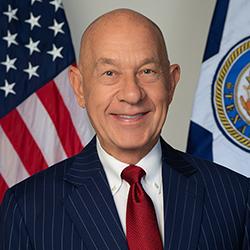
The Houston Housing Authority (HHA) is now operating with an almost entirely new set of board of commissioners after Houston Mayor John Whitmire replaced five members. The HHA provides quality, affordable housing options, promotes education and prioritizes economic self-sufficiency for Houston residents.
Mayor Whitmire, who took office at the start of 2024 after four decades in the Texas Senate, made the move after HHA President and CEO David Northern Sr. informed him in a Feb. 14 letter that the agency was over budget. The HHA immediately stopped issuing vouchers that typically support the housing needs of veterans, persons with disabilities and the homeless.
“Some of HHA’s recent missteps are unacceptable, including a recent decision to approve more than ten affordable housing deals (PFCs) with developers,” Mayor Whitmire said in a release. The HHA changes are a part of the mayor’s plan to increase affordable housing options and make Houston the nation’s most affordable big city. “The HHA is moving in the opposite direction, so I am making immediate changes.”
The new commissioners are:
- Joseph “Jody” Proler, whose term expires Jan. 31, 2026.
- Kenneth C. Li, whose term expires Jan. 31, 2026.
- Alton Smith, whose term expires Jan. 31, 2026.
- Cynthia Aceves-Lewis, whose term expires Jan. 31, 2025.
- Darryl Wilson, whose term expires Jan. 31, 2026.
The mayor also reappointed Stephanie A. G. Ballard and Kristy Kirkendoll, with both terms expiring Jan. 31, 2025. Mayoral appointments took effect immediately and do not require City Council approval.
The HHA’s services support more than 60,000 low-income Houstonians, including more than 17,000 families housed through the Housing Choice Voucher Program. Approximately 4,200 of those families live in 19 public housing and tax credit developments. An additional 716 live in project-based voucher developments around the city.
(Photo: Houston Mayor John Whitmire.)
|  | |
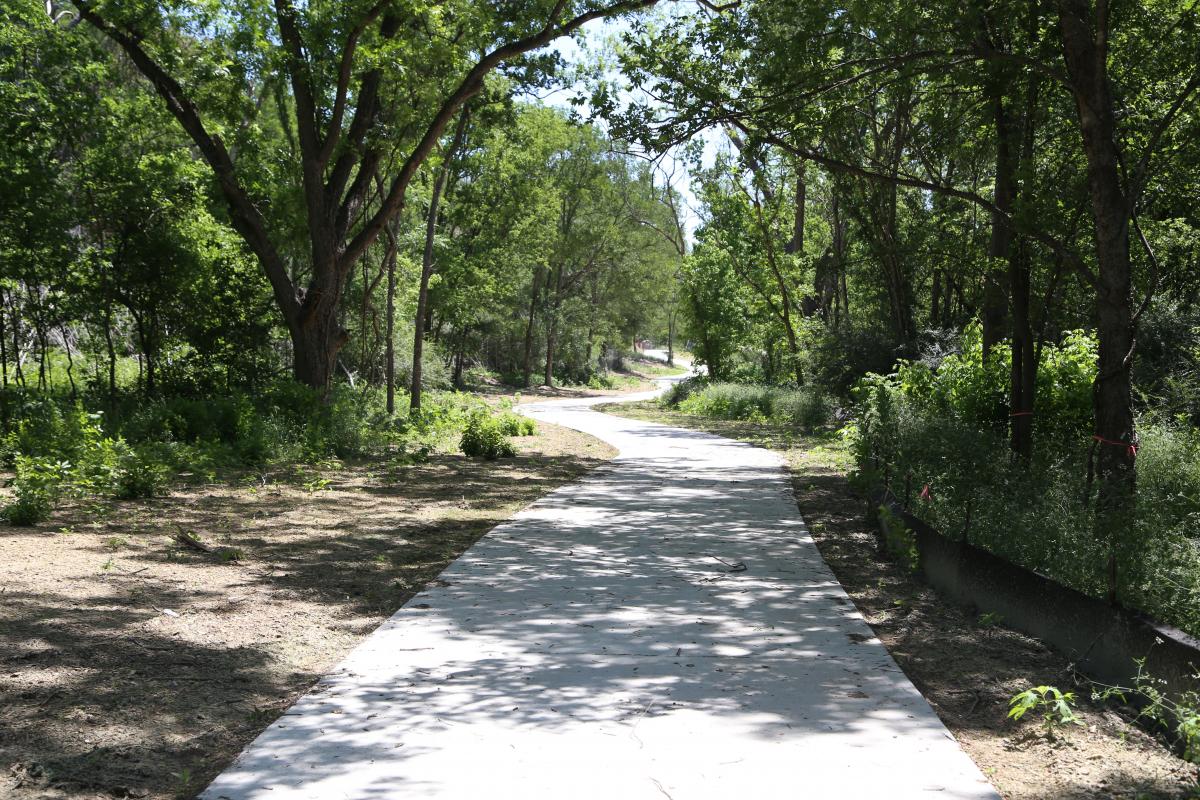
Austin may receive up to $25 million to transform a stretch of abandoned urban railway into a 6.5-mile trail system. The Bergstrom Spur Trail Network would connect parks, neighborhoods and establish pedestrian and bike connectivity in a recreationally underserved area of South Austin. The city applied for funds from the U.S. Department of Transportation’s Rebuilding American Infrastructure with Sustainability and Equity (RAISE) grant program.
The trail is planned in a high-density, low-income and park-deficient area, according to city officials. Currently in the design phase, federal funding would allow construction to “begin promptly” if federal support is received.
In addition to potentially extending to Austin-Bergstrom International Airport, the trail would provide safe east-west pedestrian and bike connectivity where none currently exists. It would also add key transit connections, including the South Congress Transit Center, 11 existing Capital Metro Local bus routes, a future Capital Metro Rapid bus route and the upcoming Project Connect Light Rail line on Riverside Drive.
Individual awards can tap the program up to $25 million, Austin will contribute $6.25 million in city funds drawn from the Urban Trails fund sourced by a $460 million 2020 Mobility Bond approved by voters. Completion of the project “will provide more ways for people in a historically underserved area to safely access transit, schools, employment centers, and other key destinations,” according to the city.
Backed by the Bipartisan Infrastructure Law (BIL), the RAISE discretionary grant program will provide $1.5 billion annually –split exactly between urban and rural areas– for Fiscal Years 2024-26. Designed to support the completion of critical freight and passenger transportation infrastructure, RAISE supported 162 projects nationwide, in addition to Puerto Rico and the Northern Mariana Islands. Awardees for the latest round of funding will be announced no later than June 27.
National projects that have received RAISE grants include New Orleans’ downtown transit center, reconstructing South Dakota’s Route 6 on the Standing Rock Indian Reservation and redeveloping a 2.5-mile stretch of road to reconnect historic neighborhoods in Birmingham, Alabama.
(Photo courtesy of the city of Austin.)
| |
Kevin Ward
General Manager
Trinity River Authority
| |
Public career highlights and education: I have a Bachelor of Administration in Accounting from the University of Texas at Austin. I spent 23 years at the Texas Water Development Board (TWDB), leading the implementation of both the Clean and Drinking Water State Revolving Funds and helping to write most of the water finance legislation for the Board through 2011. I was TWDB’s executive administrator for nine years from May 2002 to February 2011 when I left to become the general manager of the Trinity River Authority.
What I like best about my public service: I most like working with teams of multiple disciplines toward a common outcome that provides widespread public benefit. It may sound corny, but watching young leaders develop as they pitch in to help in a grander effort really makes me feel like government can work now and carry on in the future. Providing clean water and removing pathogens and other harmful substances from wastewater is an essential service that continues to move to higher technologies and biological processes.
The best advice I’ve received: Passed on from some of the great appointees I have served under: “Go with your gut.” Another is: “You may be able to get a project outcome to be more perfect, but sometimes you need to leave it at ‘good enough’ in order to devote time to the next major project that isn’t there yet. That way you get many things done right instead of a few done to perfection.”
People might be interested to know: I rode and cared for several horses at a time for nearly 27 years. I came from a cattle ranching family in Oklahoma and poor sharecroppers and tobacco farmers in South Carolina and now I have a cattle ranch.
One thing I wish more people knew about the Trinity River Authority: We care for the environment and the truth about the impacts that we have on the earth just as much or more than any other sector or advocacy group, putting more money into maintaining or restoring the environment than the public generally knows, focusing on it every day in all of what we do. I want people to understand that the water and wastewater industry is not just about pipes and treatment plants – it's about safeguarding public health, preserving the environment and supporting sustainable development. Greater awareness of the importance of this industry can lead to increased support for infrastructure investment, technological innovation and responsible water management practices.
|  | |
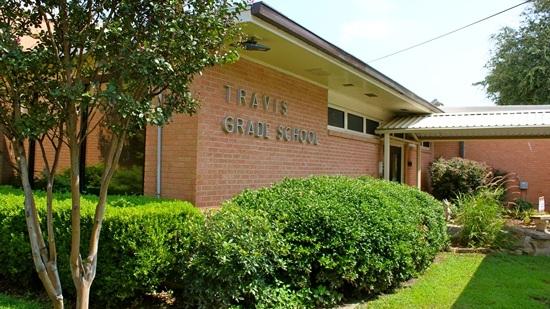
Sulphur Springs Independent School District (SSISD) officials are asking voters to approve a $157.1 million bond measure to build and renovate elementary schools. The measure is needed to accommodate enrollment growth, with some campuses having to transform closets into classrooms to accommodate students, SSISD officials said. Early voting runs from April 22 to April 30, with election day May 4.
Voter approval would allocate $138.6 million to build two elementary schools. The project’s scope includes $69.9 million for building an unnamed campus on the site of the current Sulphur Springs Elementary. The district would retire Sulphur Springs Elementary alongside Johnson and Travis elementary schools. Plans also call for building Rowena Johnson Elementary School. The project would cost approximately $68.7 million. Both schools will serve students in grades K-5.
Additionally, the bond would provide a combined $17.2 million to renovate Barbara Bush and Douglass elementary schools, using $6.72 million for each campus. The district would use the remaining $3.7 million to upgrade Bowie Primary School, converting office space for special programs staff.
Plans for Douglass Elementary include updating the building’s brick and masonry, improving ADA-compliant accessibility, enhancing learning spaces and renovating the school to serve pre-kindergarten students. SSISD would renovate Barbara Bush Elementary to serve students K-5, build a playground, improve ADA-compliant accessibility and enhance learning spaces.
(Photo courtesy of Sulphur Springs ISD.)
| |
Marty Wieder has begun his tenure as executive director of the Arlington Economic Development Corporation (AEDC). AEDC is a nonprofit organization dedicated to creating a vibrant, globally collected and innovative community within the Arlington metro area. He officially assumed his responsibilities Feb. 19, 2024.
Wieder has a storied public and private-sector career spanning 44 years. His years of experience include working as the director of economic development for North Richland Hills Economic Development, Colleyville and most recently for Grand Prairie.
As executive director, Wieder is responsible for leading a team of economic development professionals, creating a sustainable culture to drive business to the city. He will help AEDC attract and retain community partners, businesses and workforce members to invest in and grow Arlington.
Wieder obtained both his Bachelor of Arts in Journalism/Public Relations and Master of Arts in Urban Affairs (Urban Management) from the University of Texas at Arlington. He has spent 30 years of his career in economic development, holding leadership positions in several organizations. Some of these include the International Economic Development Council, American Institute of Certified Planners and the American Planning Association.
AEDC is a new organization, founded two and a half years ago. Wieder is the second to hold the executive director position, assuming the role from Broderick Green. Green left AEDC to pursue an opportunity with the Greater Washington Partnership.
| |
Austin’s search for its next city manager has been narrowed down to three candidates, Mayor Kirk Watson said this week.
Jesús Garza has served as interim city manager since February 2023, when Spencer Cronk was fired in the wake of an ice storm that left tens of thousands of people without power.
Dallas City Manager T.C. Broadnax, Denton City Manager Sara Hensley and Brian Platt, city manager of Kansas City, Missouri, have advanced from a pool of 39 candidates, Watson said.
The application was opened in January and closed last week. Austin City Council reviewed the applications Tuesday and narrowed the pool to three, Watson said. The next step will be March 25, when the candidates will participate in meetings with city staff members.
Watson and the council will interview the three candidates at City Hall in the executive session room on March 26.
“We will ask one, two or all three candidates to return for additional discussion on April 1 and anticipate voting to direct our search firm to negotiate a contract with a specific person on April 2,” Watson said. “We will post for a vote on that day.”
| |
Broadnax has served as Dallas city manager since 2017 but resigned in February amid pressure from several representatives on the 14-member Dallas City Council. He said in his resignation letter he would serve through June 3.
Broadnax manages a city with a $4.6 billion budget, around 13,100 employees, and more than 40 departments. He’s the city’s highest paid employee, making $423,246 a year, according to city records.
Prior to Dallas, Broadnax served as city manager of Tacoma, Washington, from 2012-2016. He moved to Tacoma from San Antonio, where he was an assistant city manager.
| |
Hensley was appointed Denton's city manager in 2022. She came to Denton in 2019 as the assistant city manager and was later promoted to deputy city manager and then interim city manager. Denton has a population of about 150,000 people, according to census data.
| |
Platt has been the city manager of Kansas City since 2020, according to the Kansas City municipal website. Kansas City has a population of more than half a million, according to 2022 census estimates. His contract with the city expires this year.
However, Platt might not be going anywhere. The Kansas City Council on Thursday authorized Mayor Lucas Quinton to negotiate a contract extension with Platt through Aug. 1, 2027. Platt has agreed to withdraw his name from the Austin search and negotiate an extension according to multiple sources
| |
An autonomous vehicle (AV) service officially entered Austin roads this week without a safety operator after months of testing. Austin is the fourth city in which the company has implemented its driverless cars.
The company started as the self-driving car project of a popular Internet search company in 2009, with the goal of developing AVs. Over the years, the project evolved and made significant advancements in self-driving technology.
Click here for more information
(Photo courtesy of Waymo.)
|  | |
Senate lawmakers have reached an agreement on a package of six funding bills that cover various government departments for fiscal year 2024. With an impending deadline approaching, both the House and Senate must approve the bills before March 9 to avoid a lapse in appropriations and potential government shutdown.
The bipartisan package encompasses six bills that include funding allocations for the departments of Agriculture, Justice, Commerce, Energy, Interior, Transportation, Housing and Urban Development, and Veterans Affairs. Congress is working on negotiations for the remaining departments budgets, with plans to vote on a second minibus by the extended March 22 deadline.
Click here for more information
(Photo courtesy of Caleb Fisher on Unsplash.)
| |  |
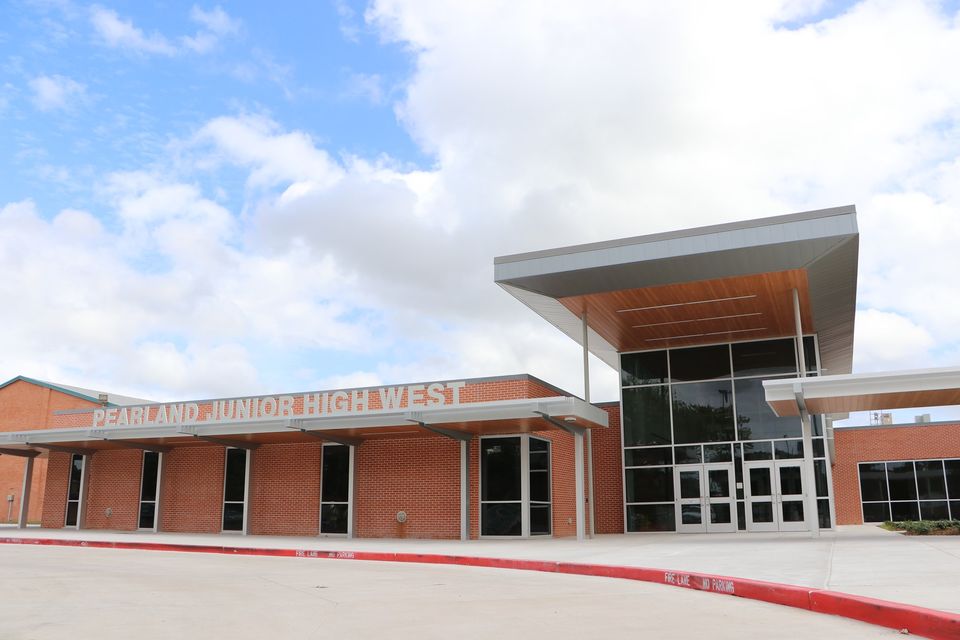 | |
Residents in the city of Pearland will vote on a $106.6 million bond to upgrade technology and improve infrastructure for Pearland Independent School District (PISD). Voting will take place May 4. Pearland is located 21 miles southeast of Houston.
Proposition A would provide $74.4 million to upgrade electrical, HVAC, plumbing, roofing, safety, parking and interior amenities districtwide. PISD would allocate the largest portion, $22.5 million, toward replacing and/or rebuilding deteriorated HVAC systems and components. The district would make improvements at several campuses, plus the district stadium and the Transportation East Facility. The systems and components include chillers, boilers, heating and domestic boilers and air handlers. The district would also replace pipe insulation across all campuses.
PISD would use $17 million to replace the roofs at Pearland Junior High (PJH) East and West, Rogers Middle School, Jamison Middle School, East Transportation, the PACE center, Shadycrest Elementary, Old ESC and the athletics buildings at Pearland High School. An additional $347,670 would go toward replacing aging roofing components. These plumbing projects would include replacing roof drain nozzles at Turner High School and PJH South, water and main lines at PJH West and installing a drainage sump for the Carleston Elementary driveway.
The district would leverage $10.9 million to improve electricity systems districtwide, increasing energy efficiency and adding security. PISD would replace old lamps with LED indoor and outdoor options, add light poles and replace deteriorated light poles. Other electricity system upgrades include wiring and extending existing generator circuits at multiple locations and replacing aging electrical components.
Other allocations would include $3.8 million to replace the parking lot at Carleston Elementary and ESC, add more parking for Challenger Elementary and repaint fire lanes districtwide. PISD would use $4 million to upgrade existing fire alarm systems across 10 campuses, rebuild elevators across four campuses, upgrade fire sprinklers districtwide and replace campus handheld radios and first responder radio coverage testing equipment.
PISD would use $3.4 million to upgrade building interiors across the entire district. The projects would include painting building interiors, upgrading sound and clock systems, refinishing and repairing gym ceilings and floors, replacing carpets and repairing slabs.
Approval for Proposition B would provide $32.2 million to cover technology expenses for the next five years. This would allow the district to replace computers on a one-to-one basis for teachers and students and upgrade classroom technology. PISD would also invest in shared computers for staff and teachers, labs, servers, storage, networking and a data center.
(Photo courtesy of Pearland Junior High West.)
|  |  | |
A technology and innovation campus in San Antonio has unveiled plans for an 11-story, $300 million office tower to accommodate growth and expand the region’s presence in advanced technology fields such as aerospace, robotics, cybersecurity and space exploration. Port San Antonio, a public entity designed to attract industries to the city, will release a request for proposals on the envisioned 295,000-square-foot tower soon. Construction will begin in 2025.
The building will include floor-to-ceiling windows, terraces on every floor and 27,000 square feet for amenities. The project’s scope calls for “spa-quality” locker rooms with saunas and amenities, including a health and wellness center, fitness classroom, dining terrace and parking garage. The structure will include private areas, LEDs and other features geared toward creating a comfortable working environment.
The futuristic office building will serve as proof of the work carried out at the Port’s existing 1,900-acre technology campus, according to San Antonio Port CEO Jim Perschbach.
The project marks the latest effort to redevelop the Kelly Air Force Base. The base was shuttered officially in 2001 following the Department of Defense’s 1995 closure order as part of its Base Realignment and Closure program.
After the based closed, San Antonio created a nonprofit port authority to redevelop the site. The port authority then built hangars, air cargo facilities, office buildings and renovated existing structures for tenants.
The office tower is one of three major projects the port announced in 2022. The other projects are currently underway. One of the projects is a specialized airport facility that will serve traditional fixed-wing aircraft, helicopters and electric vertical take-off and landing (eVTOL) vehicles. The second project is an advanced and applied research complex focusing on aerospace and infrastructure technologies.
(Photo courtesy of Port San Antonio.)
|  | 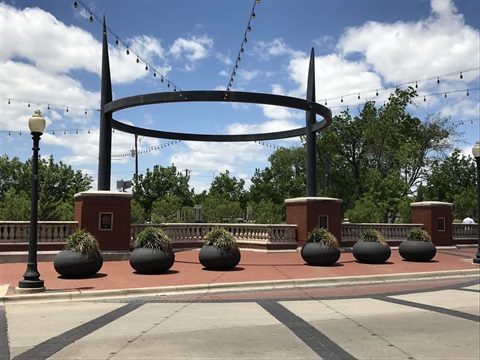 | |
The city of Fort Worth has launched a Request for Expressions of Interest (RFEI) to choose a master developer for a mixed-use redevelopment project that will bring housing and industry to the city’s historic southside. The city terminated its contract with a developer in December 2023 after numerous unacceptable delays and missed deadlines.
Developers must submit RFEI proposals by April 22, 2024. A committee of city staff, business organization and community members will review the submissions and begin interviews with finalists May 14, 2024. City officials will announce the new master developer following the interview process.
The Evans and Rosedale “urban village” is planned on 7.5-acres just south of downtown Fort Worth. Plans call for multifamily residential units, townhomes, green space, a grocery store and ground-floor commercial space with residential units above.
Over the past 30 years, the city has spent $30 million on public investments and community planning to redevelop the area. City officials have stayed steadfast in their goal: to preserve the history of the area while developing its commercial and community appeal.
Construction is planned to begin in 2025, utilizing remaining American Rescue Plan Act (ARPA) funds.
(Photo courtesy of the city of Fort Worth.)
|  |  | |
The city of New Braunfels will fund three projects worth $9.4 million that will improve storm drain systems, build sidewalks and renovate a gym. The City Council approved the economic development projects at its Feb. 26 meeting.
The biggest project approved was $7.2 million to improve the storm drain system on a major city thoroughfare. The project will take place on Coll Street between Castell Avenue and the Comal River.
New Braunfels received $700,000 to upgrade neighborhood sidewalks. The grant will cover 20% of the project’s $3.5 million cost. The city will build sidewalks and curb ramps on both sides of Common Street between South Liberty Street and Loop 337. Other plans include installing protected pedestrian crossings at major intersections.
Once completed, the sidewalks will connect neighborhoods to city parks, the New Braunfels Public Library, Lamar Elementary School and the Comal County Fairgrounds. The Alamo Area Metropolitan Planning Organization Transportation Alternatives Program will provide the remaining $2.8 million.
The New Braunfels Youth Collaborative, a local non-profit organization that provides after-school programs in the community, received $1.5 million to renovate its gymnasium. Plans include installing an HVAC unit, repairing roofs, painting, installing flooring, replacing fixtures and finishes and making upgrades to meet ADA requirements.
Once renovated, the organization can use the gym to host programs, events, sports leagues, fitness classes, dances and other events.
(Photo courtesy of the city of New Braunfels.)
| |
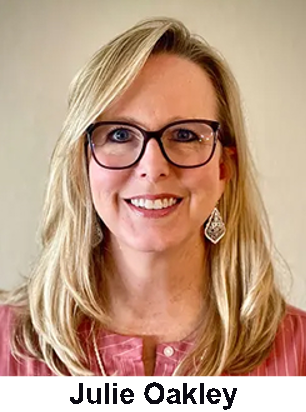
On March 5, the city of Bee Cave announced Julie Oakley as city manager. Oakley is the first woman to serve in the role. She brings 12 years of government experience, most recently serving as the city of Lakeway’s city manager since 2019. Oakley will officially replace Clint Garza on April 1.
| |
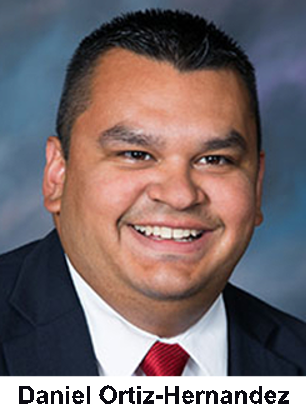
Daniel Ortiz-Hernandez has taken over the role of assistant city manager for Ennis. Ortiz-Hernandez left his previous role as city manager for Webster City, Iowa, on Jan. 18, 2024. He brings 15 years of government sector experience to the position.
| |
After serving as interim city manager for the city of Jourdanton for the past half year, Debbie Molina officially accepted the permanent role March 4. The City Council unanimously voted to offer her the position. Before serving as interim city manager, Molina was the city’s secretary. She replaced Bobby Martinez in the role.
| |
Gov. Greg Abbott announced these appointments and reappointments from March 1 through March 7:
Nueces River Authority Board Of Directors
Lisa Greenberg - Corpus Christi
James Bendele - Carrizo Springs
William Dillard - Uvalde
Eric Burnett - Portland
(all reappointed)
Marshall Davidson - Ingleside
Debra Hatch - Corpus Christi
William “Bill” Schuchman - Jourdanton
Howard “Tony” Wood - Sandia
Real Estate Research Advisory Committee
Harry Gibbs - Georgetown
Kristi Davis - Carrollton
(both reappointed)
Troy Alley - De Soto
Patrick Geddes - Celina
| |
Texas Government Insider is a free weekly newsletter detailing important happenings throughout the state and summarizing current political issues relevant to individuals interested in government.
Publisher: Mary Scott Nabers
Editors:
Adam Rollins
Dave Doolittle
| |