|
Mary’s column will be back next week!
| |
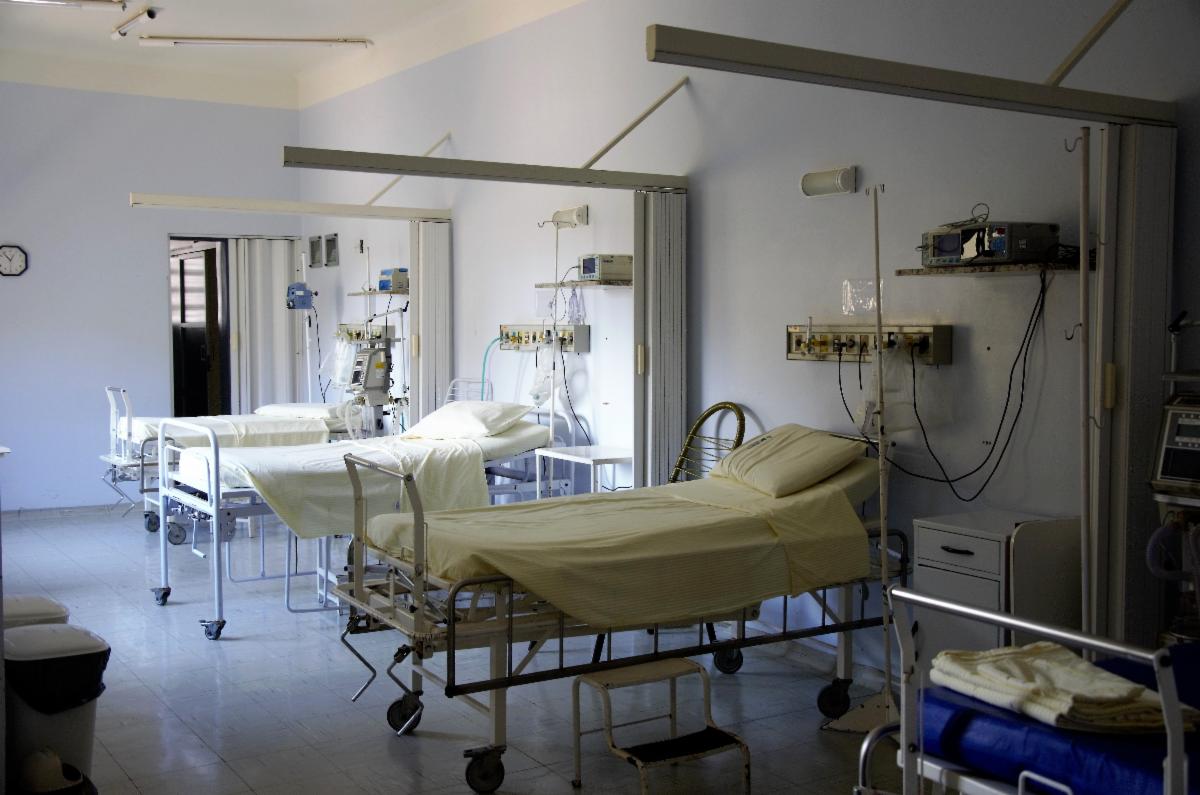
The Health and Human Services Commission (HHSC) plans to construct or significantly repair six in-patient psychiatric facilities. The new hospitals will be built to include areas for patient living, therapy and treatment, staff programs, administration and support services.
The HHSC will soon ask for interested vendors to submit their qualifications to be considered as the construction manager at risk for the replacement and construction of three hospitals. In the city of Amarillo, a new hospital will be built that will accommodated 75 patient beds. The site for this hospital is yet to be determined. The estimated construction cost for this project is $125 million. Wichita Falls has been selected for a replacement hospital with room for 200 patient beds. The facility will be constructed on the existing campus site. The estimated construction cost for this project is $325 million. The city of Terrell is the third location for a hospital rebuild. The replacement Terrell State Hospital will have room for 250 patient beds and will be constructed on the existing Terrell Hospital site. The estimated construction cost for this project is $400 million.
The HHSC is also planning to build three new secured in-patient mental health facilities. The HHSC will soon request qualifications for architecture and design services.
-
New maximum-security hospital addition at Rio Grande Center in Harlingen - The 50-bed hospital addition will be constructed at the existing Rio Grande Center site. The estimated construction cost for this project is $75-85 million.
-
New 50-bed non-maximum-security hospital in Lubbock - The new hospital in El Paso will include all the support services including a kitchen and warehouse. The site for this 50-bed hospital is yet to be finalized. The estimated construction cost for this project will be $70-80 million.
-
New non-maximum-security hospital in El Paso - The new 50-bed hospital will be constructed at the existing Lubbock State Supported Living Center site. The estimated construction cost for this project is $70-80 million.
| |
For the first time in history, the Texas A&M System will receive over a billion dollars in new funding from the state of Texas. The $1.19 billion in funding allows the A&M System to act on three priorities: keeping college affordable, keeping Texas prepared to respond to disasters and increasing a state match so Prairie View A&M University could qualify for federal funding.
The new spending overall for the A&M System includes $180.9 million for the A&M System institutions’ share of the affordability contingency, keeping tuition at current rates for the next two years. Funding of $43.1 million will support formula and research performance funding for the A&M Health Science Center. An additional $159 million will go towards “Keeping Texas Prepared” and 5% pay increases for agency employees in each of the next two years.
Another $775 million was earmarked for new initiatives, including:
- Texas A&M University System will receive $226.4 million, which includes $200 million for quantum and artificial intelligence chip fabrication; $26.4 million for the Center for Microdevices and Systems at Texas A&M Engineering Experiment Station; and $1.5 million for a mental health study.
- Texas A&M University will receive $200 million for constructing facilities adjacent to the Johnson Space Center and $25 million for the Virtual Production Institute in College Station and Texas A&M-Fort Worth.
- Prairie View A&M University will receive $15 million for the Ag Match so the university can qualify for federal funding.
- Texas A&M University Health Science Center, including $15 million for Texas A&M Care Rural Health Care Initiative and $25 million for an education and research facility at the Higher Education Center in Hidalgo County.
- Texas A&M AgriLife Research, including $25 million for Research Capability and $15 million for tornado damage at the Vernon Research and Extension Center and the Texas A&M AgriLife Foundation and Seed facility.
- Texas A&M Engineering Experiment Station, including $30 million for a new Hypersonic Wind Tunnel and $5 million for the ongoing NASA Aerospace Scholars Program.
- Texas A&M Forest Service will receive $2.5 million for aviation support costs, including fire retardant, $146.1 million for reimbursement for response to natural disasters and $2.1 million for vehicles.
- Texas Division of Emergency Management will receive $13.3 million for vehicles.
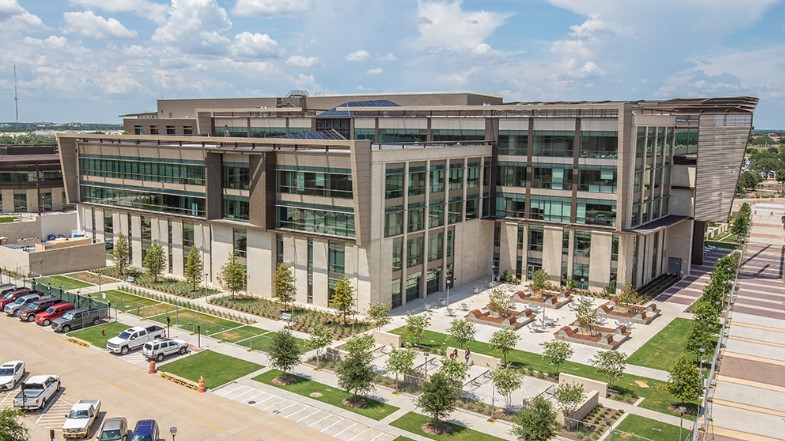
(Photo: Courtesy of Texas A&M Engineering.)
| |
The next phase of work on Interstate 35 in Waco could begin sooner than expected. Finishing touches are underway on the four-year, $350 million I-35 project from North Loop 340 to 12th Street. With a recent request by Texas Department of Transportation (TxDOT), a $263 million phase to extend reconstruction and widen the interstate to South Loop 340 could begin soon after phase one is complete.
TxDOT has requested Waco reclassify phase two from a long-term priority to a short-term priority. Making the change allows funding to be secured as early as September, with construction expected to start in the second half of 2024. The Waco Metropolitan Planning Organization (MPO) is now seeking input from the public on the changes at their upcoming meeting on Sept. 21.
The rebuild of I-35 between North and South Loop 340 initially was proposed as a single project but was split into two phases in 2017 due to available funding limits. Money would come from three sources: $64 million from MPO-directed state money known as Category 2 funds, $67 million from Category 4 funds meant for statewide connectivity projects and $131 million from TxDOT Commission-directed Category 12 funds.
The second phase of the project will closely resemble the first, according to officials. I-35 from South Loop 340 to 12th Street will be widened from six to eight lanes. Improvements will also be made to entrance and exit ramps and bike and pedestrian paths. Updates to the quality of the roadway would also be included in phase two. Construction could be completed within two years from the start of construction.
| |
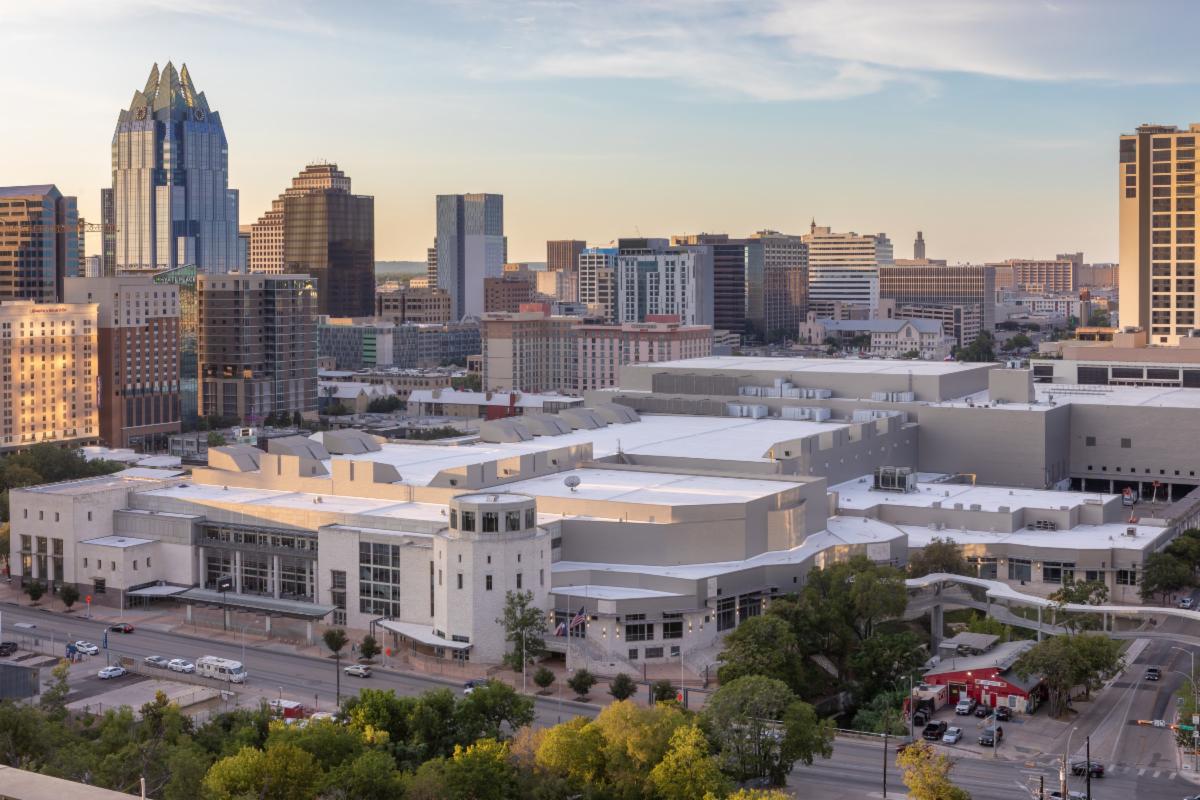
The city of Austin is taking steps to proceed with the redevelopment of the Austin Convention Center (ACC). The project, with a budget of $1 billion, will involve the demolition and reconstruction of the existing center to significantly increase its rentable square footage. The current convention center has nearly 376,000 square feet of rentable space. Expansion plans will nearly double that. The new design aims to seamlessly integrate the building's exterior into the surrounding Palm District in downtown's southeast corner.
The city is ready to move forward to find professional consulting services during pre-construction and construction management services for the redevelopment. The new convention facility could include an underground exhibition hall spanning the entire property, topped by four stories of above-ground space split between two buildings.
Other features include:
- 709,000 square feet of exhibition halls, meeting rooms and ballrooms.
- New retail and community artistic space.
- New outdoor green space along Red River Street for public events.
- The reopening of Second and Third streets to multimodal traffic through the property.
Two related projects may also be integrated into the Convention Center's design and redevelopment. These include the construction of a new chilled water plant for Austin Energy. This plant is located beneath Red River Street and is accessed via the circulation pathway to the new facility’s loading docks. The second project is a below-grade structure for public-private partnership (P3) development. This portion of the ACC site is bounded by 2nd Street to the north, Trinity to the west, Cesar Chavez to the south, and Red River Street to the east.
Estimated dates for the development include the building closure, demolition and construction to start in 2025, with a completion date of December 2028.
(Photo: Austin Convention Center. Courtesy of the city of Austin.)
| |
Following months of preparation, the Celina City Council recently got a look at a proposed final master plan for a new 100-acre Wilson Creek Park.
Costs to construct the park, at the corner of Sunset Boulevard and Roseland Parkway, are estimated at $50.7 million. The park could be divided into phases, with phase one estimated at $30 million.
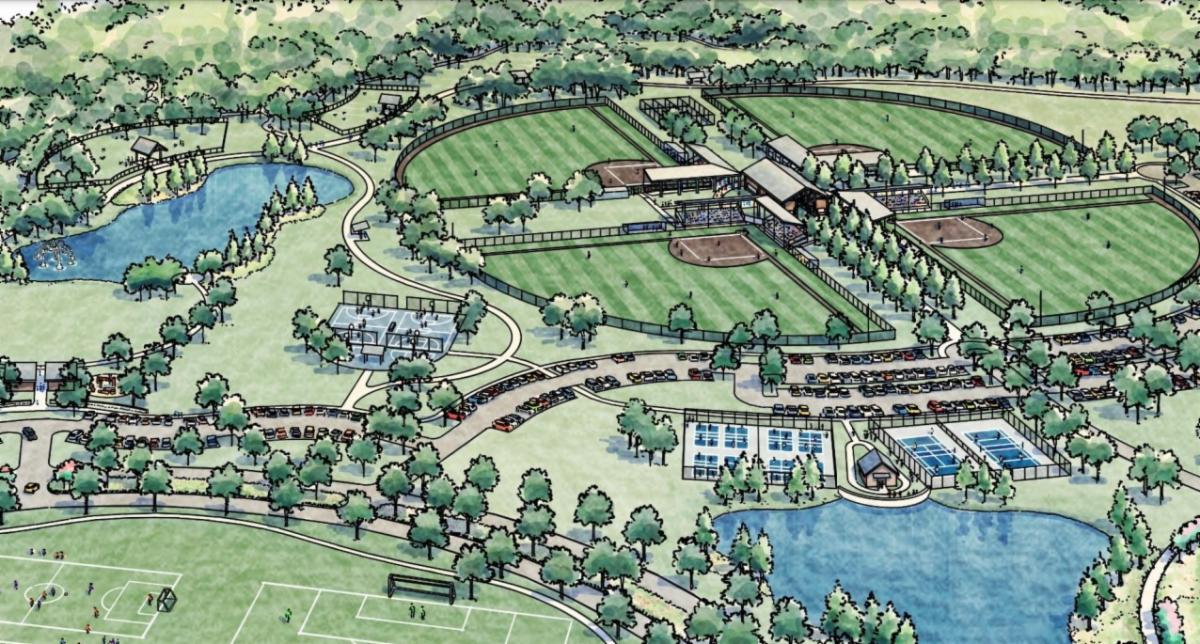
The presented final master plan includes a diamond sports complex with artificial turf, covered bleachers and 300-foot foul lines. Park features also include an irrigation pond, dog park, trail system and a court sports area. Plans also account for a neighborhood park with the potential for an amphitheater, a destination playground and open space for festivals.
Plans and cost estimates include:
- Diamond sports complex - $15 million.
- Neighborhood park - $8 million.
- General site development - $4 million.
- Multi-use sports fields - $4.7 million.
- Court sports - $3.5 million.
- Ponds and open spaces - $3.5 million.
- Parkway and bioswales - $3 million.
- Wilson Creek corridor - $500,000.
(Photo: Rendering of Wilson Creek Park. Courtesy of the city of Celina.)
| |
Opal Mauldin-Jones
City Manager
City of Lancaster
| |
Public career highlights and education:
- Became the All-American City
- Increase bond rating twice in Opal’s career
- (National Academy of Public Admiration) NAPA Fellow
- 1st Black female President of TCMA
- 1st female City Manager
- Undergrad and grad at the University of Texas at Arlington and a current student at Dallas Theological Seminary
A native Texan, Opal completed her undergraduate and graduate studies at the University of Texas at Arlington. She holds a Bachelor of Business Administration in Management. Opal has a Master’s in Public Administration and is currently enrolled in Dallas Theological Seminary working towards a doctoral degree.
In November 2021, Opal was inducted as a fellow into the National Academy of Public Administration (NAPA), a national network of over 850 prominent leaders in federal, state, and local government.
Opal is the 1st African-American woman to ever hold the position as President of the Texas City Management Association (TCMA) (June 2023) in the 97-year history of the organization. Opal is also the 1st female city manager for the city of Lancaster.
What I like best about my public service is: Having a positive impact on the lives and quality of life of the people I serve.
The best advice I’ve received: Work hard, stay humble, and be kind.
People might be interested to know that: I am super shy.
One thing I wished more people knew about the City of Lancaster is: Lancaster is a safe and great place to live, work and do business.
| |
Community colleges in Texas are anticipating a boost in funding following the 88th Legislative Session and passage of House Bill 8, which brings significant changes to the funding model for two-year public institutions. The law also commits to providing free dual-credit courses for educationally or economically disadvantaged high school students.
The bill allocates $683 million in funding for the model as well as the new Financial Aid for Swift Transfer, or FAST, a scholarship program for low-income dual-credit students. The Texas Higher Education Coordinating Board is compiling a draft formula based on the new funding model and how it will affect Texas colleges. The board will complete its draft formula in mid-July for approval in August.
Formerly, Texas’ 50 community colleges were receiving funding from three sources: state dollars, property taxes and student tuition and fees. The formula had community colleges competing for state funding. The system awarded dollars to schools with higher student enrollment, and a smaller percentage of funds were allocated through success-based measures, as well as a set amount for core operations.
According to the THECB, the new formula will tie the funding to measurable student-focused outcomes. These include:
- The number of credentials of value awarded, including badges, certificates, and degrees, that position graduates for well-paying jobs.
- Credentials of value are awarded in high-demand fields where employers are looking for skilled employees.
- Successful student transfers from community colleges to four-year universities.
- Completion of a sequence of dual credit courses, which are offered to high school students and can set them on early pathways to success.
|  | |
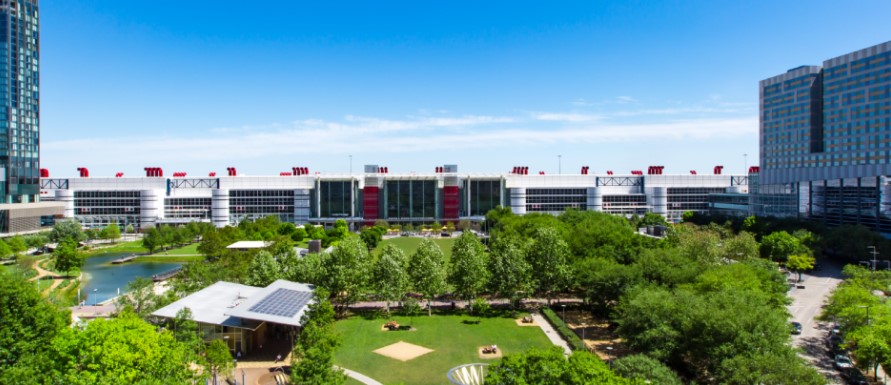
The George R. Brown Convention Center and the surrounding area downtown could soon receive a big facelift thanks to Senate Bill 1057 being signed into law.
The bill, signed by Gov. Abbott, allows the city and Houston First Corp. to receive a portion of hotel occupancy taxes more than the amount collected this year for the next 30 years. The additional revenue is estimated to be around $2.3 million in the city’s next fiscal year but could grow each year as revenue exceeds the 2023 baseline.
The money could be used to expand and modernize the George R. Brown Convention Center and build additional hotels and venues within the convention district. Houston First and city officials have not yet decided how the new revenue will be used, but they plan to begin creating a vision for the convention district later this year. From there, Houston First will start planning for how to develop that vision in phases over the coming years.
The legislation and funding opportunities put Houston in line with other large cities investing in convention districts. For example, the city of Dallas recently approved $4 billion to demolish and rebuild the Kay Bailey Hutchinson Convention Center. Much of the funding for the project is coming from state and local hotel occupancy taxes.
In 2011, the city of Houston established Houston First, a local government corporation created to operate the city’s convention and performing arts facilities, as well as promote Houston as a world-class destination for tourism and conventions.
(Photo: George R. Brown Convention Center. Courtesy of the city of Houston.)
| |
College Station ISD School Board members were given more specifics, payment options, and proposition legalities for a $350 million bond issue expected to go to voters in November. Discussion will continue in July and August, with a final decision due Aug. 21.
The bond proposition encompasses 17 projects recommended by the district’s long-range facilities and bond planning committee. Most projects are scheduled for completion between 2025 and 2027.
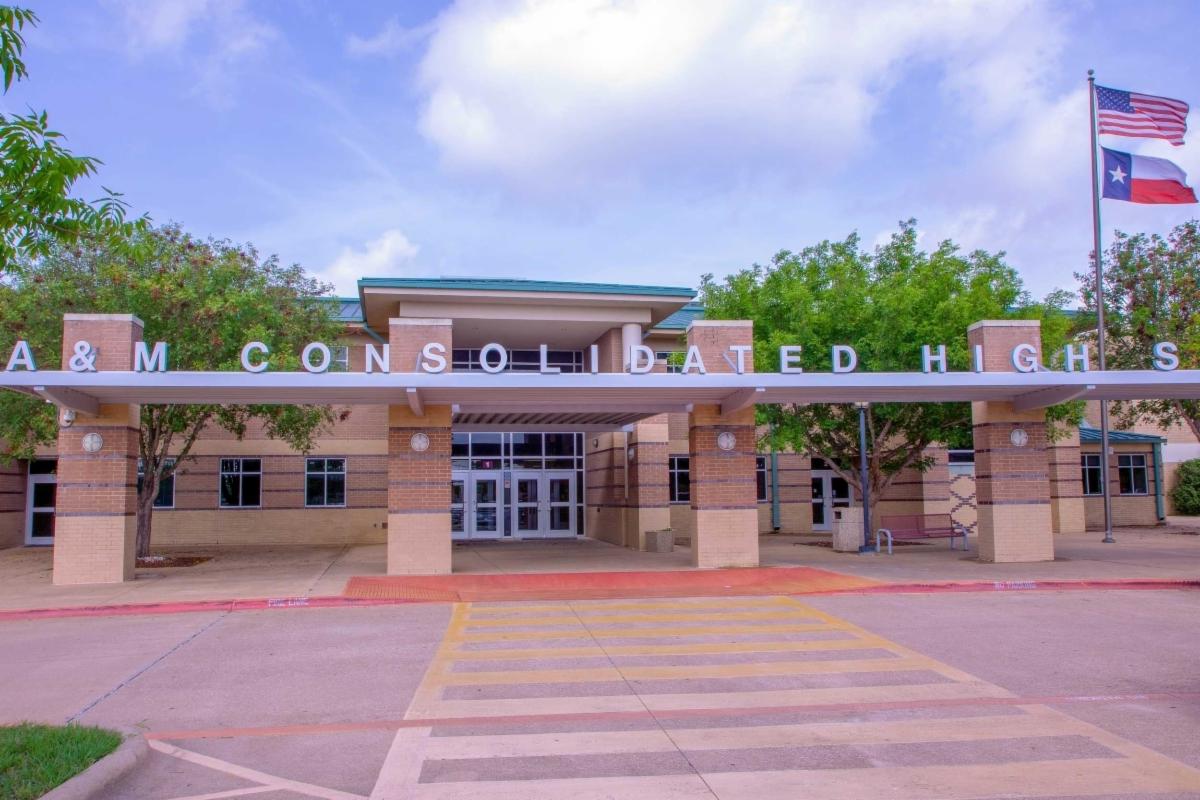
The largest amount of funding, $62.2 million, would go to additions and renovations at College Station High School. The A&M Consolidated High School, known as "Consol," would receive $50.7 million for additions and renovations. Funding of $45 million would support deferred maintenance and $32.1 million would cover Phase II of the district’s CTE center. Other proposed projects include:
- $31.1 million: Renovation of the district’s central office.
- $20.1 million: Renovations to Consol’s Tiger Stadium.
- $19.9 million: Technology investments.
- $13.8 million: Comprehensive renovation of Rock Prairie Elementary.
- $13.2 million: Renovations to both high schools’ baseball and softball fields.
- $13.1 million: Renovations to three middle school athletic fields.
- $11.3 million: Additions and renovations to Consol’s fieldhouse.
- $11.2 million: Transportation upgrades.
- $8.3 million: Additional technology.
- $7 million: Renovations to College Station’s Cougar Stadium.
- $5 million: Land acquisition.
- $5 million: District-wide safety initiatives.
- $1.3 million: Cosmetology lab at College View High School.
These items would be split into four propositions due to 2019 bond election laws that now require certain projects to be listed as separate propositions.
The general proposition would be $284.9 million. The football stadium’s proposition would total $38.4. The technology device proposition comes in at $14.1 million and the baseball/softball proposition totals $13.2 million.
(Photo: A&M Consolidated High School.)
| |  |
|
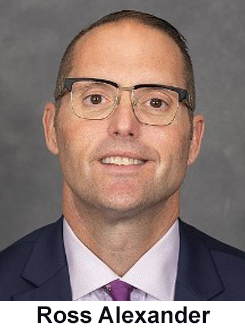
A sole finalist has been named in the search for a new president at Texas A&M University-Texarkana. The Board of Regents has named Dr. Ross C. Alexander as successor to Dr. Emily Cutrer, who announced in December she would step down this summer. Under state law, the Board of Regents must name a finalist for at least 21 days before finalizing the appointment.
Alexander will be the fifth president at A&M-Texarkana. He had served as provost and executive vice president for Academic Affairs at the University of North Alabama since 2017.
| |
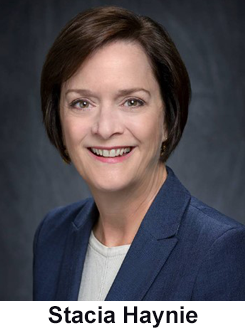
The Texas Tech University System Board of Regents has named Stacia “Stacy” Haynie, Ph.D., as the sole finalist for president of Midwestern State University (MSU). As sole finalist, Haynie is set to become the 13th president. State law requires 21 days to pass before final action can be taken on employment once a sole finalist has been named.
Haynie arrived at Louisiana State University in 1990 as an assistant professor and then climbed the ranks to associate professor before becoming a full professor in 2003.
|  | |
The Texas governor named Angela Colmenero as his new deputy chief of staff. Jordan Hale, who began serving as deputy chief of staff in October 2018, will be departing the Office of the Governor at the end of June. Hale has served in the Office of the Governor since 2015 and previously served in the Office of the Attorney General for eight years.
Colmenero has served as principal deputy general counsel to the governor since November 2021. Prior to this role, she served as deputy general counsel to the governor starting in September 2018. Colmenero previously held various leadership positions for nearly a decade at the Texas Attorney General’s Office, including as chief of the General Litigation Division and deputy chief of the Special Litigation Division.
| |
Al Davis, formerly interim director for the Texas A&M Forest Service, was appointed director by The Texas A&M University System Board of Regents on June 14. Davis had been with TEEX since 2005, having served as director of the National Emergency Response and Recovery Training Center. In 2014, he was appointed to deputy agency director.
Before joining The Texas A&M University System, Davis served as a chief executive of the Public School District in New Orleans. He also served in the U.S. Marine Corps, retiring with the rank of colonel.
|  | |
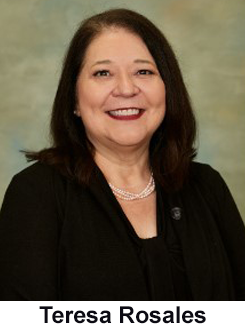
Teresa Rosales, who joined the city of Brenham in January as an economic development specialist, has been promoted to take on the lead role in economic advancements in the city of Brenham and Washington County. Rosales worked briefly under former Economic Development Director Susan Cates, who resigned from the city in April to pursue an opportunity in the private sector.
Her experience includes real estate finance and sales, management of a business improvement district, and local government work concentrating on quality-of-life issues, economic development and utility communications.
| |
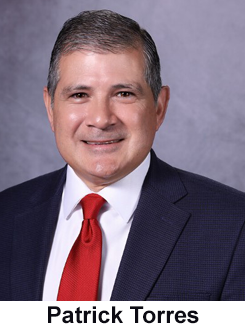
On June 16, the Venus ISD Board of Trustees voted to hire Patrick Torres as the district’s new superintendent. Torres most recently served as the superintendent in Denver City ISD. He began his career as a teacher in Wylie ISD.
Torres has also served as assistant principal, principal, and assistant superintendent in Wylie, Grapevine-Colleyville, Eagle Mountain Saginaw and Red Oak ISDs. Torres will report to the district July 1.
|  | 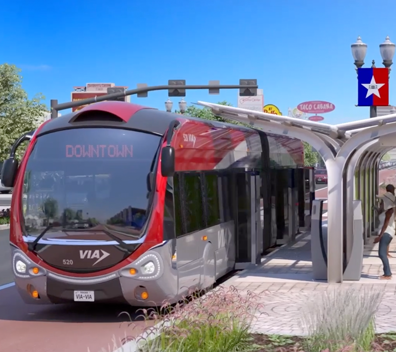 | |
The development of the VIA Rapid Green Line, a faster bus line along San Pedro Avenue in San Antonio, is on track, but construction costs have increased from $320 million to $388 million. Construction is set to start in early 2025.
VIA Metropolitan Transit’s north-south advanced rapid transit line, called the VIA Rapid Green Line, will replace the two existing bus routes along San Pedro beginning in 2027. It will run larger buses at a higher frequency in dedicated lanes, with 10-15 minutes between buses compared to the current 20-30 minutes. The line will run along nearly 12 miles of San Pedro, connecting San Antonio International Airport to downtown, Roosevelt Park and Mission Concepción on the near South Side.
In addition to inflation, the total cost has increased since design work is further developed and costs are more defined. The Federal Transit Administration has approved $158 million for the project, and VIA is looking to the Biden administration to cover 60% of the project’s $388 million total. The agency also anticipates receiving additional funds from sales tax revenue approved under the San Antonio Moving Plan (KSAM) in 2020. VIA’s budget is largely funded by local sales tax revenue. The sales tax was initially expected to generate $40 million for VIA, but estimates have grown to $49 million.
|  |  | |
The Hill Country Village City Council reached a consensus on June 14 to move forward with a proposal to rebuild the existing municipal complex. Out of the three site plans presented by a hired architectural firm, the council selected the "heritage" plan, which involves replacing the current City Hall structure with a larger and more modern building that blends well with its surroundings.
The cost of constructing a replacement City Hall is estimated to be up to $4.25 million, excluding the expenses related to temporary staff relocation. Administrative, public works and police department employees all will have to relocate for an estimated 18 to 24 months while the new municipal complex is built.
The 42-year-old City Hall/police station on Aspen Lane has various challenges, including foundation issues, roof leaks, frequent plumbing and sewer issues and insufficient storage space for equipment and records.
The project is still in the planning phase as city officials continue their efforts to refine project details. Several proposals that have been introduced to provide funding for the development are to use unspent money remaining from the town’s 2019 street improvement bond, reserves and proceeds from a possible sale of the city’s undeveloped tract at Tower Drive and West Avenue.
|  |  | |
Texas Government Insider is a free weekly newsletter detailing important happenings throughout the state and summarizing current political issues relevant to individuals interested in government.
Publisher: Mary Scott Nabers
Editors: Kristin Gordon
Claire Robertson
TGI is published by Strategic Partnerships, Inc. (SPI), a research and consulting firm. Founded in Texas in 1995 by former government executives and public sector experts, the SPI Team has developed a national reputation for partnering public and private sector entities.
To learn more about SPI services, click here or contact our sales department at 512-531-3900
Address: 7500 Rialto Boulevard
Building 2, Suite #145
Austin, Texas 78735
| |