Volume 20, Issue 22 - Friday, June 3, 2022 |
|
By Mary Scott Nabers, CEO of Strategic Partnerships Inc. |
Millions of motorists cross bridges daily, and every driver assumes that these bridges are safe. That safety, however, comes at an extremely high price – high enough to have prohibited hundreds of bridge maintenance projects over the past decade. With new funding, bridges throughout the country now are receiving attention that is long overdue.
More than 42 percent of the U.S.’ 617,000 bridges are 50 years old … or older. Even more noteworthy is the fact that 46,154 of America’s bridges are considered structurally deficient. Data tells us that 178 million trips are taken across these structurally deficient bridges every day. That risk can be mitigated now that infrastructure funding is available.
The New Hampshire Department of Transportation is set to launch numerous projects to repair and rehabilitate bridges in the state. The department has plans to spend $972 million — nearly a quarter of its budget — on bridge upgrades. The overall plan includes many individual bridge projects, but one that will begin soon is a $12.6 million rehabilitation project on the Spaulding Turnpike. Another $37.1 million project will address maintenance on the bridges that carry motorists over the Merrimack River.
|
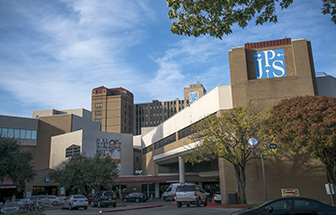
Tarrant County Hospital District, which does business as JPS Health Network, extended its deadline for construction manager at risk (CMAR) proposals to June 7 for a psychiatric emergency center (PEC) that is part of a $1.2 billion expansion.
The psychiatric emergency center will be in a new building on the southwest side of the campus, along Allen Street at South Jennings Avenue, which will temporarily house the center that JPS leaders have identified as a critical short-term need.
JPS is planning a 97,187-square-foot facility that will house an extended observation unit and a 23-hour observation unit for adults and children. The building will have space for discharge services, patient therapies, clinical ancillaries, and administration.
Following three phases that will culminate with the construction of a new hospital building, JPS ultimately will relocate the psychiatric emergency center to a new Behavioral Health Inpatient Hospital, using portions of the existing hospital including the sky bridge which will connect it to the Emergency Department in the Pavilion. The building originally created for the PEC will be repurposed.
Funded in part by a $800 million bond in 2018, the expansion will redefine the JPS main campus and create a new complex anchored by a new hospital envisioned as a large base building covering most of the green space, with potentially two patient towers rising out of the base.
In addition to the taxpayer-funded bond construction program, JPS will invest another $400 million toward capital improvements which will add complementary projects in a combined effort to upgrade the main campus.
Along the way, the project will produce at least eight entirely new buildings or parking structures, expand two existing structures, and create additional surface parking.
|
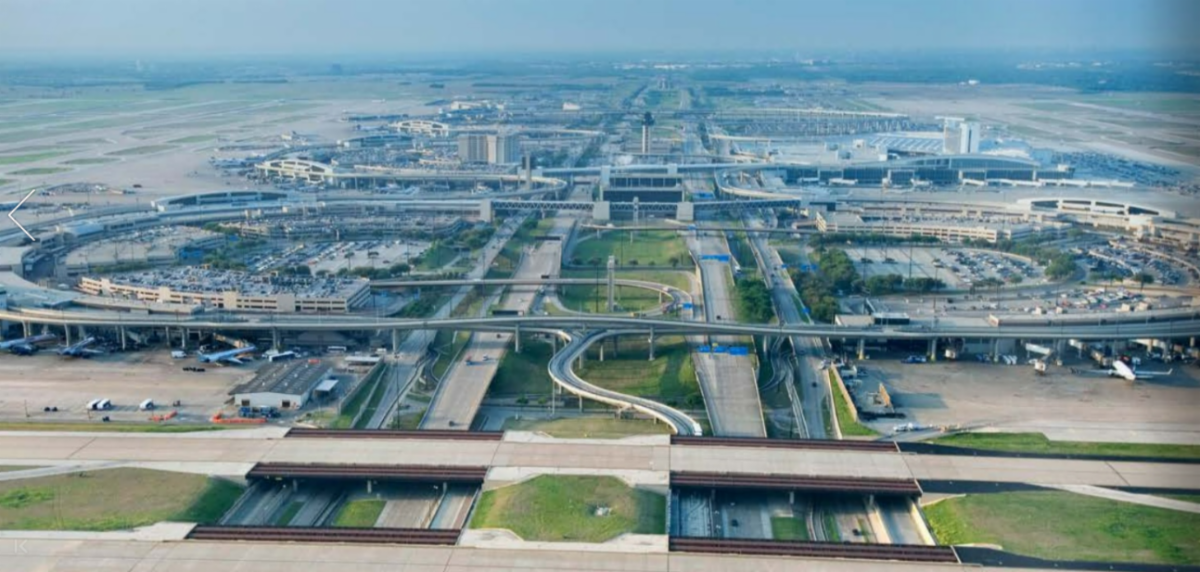
Dallas-Fort Worth International Airport (DFW) will showcase several major procurements that are on the horizon at an upcoming Business Opportunity Forum.
DFW procurement staff invite vendors to attend the forum from 8 to 11 a.m. June 10 at LOOK Theaters, 5655 Colleyville Blvd., Ste. 300, in Colleyville. This event will take place both in person or via Zoom.
Learn about the initiatives underway at the airport and business opportunities within the Infrastructure and Development Division including energy, transportation and asset management, planning, commercial development and design, code, and construction departments.
Among the projects the airport plans to launch in the coming months are construction of Terminal C garages and roadways for an estimated $230 million. This procurement is scheduled for the fourth quarter of this fiscal year, ending September 30.
The airport plans to solicit bids for the rehabilitation of Runway 17R/35L for $241 million in the fourth quarter, the replacement of an explosives detection system for $89 million in the third quarter, and expansion of a utility corridor for $75.5 million.
Imminent information technology opportunities include installing $7.8 million in fiber equipment in the fourth quarter and $7.3 million in desktop workstations and laptops in the third quarter. DFW also has budgeted $2.57 million to refresh firewalls and network security in the fourth quarter and $2.4 million to acquire an automated taxi system in the third quarter.
|
The Harris County Flood Control District expects to begin the third phase of its feasibility study on countywide stormwater conveyance tunnels this fall.
District engineers will determine the scope elements of the third phase of the feasibility study in late 2022 and could begin the phase in the spring of 2023.
The first phase estimated total project costs in 2019 dollars at $1 billion for a 25-foot diameter tunnel and $1.5 billion for a 40-foot diameter tunnel.
The third phase likely will consider further engineering analyses (validation of assumptions, hydrologic and hydraulic modeling, geotechnical investigations, and evaluation of active versus passive systems.
It will examine the countywide economic benefits of adding a tunnel system to our current stormwater management network, as well as the process needed to integrate the tunnel system within existing neighborhood drainage, bayous, and stormwater detention basins. Additionally, Phase 3 includes further environmental analysis and exploring funding strategies to pay for a tunnel system.
Following Hurricane Harvey in 2017, county leaders challenged the district to consider all innovative technology for reducing the risk of flooding. Voters in 2018 approved a bond program that includes $20 million for the feasibility study.
|
Priya Zachariah
Chief Resilience and Sustainability Officer
City of Houston
|
Public career highlights and education: My foray into the public service started as a Bohnett Fellow, as a graduate student in Urban and Regional Planning and working in Los Angeles Mayor Antonio Villaraigosa’s office on the Energy & Environment team. I started working for the Metropolitan Transit Authority of Harris County (Houston Metro) when I moved to Texas in 2011. A career highlight was leading the effort on METRONext, Harris County’s long-range transit referendum. In my role at the city of Houston, I feel fortunate for the opportunity to draw upon my previous experiences to help make Houston be a more resilient and equitable city.
What I like best about my public service is: The early part of my career was spent in the private sector, but I wanted to move to the public sector for its unique ability to set policy and effect impactful change. I find this to be especially true in a local municipality as we not only have the line of sight to communities but also the tools to bring about enduring and systemic change through codes, ordinances, incentives, projects, programs, and policies.
The best advice I’ve received is: That there is always opportunity for growth in adversity, or failure or chaos – it’s just a matter of perspective.
My favorite ways to de-stress are: I love reading, and I am always pleasantly surprised to realize how enjoyable reading still is for me even in a time when there are so many other media and entertainment options.
People might be surprised to know that I: Lived in a number of different countries and cities before my family and I moved to Houston in 2011. And when I moved jobs from Houston METRO to the city of Houston’s Mayor’s Office, it was the first time in a 20-plus year career that I changed jobs without relocating to other cities or countries.
One thing I wish more people knew about the city of Houston is: It is one of the most diverse cities I have lived in. It is one of the most racially diverse places in the country: the city is 44 percent Hispanic, 25 percent Non-Hispanic White, 23 percent Black, and 7 percent Asian. One in four Houstonians was born outside the U.S., and more than one-third of Houstonians speak a language other than English at home. The five most frequently spoken languages after English are Spanish, Vietnamese, Chinese, Arabic, and French. I like to think of Houston as a place where you can find the familiar no matter where you come from, and the unfamiliar and new, for new journeys and experiences.
|
The Texas Facilities Commission (TFC) will host two mandatory pre-proposal teleconferences at 10 a.m. June 14 and June 15 for project management services including consultation, project management, project controls, and administrative services for the Permian Basin Behavioral Health Campus (BH Campus).
Vendors who wish to submit a request for proposals must attend at least one of the teleconferences in order to be considered for the project. Pre-registration for the pre-proposal teleconferences is required.
The third called session of the 87th Texas Legislature appropriated $40 million for TFC’s use to acquire land, program, design and construct a 100-bed comprehensive behavioral health center in the Permian Basin region of Texas.
This BH Campus will serve the entire region and include inpatient and outpatient psychiatric care facilities for adults and adolescents, along with a crisis stabilization unit, professional offices, and counseling/therapeutic spaces appropriate for all ages.
TFC intends to contract a project management firm to support the successful execution and completion of programming, design, construction, furnishings, fixtures, and equipment for the BH Campus.
The desired management solution must be lean, collaborative, and owner-centric while addressing the entirety of project planning, procurement, monitoring, management, reporting, and implementation of the behavioral health campus.
Proposals must address proper management of the overall project goals from beginning to end, including a system-wide approach for managing the risks and economic uncertainties associated with large, complex, capital design and construction projects.
|
The Lubbock City Council has begun weighing new street and road projects that could merit placing a new road bond referendum on the November 8 ballot.
After authorizing formation of the committee to identify road and street projects for potential bond funding, councilmembers also agreed to vote on a resolution when they meet in mid-June.
If the City Council approves the resolution, then it will appoint a 13-person committee — two by each council member and a chair appointed by Lubbock’s mayor — to present a final package of road projects for bond funding no later than August 9. The Council would then have less than two weeks to call for a special bond election.
Following last year’s failed bond election, the city has already identified multiple segments of roadway in dire need of repairs. Streets leading to major thoroughfares around the city of Lubbock — such as Erskine, 34th, 82nd, 98th, and 114th streets — have already been targeted for rehabilitation, expansion, or enhancement.
|
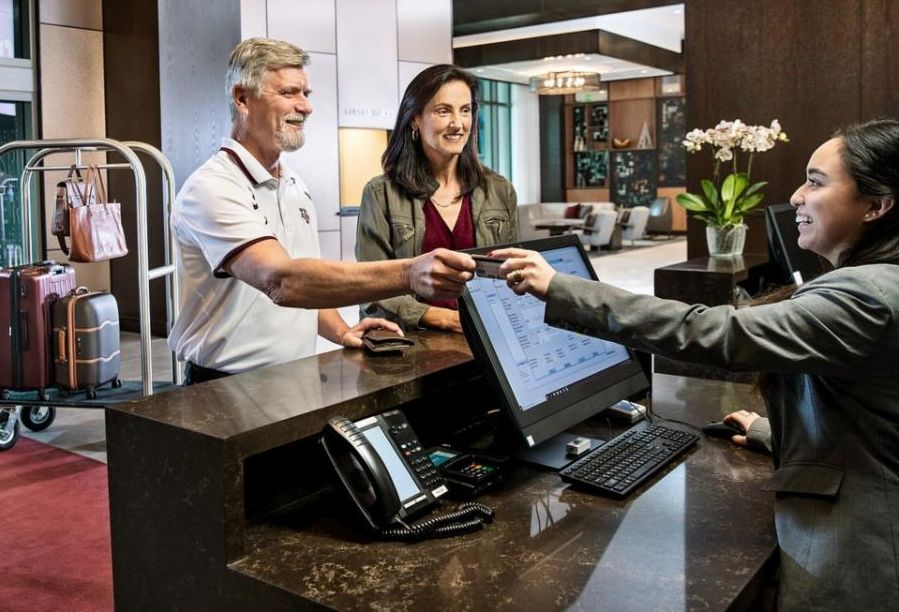
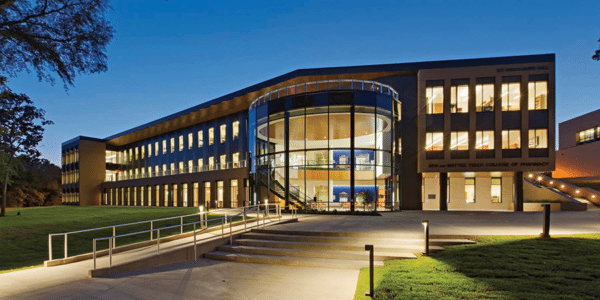
Texas A&M University announced on June 1 that it received a $50 million donation from a former student to build a new center for hospitality entrepreneurship.
Arch “Beaver” Aplin III’s donation will go toward construction of the Aplin Center that will be home to new university programs in hospitality, retail studies, and food product development involving degree programs including viticulture, fermentation processes, coffee, and food science. The facility also will house product development laboratories and food tasting centers which can be utilized in partnership with related industries.
It will include outdoor and indoor student recreational space, as well as retail and food service areas managed by students and faculty through the educational programs.
In addition, the new center will host corporate training and recruiting programs, along with professional development opportunities. Workforce training based on industry needs will be a key component of the center.
Primary academic partners will be the College of Agriculture and Life Sciences and the Mays Business School, although other academic units will be involved in specialty projects.
Texas A&M President Dr. Katherine Banks said the Aplin Center will allow for more entrepreneurial activities for students across disciplines.
The center, which will highlight co-developed products, will be built across the street from the Texas A&M Hotel and Conference Center at the intersection of Wellborn Road and the pedestrian tunnel that functions as the main foot and automobile traffic corridor on campus, in the shadow of Kyle Field.
|
The Texas General Land Office (GLO) is renewing its commitment to supporting communities in need of modern and resilient building codes and flood damage prevention ordinances with the launch of its $100 million Resilient Communities Program.
Communities that receive the funds will develop, adopt, and implement modern and resilient building codes and flood damage prevention ordinances to help ensure that structures built within the community can withstand future hazards.
The GLO allocated up to $100 million in Community Development Block Grant – Mitigation (CDBG-MIT) funds from the U.S. Department of Housing and Urban Development (HUD) for the program.
Cities, counties, councils of government, and federally recognized tribes in CDBG-MIT eligible areas are eligible to apply for up to $300,000 per applicant. All applicants must have legal authority to adopt and enforce building codes, zoning ordinances, land use plans, and/or comprehensive plans proposed in the program application.
The GLO began accepting applications June 1. It will process them for eligibility on a first come, first served basis until June 1, 2028, or until funding is exhausted, whichever is first.
|
The University of Texas at Tyler (UT-Tyler) will host a virtual pre-submittal conference at 2 p.m. June 7 to present information on a $35 million nursing addition and renovation project.
UT-Tyler is seeking a construction manager at risk (CMAR) to build a new 47,000 gross-square-foot multi-story addition that connects directly to the School of Nursing.
The new construction will include a main building entry with lobby, medical simulation space with labor/delivery suite, nurse station, pediatric, control rooms, supply, ICU, debriefing rooms, patient rooms, home health rooms, student recruitment, study, and collaboration spaces.
Additional programmatic spaces in the project are anticipated to include commons, study spaces, conference/meeting rooms, student organizations, breakrooms, office suites, individual offices, work rooms, departmental storage, and advising center.
Renovations of 44,000 gross square feet in the existing school building will include faculty spaces, classrooms, and computer labs. Classrooms will be reconfigured/consolidated for efficiency with enhanced technology to provide one large modern classroom for approximately 150 students. The remodel is required to be completed in multiple stages due to campus operations.
The design phase is anticipated to start in August. Construction is expected to be complete by October 2024.
|
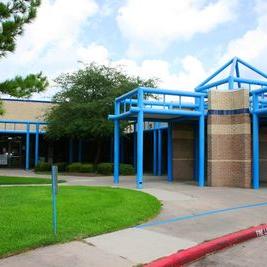
Plans for a new home to serve the Spring ISD Leadership Academy are gaining momentum after the district hosted architect firms on June 2 to provide facility planning and design for the federally funded project.
The Momentum Academy Project is part of the Department of Education’s Elementary and Secondary School Emergency Relief Fund (ESSER).
Spring ISD will be closing Clark Primary School and converting it into the Spring Leadership Academy, a specialty middle school serving district students.
Clark Primary School was built in 1991, renovated in 1998, and again in 2010. It is approximately 509,600 square feet. Once renovated, the campus will host approximately 600 students in grades 6, 7, and 8.
The ultimate build-out of this renovation will be to transfer the current Spring Leadership Academy students and staff to the new campus to allow for growth of the program. This initial phase will focus on the educational appropriateness, code compliance, and accessibility of the facility.
Spring ISD budgeted $11 million for the initial scope of work. Later phases will focus on mechanical, electrical, and plumbing elements as well as beautification.
|
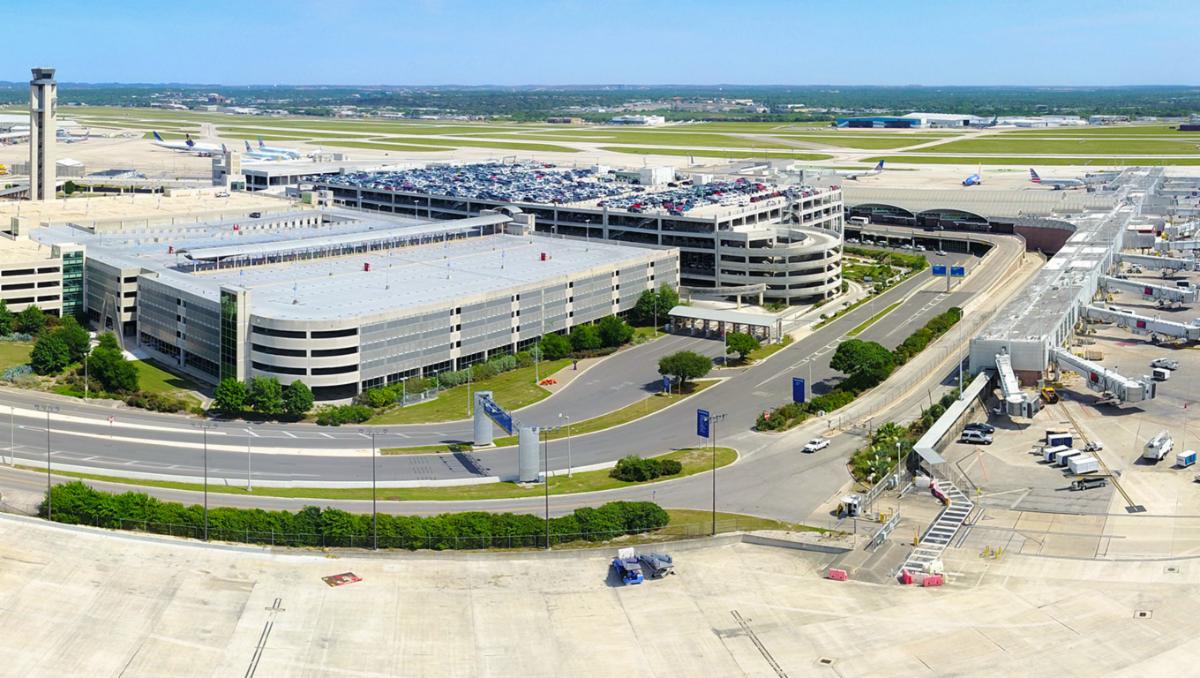
The San Antonio City Council authorized a contract on June 2 that commenced the design phase for the new Terminal C building planned for San Antonio International Airport.
San Antonio will work with an architecture and design firm to provide the Airport Terminal Planning Services (ATPS) for the Terminal Development Program for the airport’s next terminal facility and its enabling projects that will lay the foundation for work to begin on Terminal C earlier than expected.
The firm’s services include:
- Architectural concept design for key components of the Terminal Development Program that will allow environmental reviews to begin immediately.
- Updated cost estimates for those design components.
- Recommendations on project phasing and procurement strategies.
Terminal C is expected to be completed by 2028. The new terminal would feature up to 17 narrow-body gates including as many as five international positions and a new international arrivals hall. The new terminal and associated enabling projects include a ground transportation center, parking garage, and terminal road realignment.
|
|
A public-private partnership (P3) led by the U.S. National Science Foundation (NSF) is investing $37 million in next-generation networking technology research at university campuses across the country, including several in Texas.
The NSF disbursed funding among specific research projects through NSF’s Resilient and Intelligent Next-Generation Systems (RINGS) program. RINGS funding is now bridging the public-private divide to develop familiarity with next generation (NextG) networking and computing systems, such as 6G cellular networks.
Using criteria such as competitiveness, security, and resilience, the accelerated research projects funded by NSF will offer insight into how NextG’s arrival is likely to impact telecommunications and IT sectors of the global economy.
Collaboration will underpin these seven research projects in Texas overseen by The University of Texas at Austin, The University of Texas at Dallas, the University of North Texas, and Texas A&M Engineering Experiment Station.
The RINGS program marks NSF’s most expansive effort to engage prospective public and private partners. These collaborations will expand availability of resources and offer wider, more impactful insight into NextG’s future deployment. This braces many aspects of U.S. infrastructure for the next wave of transformative network system technology.
Funding is already supporting partnerships with private entities from the telecommunications industry. At the same time, the RINGS program also supports university-anchored partnerships with other kinds of public entities, such as the U.S. Department of Defense’s Office of the Under Secretary of Defense for Research and Engineering.
|
The Cameron County Regional Mobility Authority secured a federal grant of up to $5.57 million on May 26 for a railroad improvement project that the county began more than a decade ago to make the downtown area of Harlingen safer for the traveling public
Part of the Federal Railroad Administration’s award of more than $368 million in Consolidated Rail Infrastructure and Safety Improvements (CRISI) grants for fiscal year 2021, the lone Texas project to receive an award will relocate and realign approximately 1.7 miles of track and construct one new crossing in order to eliminate seven existing at-grade crossings in Harlingen.
The new track connection will enable the Union Pacific Harlingen Subdivision track to connect to the Union Pacific Brownsville Subdivision, as well as straighten out two curves. The extension of this track between Jefferson Avenue and Adams Avenue would allow for the closure of the older SP switchyard east of Commerce Street between Ona Street north to Orange Heights Street and the removal of the rail line between Commerce Street and Adams Avenue.
This new connection would result in the retirement of approximately 1.7 miles of the Harlingen Subdivision between U.S. 77 Sunshine Strip and Jefferson Avenue and close seven crossings to improve railroad infrastructure, reduce congestion, and improve safety along active rail.
The Mobility Authority will provide a 20 percent match to fund the project.
|
Historically Underutilized Businesses (HUBs) are invited to attend the Building Your Dream HUB EXPO from 8 a.m. to 3 p.m. June 9 at the Downtown Event Centre, 700 Crockett St., in Beaumont.
Join the Texas Comptroller of Public Accounts for a day of procurement training and workshops, panel discussions, networking, and more.
Panel discussions will help HUBs learn how to do business with state agencies such as the Texas Department of Transportation (TxDOT) and Department of Information Resources (DIR).
Other highlights of the day’s agenda include:
- All-day tabletop exhibits and open networking with state agencies and universities.
- Statewide HUB certification and procurement resources presentation and Q&A.
- “State University Procurement” panel discussion.
- “Information is Power” panel discussion.
- Business lunch and learn.
- Door prizes and minute-at-the-mic.
Registration is free, with the option to purchase lunch.
|
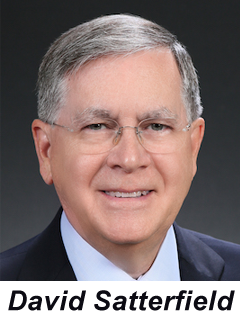
Rice University named Ambassador David Satterfield as the new director of the Baker Institute for Public Policy, effective July 1. He will succeed Ambassador Edward Djerejian, who led the Baker Institute as director for 28 years.
Satterfield has more than four decades of diplomatic service and policy and management leadership experience in the U.S. and overseas in the Near East and Europe. He has served as assistant secretary of state, National Security Council staff director, and as ambassador to Lebanon and Turkey and charge’ d’affaires in Iraq and Egypt.
|
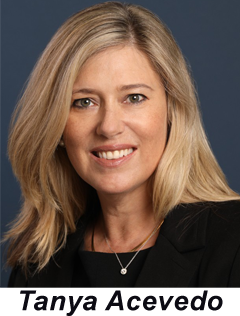
The Capital Metropolitan Transportation Authority (CapMetro) in Austin selected Tanya Acevedo as senior vice president and chief information officer (CIO).
Acevedo most recently served as vice president and CIO of Miami Dade College. Before that, she was chief technology officer for the Houston Airport System, and CIO for Travis County.
|
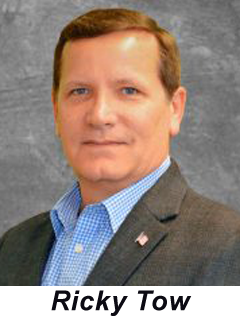
The Cameron City Council appointed Ricky Tow as the new city manager, effective July 18. He will succeed Rhett Parker who resigned in July 2021.
Tow is currently the city manager of Gladewater. Before that, he had a previous stint as Cameron city manager as well as tenures as city manager in Bowie and city administrator of Alvord.
|
Richardson City Manager Don Magner appointed Michaela Dollar and Charles Goff as assistant city managers, effective July 11 and June 13, respectively. |
Dollar most recently served as economic development director for the city of Georgetown. Before that, she held positions in economic development for the Round Rock Economic Development Partnership, the city of Dallas, the Cedar Hill Economic Development Corporation, and the Bay County Economic Development Alliance in Florida. |
Goff previously served as assistant town manager for the town of Sunnyvale. Prior to that, he was director of development services and planning for the town of Addison. |
The city of Montgomery selected Dave McCorquodale as interim city administrator on May 31. He will take over from former City Administrator Richard Tramm.
McCorquodale is the assistant city administrator and director of planning and development for Montgomery. He spent 14 years serving on various boards and commissions for the city, including five years on the City Council.
|
The city of Georgetown is set to confirm Cory Tchida as the city’s permanent police chief on June 6. He had been serving in an interim capacity since June 2021 when Police Chief Wayne Nero was promoted to assistant city manager.
Tchida has been with the Georgetown Police Department for more than 25 years as a lieutenant of patrol and administration, a sergeant over patrol, training, traffic, and narcotics, and as a patrol officer.
|
Dozens of public-sector jobs are available. Click here to view all job openings and guidelines for job submissions to SPI. New jobs added this week:
-
Office of the Texas Governor – Deputy Director
-
Texas Department of Motor Vehicles – Human Resources Director
-
Texas Department of State Health Services – School Health Nurse – Team Lead
-
Texas Department of State Health Services – Licensed Vocational Nurse I (2 positions)
-
Texas Health and Human Services Commission – Program and Policy Advisor
-
Texas Health and Human Services Commission – Research Specialist V (2 positions)
|
|
|
|
|
Connect with Us
Check out our
social media links!
|
|
View our Texas Government Insider and Government Contracting Pipeline newsletter archives
|
|
Help us share this message.
To ensure delivery and proper formatting of the newsletter, be sure to add editor@spartnerships.com to your safe senders list. Otherwise, the newsletter may be flagged as spam and automatically routed to your junk e-mail folder.
|
|
For news or calendar items: editor@spartnerships.com
For information about SPI's products and services: sales@spartnerships.com
© 2022 Strategic Partnerships, Inc. All rights reserved.
|
|
|
|
|
|
|
|