By Mary Scott Nabers, CEO of Strategic Partnerships, Inc. |
A new year is dawning and while the Strategic Partnerships Team (SPI) is brimming with excitement about a few upcoming announcements, the team is also pausing to acknowledge appreciation, gratitude, respect, loyalty and a renewed commitment to clients and friends who helped us build SPI over the past two-and-a-half decades.
What an incredible 25 years! It barely seems possible … the years have slipped by so quickly. In 1995, after leaving government, Janice Haddock and I opened an office for Strategic Partnerships with two clients - Northrop Grumman and AT&T. Our initial service offerings included the brokering of great partnerships between public and private sector entities.
Twenty-four years later, our client Northrop Grumman exited the state and local government marketplace to focus solely on the federal government, but AT&T, after 25 years, is still a treasured SPI client. Our service offerings have expanded, but our name tells our story well. The company was created to increase collaboration between public and private entities for the betterment of government, taxpayers, and the public at large.
Many clients have partnered with SPI for more than 15 years, and quite a few current clients are nearing a 20-year engagement with SPI. The line between consultants, researchers, and clients blurs as the working relationships becomes a true partnership. It is the people we work with, in both sectors, that we count as our greatest reward.
|
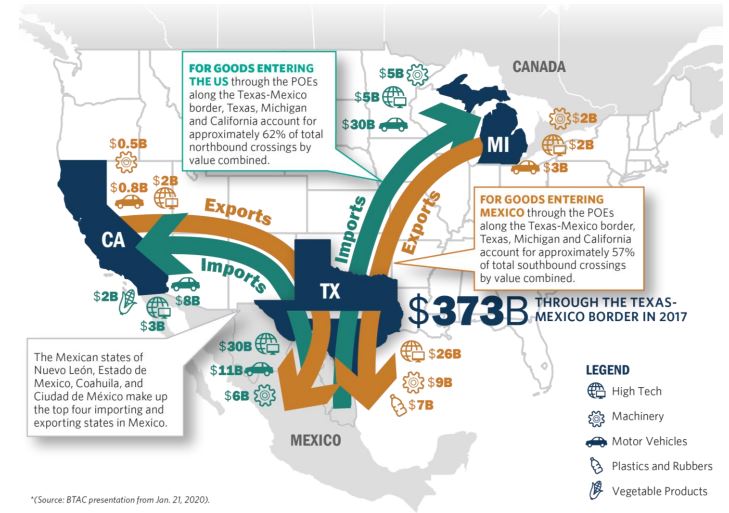
A newly released draft Border Transportation Master Plan recommends 554 projects in Texas totaling $32.7 billion to avoid costly delays that could result in up to $4.4 billion in economic productivity losses in 2050 if no improvements are made at the state’s border with Mexico.
Trade across the Texas-Mexico border not only contributes an estimated 5.3 percent to Texas’ $100.2 billon gross domestic product (GDP), but it also adds to the GDPs of Michigan, Illinois, California, and Ohio.
Between 2019 and 2050, the number of northbound vehicle crossings at the Texas-Mexico border is expected to increase by 7.7 million or 168 percent (3.2 percent annually) to an estimated 12.35 million crossings in 2050.
During that same period, the number of northbound railcar crossings is expected to increase by 1.5 million or 150 percent (3 percent annually) to more than 2.55 million railcars in 2050.
Texas Secretary of State Ruth Hughs presented the plan to the Texas Transportation Commission on December 10 that highlighted infrastructure priorities and projects as well as funding needs for necessary improvements. In her role as secretary, Hughs serves as Texas’ border commerce coordinator.
The Texas Department of Transportation and the Border Trade Advisory Committee, which worked together to develop the plan, will schedule a public comment period before presenting the plan’s final report to the commission to consider for adoption.
|
Rico Davis brings eight years of sales and business development and strategy leadership to SPI as a Senior Consultant. He has led teams as large as 60 members and been responsible for generating millions in annual sales.
Rico has had the pleasure of working with both large public enterprises and small growing companies. He also has gained experience in selling to governmental agencies. Rico’s talents in sales, marketing, strategy, and structured processes are all areas of high importance in business development.
He attended Jackson State University, where he attained a bachelor of business administration and operations degree. He also holds certificates in special operations, budgeting, and data storytelling. He specializes in creative business development, growth and expansion, process improvement, project and team management, and relationship building. He is passionate about delivering extreme value to customers and clients.
|
The University of Texas at San Antonio (UTSA) and Port San Antonio formalized their agreement for UTSA to serve as the Port’s primary academic partner by signing a memorandum of understanding (MOU).
Their December 14 announcement highlighted the two organizations’ shared goal of strengthening their internet technology (IT) and cybersecurity collaboration.
Among priority research and development areas outlined in the MOU are critical infrastructure protection and security, automation and robotics, space sciences and hypersonics, artificial intelligence, data science and visualization, cloud computing, cybersecure manufacturing, and supply-chain security.
Together, UTSA and the Port will focus on supporting collaborative research, education, and workforce development. As the Port’s premier academic partner, UTSA will lead efforts to supply research and academic capabilities in cyber security, data analytics, machine learning/AI, and cybersecure manufacturing within the Port’s ecosystem. These activities will be part of work conducted by UTSA’s School of Data Science, the National Security Collaboration Center (NSCC), Cybersecurity Manufacturing Innovation Institute (CyManII), and other research initiatives.
Within the next three years, the two organizations’ combined capabilities and expertise will be leveraged to build new research programs, educate and train undergraduate and graduate students and researchers, and advance new science and cutting-edge technologies to secure U.S. critical infrastructure. The partnership between UTSA and Port San Antonio also will allow highly competitive research and education teams to pursue larger and more complex funding requests and increase opportunities for collaboration and multi-disciplinary research.
The Port and the NSCC share several industry and federal partners working on both independent and overlapping projects. The MOU allows great flexibility and collaboration among shared partners while ensuring necessary intellectual property safeguards. This mutual ecosystem includes the 16th Air Force (Air Forces Cyber), the National Security Agency (NSA), Army and Air Force Research Laboratories, the Department of Energy National Laboratories, and more than 40 additional federal, industry, and academic partners.
The Port’s contributions will provide the university greater access and connectivity to cybersecurity testbeds, infrastructure resiliency, power systems engineering, and robotics capabilities. The partners also will explore co-location of research and education activities within the Port ecosystem.
|
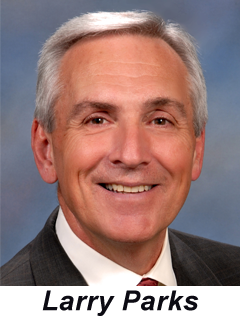
Larry Parks, President, Board of Directors,
North Texas Municipal Water District
|
Career highlights and education: I have worked in banking for 50 years. I graduated from the University of Texas in 1970 with a Bachelor in Business Administration and later graduated from the Southwestern Graduate School of Banking at Southern Methodist University. I began my career in 1970 at the Department of Treasury – Office of the Comptroller of the Currency, examining national banks for soundness and safety. Three years later, I began working in various community banks and did so until 2017. In 2011, I began serving in my current position as a director for the Rockwall branch of an independently owned North Texas bank.
What I like best about my public service is: Improving the lives of others. That has been a great source of pride and satisfaction in my life. It is important for leaders to put service above self and give back to the community. The work the North Texas Municipal Water District (NTMWD) does is vital. Water is life. It is important that NTMWD continue to ensure safe and dependable water, wastewater and solid waste services for the million-plus North Texans that depend on the services we provide.
The best advice I’ve received is: Life is very humbling, and you should remember, “There is many a slip between the cup and the lip.” Always have a plan with the realization that the plan will change. Change is one of the few constants in life.
My favorite way to destress is: A good family vacation with a new book, a little golf, fine restaurants, and fun entertainment … especially in Colorado.
People might be surprised to know that I: Started my college education with a financial scholarship to become a landman. My brother-in-law was a geologist for Exxon, so I had an interest in his career. My high school principal suggested an interview with the American Petroleum Association. I received a scholarship that awarded me the opportunity to study at the University of Texas at Austin or the University of Oklahoma. The degree was structured as a combination of business and geology classes. During my junior year, Mineralogy 101 helped me realize that "rocks looked like rocks." A quick search of the course catalogue verified that I could change my degree to business of bachelors administration without losing any course credits. I surrendered my scholarship and turned my interest to business finance and real estate. Two years later, I was employed by the Department of the Treasury ... and the rest is history.
One thing I wished more people knew about the North Texas Municipal Water District is: How long it takes to plan and begin using a new water source. Water planning is a long-term vision, and it can take 20-30 years to develop a source of water from concept to public consumption. NTMWD serves one of the fastest growing regions in the nation. We are a regional water district formed in the 1950s to provide high quality and dependable water to serve the then 32,000 people in 10 member cities on the eastern perimeter of Dallas. Today, the District has grown to provide water to about 1.8 million people in 80 communities in North Texas including our 13 member cities. We expect our service population to double by the year 2050. Additionally, NTMWD provides wastewater and solid waste services. The District strives to help our users understand our sources of water and the complexities of construction in one of the nation’s strongest growth areas.
|
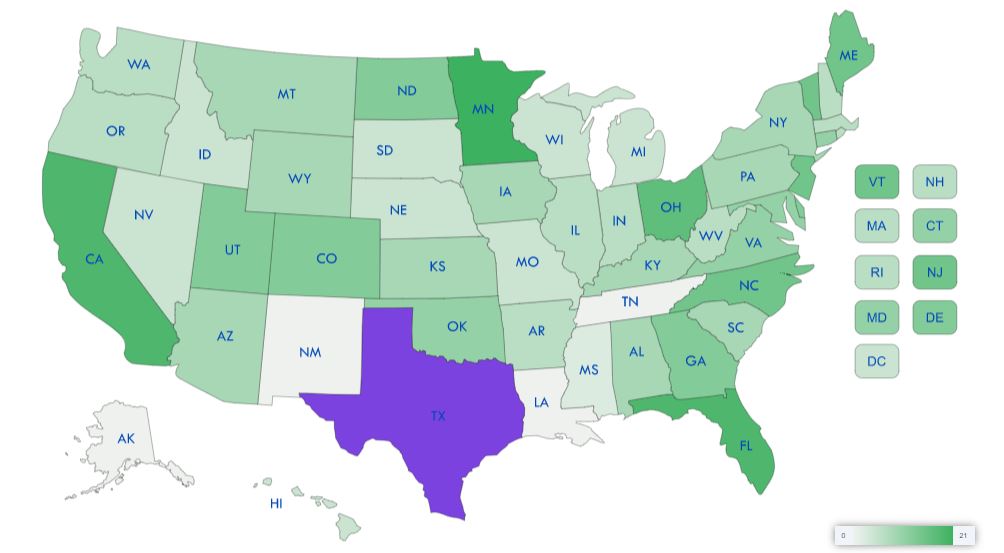
Texas was among 24 states rated as “Good” for information technology (IT) readiness, according to new scoring by the Internet Association.
The trade group released a map on December 15 that represents its analysis of government IT readiness in all 50 states, the District of Columbia, and U.S. territories.
SITARA, or the State, Local, Tribal, and Territorial Information Technology Advancing Reform Achievements, uses an established baseline of participation in programs recommended by the U.S. Cybersecurity and Infrastructure Security Agency (CISA).
The state of Texas earned 10 out of a possible 21 points with the Internet Association awarding it five out of seven points for cybersecurity. Texas drew high marks for having an established cyber security posture, participating in two Information Sharing and Analysis Centers (ISACs), budgeting $10 million for cybersecurity, and reporting less than the average number of ransomware attacks per million. Its Cyber Security Strategic Plan outlines an IT security strategy.
Texas dropped points for its IT infrastructure by establishing a state data center priority instead of a cloud-related priority. The analysis suggested the state codify a cloud-first policy.
The report noted a lack of support for modernizing government IT and no formal effort to implement a digital government experience. The metric examines whether or not there is a Digital Services Team (DST), innovation focused group, or another form of a Digital Services Plan that looks at improving resident services through the use of emerging technologies (e.g., data analytics, artificial intelligence, machine learning) in the state, and if that effort is codified by statute.
Minnesota scored the highest among the 50 states with its “Very Good” score of 14 points on a 21-point scale. Joining it in achieving that rating were California and Florida with 13 points. Twenty-four states earned “Good” scores, and 23 states and the District of Columbia garnered “Getting Started” scores. None achieved “Exceptional” or “Excellent” ratings.
|
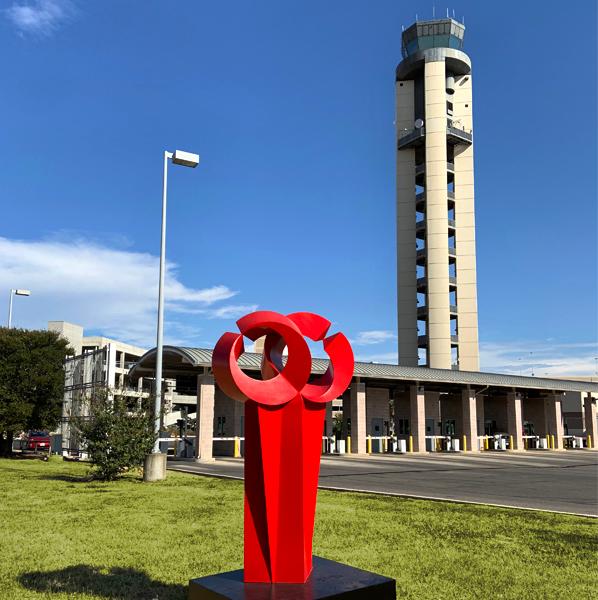
The director of the San Antonio International Airport briefed councilmembers on plans for expansion over the next 20 to 50 years that would allow the airport to accommodate projected passenger growth and planes with greater range.
Expanding the airport’s primary runway from 8,500 to 10,000 feet within the next 20 years would enable the airport to service farther international destinations such as Central and Eastern Europe, parts of Africa, and Asia.
Prior to the COVID-19 pandemic, the city’s Aviation Department developed a Strategic Development Plan (SDP) that will produce a 20-year Master Plan for the airport and examine the needs of the region from the airport system in the next 50 years.
In February 2020, the city’s Transportation and Mobility Council Committee was briefed on Phase 2 of the SDP, which includes the development of the airfield alternatives and the anticipated timeline for the completion of the plan.
Additional improvements set for discussion in early 2021 include terminal alternatives, multimodal access, and design standards. The Aviation Department will continue its work to develop a plan for cargo, tenant, and support functions as well as assess and adjust for COVID-19 impacts as it prepares for the city’s FY 2022 capital budget.
By implementing both delivery phased projects and a funding and financing strategy, the department aims to complete the second phase of the SDP.
|
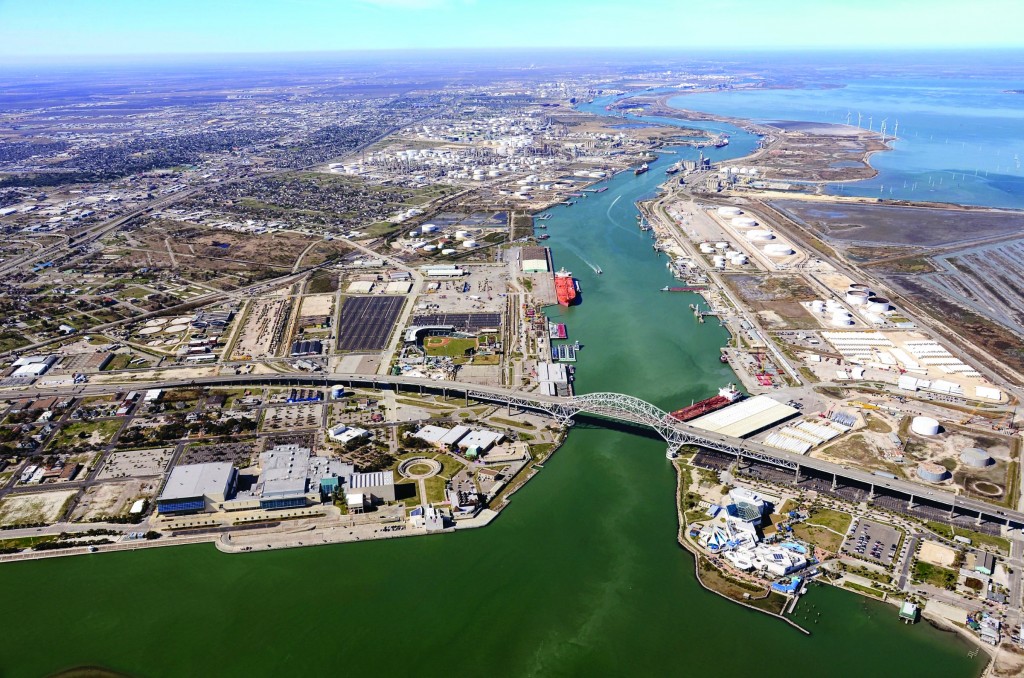
The Port of Corpus Christi advised consulting firms on December 17 that it plans to issue a request for qualifications (RFQ) for various projects requiring engineering and architectural services in 2021.
Among the bid categories expected to be included in the RFQ are:
- Computer consultant.
- Consultant services.
- Digital mapping/graphics.
- Engineering analysis/testing.
- Engineering consulting.
- Environmental consulting.
- Survey services.
- Testing laboratory.
Consultants may obtain the complete RFQ through the port’s procurement website when the document is released on December 23.
|
The Lower Rio Grande Valley Development Council and the city of Harlingen are continuing their efforts to secure federal funding for a new transit center.
In late 2019, Harlingen city commissioners approved the purchase of a county warehouse site to build a new public transit center. Since 2018, the property has been a makeshift hub for buses traveling on Interstate 69.
After the Federal Transit Administration (FTA) committed $5.6 million to the project, local leaders advanced plans to build a facility that would serve as Valley Metro’s hub in northern Cameron County. Valley Metro is the transit department of the Lower Rio Grande Valley Development Council.
Local transportation officials said FTA is performing a final review on the council’s application for $5 million to help fund construction of the transit center.
Designs include a 10-bay bus terminal that would house a ticket office, waiting area, and retail space. City officials said they envision renting space to bus companies, restaurants, and retailers to offset operating costs.
|
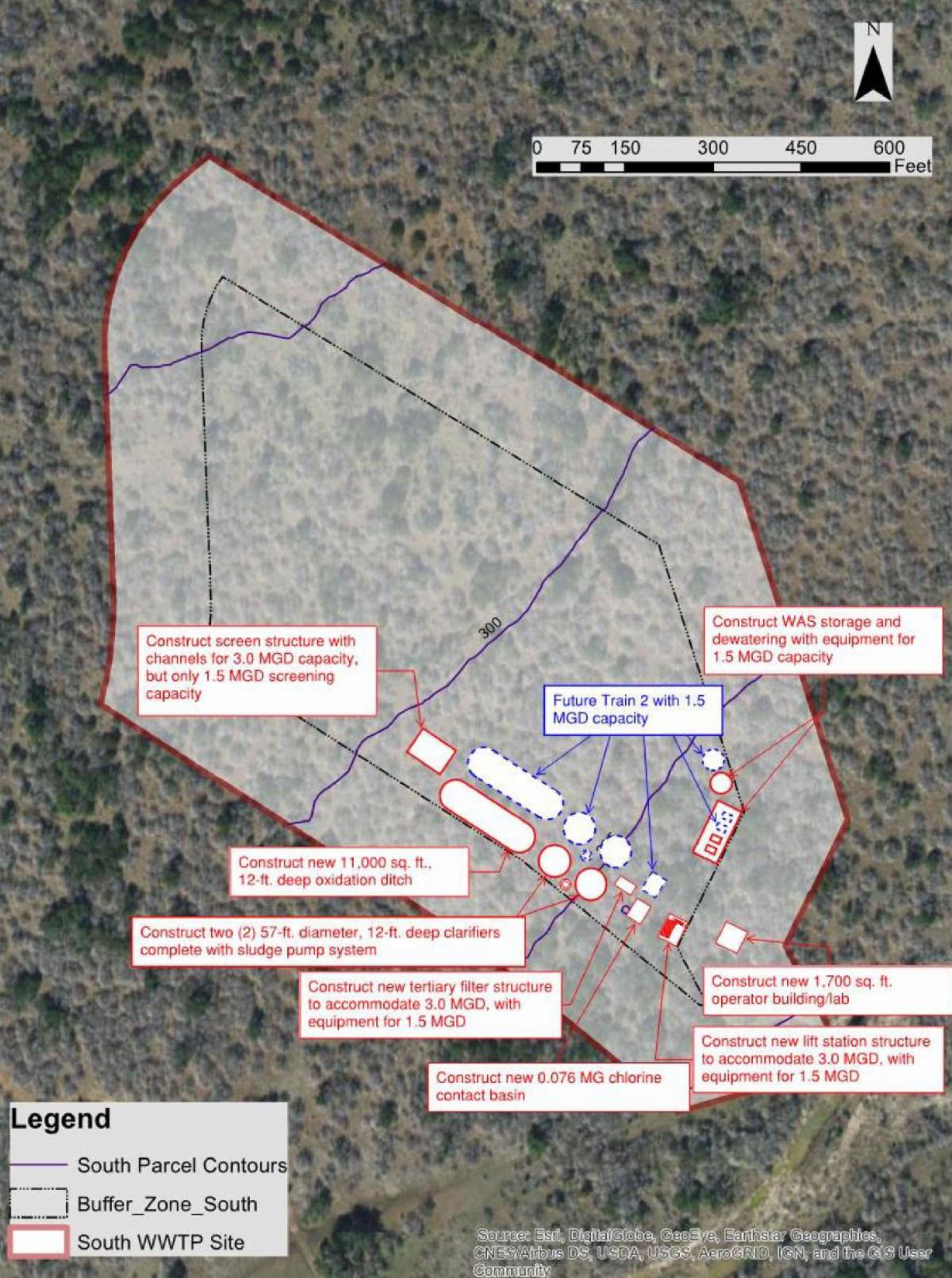
The Lower Colorado River Authority (LCRA) board of directors authorized staff on December 15 to sell 49 acres from the Shifflett Tract in Burnet County to the city of Marble Falls to allow the city to build a new $15 million to $18 million wastewater treatment plant.
Marble Falls concluded its request for qualifications last week for engineering services to design a new plant, and officials anticipate the design phase will take 12 months after which a procurement would be issued for construction services.
An early 2019 engineering study recommended that the city build a new plant on the site of its wastewater treatment affluent farm instead of expanding its current facility, which was damaged twice by floodwaters.
Engineering is expected to take 20 to 24 months with construction beginning in 2022 and the plant going online by early 2024.
On September 3, the U.S. Economic Development Administration (EDA) awarded the city $2.5 million for engineering, design, and permitting for the new wastewater treatment plant.
|
The Texas Comptroller of Public Accounts (CPA) will host a pre-solicitation meeting as it prepares an upcoming solicitation to the statewide contract for transit vehicles.
As stated in its specification released on December 14, the CPA’s office is seeking a transit-quality paratransit vehicle manufactured with a gasoline engine and raised roof. Other desired features include stand-up entry, seating for at least eight adult ambulatory passengers, and one wheelchair position along with the wheelchair lift and tie downs. A standard van body with single rear wheels must meet all stated specifications and the structure must be devoid of degradation.
Vendors will be required to have a dealership license. The specification did not state how the paratransit vehicles will be used.
Comments must be submitted by January 4, 2021, prior to the pre-solicitation meeting at 2 p.m. on January 6, 2021 to discuss the submitted questions and comments.
|
|
The city of Austin and the state of Texas are both victims of a massive breach in state and federal computer networks by purported Russian intelligence agencies, according to confirmed reports.
Executives from the city of Austin say they are following measures recommended by the Cybersecurity and Infrastructure Security Agency (CISA) and FBI.
Austin councilmembers on December 8 awarded a contract for citywide cyber liability insurance for up to $2.43 million to Alliant Insurance Services, Inc. According to the solicitation documents issued in February 2020, the city was seeking insurance agents and brokers experienced and qualified to provide cyber liability consulting services and placement of comprehensive cyber liability insurance coverage for large public entities.
CISA issued an emergency directive on December 13 after it was discovered that hackers had gained access to multiple computer networks via SolarWinds’ Orion products. SolarWinds Corporation is headquartered in Austin.
Officials at the Texas Department of Public Safety (DPS) did not confirm if the agency had been breached, but they referred inquiries to FBI Special Agent Michelle Lee in the bureau’s San Antonio office.
On its website, SolarWinds stated that it believes “the vulnerability was inserted into its Orion platform products and it existed in updates released to customers between March and June 2020.”
The breach to SolarWinds permitted attackers to gain access to an estimated 17,000 network traffic management systems out of the company’s 33,000 Orion customers.
The Multi-State Information Sharing and Analysis Center reported that multiple vulnerabilities have been discovered in SolarWinds N-Central. Two of these vulnerabilities, when used in conjunction with each other, could allow for remote code execution. SolarWinds N-Central is a remote monitoring and management automation platform for managed service providers and IT professionals.
Successful exploitation of the most severe of these vulnerabilities could allow for remote code execution. Depending on the privileges associated with the user an attacker could then install programs; view, change, or delete data; or create new accounts with full user rights. Users whose accounts are configured to have fewer user rights on the system could be less impacted than those who operate with administrative user rights.
|
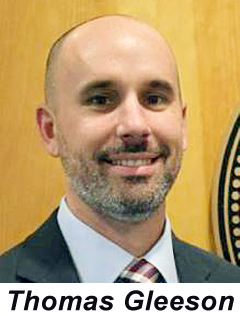
The Texas Public Utility Commission (PUC) promoted Thomas Gleeson to executive director on December 17. He will succeed John Paul Urban III who resigned on December 9.
Gleeson most recently served as the PUC’s chief operating officer. Prior to that, he held positions as director of finance and administration, director of budget and fiscal affairs, and supervisor of budget and fund administration.
|
The city of San Antonio selected Mary Garr as interim director of the San Antonio Metro Health Department. She will take over for Dr. Colleen Bridger who has been serving as assistant city manager and interim director. Bridger will transition to incident commander of the city’s COVID-19 pandemic response.
Garr will continue to serve in her current role as president and chief executive officer of Family Service in San Antonio. She is a former garrison commander of Joint Base San Antonio- Fort Sam Houston and Camp Bullis as well as a former chief operating officer for the San Antonio Military Health System.
|
The city of Eagle Lake named Melissa Landin as its city manager on December 8 after voters approved a city manager form of government.
Landin has served as Eagle Lake’s city administrator since June. Before that, she was the city administrator and utilities director for the city of Falfurrias.
|
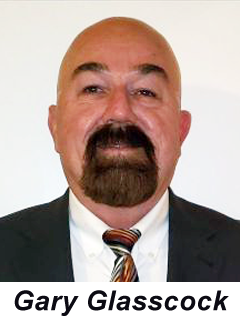
The city of Houston appointed Gary Glasscock as the new director of the city’s fleet management department.
Before joining Houston, Glasscock was the director of maintenance for the Metropolitan Transit Authority of Harris County (METRO). Before that, he was vice president of fleet and facilities for VIA Metropolitan Transit in San Antonio.
|
The Sealy City Council approved Kimbra Hill as the new executive director of the Sealy Economic Development Corporation (EDC) on December 15. She will succeed Robert Worley who is resigning to accept another position.
Hill most recently served as Sealy’s Main Street director and had been training to transition into the new role by working as executive assistant at the EDC since April 2019.
|
The city of San Juan, Texas, appointed Rubin Morin as its next chief of police on December 15. He succeeds Juan Gonzalez who resigned in August.
Morin returns to San Juan where he served from 1993 to 1997 until he accepted a position with the Texas Department of Public Safety (DPS). There, he was a Texas Highway Patrol trooper, sergeant-investigator, and lieutenant. Most recently, he oversaw DPS criminal investigations division.
|
Gov. Greg Abbott announced these appointments and reappointments from December 11-17:
54th Judicial District Court Judge
Susan Kelly – Waco
Texas Public Finance Authority
Jay Riskind – Austin
Texas Board Of Occupational Therapy Examiners
Jacob Boggus – Harlingen
Low-Level Radioactive Waste Disposal Compact Commission
Brandon Troy Hurley – Grapevine (reappointed)
Texas Medical Board District One Review Committee
Antoinette Jackson – Houston
Sheela Lahoti – Houston
Aundrea Young – Houston
David Davila – Cypress
Courtney Townsend – Galveston
Imran Dar – Houston
Kimberly Phillips – Houston
Texas Medical Board District Two Review Committee
Zachary Jones – Frisco
Lewis Benavides – Crossroads (reappointed)
Carrie de Moor – Frisco
Clyde Loll – Huntsville
Robert Simonson – Duncanville
Angela Downes – Irving
Ivan Rovner – Plano
|
Dozens of public-sector jobs are available. Click here to view all job openings and guidelines for job submissions to SPI. New jobs added this week:
-
Office of the Texas Governor – Travel Accountant (Accountant III)
-
Texas Department of Information Resources – Program Specialist VII (Texas Open Data Portal Coordinator)
-
Texas Water Development Board – Water Resources Engineer (Engineer IV)
-
Texas Water Development Board – Engineering Reviewer (Project Manager I/II)
-
Texas Water Development Board – Geographic Information Specialist IV (GIS Administrator)
-
Texas Water Development Board – Strategic Communications Manager
-
Texas Department of Housing and Community Affairs – Senior Policy Analyst
-
Texas Comptroller of Public Accounts – Statewide Procurement TXMAS Contract Developer
-
Texas Comptroller of Public Accounts – Accountant (Payroll/Timekeeping)
-
Texas Comptroller of Public Accounts – CAPPS Production Support Time and Labor Analyst
-
Texas Comptroller of Public Accounts – CAPPS Production Support Performance, Recruit, and Learning Analyst
-
Texas Comptroller of Public Accounts – CAPPS Production Support Payroll Analyst
-
Texas Department of Licensing and Regulation – Audit and Assessment Specialist (Program Specialist III)
-
Texas Department of Licensing and Regulation – Prosecutor’s Legal Assistant (Legal Assistant III)
|
|